






A Jewish and Navajo Marriage at the New Year of the Trees

By Diane Joy Schmidt
February 4, 2025
In 2025 Tu B'Shvat begins on the full moon, Feb. 12th.
On Tu B'Shvat, some years ago...
A marriage ceremony took place between a Navajo groom and a Jewish bride on Friday evening. It was not only Valentine’s Day weekend, when a lot of couples choose to get married, it was also an auspicious and meaningful time in the Jewish and Navajo calendars of the year. On this date, the full moon marks the midpoint of the 5th month of the lunar year, the Hebrew month of Shevat, and the Navajo month of Baby Eaglets, when snakes, bears, lizards and plants awaken and plants sprout.
At sundown began the Jewish festival of Tu B’Shvat, the 15th of Shevat, the New Year of the Trees, when the first buds appear and the sap begins to rise in the trees’ roots. And when the rabbis, who wish to comfort us if the snow is still on the ground, will say, “While it still feels like winter, the 15th of Shevat is the midpoint between fall and spring. So, once half the winter has passed, its strength is weakened, the cold is not as intense, and the budding process begins,”
The Maharal of Prague, the 16th century mystical Rabbi Judah Lowe, explained that since everything in the physical world is a manifestation of a spiritual root, when one studies the natural world and its seasons one can understand the spiritual energy of that time of year. The New Year of the Trees marks the day on which the rain's potential growth begins to materialize through the trees producing fruit. So just like the trees, Tu B'Shvat is the opportune time to both harvest and assess the spiritual fruit of our labors.
The wedding couple stood under a huppah, which is the Hebrew word for canopy. The Babylonian Talmud of biblical times said that it was the custom when a boy was born to plant a cedar tree and when a girl was born to plant a cypress or pine tree, and when they married, the trees were cut down and a canopy was made of the branches. So in the Jewish tradition the wooden poles on the left are made of cedar and the poles on the right are made of cypress or pine.
In the Navajo tradition, the elders say that when the humans were created, the left leg was made from the cedar tree and the right leg from the pinon tree.* And in both the Navajo and the Jewish traditions, the man stands to the left of the woman.
The huppah represents the couple’s new home. Its four sides are open to the protection, love, and presence of the Divine Creator.
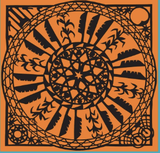
In the Navajo tradition, the marriage ceremony would take place inside a hogan, a manifestation of the four sacred mountains which represent the main pillars of a home. The Navajo wedding basket that is used in the ceremony has a pattern that represents the mountains.
On the day prior to the wedding ceremony the couple reported that they were visited by a flock of bluebirds that filled the air with their playful chatter.
* When Rabbi Gershon Winkler of Walkingstick Foundation, which is "dedicated to the restoration and preservation of aboriginal Jewish spirituality," read the description of Navajo anatomy in the book Diné Terminology for Diabetes Mellitus by Frank Morgan (Navajo Special Diabetes Project, 2004), he recognized this parallel between Navajo traditional knowledge (ancient oral traditions passed down for centuries) and the Babylonian Talmud (written from 500 to 600 CE) and brought this to our attention.
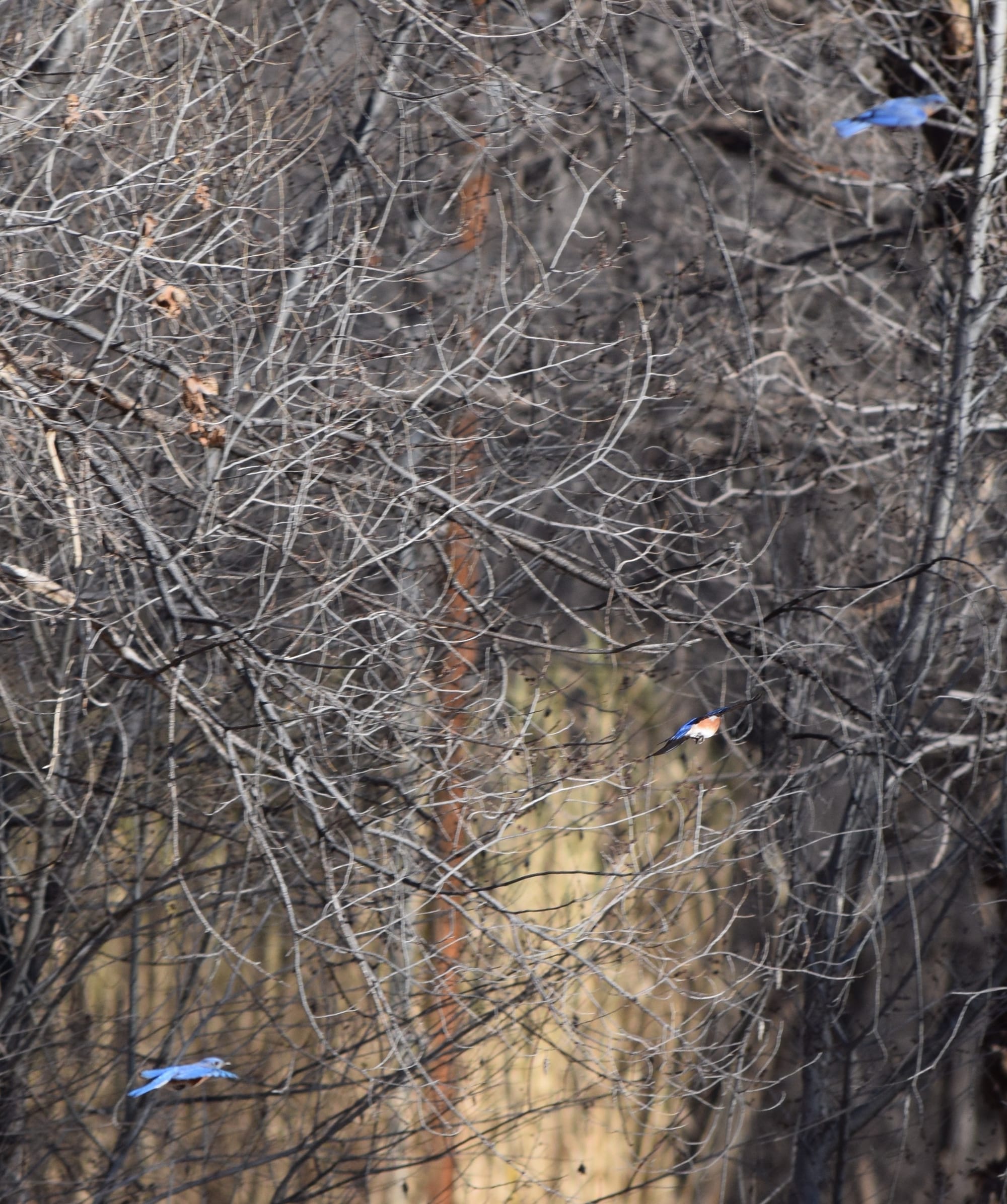
This story won a First place award for Columns, General and an Honorable Mention, Graphics for "Bluebirds," the drawing by Frank Morgan, in the 2026 New Mexico Press Women Contest.
Diane Joy Schmidt, publisher and editor of the NM Jewish Journal, is an internationally award-winning storyteller and imagist. She is anchored by her memories of the fireflies at Union Institute camp and the Big Dipper over Lake Michigan, and is an admirer of all things spiritually resonant. Former regular contributor and columnist for the Chicago Tribune, she was senior correspondent for the New Mexico Jewish Link, which closed in 2022. MFA, New Media and Screenwriting, Antioch University, 2020; MA, Creative Writing, UNM; BFA, Photography RISD; BA, Comparative Literature, Prescott College, Arizona. Books include The Chicago Exhibition (Melrose), published stories, the industry-awarded screenplay Turquoise Mountain, photojournalism and drawings, and a graphic novel in progress, On This Night. View more at www.dianejoyschmidt.com.
Frank Morgan is an artist, author, translator, educator, farmer, veteran and retired Director of Diné Educational Philosophy at Diné College, Navajo Nation. His drawing, Blue Birds, was first published in his book, Navajo Terminology for Foods and Nutrients: kindness, caring, and blessings through our food, 2011, in the frontispiece with the words, " Our language emulates the bluebird's voice..." His books of standardized Diné (Navajo) terminologies for diabetes, genetics, biology, cancer, nutrition, uranium remediation, suicide prevention, Navajo psychology, wellness, and court interpreter trainings are in use by health professionals across the Navajo Nation, at universities, and by state and federal governments.
Community Supporters of the NM Jewish Journal include:
Jewish Community Foundation of New Mexico
Congregation Albert
Jewish Community Center of Greater Albuquerque
The Institute for Tolerance Studies
Jewish Federation of El Paso and Las Cruces
Temple Beth Shalom
Congregation B'nai Israel
Shabbat with Friends: Recapturing Together the Joy of Shabbat
New Mexico Jewish Historical Society
Policy Statement Acceptance of advertisements does not constitute an endorsement of the advertisers’ products, services or opinions. Likewise, while an advertiser or community supporter's ad may indicate their support for the publication's mission, that does not constitute their endorsement of the publication's content.
Copyright © 2025 New Mexico Jewish Journal LLC. All rights reserved.