









The Spiritual Path of a Maestro: Reb Zalman Schachter-Shalomi

by Ron Duncan Hart
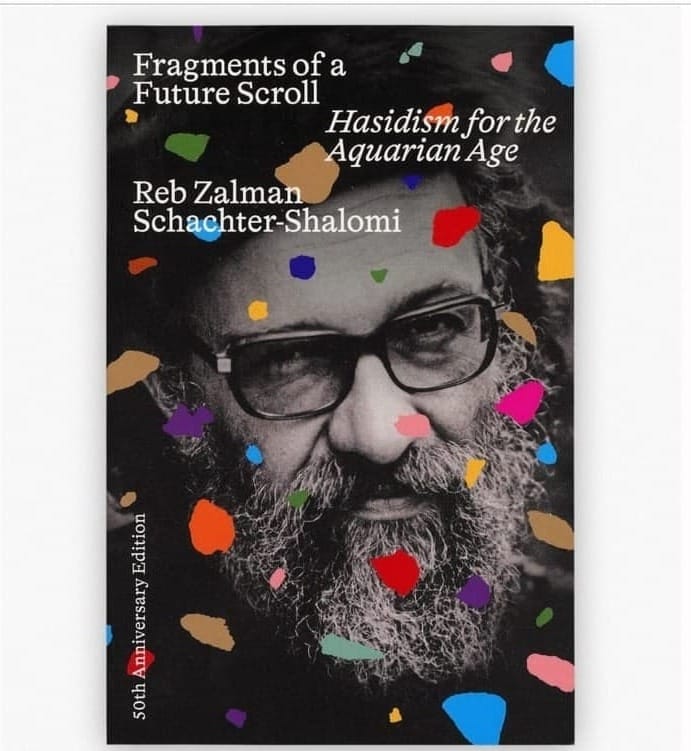
Rabbi Zalman Schachter-Shalomi was a unique influential rabbi of the late twentieth century, and his foundational book, Fragments of a Future Scroll: Hasidism for the Aquarian Age, published in 1975, has just been republished after fifty years.[i] Reb Zalman was born in Poland in 1924 in an Orthodox Jewish family. Because of the rising antisemitism of that time his family moved repeatedly, and in an internment camp in France he met Rabbi Menachem Mendel Schneerson, who later became the seventh Chabad rebbe. Finally in New York Zalman attended the Chabad yeshiva, and in 1947 he became a Chabad rabbi.
At the age of twenty-four, one year after being ordained as a rabbi, he and his colleague Rabbi Shlomo Carlebach, were sent to speak on college campuses. They were sent by the new Lubavitcher rebbe Menachem Mendel Schneerson among the first schluchim of the Chabad movement. From 1956 to 1975 he was the Hillel director at the University of Manitoba where he broadened his understanding of spirituality as he worked with Jewish and non-Jewish students. In the early 1960s he experimented with LSD and began to explore religious mysticism and cross-cultural religious ideas, moving away from Chabad. As he expanded his religious horizons, he became interested in Tibetan Buddhism and traveled to meet the Dalai Lama, establishing a long-term relationship with him. Along with a career teaching at Temple University, he co-founded ALEPH, the Alliance for Jewish Renewal with Rabbi Arthur Waskow.
Fragments of a Future Scroll was the early text of Reb Zalman’s vision for a spiritually vital Jewish life. It reflects his growing spirituality which drew from Hasidic mysticism, Buddhist meditative practices, and the countercultural New Age consciousness of the late 1960s and 1970s. He gives a guide for people seeking a deeper meaning in spirituality beyond established institutional religious practices. He engaged with a broad range of mystical practitioners from the Dalai Lama to Thomas Merton and Sufi teachers. He went on to write more than eighteen books, but in Fragments of a Future Scroll he had already set out his vision of the spiritual life.
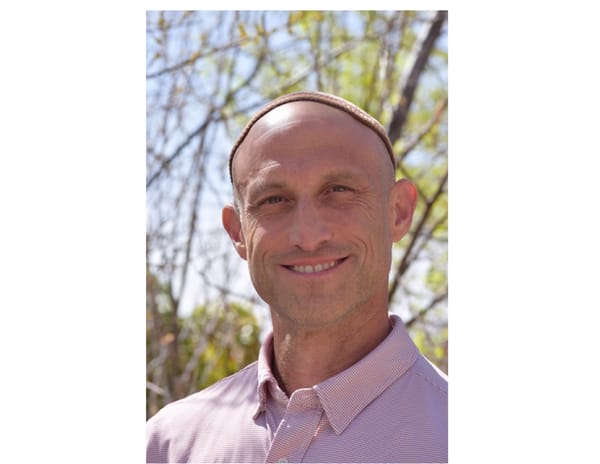
My knowledge of his vision of the spiritual life was on full display when I got to know Reb Zalman in 2010. My wife, Gloria Abella Ballen, and I traveled to Boulder to meet him. He was probably 85 at the time with an expansive smile, and he generously welcomed us into his life and world. On that first visit we spent a good part of one day as he talked about spirituality and the role of prayer in life. Prayer had a central role in life for him, and he showed us his prayer room, actually a small, enclosed space where he could isolate himself from other sensory stimulation and move into another world of consciousness.
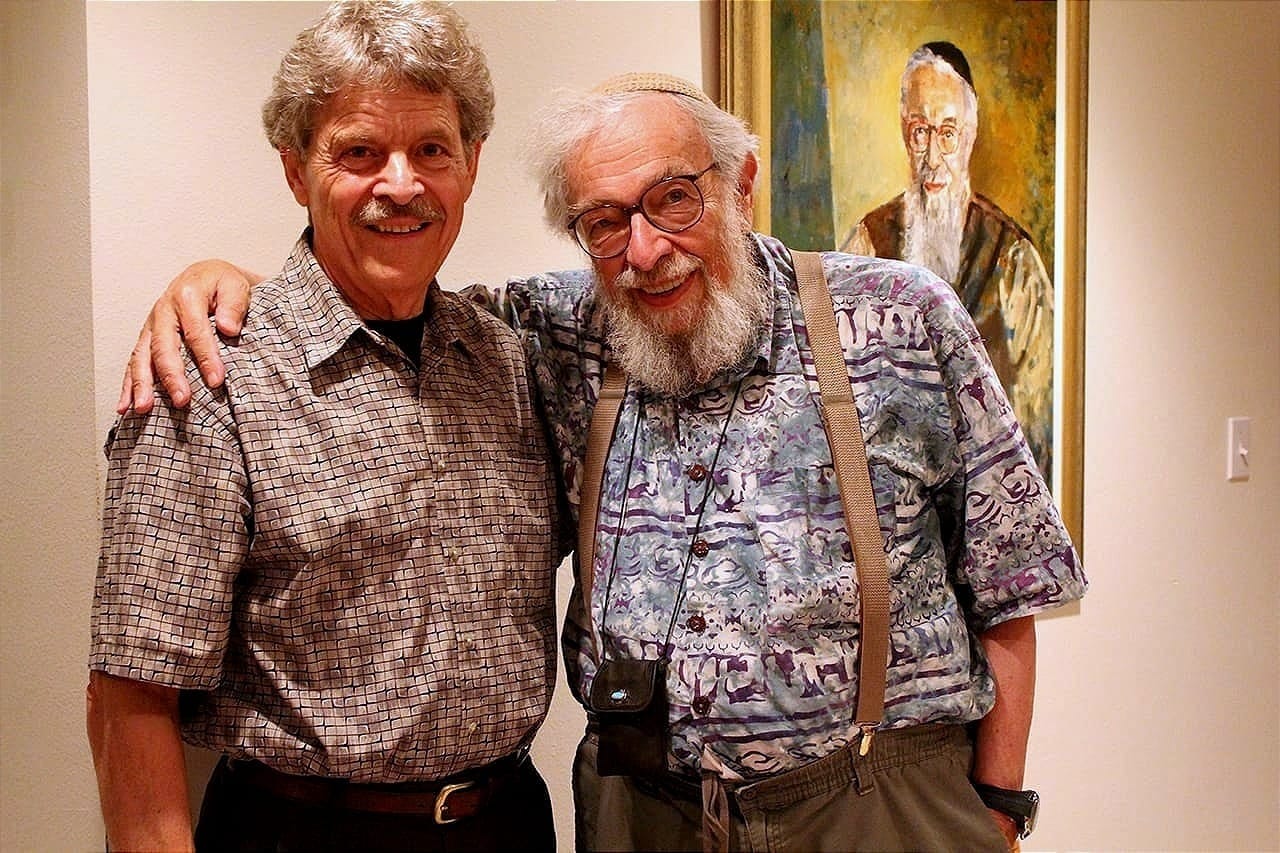
Reb Zalman was a storyteller, and he told us of his life as a young man escaping the antisemitism of Europe. He and his family arriving to the camp in France, where he met Rabbi Schneerson, then Marseilles, and from there they went to Casablanca, as they waited for papers to enter the United States. The thing he most remembered from Casablanca was eating canned sardines from a company call Aleph, the name of the Alliance for Jewish Renewal that he would later help found.
His basement was filled with shelves and rows and rows of recordings that he had made, some teaching about mystical spirituality, but he also had recordings of himself chanting prayers. He told us how prayer itself becomes a mystical experience for him moving into another spiritual space. He began to chant a Psalm and then another and the hum of his Hebrew words as he chanted took us into a mystical space transcending the confines of the body and voice. I felt as if I had heard the Oom of the universe. That was the “at the heart” of his deep connection to the spiritual life.[ii]
In the Preface to Fragments, Reb Zalman defines his view of what the book is, “Treat this book as a study guide. It is not a textbook. Read a page, think about it, sift the ideas through your consciousness. Let what comes from your mind float free and follow gently. More than what stimulated it, your own production is what counts in spiritual life.” In those few words he stated his understanding of spiritual life, and the rest of the book elaborates those ideas.
Later, he says, “All that happens in the mind depends upon valences born of interests, needs, and concerns in the student or seeker. As an instrument in the hands of the Spirit who informs and guides, I permit this life force to play on whichever key it wills.” The spiritual life varies from one individual to another based on the interests, needs, and concerns of each. Spiritual life is not structured, it is an openness to the truth that comes sometimes unexpectedly.
Drawing from his Orthodox background, Reb Zalman was a storyteller, and he enriches Fragments with stories of Hasidics and their experiences of breaking through the barriers of understanding to new spiritual insights. His stories could range from the thief telling how to make an omelet to another one about a young Hasid who learns from the essence of Hasidic practice from the Kotzker Hasidim.
Death takes one to a new spiritual place. Reb Zalman says, “The soul first enters the lower Gan Eden, which is a paradise of emotional bliss. While on earth, most people are unable to feel more than one dominant emotion at a time, but the bliss of the souls in the lower Gan Eden is likened to a majestic chord of benign emotions which the soul feels toward God and toward other souls.” His view of heavenly life is a beautiful illusion of life submersed in spiritual pursuits.
Reb Zalman understood Kabbalah this way, “When we enter into meditation and are in touch with the inner vision, observing the dynamics of the interaction of names, worlds, and sefirot in us, we see through the speculum: we are involved in speculative Kabbalah. Yet, Kabbalah, as a system, can also be helpful in providing us with a vocabulary of the inner and higher life. So it pays to learn its language, especially because it allows us to hear what sage, seer, and saint observed and transmitted to us.” He goes on to explain gematria, the Cosmic Mind, and the relationship between the carnal and the spiritual, which are not opposites, but an integrated life brings them together.
The second half of the book is “Hasidic Translations”, in which Reb Zalman drew from Hasidic writings that were most meaningful to him. From the lyrics of a ballad to letters from the Baal Shem Tov and other leading Hasidic rabbis, Reb Zalman sketches out the life and thoughts of those who have contributed to our own understanding of mysticism and spirituality.
With Fragments of a Future Scroll: Hasidism for the Aquarian Age Reb Zalman wrote his guidebook to understanding mysticism in spiritual life, opening a door for others to the life of the spiritual self that he understood so well.
Reb Zalman passed away in 2014 in Boulder at the age of 89. Our other visits in those four years in Boulder and at ALEPH meetings were more about his books we published, and his consistency as person guided by insightful spiritual life was always present.
[i] Fragments of a Future Scroll: Hasidism for the Aquarian Age by Zalman Schachter-Shalomi is being published by Ayin Press. March, 2026. https://shop.ayinpress.org/products/fragments-of-a-future-scroll-hasidism-for-the-aquarian-age
Ron Duncan Hart and Gloria Abella Ballen of Gaon Books published two of Reb Zalman’s books: A Hidden Light: Stories and Teachings of Early HaBaD and Bratzlav Hasidism (Winner of the Best Book Award in 2012 New Mexico/Arizona Book Awards) and All Breathing Life Adores Your Name: At the Interface Between Poetry and Prayer: Translations and Compositions of Jewish Sacred Literature. http://www.gaonbooks.com/
[ii] You can hear Reb Zalman chanting at https://www.tolerancestudies.org/RebZalmanChanting.html
Ron Duncan Hart, Ph.D. is the Director of the Institute for Tolerance Studies in Santa Fe and the Santa Fe Distinguished Lecture Series. He is a cultural anthropologist and former Dean of Academic Affairs. He has awards from the National Endowment for Humanities, the National Science Foundation, Ford Foundation, and Fulbright among others. He is an award-winning author and his most recent book is Evangelicals and MAGA: The Politics of Grievance a Half Century in the Making, which received an American Jewish Press Association Rockower award ("the Jewish Pulitzers") for Excellence in Writing about Antisemitism.
Read Hart's multi-award-winning series on Jews and Christian Nationalism in the NM Jewish Journal. “Prophetically terrifying and a great history of the Evangelical takeover of the government leading us to a U.S. theocracy,” commented one judge. Read all Ron Duncan Hart articles.
Gloria Abella Ballen has won international Awards in painting and graphics. She has been a visiting artist at the university of Essex, the Camberwell School of Art in the UK, the Mishkan Omanim inHerzliya Israel. Abella Ballen has published 3 award-winning books: The Power of the Hebrew Alphabet, Garden of Eden and The New World Haggadah, the latter with Ilan Stavans. All have won Best Book Awards.
Community Supporters of the NM Jewish Journal include:
Jewish Community Foundation of New Mexico
Congregation Albert
Jewish Community Center of Greater Albuquerque
The Institute for Tolerance Studies
Jewish Federation of El Paso and Las Cruces
Temple Beth Shalom
Congregation B'nai Israel
Shabbat with Friends: Recapturing Together the Joy of Shabbat
New Mexico Jewish Historical Society
Where the North Ends, A Novel by Hugo Moreno
Policy Statement Acceptance of advertisements does not constitute an endorsement of the advertisers’ products, services or opinions. Likewise, while an advertiser or community supporter's ad may indicate their support for the publication's mission, that does not constitute their endorsement of the publication's content.
Copyright © 2026-27 New Mexico Jewish Journal LLC. All rights reserved.