



What is it like in Iran — really?

By Judith Fein
Photos by Paul Ross
“You’ll never get out alive. You’re Jewish. You’re female. They’ll behead you, and they’ll post it on youtube.”
"There’s NO American Embassy. You’ll rot in a rat-infested jail for the rest of your life. No one will be able to help you!”
Those were some of the cheery reactions my friends had when I said I was going to Iran.
But a very stubborn streak runs down my back. I was going to Iran, a Muslim country also known as Persia, and fully expected to spend my entire visit with my head attached …although I planned to cover it with an obligatory headscarf. I also packed a few long blouses, as both hair and bum had to be covered in public, as mandated by the ayatollah. I also decided that I would not mention that I was Jewish. It was around 2017— not so long ago—when I returned from Iran and surprised everyone with what really happened there.
About fifteen minutes before the plane landed in Tehran, I asked a man who was seated behind me how to say “hello” and “how are you?” in Farsi. When we disembarked, and while the uniformed customs official fingerprinted me and scrutinized my passport and visa, I ventured, “Salaam,” and asked, “Khoobi?” He giggled, put his hand on his heart, smiled and bowed his head in welcome.
I checked into my hotel and headed for a money exchange. People in the street stared (blonde bangs protruded from the headscarf) and asked with gestures or words, “Where are you from?” When I said, “America,” they grinned, smiled, and drew a “heart” sign in the air. Everywhere I went in Iran, locals gave us hearts and thumbs up signs.
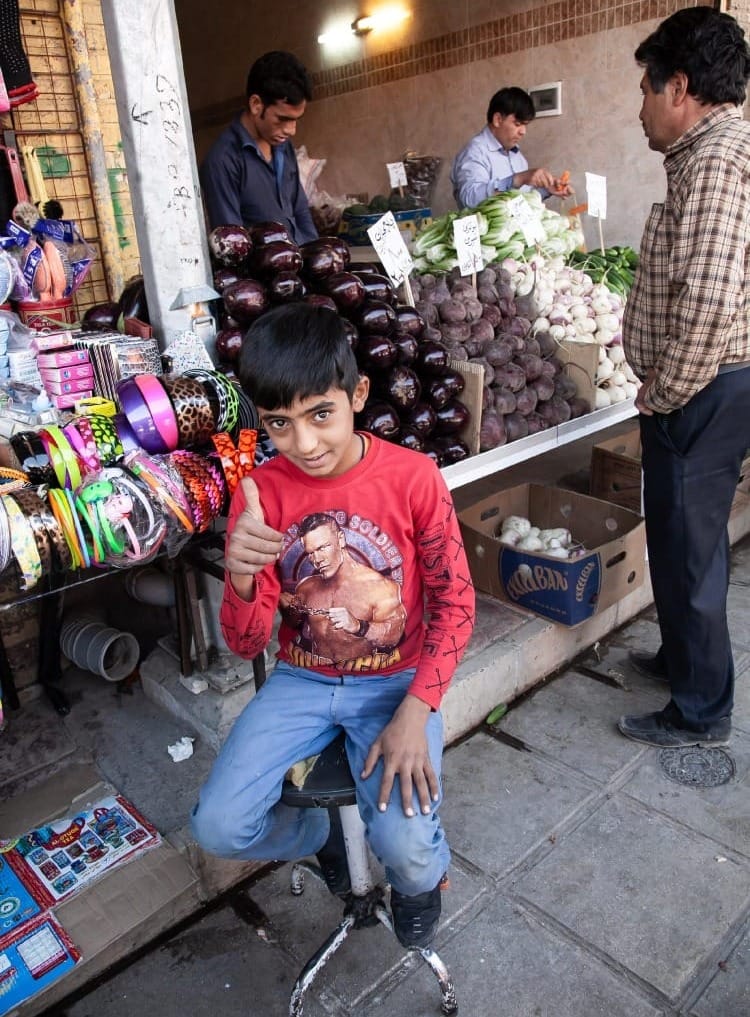
At the currency exchange, I handed a man two hundred dollars and received a thick wad of seven hundred thousand rials. Since severe economic, trade, and military sanctions were first levied against Iran after hostages were taken at the American Embassy in 1979, and succeeding American Presidents occasionally loosened but more often tightened the screws, the rial had been so devalued that a single U.S. dollar would buy you 3,450 of them. Unemployment had reached catastrophic levels, so you would assume that Americans were considered to be denizens of an evil empire. But, as people in the street informed me everywhere I went in Iran, “we don’t like your government, but we love American people.” They even ate American fast food. USA businesses were barred from operating in Iran, and were replaced with local equivalents like “Mash Donald’s,” Pizza Hat,” “Sheak Shack” and “Burger Queen.”
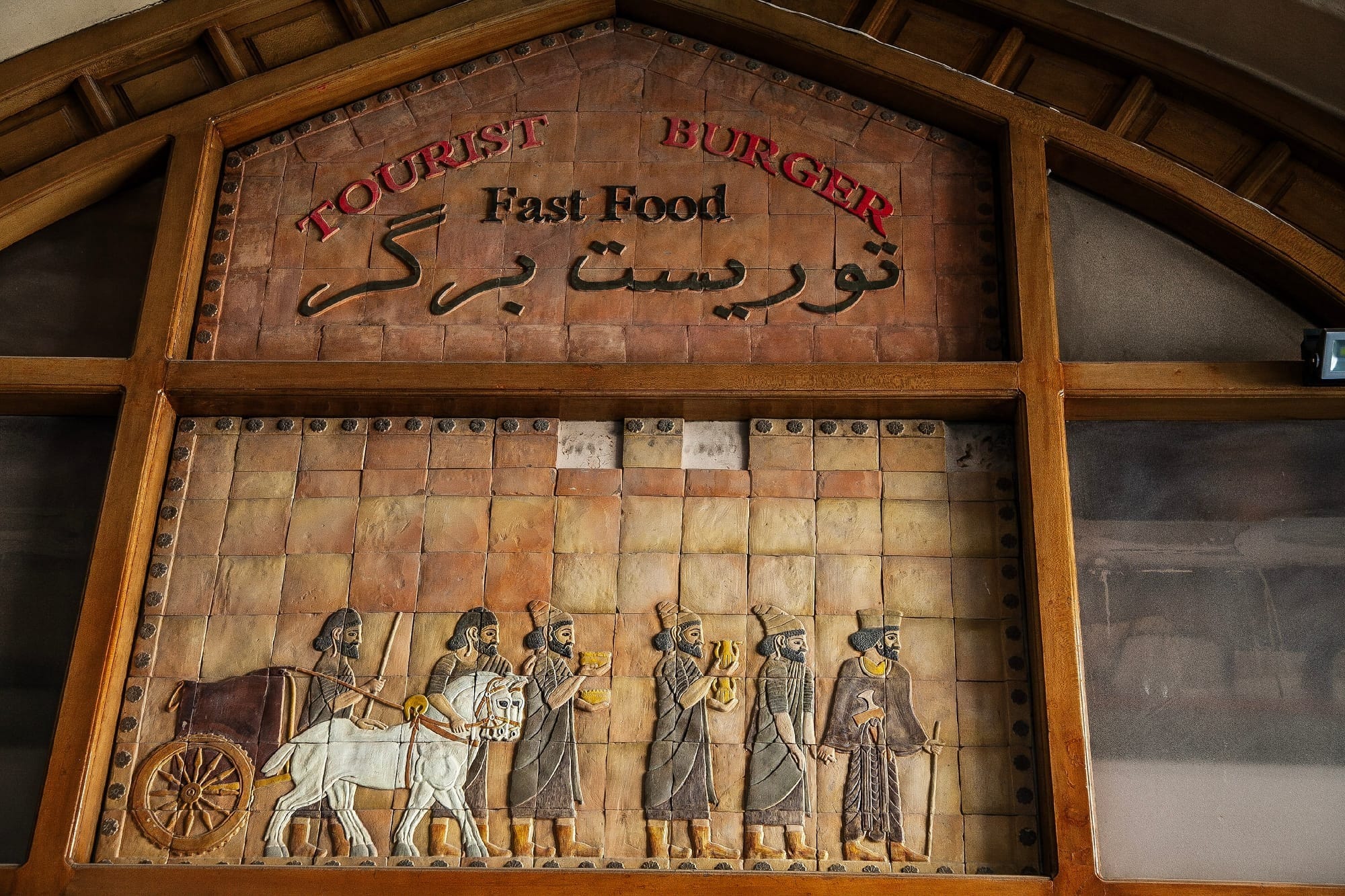
When I walked into a 7/11-type market to buy bottled water, all the shoppers gathered around me. “Where are you from?” This time, when I answered, “the U.S.,” the man standing closest to me insisted on paying for my aquatic libations.
That first night, I found the official Iranian English language Press TV channel, and became hooked. It was a one-eighty from news shows in America. The bad guys were the U.S., Israel and Saudi Arabia. Debates centered around the occupation of Palestinian lands, and nightly footage shows graphic IDF incursions and violence in the West Bank. Surprisingly, there was generally a pro-Israeli person engaged in debate with a pro-Palestinian person, and they were more or less given equal time. The newscasters — often women in headscarves –- dropped their veneer of neutrality and railed with moral outrage at the Israeli occupation and insisted that it must end.
I never heard anyone on television or whom I met call for Israel to be wiped off the face of the map, nor did I hear any antisemitic screeds. But in Tehran there were banners provided by the strict Islamist government with slogans calling for the downfall of the USA and Israel. I also clearly remembered the days of hate-spewing-Israel-annihilating Ahmadinejad, although Iranian people told me they considered their former President an embarrassment and an ignoramus. Thousands of Jews still lived in Iran, and although they were monitored and faced certain legal restrictions, they were granted religious freedom. They are also one of the most ancient Jewish communities in the world.*
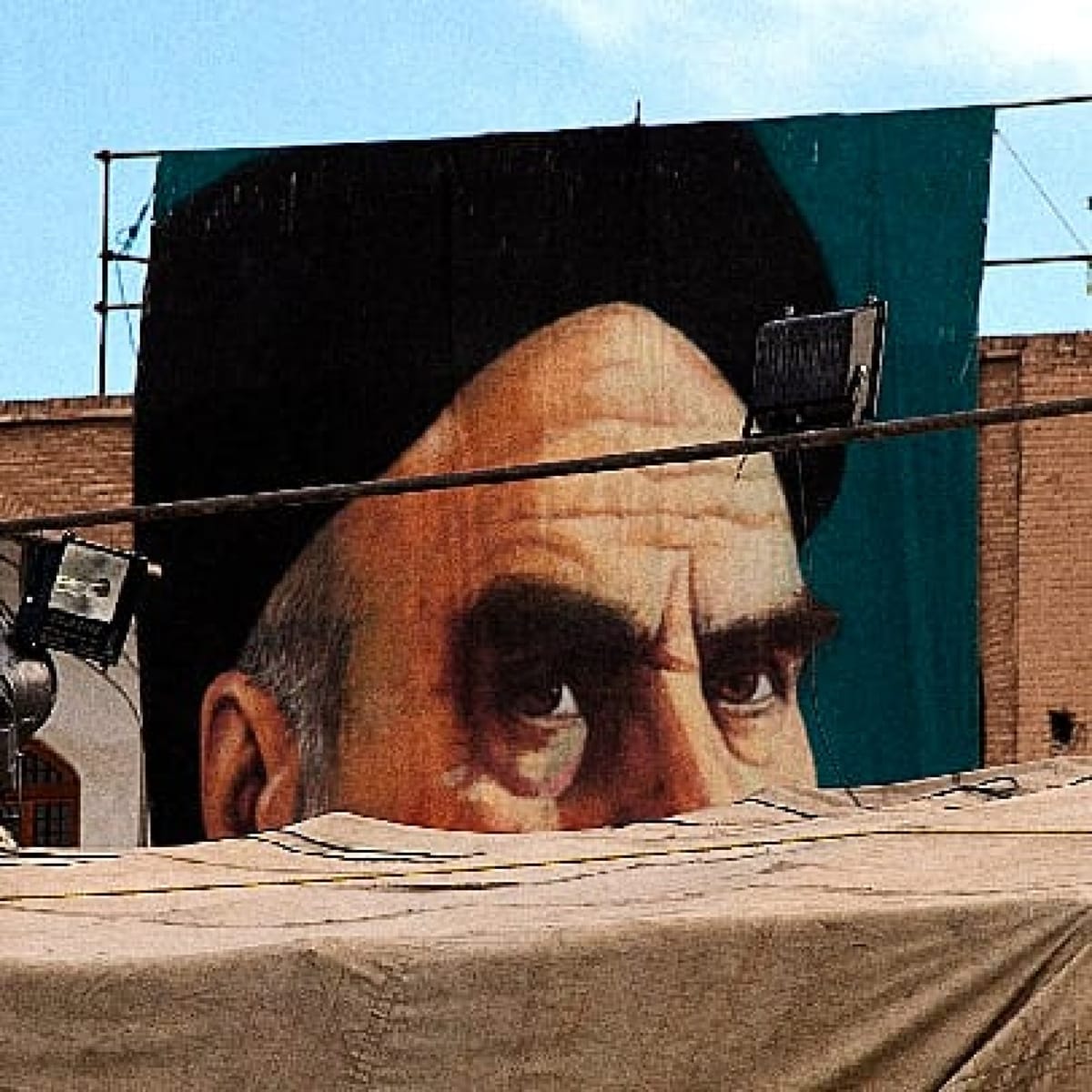
While I was visiting the capital city, there was a major exhibit at the Contemporary Art Museum featuring prominent Jewish American artists, Jewish travelers were welcomed — as long as there was no Israeli stamp on their passports — and I was told that there were plans afoot to offer Jewish heritage tours. Queen Esther and her cousin Mordecai — heroes of the Purim story— are enshrined in Persian tombs in Hamadan, and there are sites that are redolent of an important Jewish past. So, just as Iranian people can dislike our government but like us as Americans, I fell in love with the Iranian people and disliked the oppression of the people and the eyes of the ayatollah who glared down on us all from a large, prominent portrait.
The recent implementation of the Joint Comprehensive Plan of Action with Iran, which involved lifting economic sanctions in exchange for restrictions on Iran’s nuclear program, was greeted everywhere in Iran with reactions that ranged from skepticism to cautious optimism to unbridled buoyancy. The two financially-oriented English language newspapers, which I read every chance I had, featured articles about trade and oil deals with every country you can think of—except the U.S.
Officially, there would be no business with the USA. But I was sure tables were bouncing from all the deals that would be going on underneath them. New hotels were in the works. Tourists were arriving in busloads from Germany, France, and Asia.
With the exception of Iranian-Americans with dual citizenship who risked being jailed, I felt that it was the perfect time to go to Persia. You’d be treated like a welcome guest, and sometimes even like a rock star. And everywhere you went, folks would ask to take selfies with you. The country was safe, Iranians were truly friendly, and it was rich in ruins, art, history, architecture, food, carpets, spices, and, above all, exotic ambience.
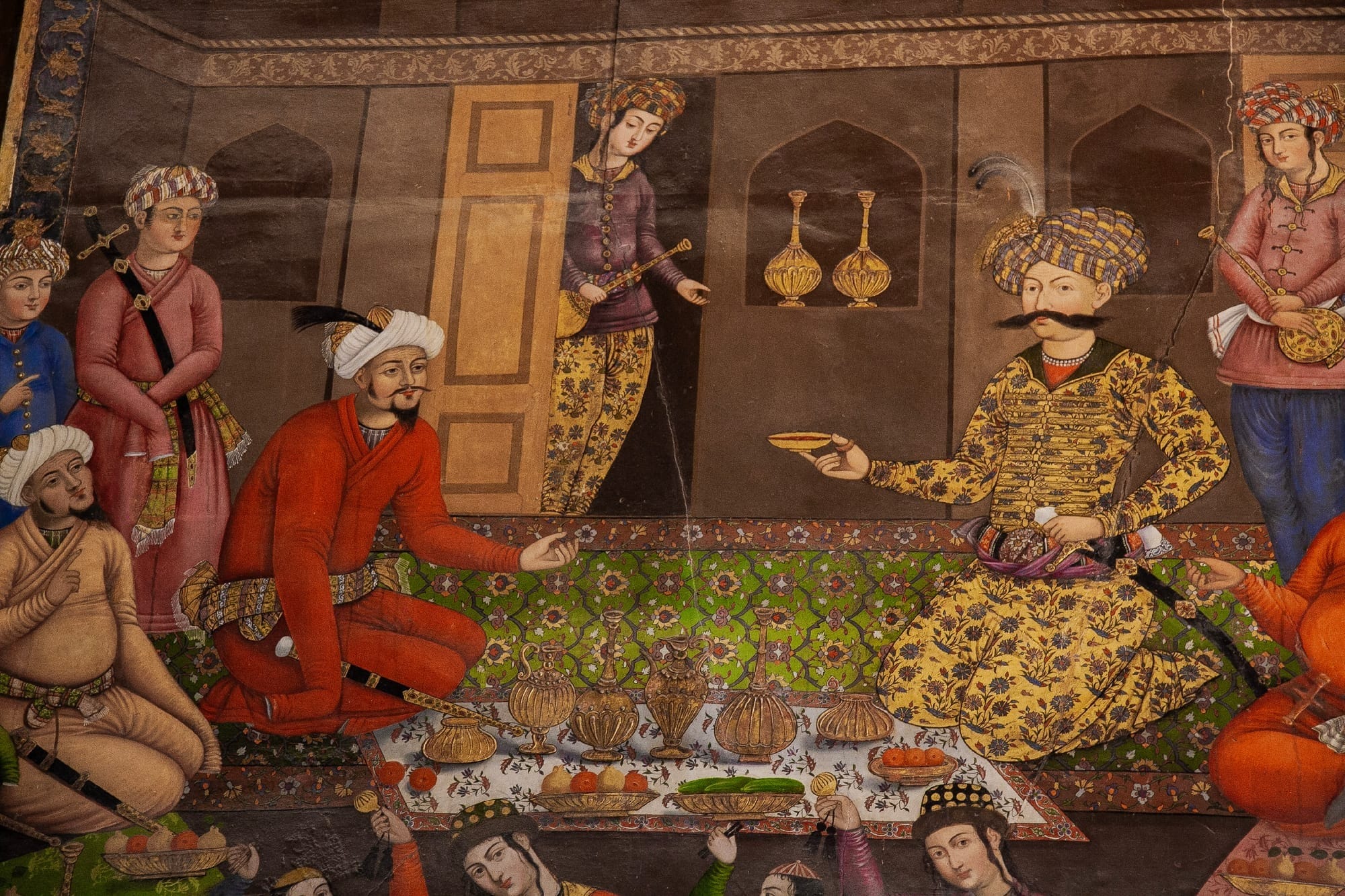
One of the sites I wanted to visit was the mausoleum of Cyrus the Great. After Nebuchadnezzar’s destruction of the Temple in Jerusalem in the 6th century B.C.E., there was a forced exile of leadership, priests, prophets, scribes, and other Israelites to Babylon. When Cyrus conquered Babylon and became its ruler, he decreed that the Temple should be rebuilt in Jerusalem, and that Jews were free to return there to accomplish the task. He returned some of the booty stolen from the Temple, and also provided large sums of money for its reconstruction. Frequently mentioned in the Hebrew Bible, Cyrus is generally considered to be a savior and patron of the Jews.
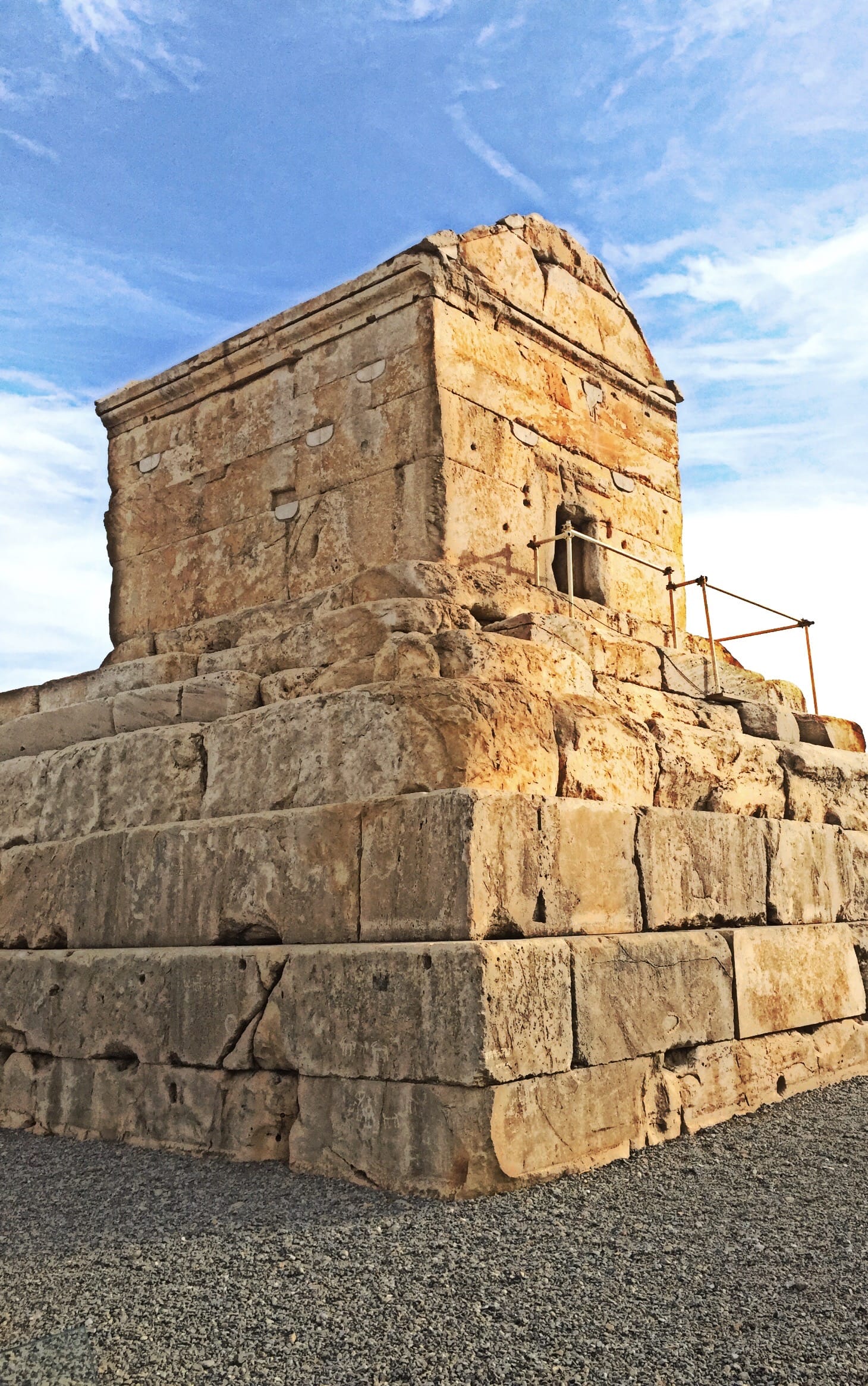
I assumed that, given the climate of Iranian-Israeli relations, there would be no mention of Jews at the site of the mausoleum. The opposite was the case. As I arrived, walking down the long path that leads to the tomb, which looks like a cross between an earth-tone ziggurat and a symbolic mountaintop, a loud recording spoke about Cyrus and the Bible and how he gave Jews permission to return to Jerusalem in the time of Ezra and Nehemiah.
Cyrus was a tolerant humanist, a visionary leader, and a practicing Zoroastrian. This piqued my interest and I found out more about the religion in Yazd, a desert town, where we visited the Temple of Silence and the Fire Temple. The former is perched on top of a steep, arid hill, and is the place where, in the past, bodies of the deceased were carried so they could be close to the sky. Their flesh was devoured by vultures, who picked the bones clean before eventual burial. Jewish bodies were food for worms in the ground, and Zoroastrian bodies fed the bird kingdom in the air. Judaism, like Zoroastrianism, is monotheistic, and both associate fire with the divine. In the Hebrew Bible, God is represented by fire.
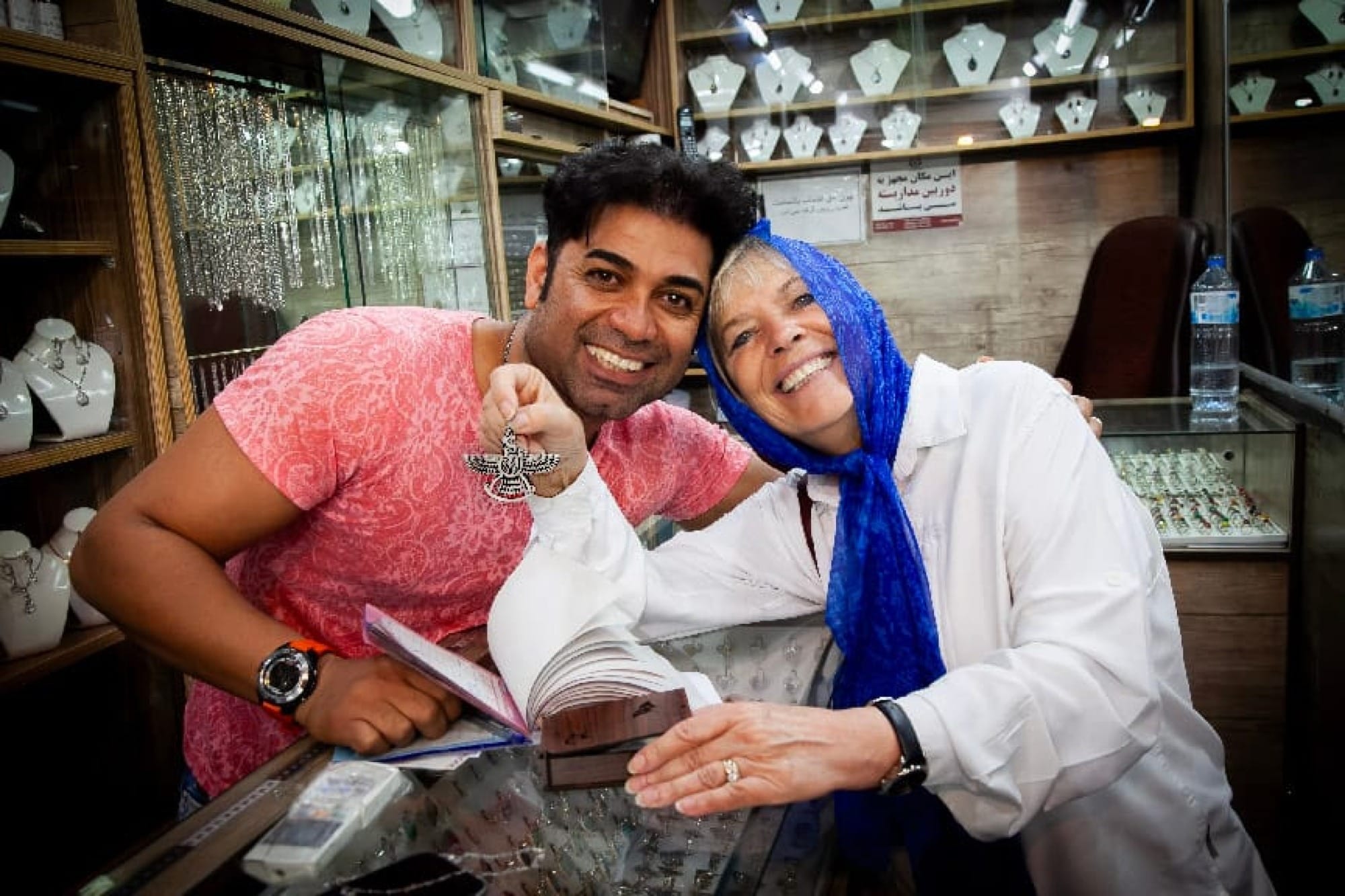
The Fire Temple, where an eternal flame burns in a huge copper urn, and the adjacent museum, offer a good deal of information about Zoroastrian rituals and practices. I loved the fact that joy and feasts are key components of the religion. And felt a pang of familiarity and recognition when I saw, in the modern Zoroastrian graveyard, small stones that family members and friends left on top of headstones when they visited. This is also a Jewish custom.
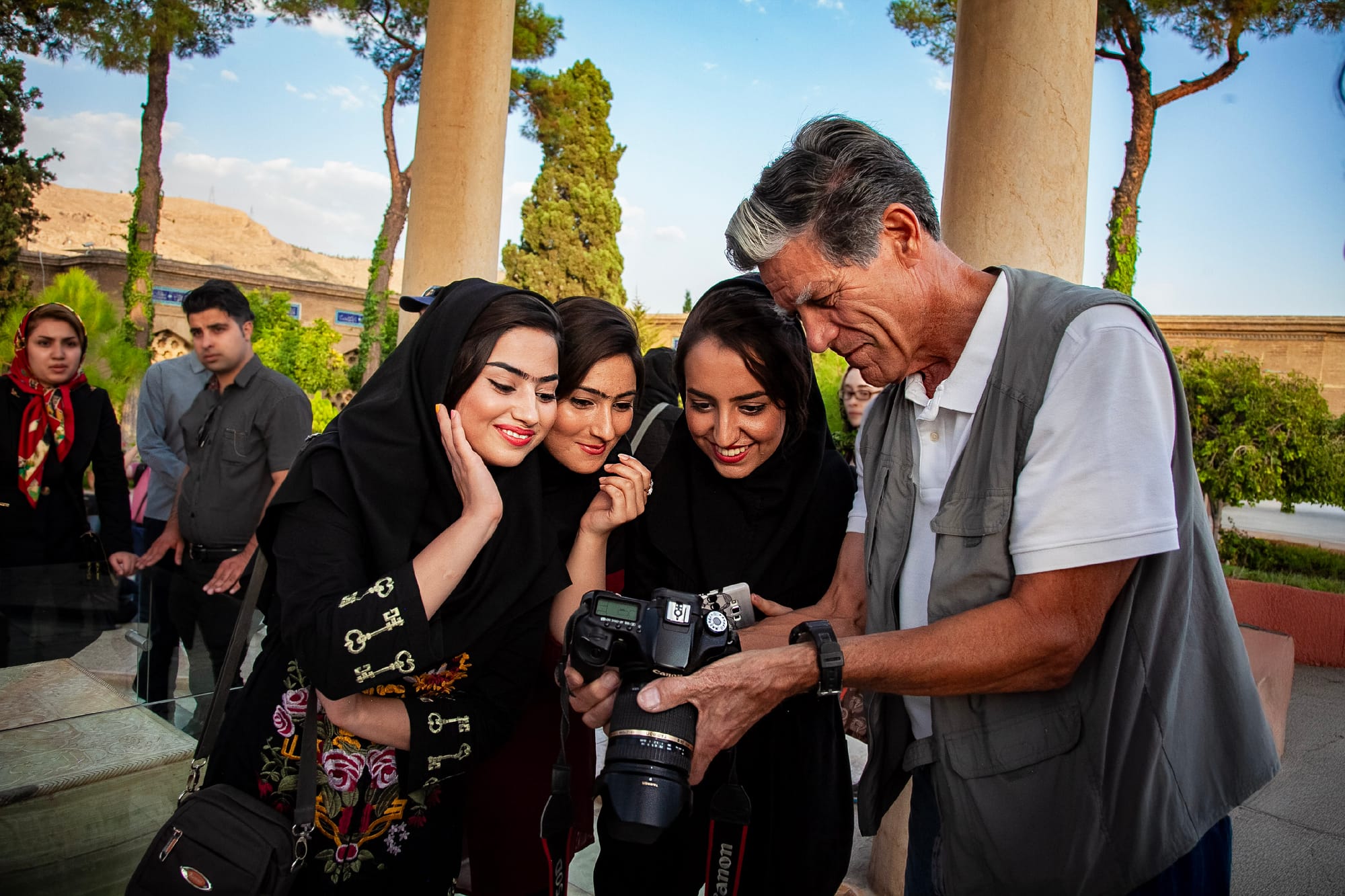
Another mausoleum in Iran belongs to Persia’s greatest poet, the l4th century Hafez. His tomb is nestled in a lush garden, and Iranians of all ages come to pay homage to the master. I had a sudden urge to hear one of Hafez’s poems read aloud, and I turned to a gaggle of college students and asked if they would oblige. One of the men pulled out his cellphone, quickly downloaded a Hafez app, and Hafez’s lyrical words poured from his lips. The three women in the group were a bit shy, but when I asked them what they were studying, they proudly answered Political Science, Information Technology, and Engineering. Women were certainly being educated in Iran, and I hoped the job situation would improve so they could work in their chosen fields.
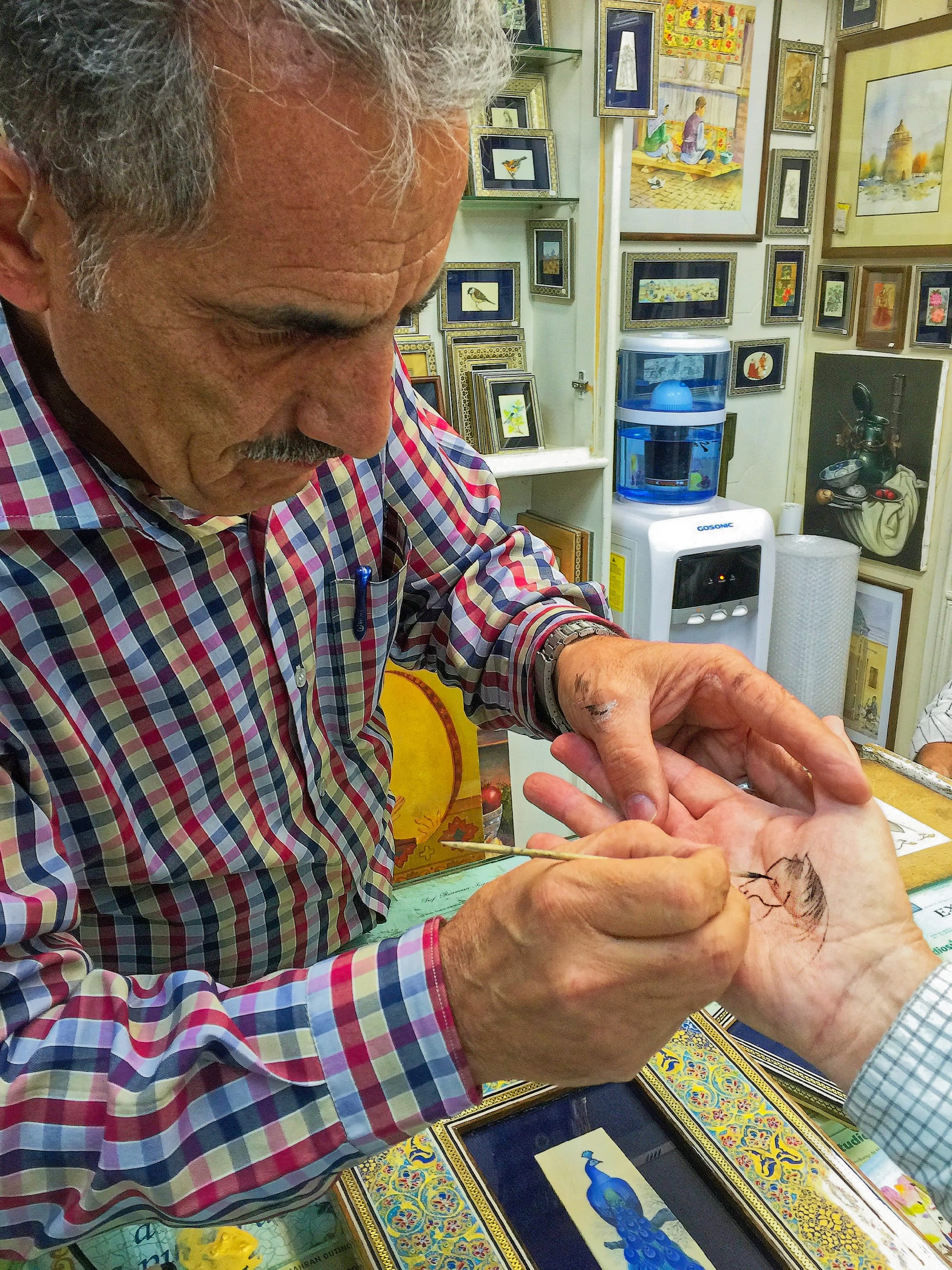
In Isfahan, we visited the workshop of an artist who paints in miniature, learned more about Persian carpets, and hung with locals at (the main) Imam Square, which is a UNESCO World Heritage site that rivals Bejing’s Tiananmen Square in terms of size and the number of monumental historic buildings. The Shah Mosque is a shimmering example of Safavid architecture, the Ali Qapu palace makes visitors dreamy as they imagine life in a spectacular, art-adorned palace, and the Lotfollah mosque, which was built for the ladies of the harem in the l7th century, is an elegant and graceful architectural pearl. After sightseeing came shopping, and there was no better place to browse for art, hand-stamped textiles, jewelry, carpets, and souvenirs of every stripe than the Imperial Bazaar. If your feet got tired, you could relax at a teahouse and maybe try a flavored tobacco in a water pipe.
At a teahouse, I overheard a few European tourists discussing their favorite sites. One waxed eloquent about the Jewelry Museum in Tehran, with its blinding array of functional objects covered in gold and dripping with rubies, emeralds and diamonds, and the Carpet Museum, with its brilliant pictorial carpets that are of such high quality that they can last hundreds of years. Another foreign tourist extolled the Archeology Museum in Tehran, which features the art and artifacts of little-known civilizations like the Sialk (1000 B.C.E) or the 7,000 year old Bakun culture. A third agreed about the Archeology Museum, with its bronze lions, massive reliefs carved in stone, and symbolic elements like the lotus flower (longevity), and the palm tree (sweet life)– all found in the ancient city of Persepolis.
At the mention of Persepolis, my pulse quickened. It was one of the reasons I had come to Iran in the first place. Persepolis, whose site may have been personally selected by Cyrus the Great, was the ceremonial seat of the Achaemenids, one of the world’s greatest and most extensive empires. The city dates from around 500 B.C.E., and lasted until it was burned and sacked by Alexander the Great in 333 B.C.E. According to legend and our guide, Alexander needed 30,000 animals to carry off the gold and jewels from Persepolis. Going to the ancient city and seat of wealth and power was like visiting the remains of former great empires in Rome, Athens, Luxor, or Palenque.
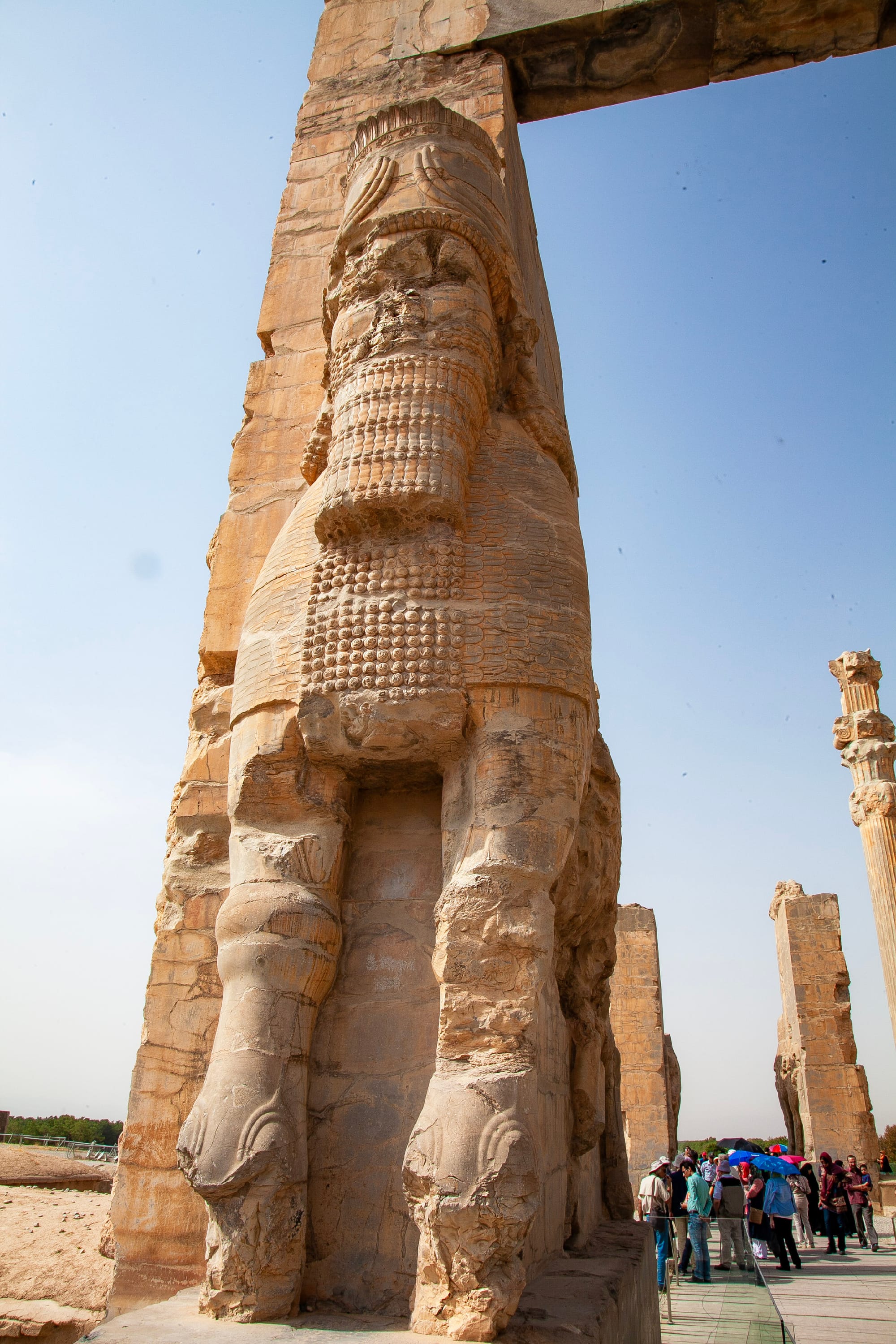
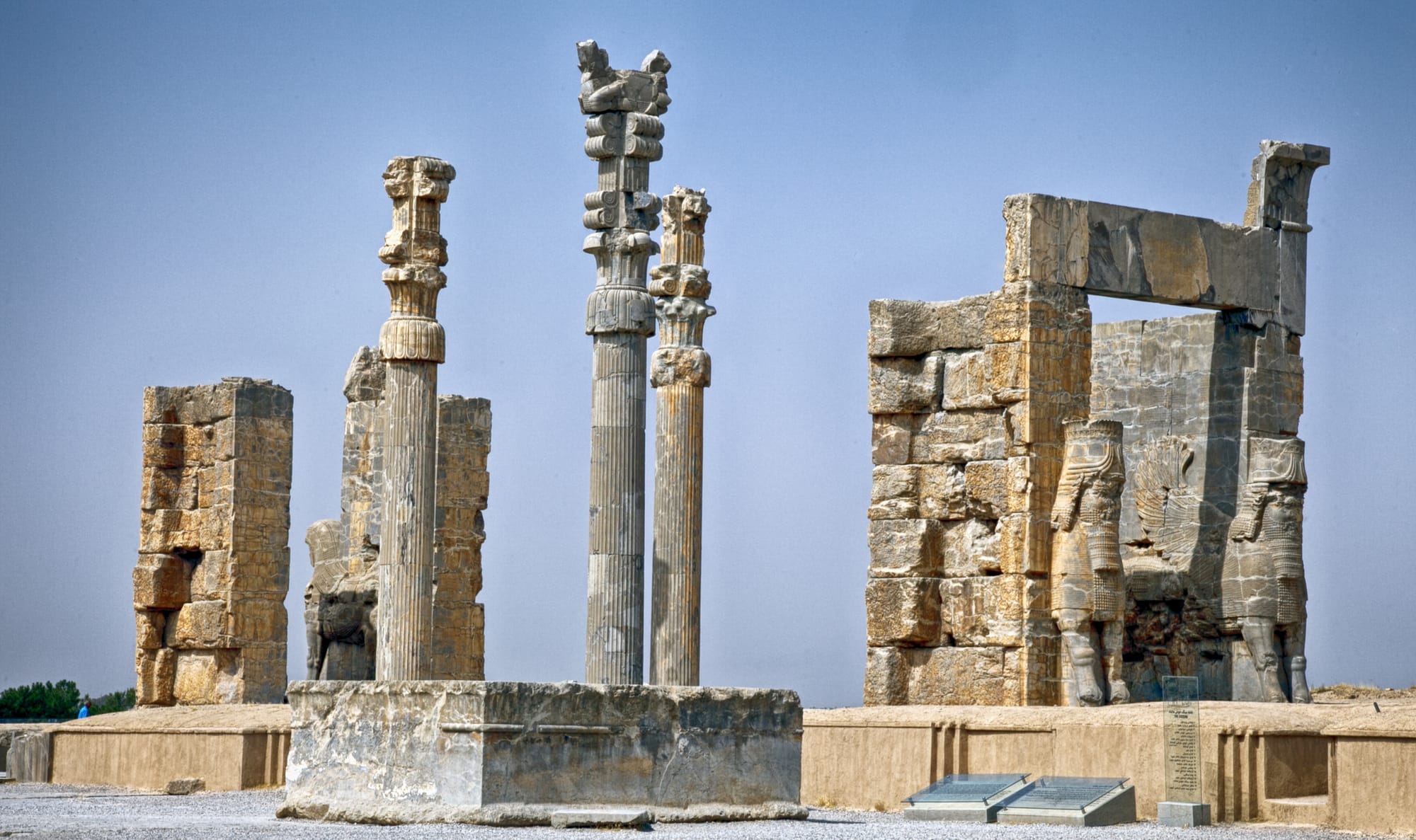
Persepolis, easily reachable from the city of Shiraz, rises from the desert floor, seemingly in the middle of nowhere. We entered through the Gate of All Nations, where partially ruined monumental Lamassus statues stood in proud but broken glory, with the head of oxen and the bearded face of humans—suggesting both power and intelligence.
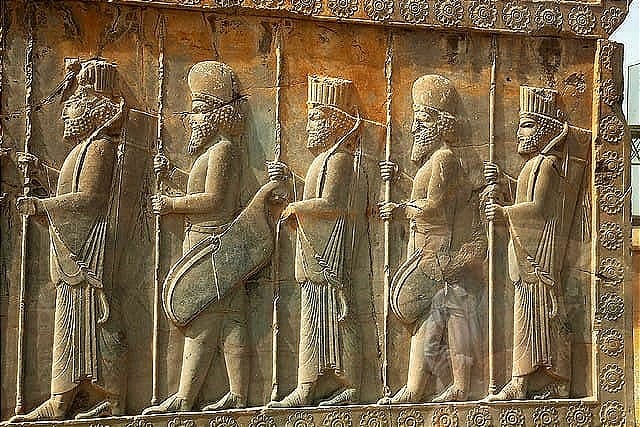
Although a lot of the ancient site was in ruins, many of the fabulous friezes remained; they depict the gifts each nation brought in tribute — lotus flowers for longevity, perfume, gold, silk, giraffes, elephants, and, most prized of all, lions from Africa. The animals were so well depicted that you could still see the wide eyes of a sheep, its nostrils flared, as though it knew it was about to be sacrificed and eaten.
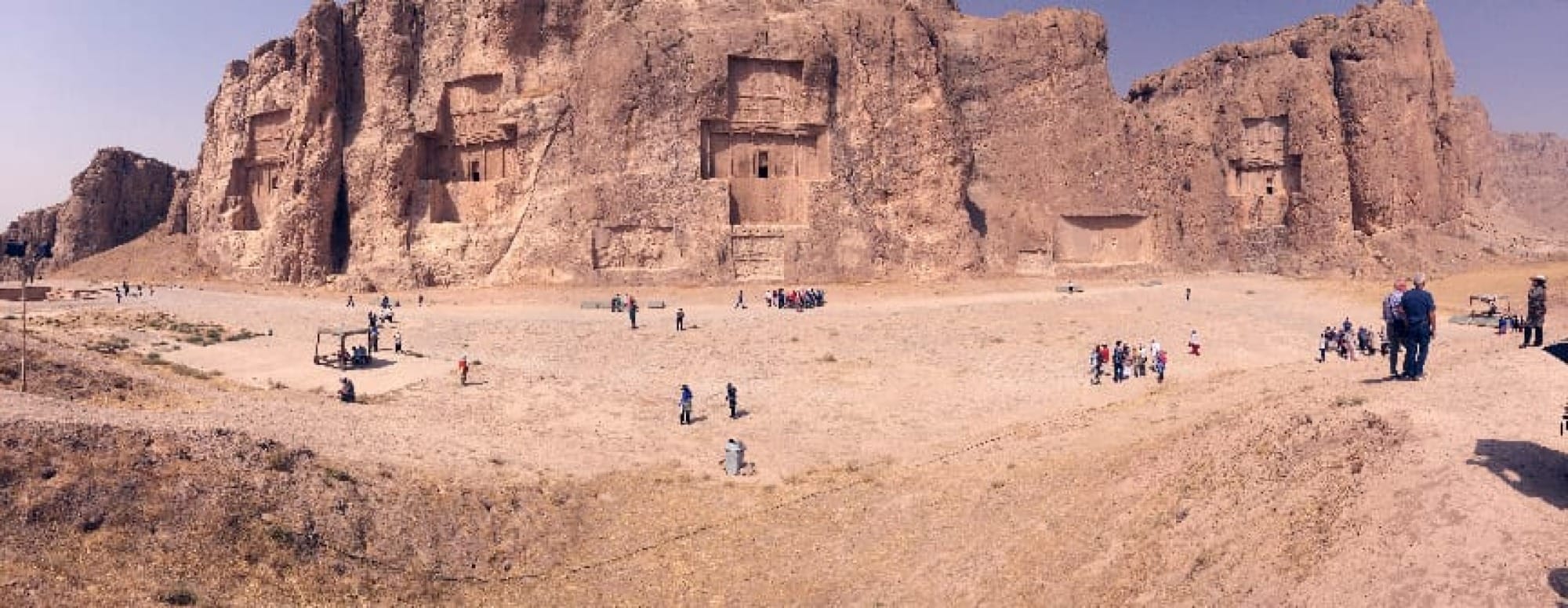
There were the sculpted representations of the 10,000 soldiers who took care of the royal family. When one died, he was replaced, so the number was always 10,000. Because their ranks never dwindled, they were called the Immortal Guards.
As I wandered past statues and friezes, columns and palaces, I reflected on how many empires have arisen, flourished, and vanished. I thought of the countless soldiers who have died and continue to die in wars fought over power and resources, and the suffering of those they left behind.
As though reading my thoughts, a young Persian woman, who spoke English well, came up behind me. “Today’s enemies are tomorrow’s allies and friends,” she said. “We are all just humans, and we welcome you to our country. We must meet each other, and love one another. It is the only way.”
Judith Fein is an award-winning travel journalist, author, speaker, and workshop leader. She has contributed to 130 publications and when asked what her favorite country was, she answers, “The one I just visited.” For a link to her TEDx talk about Deep Travel, her column called Transformative Travel for Psychology Today, four best-selling and unusual travel-related books, go to https://www.GlobalAdventure.us
Paul Ross is an award-winning photojournalist whose articles and photos can be found in many national and international publications. His photos appear in Judith Fein’s books, articles, and TEDx talk. He is also a highly entertaining and original cowboy poet, and has been performing around New Mexico. His website is also https://www.GlobalAdventure.us
Judith Fein is the Senior Travel Writer and and Paul Ross is the Senior Travel Photographer of the New Mexico Jewish Journal.
*Editor’s Note: Jews have lived in Iran (Persia) since ancient times — at least as far back as the Assyrian conquest of the Northern Kingdom of Israel in 722 BCE. At the time of Israel's formation in 1948, there were an estimated 100,000–150,000 Jews in Iran. Unlike in Arab countries, they were not forcibly expelled. By 1979 the population had already dropped to roughly 80,000 through emigration; most of the remainder left in the years following the Islamic Revolution.
For some years Americans — and then, increasingly, Americans with dual Iranian citizenship — have been jailed and used as political capital for prisoner swaps and financial concessions. Iran does not legally recognize dual citizenship, making dual nationals especially vulnerable. Today, a small Jewish community — estimated at around 9,000–10,000 — remains in Iran.
Disclosure: this information was compiled from questions posed to Gemini and Claude AI chatbots, "How long have Jews been in Iran (Persia) and how many are there today?" and sources listed included CBS News, Wikipedia, and the Encyclopedia Brittanica. Estimates of how many Jews were there, as of 2021, varied widely, from 5,000 up to 20,000. – DJS.
For current reporting on the US/Israel war with Iran: More Than 50 Reliable Varied Sources of News, Analysis, and Opinion about Israel and the US, a resource list compiled by the New Mexico Jewish Journal.
Community Supporters of the NM Jewish Journal include:
Jewish Community Foundation of New Mexico
Congregation Albert
Jewish Community Center of Greater Albuquerque
The Institute for Tolerance Studies
Jewish Federation of El Paso and Las Cruces
Temple Beth Shalom
Congregation B'nai Israel
Shabbat with Friends: Recapturing Together the Joy of Shabbat
New Mexico Jewish Historical Society
Where the North Ends, A Novel by Hugo Moreno
Policy Statement Acceptance of advertisements does not constitute an endorsement of the advertisers’ products, services or opinions. Likewise, while an advertiser or community supporter's ad may indicate their support for the publication's mission, that does not constitute their endorsement of the publication's content.
Copyright © 2026-27 New Mexico Jewish Journal LLC. All rights reserved.