

His Card Sat on My Desk: Introducing the Spectrum Series

Editor's Letter by Diane Joy Schmidt
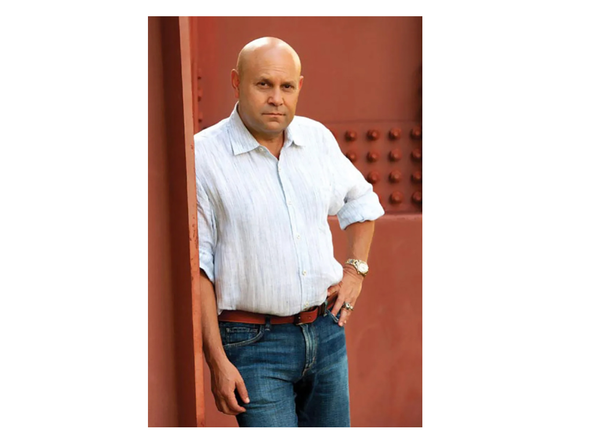
Preparing for presenting the article about Jeffrey Haas that appears in this issue was difficult for me on both a personal and political level. His life had cast a shadow on mine twice before, though we never met until this year. I knew him as one of the lawyers who’d represented the family of Chicago Black Panther Fred Hampton, who was murdered in 1969. Then his name surfaced after I was confronted by a group of pro-Palestinian protestors in 2024 — Haas is the Steering Committee Chair of Santa Feans for Justice in Palestine, according to his biography on the organization's website.
My father, a Ph.D. and M.D., opened a medical practice on Chicago’s West Side in about 1963, before Medicaid came into being in 1965. At that time most of his patients paid him with a few dollars. It was the Sacramento-Madison Medical Center, at 2949 W. Madison Street. When Martin Luther King Jr. was assassinated in 1968, his patients came and had him lie down on the back seat of his car and drove him out of the area, and wrote “Soul Brother” on his front windows, while buildings around his burned. On December 4th, 1969 Fred Hampton was shot, 6 city blocks away from his office. When my father came home that night, I remember him saying his patients were coming into his office crying that day, and that he thought Hampton was an okay guy, he respected what he was doing, with his breakfast program, he was just trying to feed the poor. Looking back now I realize my father walked the talk, he worked every day serving that community for more than two decades until his health gave out.
I returned to Chicago in 1978 after college, where I studied art photography, and began a career as a freelance photojournalist. I hung out with a group of journalists who had been directly and profoundly affected by the assassination of Fred Hampton a decade earlier, who wrote about and followed the case for years, who knew Haas, who had himself been influenced by SDS leader and later founding member of the Weather Underground Bernardine Dohrn (née Ornstein) at the University of Chicago. I didn’t understand any of this at the time.
On December 4th, 1980, 11 years to the day that Hampton was shot, four American churchwomen, there as missionaries, were found in a shallow grave in the countryside in El Salvador. They had been raped and shot in the head.
Ambitious to make my mark, to fight the good fight, influenced by my mother’s admiration for her first cousin, the playwright Jerome Lawrence, whose plays and books I had been brought up on, Inherit the Wind, The Night Thoreau Spent in Jail, and a children's book Oscar the Ostrich, and surrounded by the crowd that had been influenced by the death of Hampton in the '60s, I went to El Salvador in 1981 as a photojournalist with a letter of assignment to do a story on the oligarchy from a German magazine, to save the day, uncover injustice, and end the war.
The morning I left Chicago, I went to meet with Mike Gray, who was back in town from Hollywood staying at a journalist friend’s house. I knew him as the screenwriter of The China Syndrome that had just been released in 1979, and as a documentarian. I didn’t realize until I met Jeffrey Haas 45 years later, that Gray and Howard Alk had produced “The Murder of Fred Hampton” in 1971. Here is what I wrote in 1981 about meeting Gray that morning:
I asked Mike for some sage advice. He told me, “Things are never black and white. Evil doesn’t always wear a handlebar mustache. It’s not always clear who the bad guys are.”
I would spend a month in El Salvador. In the last days before I left, at the suggestion of Maria Julia Hernandez, Director of the Tutela Legal, the archdiocese human rights office founded by Archbishop Oscar Romero, I traveled to the countryside to find out if the justice of the peace who had signed the order to bury the four churchwomen, and who then the next day had them exhumed for the U.S. Ambassador, was still alive. Rural judges, required to sign these orders, literally knew where the bodies were buried, and 20 Salvadoran justices of the peace would be killed between 1980 and 1982.
When I found this judge, he asked for my help. On the way back to the city, a blackened-window Jeep Cherokee with a rifle sticking out the window followed my taxi down the mountain road. I repeated the Shema while crouching down on the back seat. I sought help, unsuccessfully, from other members of the press corps. And then, to write about him was to endanger him. This judge's life would always weigh on me. I learned, then, at the core of my being, that if the world is not free, then neither are we.
I left El Salvador the next day when, fortunately, my one-month visa expired. The plane stopped in Guatemala and took on more passengers. A distinguished older man, who looked like Don Quixote, sat down beside me. I began to tell him, to talk, finally about all that I had witnessed that month. He said, “Tu viniste de la boca del lobo." You came out of the jaws of the wolf.
He was a climatologist. I learned that he had been tortured during Guatemala’s long genocide. He said, “I don’t have a faith; I don’t have faith in words like confidence, but in words like desire and passion.”
It was a view that served him.
Fast forward, 2024. I registered the New Mexico Jewish Journal, LLC on Feb. 4th, 2024 with the State of New Mexico. The next month I was furiously learning what it would take to publish an online journal, and on March 18th, our first issue came out. It was the height of the Israel-Hamas war. A week later, on March 25th, the Israeli Consul of the Southwest came to the Jewish Community Center in Albuquerque to give a talk. I was contacted by the JCC that I should cover the talk. I hadn’t been following the news, that Meow Wolf had canceled Matisyahu’s concert in February, and that the Four Seasons had canceled the consul's scheduled appearance in Santa Fe.
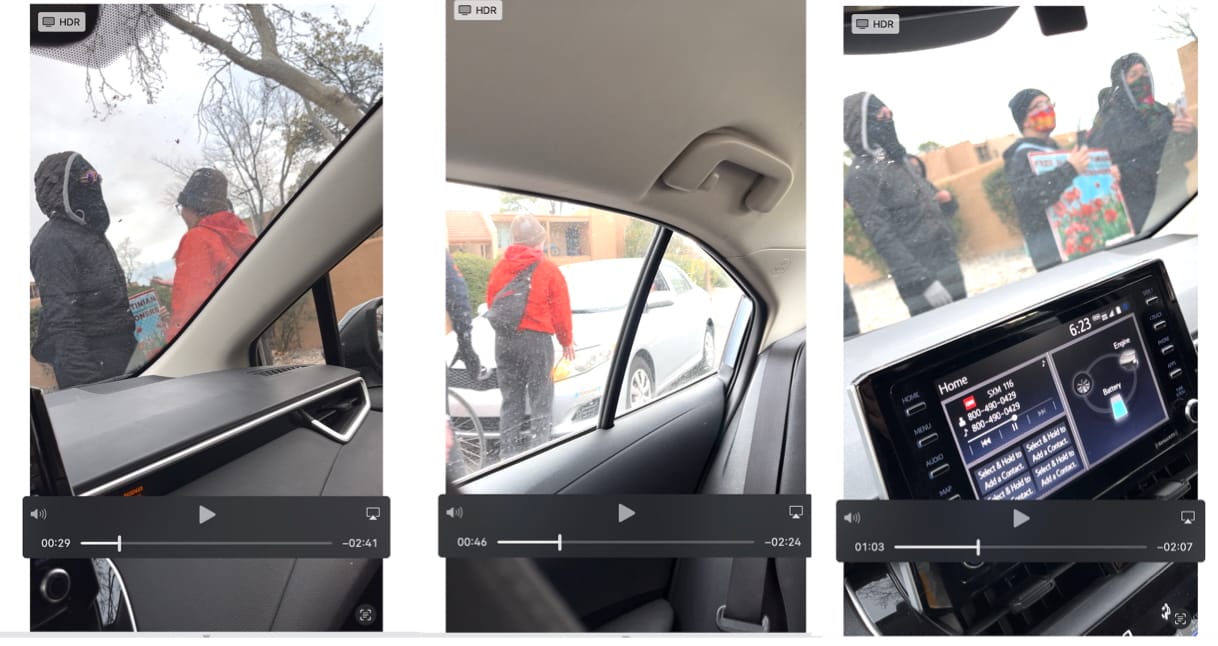
When I arrived at the JCC, the entrance was blocked by some 150 protestors. I drove around to the other entrance, a drive alongside the residential apartments next door, where a group of some fifteen protestors were now walking in a circle blocking that private driveway. I assumed they would let me pass. I spent the next 20 minutes surrounded by shouting, chanting protestors, some holding signs from Samidoun: Palestinian Prisoner Solidarity Network, a pro-Palestinian and anti-Israel advocacy group that six months later would be designated as a terrorist organization. One young man, a Native, stood alongside my door staring fixedly cursing me, and banged on the hood. Others put rocks under my tires, leaned on it, and when I raised my cell phone to record them, pressed their cell phones to my windshield and photographed me. Another small sedan arrived with a woman driving, and a young woman in an orange sweatshirt, grey hat and sling backpack positioned herself in front of it. She periodically went to consult with a fully masked man. When the sedan started to inch forward, she quickly returned to it, and then someone called out, “Let her go forward, let her go forward, let her hit the rocks,” which I heard later recorded on my cell phone. At that point I called 911 and the operator, after repeatedly insisting that police were in the area, hung up on me. Eventually two officers walked over and the protestors quietly dispersed. I felt like I was in a pogrom in Czarist Russia. (see photos below).
Only afterward did I learn about the posters on Instagram that had been circulating in the days before the consul's visit, calling for all to come to the JCC to protest. Their logos included Jewish Voice for Peace Albuquerque, Santa Feans for Justice in Palestine, and others. The Instagram posts had spread, been picked up by other groups further out. I recognized Haas' name when I saw it on the Santa Feans for Justice page. (see posters)
Later, in Source NM's May 31, 2024 coverage, I recognized in their photos and video the same young woman — grey hat, orange sweatshirt, sling backpack — who had jumped in front of a Chevy Silverado truck at the front entrance earlier. The article reported that APD had a riot squad on standby that night but chose not to deploy it, according to an APD spokesperson. Source NM's coverage focused on the incident at the front entrance and quoted Haas extensively.
Seeing Haas' name had sent me looking further. I found the Lannan Foundation of Santa Fe's 990 tax documents online from the years 2021 thru 2023. In 2023 they gave $500,000 to Jewish Voices (sic) for Peace Berkeley. Contributions had also gone from Lannan to another foundation, Tides, with the purpose of the grant designated for the Adalah Justice Project — $40,000 in 2021, $70,000 in 2022 and then $50,000 in 2023. According to his biography on the SFJP website, Haas serves on the Adalah Justice Project's Advisory Board. As posted on Adalah's website, "We support the cultural boycott of Israeli apartheid by launching strategic campaigns to compel artists to express solidarity with Palestine and not play in apartheid Israel." In 2024, the Lannan Foundation returned to its arts funding priorities. (see 990)
I couldn’t put all the pieces of the story together - the trauma I had spent so many years recovering from had resurged, making it doubly difficult to write about, along with the faint vibration of a spider's web whose shape I hadn't yet been willing to see.
For the next two years, Haas’ presence in Santa Fe would hang like a bogeyman around me, someone I feared and yet felt compelled to talk with. At the Jewish Community Day at the Roundhouse in February, 2026 I photographed him outside with his group of Wednesday protestors, and introduced myself as a friend of the journalists he knew from back in the day in Chicago. In fact the first news photographer I had met in 1979 in Chicago has the most photos in the book Haas published in 2009, The Assassination of Fred Hampton. And it turns out Haas’ birthday is the day before my mother’s. Are these meaningful connections, a karass, or just a granfalloon?
Kurt Vonnegut introduced a generation of college readers to these words in Cat’s Cradle in 1963. On the opening page he invents a religion called Bokononism, and a term, karass: “We Bokononists believe that humanity is organized into teams, teams that do God’s Will without ever discovering what they are doing. Such a team is called a karass …”
Later, he introduces "granfalloon" when a fellow Hoosier - someone from Indiana - buttonholes him on an airplane: “Hazel’s obsession with Hoosiers around the world was a textbook example of a false karass, of a seeming team that was meaningless in terms of the ways God gets things done, a textbook example of what Bokonon calls a granfalloon.”
Vonnegut said Bokononism was based on harmless lies – that it served people. He had survived the fire bombing of Dresden in 1945 as an American POW in an underground meat locker — labeled Slaughterhouse Five.
His books pose the question of whether life is meaningful or meaningless.
Vonnegut lived within the paradox of that question, a Talmudic response. The Guatemalan climatologist, who had lost his faith, felt it didn't matter. But I seek an answer. I find meaning through the patterns, through seeing the connections; looking back at the master weaver, Spiderwoman, having seen, after fifty years, what the web can do.
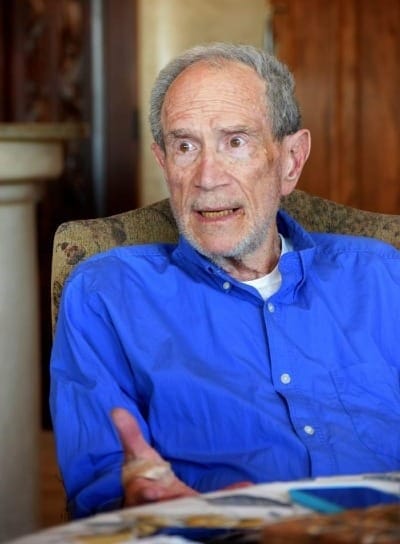
After the Roundhouse I had told Haas I would be in touch. His card sat on my desk. Finally I realized I couldn’t do the interview. I was too conflicted, hadn’t sorted any of this out yet. So I asked Ellen Marks to do it instead. We went to his nice house in Santa Fe. I would take the photos.
I disagree with what Haas advocates now – but I needed to understand where he comes from, and how it is that we ended up pursuing justice differently. And it's a divide many of us struggle to bridge with a younger generation. That’s why I feel we need to publish Jeffrey Haas: Civil Rights Lawyer, Anti-Zionist.
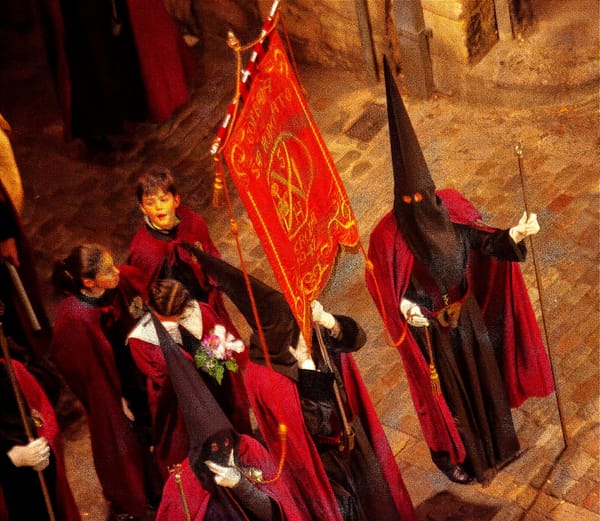
I thought a lot about how to frame the story. If I were going to publish his profile, I decided it would have to be part of a continuing series introducing influential Jewish voices across the spectrum of ideas in Jewish life in New Mexico.
The Santa Fe Chabad rabbi, known for distributing dollar bills as blessings, had been leading events at the Roundhouse that day. Perhaps that worked its way into the dream I then had:
I was attending a Navajo ceremony. A tall Navajo medicine woman, who had short blond hair, did a healing ceremony. Afterwards children came up and pressed dollar bills into my hand.
In the morning I told my husband, Navajo educator and linguist Frank Morgan, former Director of the Diné Educational Philosophy program at Diné College, about the dream and the children with the dollar bills. He said, “Sometimes that happens after a ceremony, people will come up to the patient and give them things of value, it encourages the healing process.”
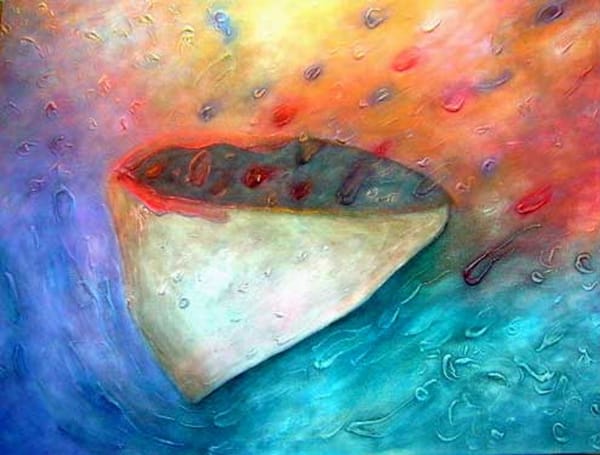
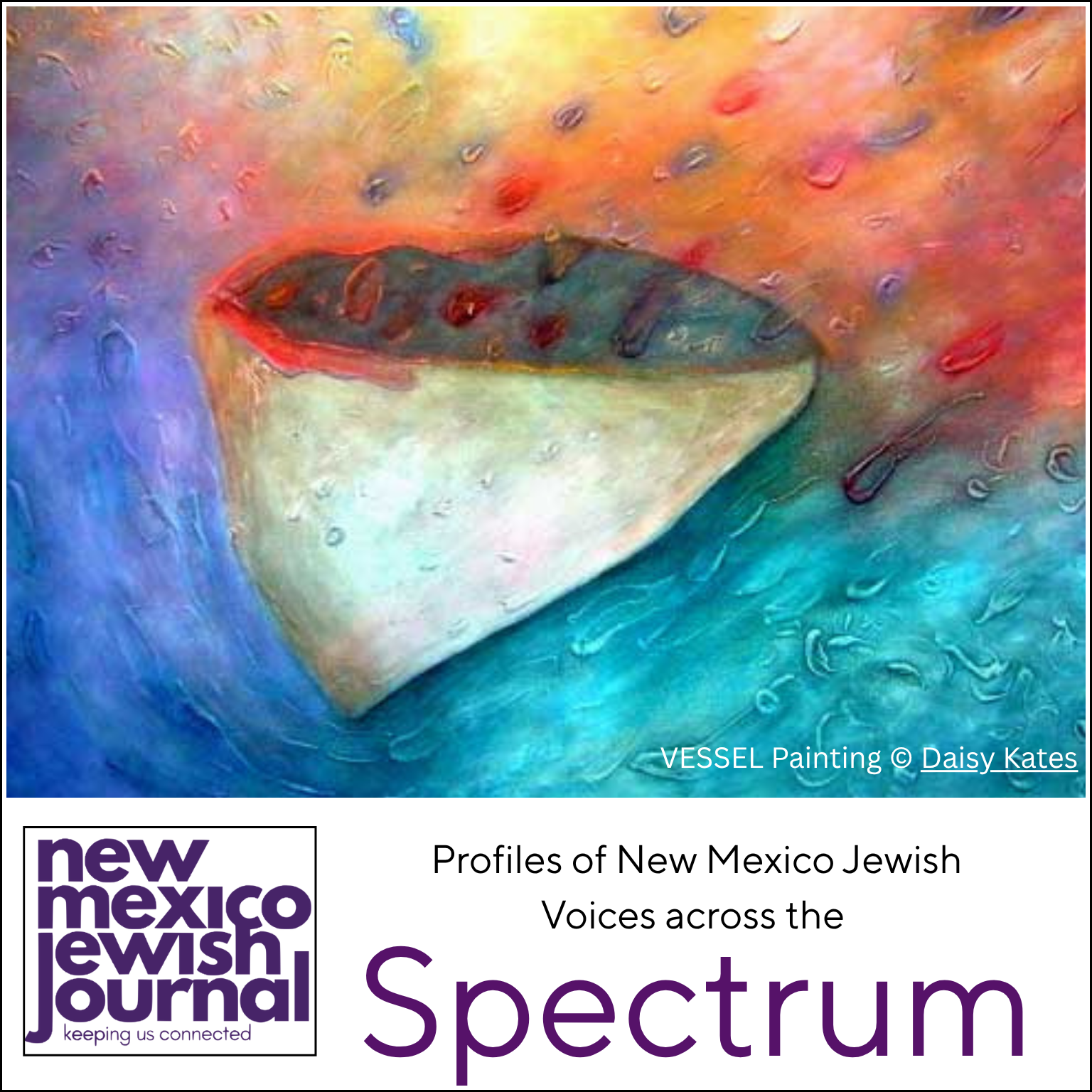
In the dream the medicine woman was called Daisy Kates — the name kept repeating. Later in the day I recalled that Daisy Kates is an artist in Placitas and found this painting on her website, "Vessel," that includes all the colors of the spectrum. She says that she painted it when a friend’s husband passed away, and graciously gave us permission to use it. To me, the image could also represent our Jewish community, a vessel with what looks like the sparks of eternal life, the yods, moving around it.
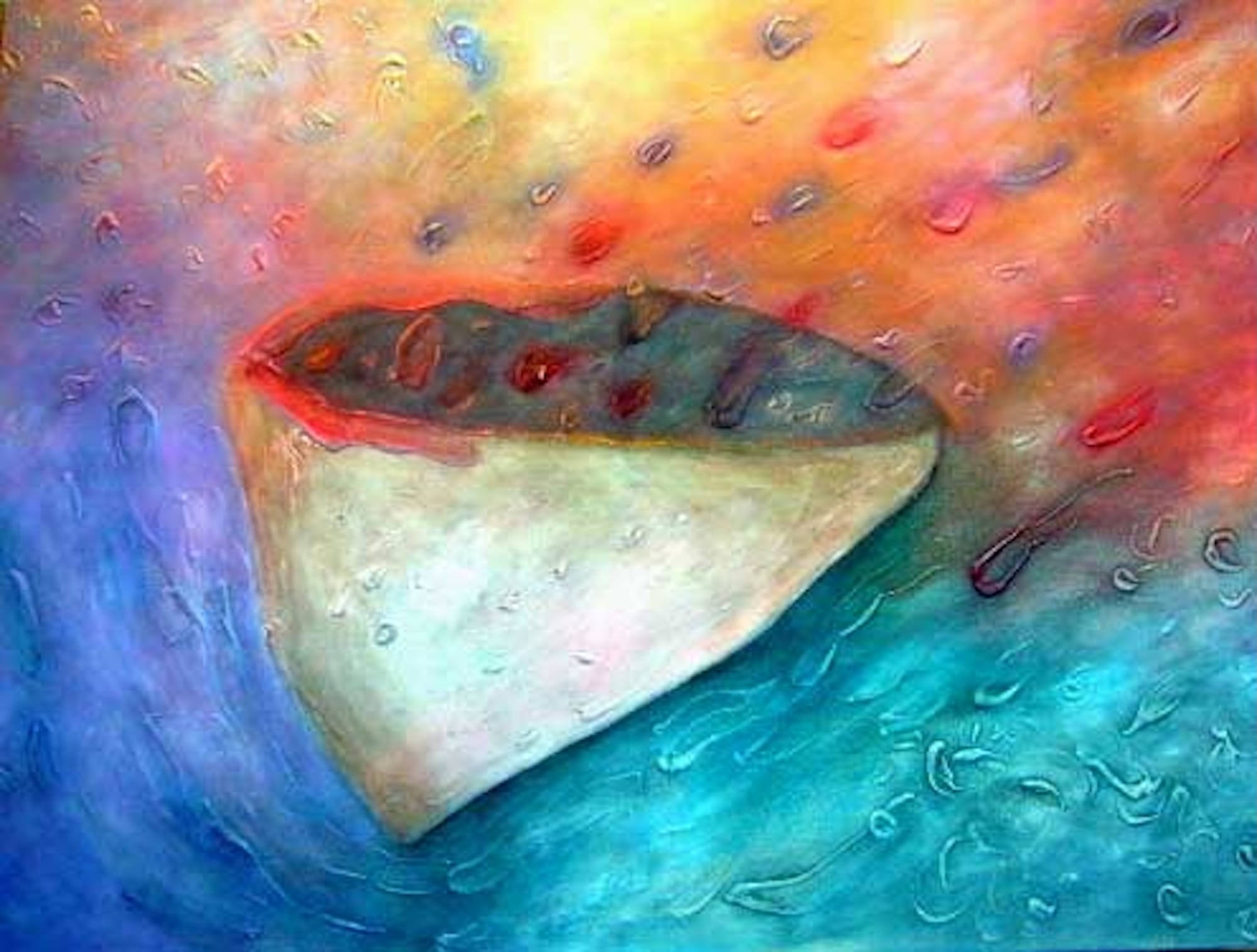
Vessel Painting © by Daisy Kates
Daisy is turning 80 this year. She lives in her small house and studio high in the foothills of the Sandia Mountains. She spent her long career teaching pottery and ceramic art in social service settings as well as traveling to many far off places.
After 50 years of working in clay and also painting, she now builds mixed-media sculptures primarily in steel. https://nmpotters.org/daisy-kates/133921370
Lannan Foundation 2023 990 Tax Form showing contributions made
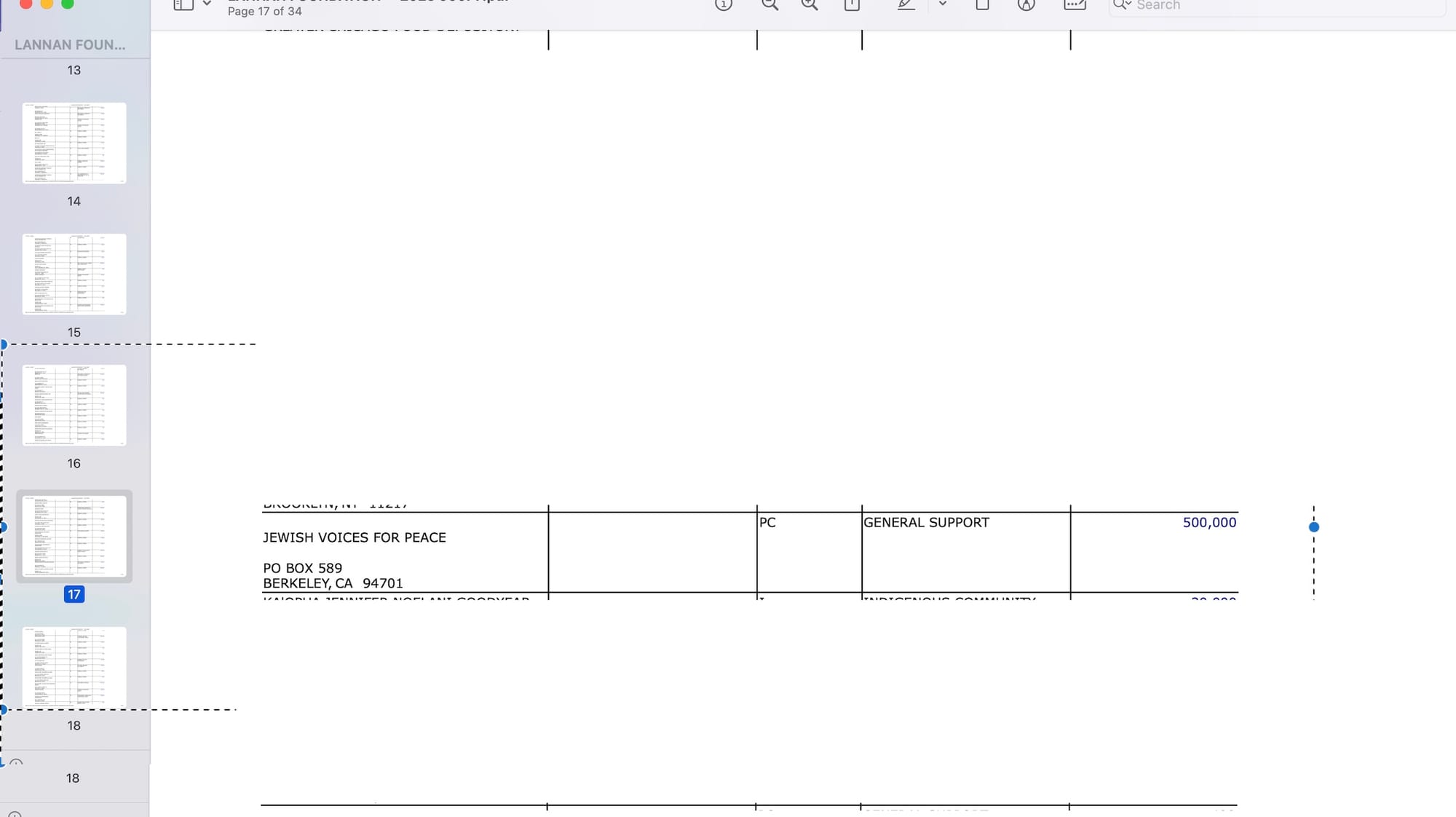
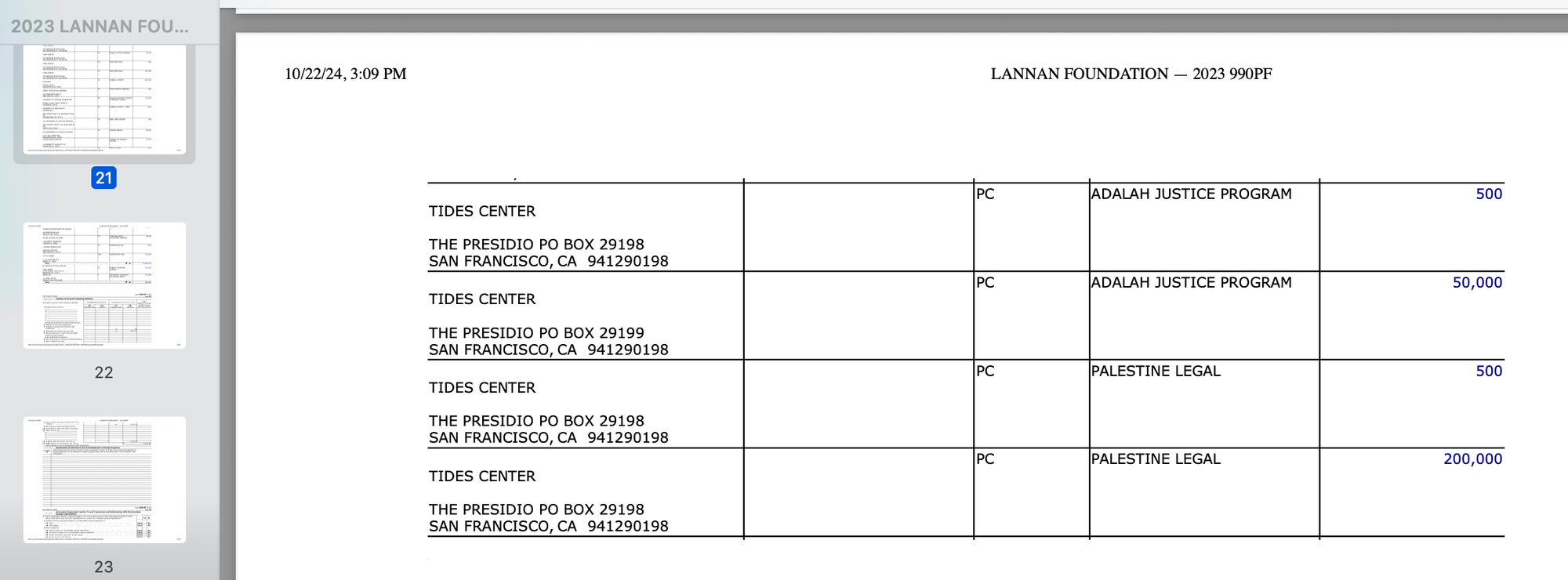
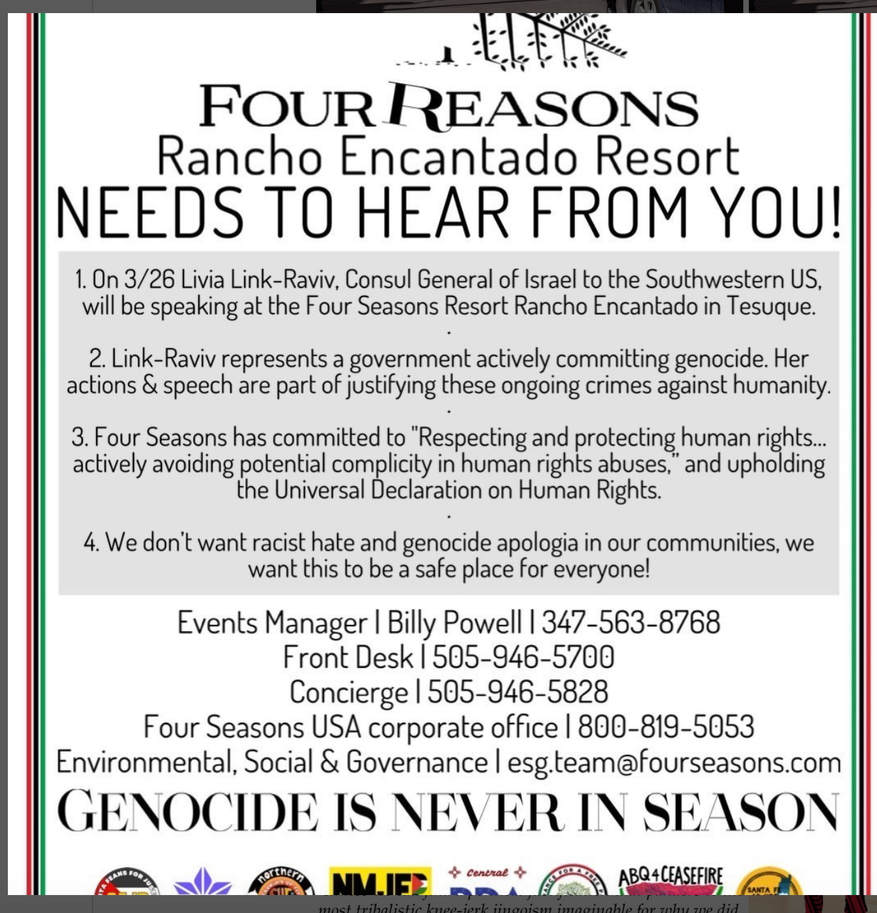
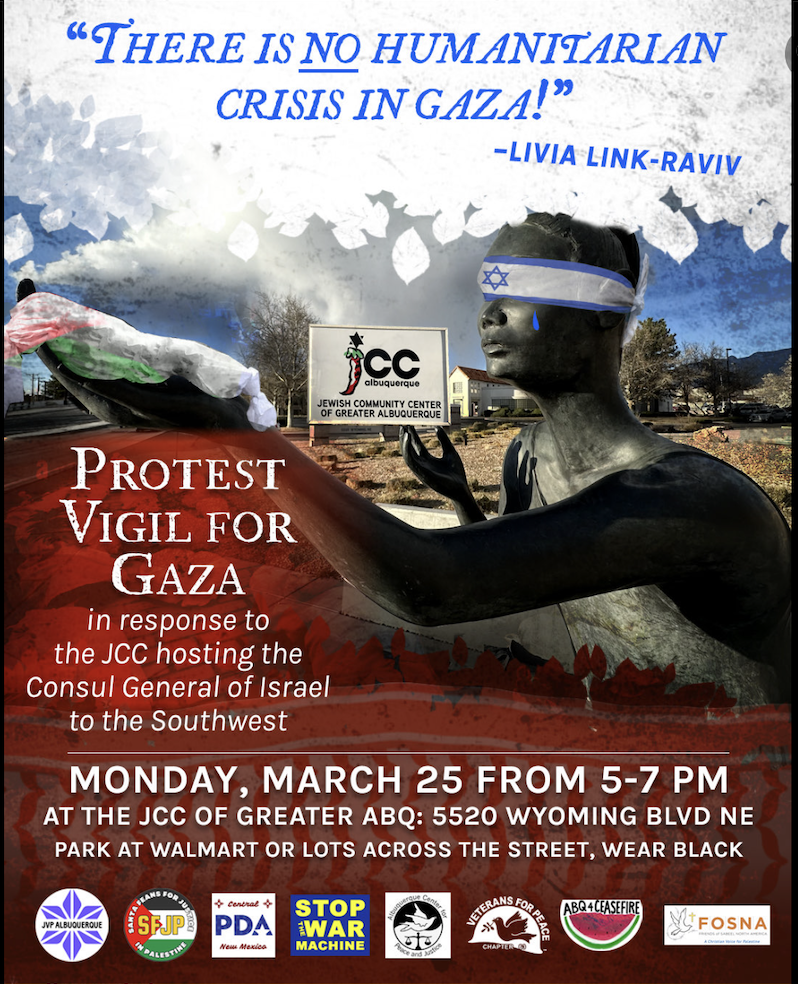
2024 POSTERS Calling to shut down visit of the Consul General of Israel to the Southwest at Four Seasons Rancho Encantado Resort in Santa Fe, and at the JCC in Albuquerque, New Mexico. 2024 Social media screenshots.
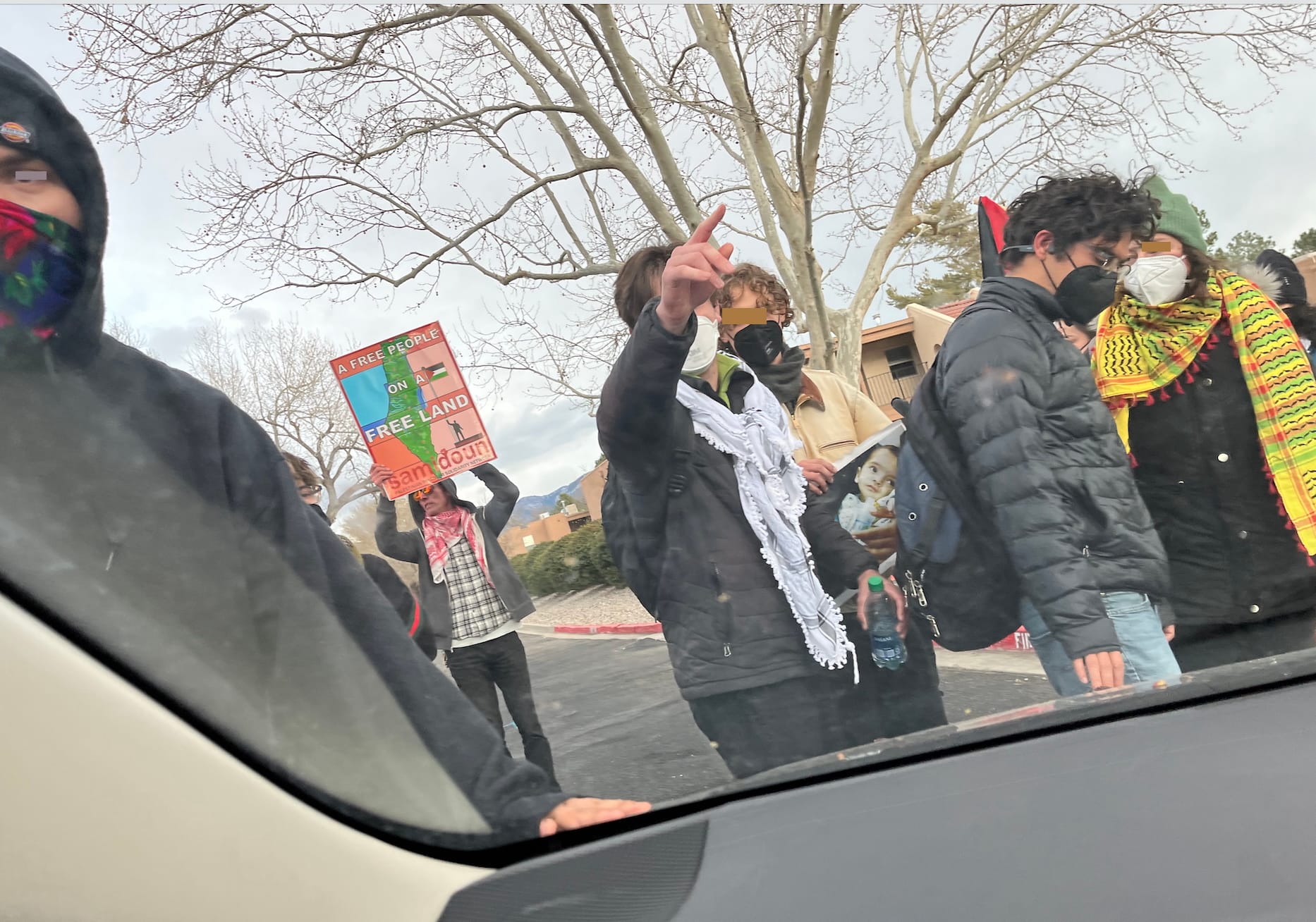
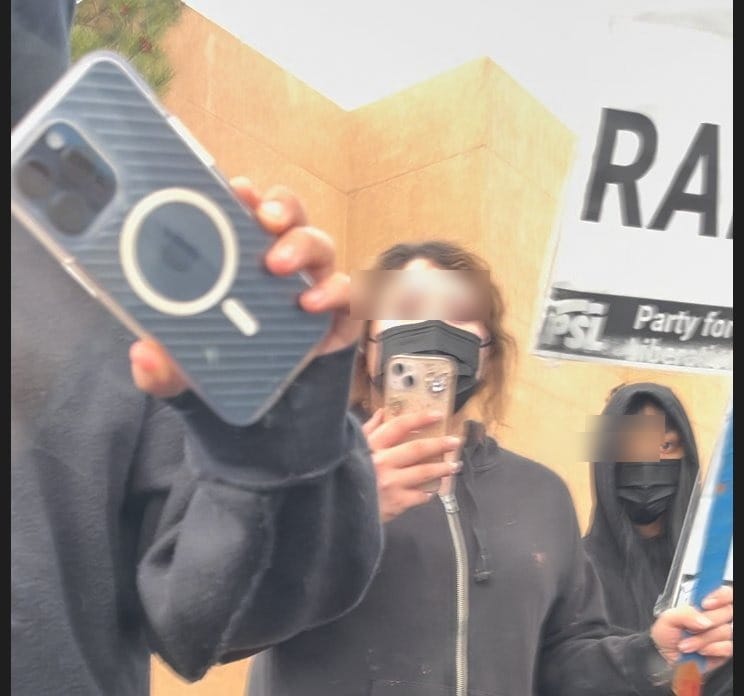
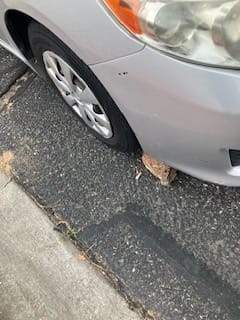
Diane Joy Schmidt is the publisher and editor of the New Mexico Jewish Journal.
Community Supporters of the NM Jewish Journal include:
Jewish Community Foundation of New Mexico
Congregation Albert
Jewish Community Center of Greater Albuquerque
The Institute for Tolerance Studies
Jewish Federation of El Paso and Las Cruces
Temple Beth Shalom
Congregation B'nai Israel
Shabbat with Friends: Recapturing Together the Joy of Shabbat
New Mexico Jewish Historical Society
Policy Statement Acceptance of advertisements does not constitute an endorsement of the advertisers’ products, services or opinions. Likewise, while an advertiser or community supporter's ad may indicate their support for the publication's mission, that does not constitute their endorsement of the publication's content.
Copyright © 2026-27 New Mexico Jewish Journal LLC. All rights reserved.