

New Mexican by Proxy or How My Soul Came to Belong to New Mexico
by Corinne Joy Brown
Citizens of New Mexico fascinate me. Native Americans, settlers, adventurers, retirees, and transplants. People who arrived by accident and others who came for a reason. Some who thought they were merely passing through, then realized, decades later, they never left. Let’s not leave out the groupies; people like me who love the atmosphere and culture, but live elsewhere. They dip in and out whenever they need a New Mexico fix.
So, no, I’m surely not from New Mexico, but I have felt this deep kinship to the land and people as if a part of me does live there in some unexplainable way.
***
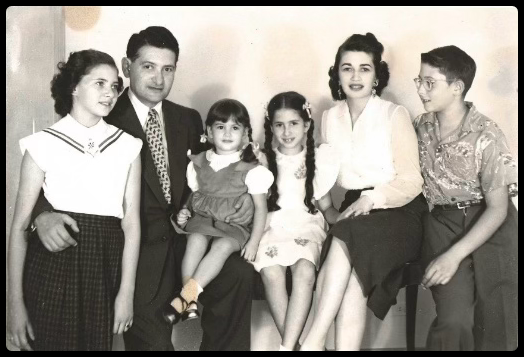
I’m not sure when all this happened. It may have started in my childhood when my parents, recently arrived from Europe, escaping Nazi occupied France, arrived in America in 1942 and settled in Denver, Colorado. I was the second child born in this new country, coming into the world in 1948. At the same time, my “adopted “sister Viesha (Vivian) arrived. She was actually my father’s niece and was discovered after the war in a Polish orphanage outside of Warsaw. She was the only surviving child of my father’s own sister who perished in the Warsaw Ghetto, but not before finding safe-keeping for her five-year-old daughter. By the time Vivian was discovered and flown to Denver on a Red Cross plane to her new family, she was a very confused young girl of 11 years of age, still wearing a cross around her neck, a talisman that had served as armor and protection.
What, (I’m sure you are asking), does any of this have to do with New Mexico?
I’ll tell you.
My mother, raising three children (me, my sister, and our older brother), plus an adopted daughter, with yet one more on the way, needed help. A young bride from the Jicarilla Indian reservation in Dulce, New Mexico, was living in Denver at the time and needed a place to stay. Her husband was stationed at Denver’s Lowery Airforce Base and wives were not allowed. Our father picked her up.
Perhaps it was fate that brought Orpha Mae Quintana into our home. Helpful and kind, more importantly, she was my very own Indian princess, a full-blood Apache woman with jet black hair and brown eyes tempered by wisdom and warmth. At that time, I was around five years old and thought a miracle had occurred. I no longer had to fight for attention from my sisters, or attempt to braid my own hair, or find someone to read me a story. Her cozy room in the basement of our house filled with antique furniture and Indian blankets became my favorite hideaway. We bonded. I loved horses and she did too, willingly taking me to Denver’s National Western Stock Show every year by city bus. (Two transfers.)
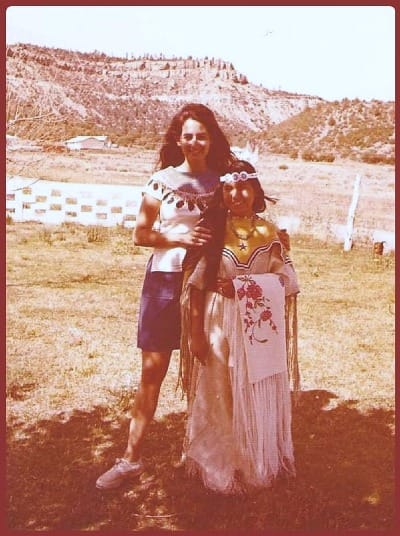
Our connection was so deep that Orpha Mae never forgot me, nor I her. Even after she left, (the year I turned nine years old), postcards and Christmas cards came regularly. None of us in my family should have been surprised when she returned a decade later, by then a divorcee, headed to Denver to get a business education, courtesy of the Bureau of Indian Affairs. Along with her came three children: a toddler with infant alcohol syndrome, a tall, 16-year-old boy, and a seven-year-old little girl with long braids– all adopted. The little girl was named Corinne.
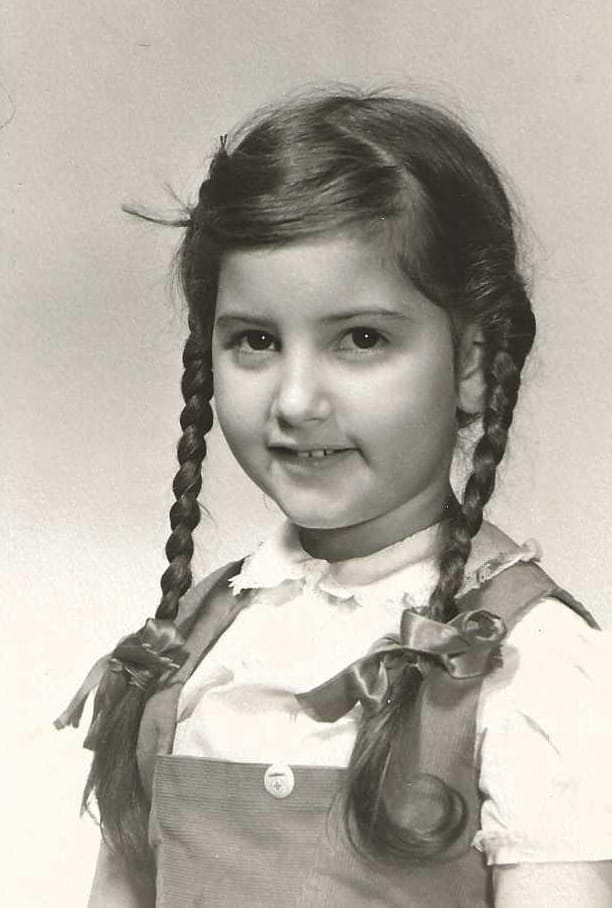
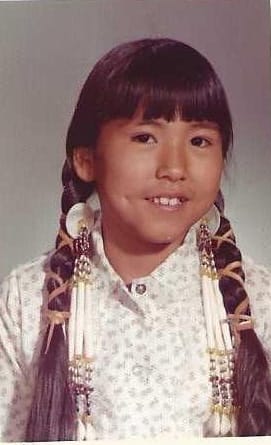
Corinne Joy Mosko and Corinne Quintana
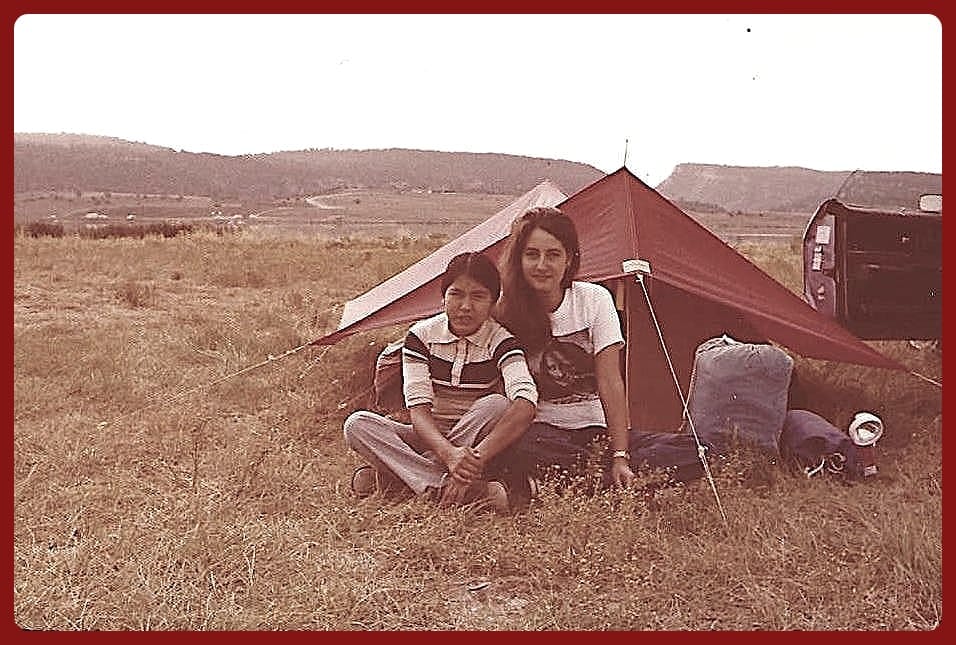
Many years later, in 1974, I drove with my fiancé (husband Avi Brown) down to New Mexico where Orpha Mae had resettled because I wanted him to meet this amazing woman – my “Indian mother.” That’s how I felt about her, nothing less.
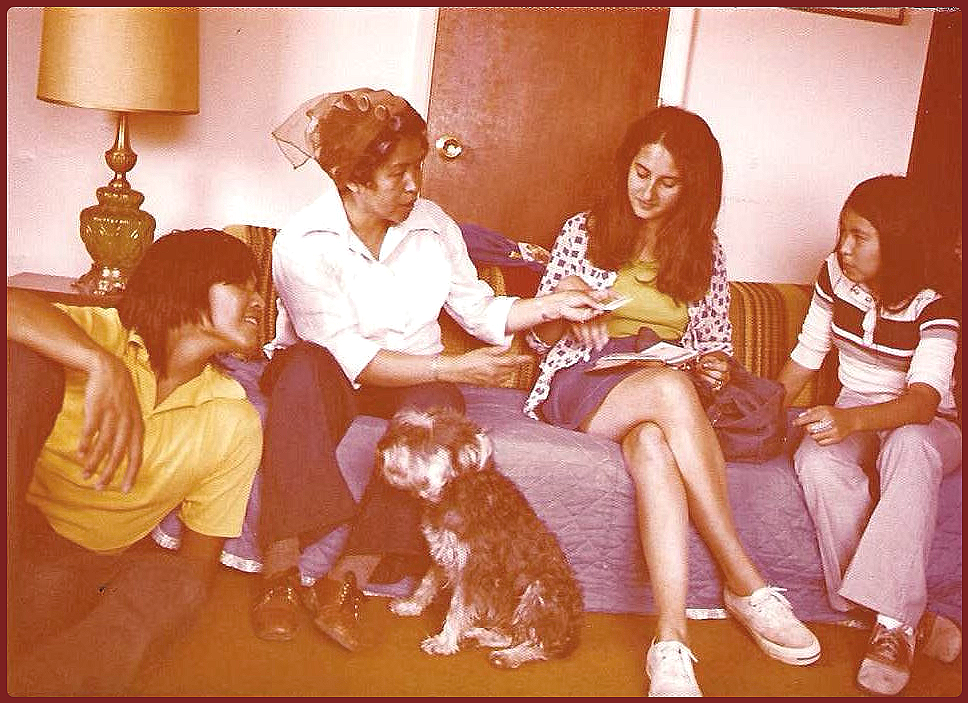
We camped on reservation property near Dulce in the northern part of the state and with her, explored the sacred lands that belonged to her tribe. It was here I saw my first herd of wild horses, beautiful creatures that appeared and disappeared among the hills, and was thrilled by their beauty. Orpha Mae showed us ancestral burial grounds where the earth was laced with potshards of ancient vessels that had survived centuries of sun, rain, and winter snow. I didn’t know then that it was forbidden to pick these relics up. But these humble broken pieces of clay spoke to me, survivors of the past. I gently lifted a few that were visibly jutting out from the soil, nestled them the in my jacket pocket, and later, once home, assembled them on a piece of buckskin. One day I will gift them to a museum which is where they belong, and hope that all will be forgiven.
From that point on, New Mexico became a part of me. I always felt as if I was destined to return and, eventually, I did. Many times, for different reasons. But what happened next is what really cemented my connection; a circumstance unexpected and unexplainable.
***
In 2010, I decided to write a novel about New Mexico’s crypto-Jews. Their existence fascinated me and revived my adopted sister Vivian’s story which had stayed deep within me, seeking to be better understood. The whole idea of having to hide because of who you are demanded examination. My sister was hidden because of her Jewish identity, and survived, challenged with making a new life for herself once rescued, redefining who she was.
Now, as an adult, all of these ideas swirled in my head, surfacing in a story that took five years to write and many trips in to and around New Mexico. Little did I know that by writing this novel about someone I didn’t know, but created, I’d be rewriting a part of my own story as well.
That said, I should not have been surprised when, out of the blue, sometime in 2014, I got an email from a Jewish genealogist in New Jersey named Miriam Weiss. She’d received my name from a relative, (a third or fourth cousin I’d never met) who lived in NYC; a hedge fund manager whose grandmother had been one of the original “Mosko tribe” members in Denver (a Jewish family of ten brothers and sisters) that helped bring my parents to America. He hired this woman to trace our families’ stories (his kin went to California) and create a booklet that would help connect all of us to each other, to be celebrated by a large gathering in Los Angeles when it was done.
I was amazed. It was an exciting moment, but I had to ask: why me?
It turns out someone told him I was the family archivist, a role only partly true. Following my parent’s passing, I safeguarded their documents, papers and photos, never sure what to do with any of them. Further, I didn’t know what I could contribute to the family history. Details were known by so many others, mostly older, who were thankfully still alive. I got on the phone and started to dig. But I was the touch-point –the glue who would investigate and help hold it all together.
For the genealogist, part of the problem was the lack of first-hand information. Neither my father or mother ever spoke much about their past, growing up in Poland, each leaving to escape antisemitism, and then, at different times, moving to France. For we siblings, there was the home with three languages, spoken alternately at different times, and the very French cuisine, and the occasional visits to Paris where our mother’s surviving brother lived, a distinguished member of the French publishing world.
We all knew there was a life before America, but not in any real detail.
In addition, my parents dedicated themselves to assimilating. Our family was not observant of Jewish traditions except major holidays, and being American meant a great deal to them—absorbing new holidays and new ways of eating, cooking, entertaining and fitting in. I never grew up with a clear understanding of what their lives were like in Poland or France, or what it felt like to be Jewish myself. The profound losses my parents endured on both sides were never discussed until years later when my mother erected a memorial in a local Jewish cemetery to honor her father and younger brother who both died in concentration camps. She’d carried the guilt of her escape long enough.
That said, it seems more than strangely coincidental that while I was traveling all over New Mexico to create the novel Hidden Star, constructing a hidden past and a Jewish identity for a fictional character named Rachel, I was simultaneously reconstructing my family’s history via the phone and the internet. The past and my connection to it became remarkably clearer. With each passing week, new details emerged for the benefit of both.
Over months of communication with Miriam and her “Routes to Roots” company, I discovered records such as the ship passenger manifest of the very ship my parents arrived on to the port of New York, the marriage and death records of my father’s great uncle who came to Denver in the late 1800s, the headstones of these ancestors graves in a local cemetery, my father’s military rank and assignment from the United States Army to which he had enlisted to go back and help save France, and so much more. I began to sense my past and my Jewishness in a whole new way, as well as confirm a better sense of what I had inherited.
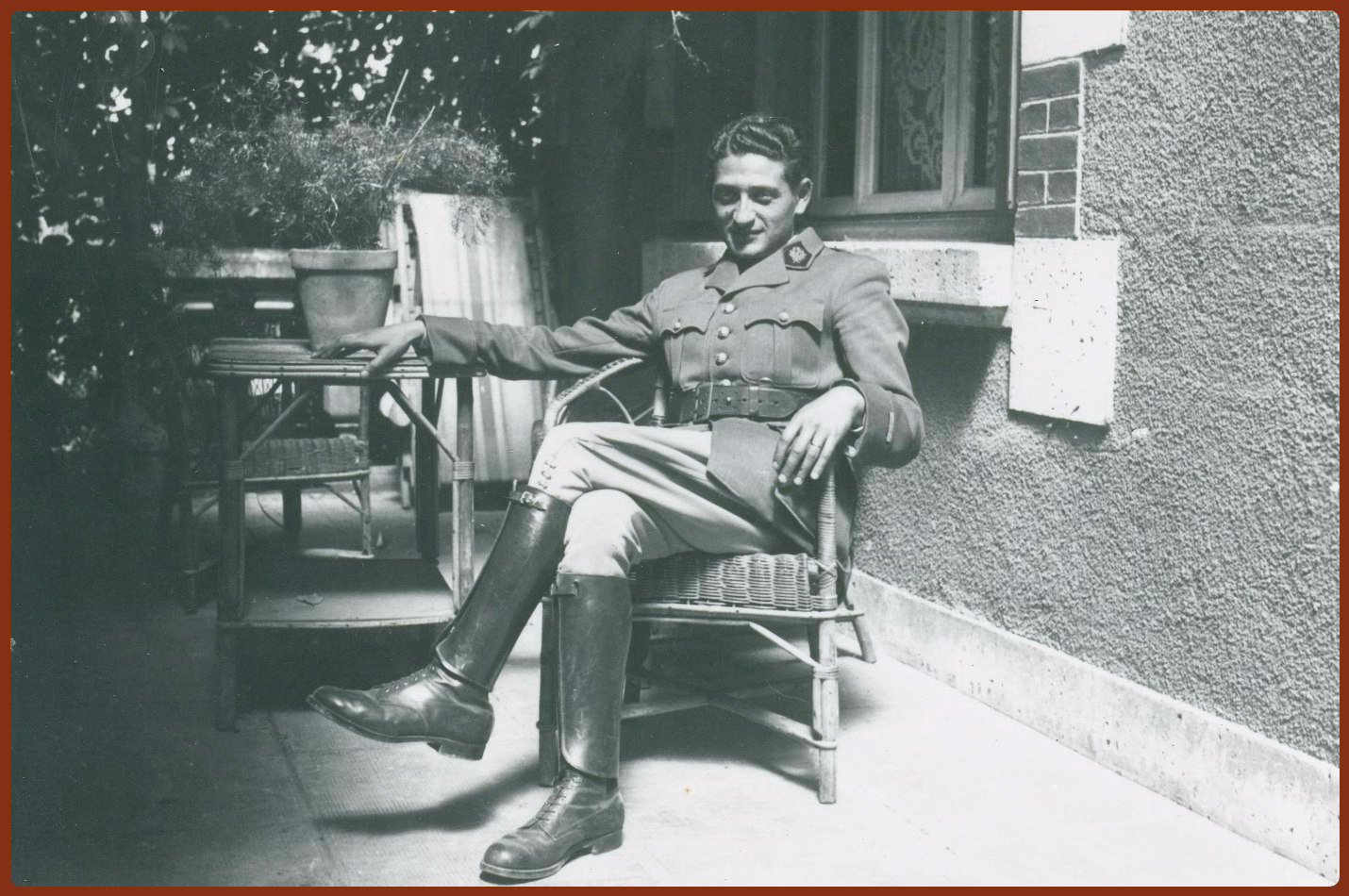
The synchronicity of this experience; the simultaneous biographical construct of the history of two different people, each searching for their past, seemed unfathomable at the time. Now, I simply credit it to the magic of New Mexico, where time often seems suspended, with yesterday, today and tomorrow often intertwined.
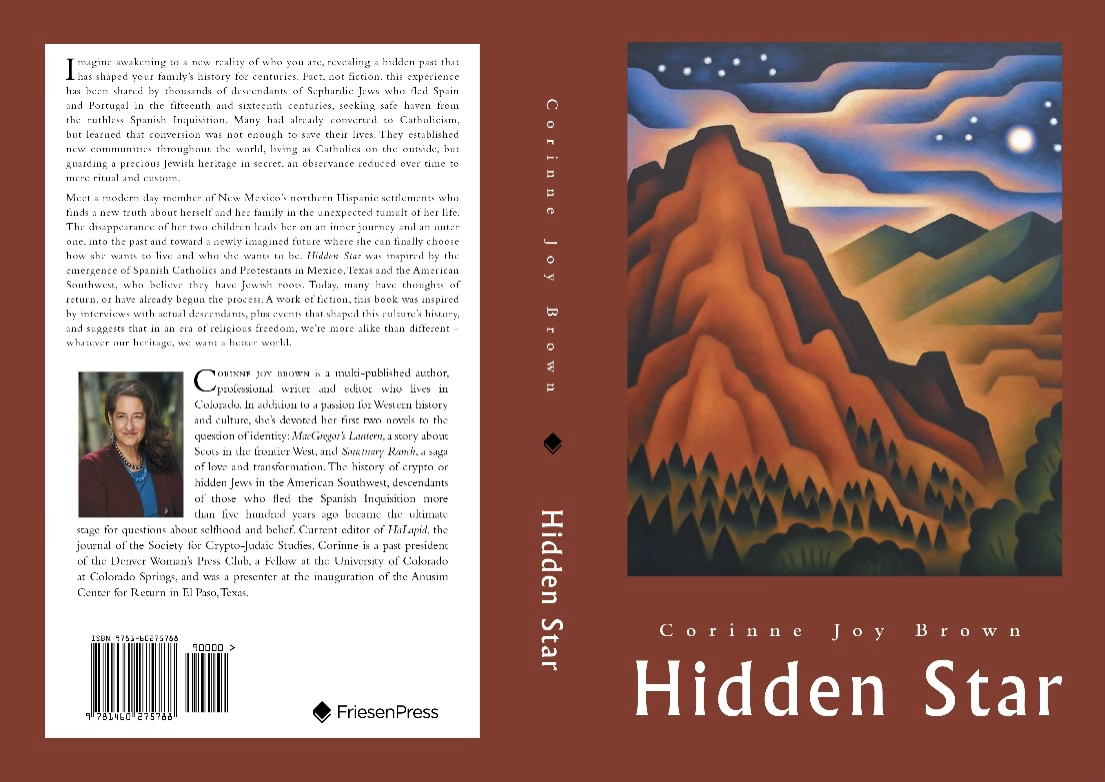
The novel, published in 2016, went on to win the New Mexico/Arizona book award for historical fiction in 2017, and the Latino Literary Award for Inspirational Fiction as well, among other distinctions. It continues to circulate after ten long years. The extended Mosko family did meet in LA as promised in late 2016 for an unforgettable gathering of over 75 people who were thrilled to find out we were all cousins, one way or another.
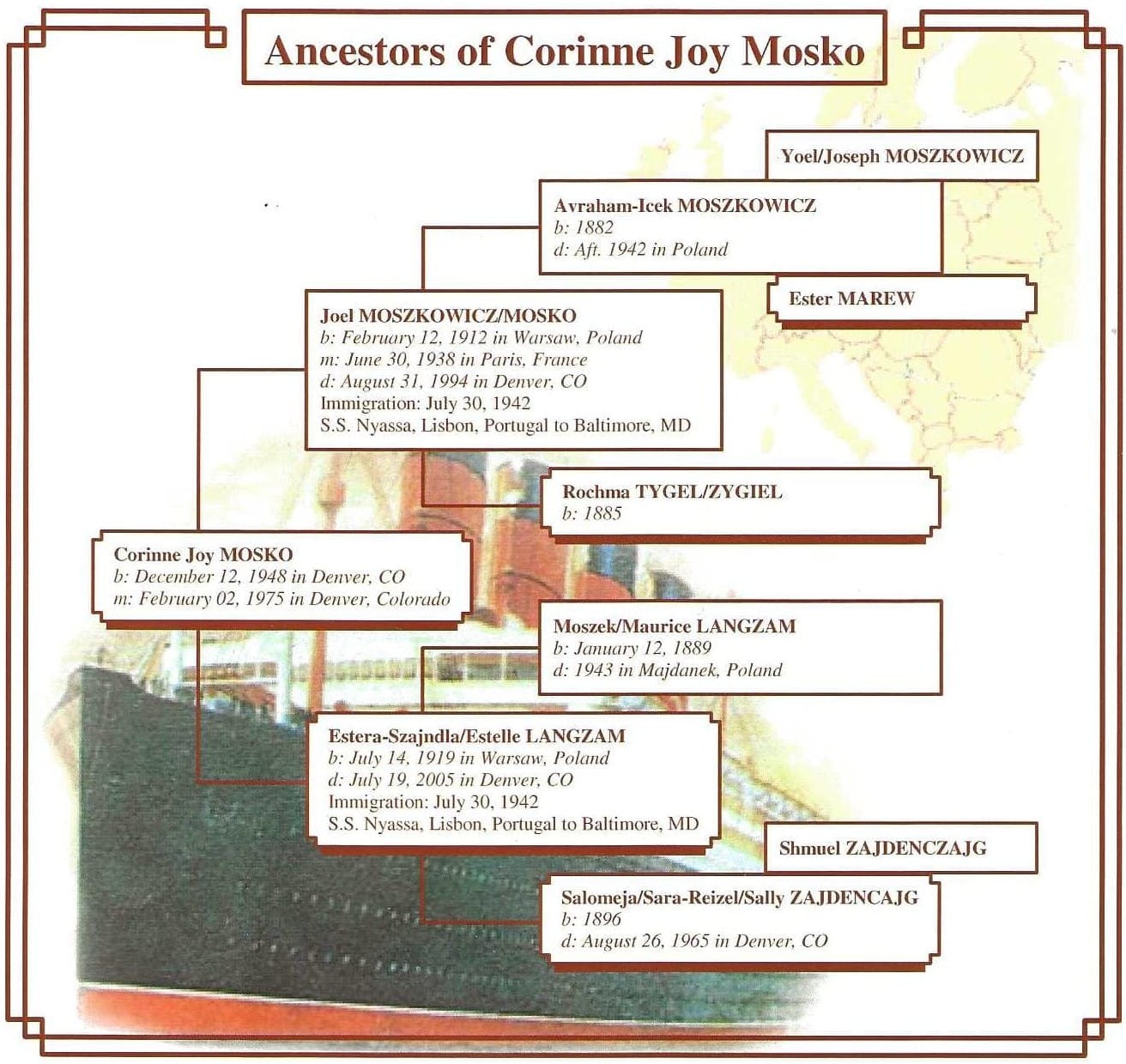
I’d like to think I owe New Mexico just a little bit of credit for all the naches and if I may also add, if this doesn’t make me an honorary Jewish New Mexican, I don’t know what does.
Corinne Joy Brown is an award-winning author of historical fiction and non-fiction inspired by the American West with ten books in print, including her acclaimed novel Hidden Star about crypto-Jews. She also writes memoirs, plus freelances for a variety of print publications focused on design, architecture, fine art, and popular culture. Corinne writes middle-grade fiction as well, and has published a series of art books for young readers who love horses. A past-president of the Denver Woman’s Press Club, a founding member of Women Writing the West, and the editor/publisher of HaLapid, an academic journal serving the Society for Crypto-Judaic Studies, she is a Fellow of the University of Colorado History Department at CU/Colorado Springs. She and her husband live in Colorado and enjoy their German Shepherd, Ziggy. Stav Appel has inspired her next novel. Visit her at https://corinnejoybrown.com/
Read also by Corinne Joy Brown:
Review and Q&A with Ilan Stavans: El Illuminado A Mystery of Santa Fe by Ilan Stavans and Steve Sheinkin. UNM Press March 2026.
No One Came to Taos to be Jewish or the book you weren’t looking for but are glad you found
The Torah in the Tarot by Stav Appel, Coming from Ayin Press
From Mabel Dodge Luhan to Rosh HaShanah, An Unexpected Connection
Community Supporters of the NM Jewish Journal include:
Jewish Community Foundation of New Mexico
Congregation Albert
Jewish Community Center of Greater Albuquerque
The Institute for Tolerance Studies
Jewish Federation of El Paso and Las Cruces
Temple Beth Shalom
Congregation B'nai Israel
Shabbat with Friends: Recapturing Together the Joy of Shabbat
New Mexico Jewish Historical Society
Where the North Ends, A Novel by Hugo Moreno
Policy Statement Acceptance of advertisements does not constitute an endorsement of the advertisers’ products, services or opinions. Likewise, while an advertiser or community supporter's ad may indicate their support for the publication's mission, that does not constitute their endorsement of the publication's content.
Copyright © 2026 New Mexico Jewish Journal LLC. All rights reserved.