












SNAILS, AN ANTI-SEMITIC PLAY, ROMAN SOLDIERS, A SEDER, AND CATALONIAN SECRET JEWS

by Judith Fein
When I met an affable local guide in Catalunya, I innocently asked if anything unusual was happening during the current Semana Santa or Holy Week, which included both Easter and Passover.
“Well,” she began, “perhaps you have heard of the Catalonian desserts called brunyols, which are fried pastries that were cooked in oil that is used to light the way for the Dance of Death tonight in the town of Verges. The oil is poured into snail shells which are then stuck to the stone walls of Verges with clay.” So now tell me the truth. Wouldn’t you be curious about seeing this rancid oil and snaily muddy phenomenon?
I asked every person I met in Girona province, in Catalunya (aka Catalonia), in the northeast of Spain, if they planned on going. One said the events didn’t start until after 10 pm, and that was too late. Another said the roads were remote and dark and they feared getting lost. I asked every sentient being if they were going to Verges that night and could take us with them. My husband Paul and I didn’t have a car, don’t particularly like snails, but I felt we had to go.
At 8 p.m. my sad sighs were so loud that a Russian singer and musician friend named Tatiana said she would drive us there. She made it known that she felt sorry for the snails and made us promise that we wouldn’t stay too late. She asked us what, exactly, would be happening that night of Maundy Thursday. I had no idea but said there would be a Dance of Death in addition to the snails.
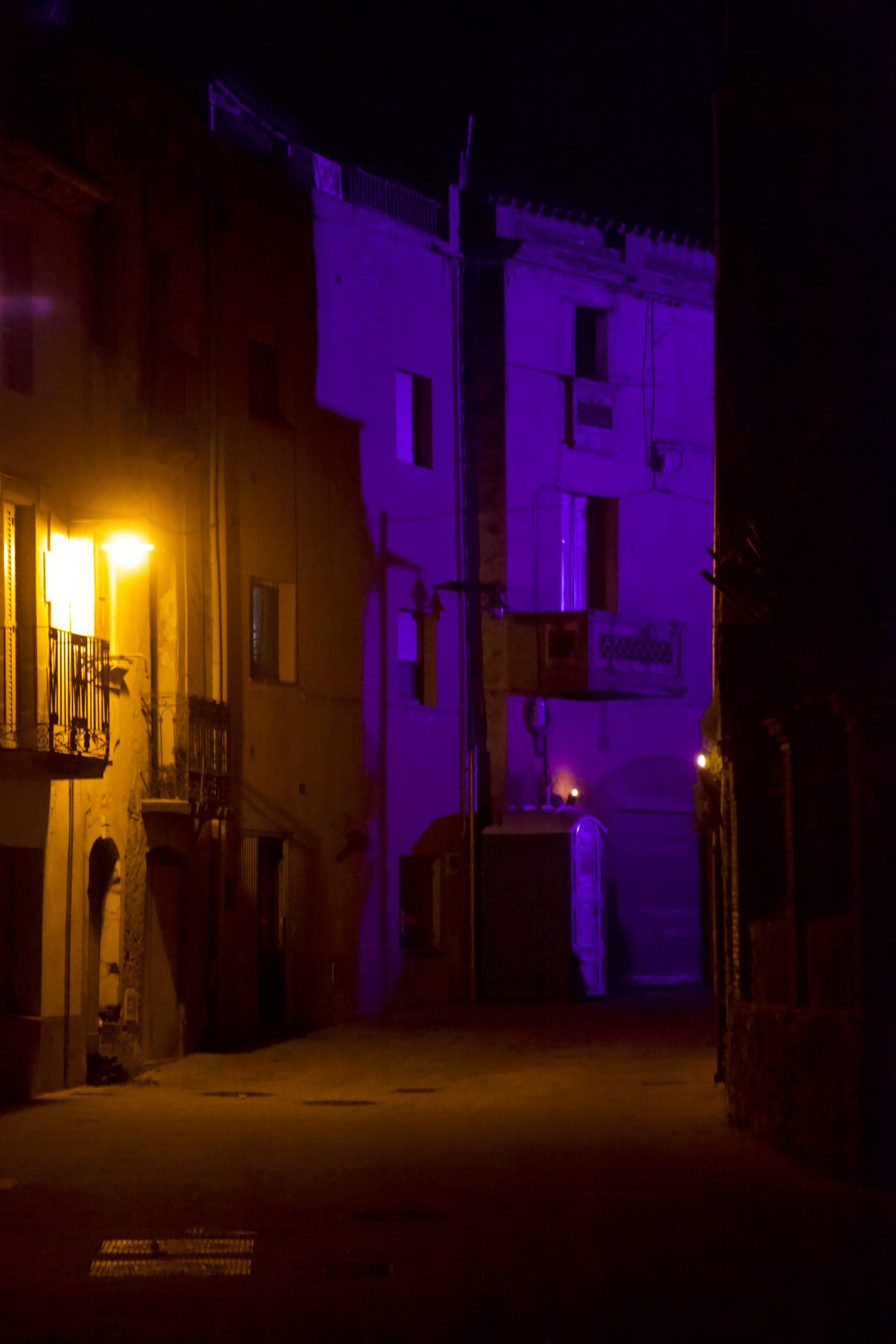
When we arrived in Verges, there wasn’t a parking spot to be had, but Tatiana was completely undaunted. She drove the wrong way through one-way streets, lifted police barriers and drove right into the heart of the medieval city, where throngs had already gathered.
“So, what do you want to see here?” Tatiana asked logically.
“Don’t worry, some angel will appear to inform us,” I said jokingly. No sooner had the words passed my lips than a young woman stopped us and asked if she could be of help. She wondered if we had tickets for the play that featured the Dance of Death? “What play?” “The Passion Play.” “Could you please tell us about that?” I asked. “Yes, of course. I have participated in it. I played an angel.” I promise you this is true. I threw my arms around the woman — whose name was Julia — and said I knew the angels would come. Our angel said there were only two ways to see the Dance of Death that night — at the play, and in the streets after the play.
Julia led us through the darkened, winding, medieval streets and said she knew a place where we could get a view of the Dance of Death as it came by, when the play was over, around midnight. “But why can’t we see the play?” “Oh, that’s not possible,” Julia said sadly. “The tickets are sold out long in advance.”
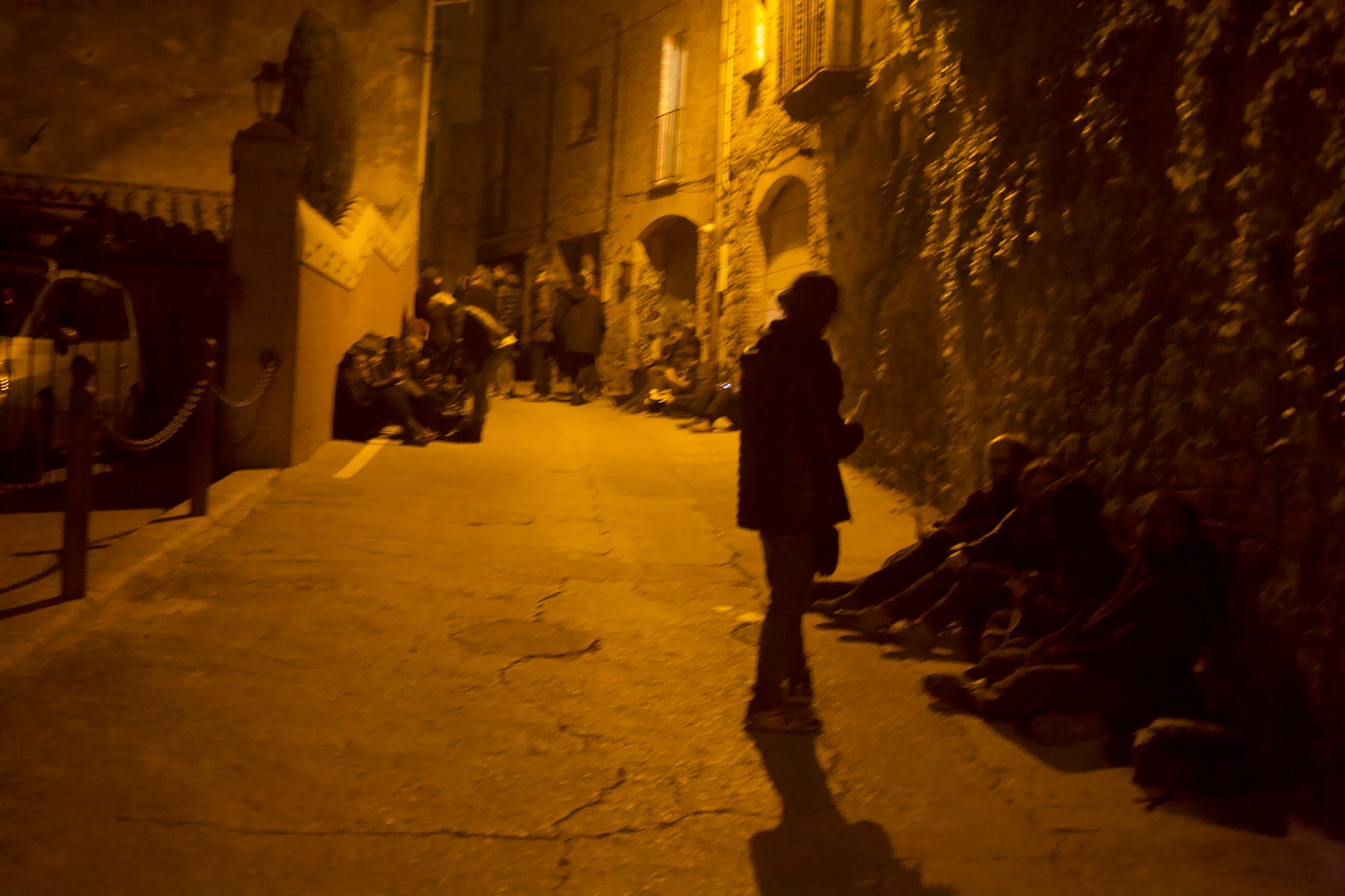
All around us, people were sitting on ancient raised stones, bundled up against the cold. Wait there for two hours? The idea of having a stone-cold butt was about as appealing as drinking the leftover brunyol oil. And wait until after midnight? Tatiana reminded us of our promise not to stay late.
I thought about the sold-out play. After all, I come from New York where “No” means “Yes.” We asked our angel if she could take us to the place where the play would be performed. We followed Julia though a warren of cobblestone streets to a long stone alley where, behind police barriers, men and women in Biblical robes were preparing for their moment in the lights. We asked one official after another, and they kept saying we couldn’t get in, even with our American press credentials. There was no room. And each one deferred to the next person and finally, I bent my knees so I was even shorter than the five feet I measured, and I said in a pitiful little voice, “But please, sir, we are very small. We will not take up much room.” The whole staff burst out laughing.
Next thing we knew, the barrier was moved aside, and Julia waved goodbye as we were ushered into a large square surrounded by burnished medieval stone walls and ramparts. In the middle was a stage, and on both sides of the stage were hundreds and hundreds of seated patrons. And I swear by the full moon that a woman approached us and led me to the end seat of the front row, and led Tatiana to the end seat on the fourth row. For Paul, we blinked in disbelief as we saw the woman lead him next to the stage, so he could photograph from up close.
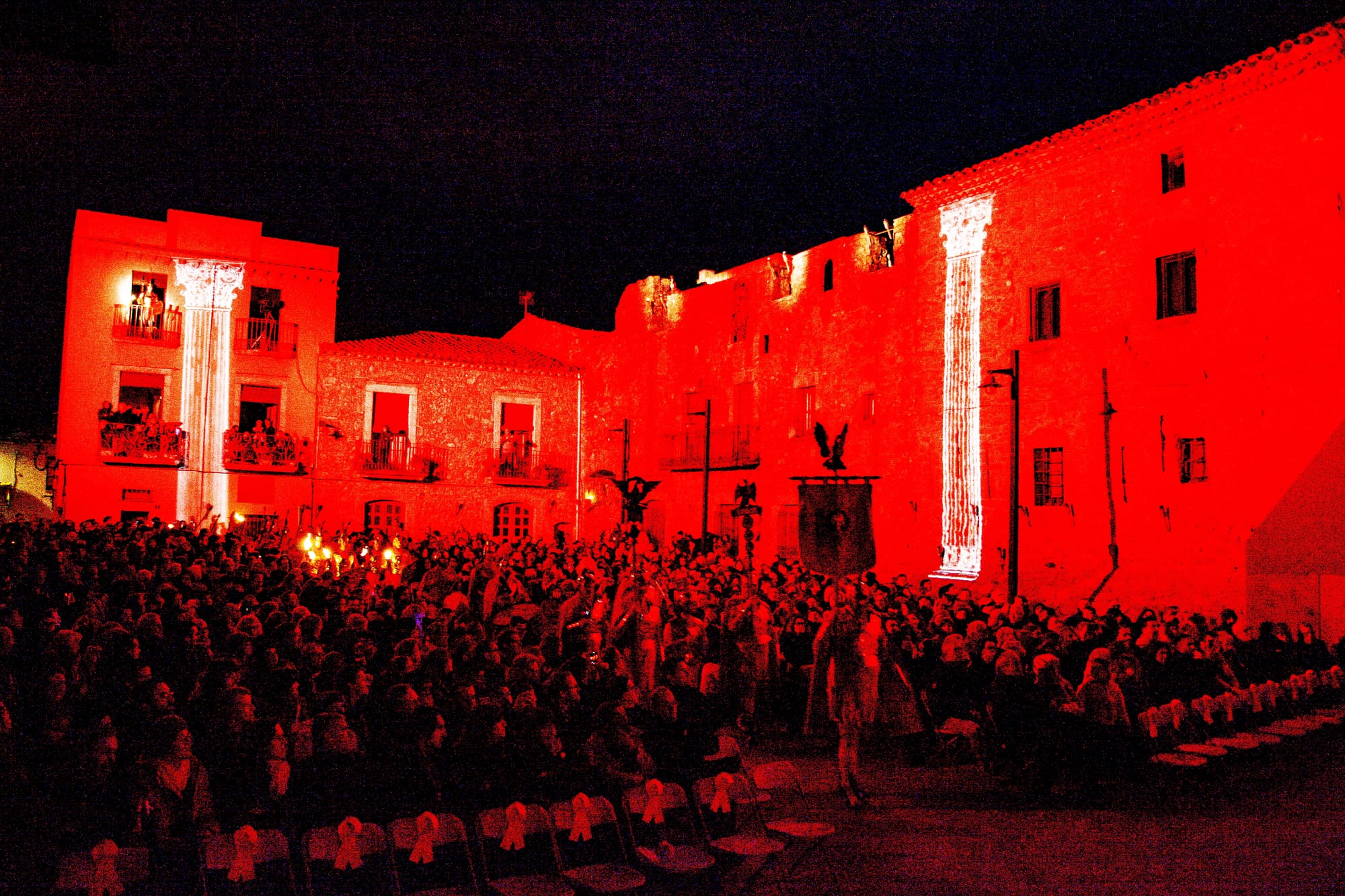
Moments before the play began, the woman who was seated next to me asked me to change seats with her. I stared at her quizzically. “If you change places with me, you will be closer to the center and see better.” I demurred and she insisted. I wrapped my cold head in a scarf and offered part of the scarf to the woman who gave me her seat, but she declined. We waited as the lights went down and then came up on the story of Jesus, leading up to the crucifixion.
The whole town puts on this annual pageant, and it is a remarkably well acted and directed Passion Play, with the emphasis on passion. There is no stiffness in their portrayal of the Samaritan woman, the disciples, Judas, Pontius Pilate the Roman governor of Judea, and all the other characters in the story. The costumes were beautifully executed, and I would dare you not to be mildly freaked by the pounding advance of the long column of Roman soldiers with their lances beating an awful rhythm of domination and death.
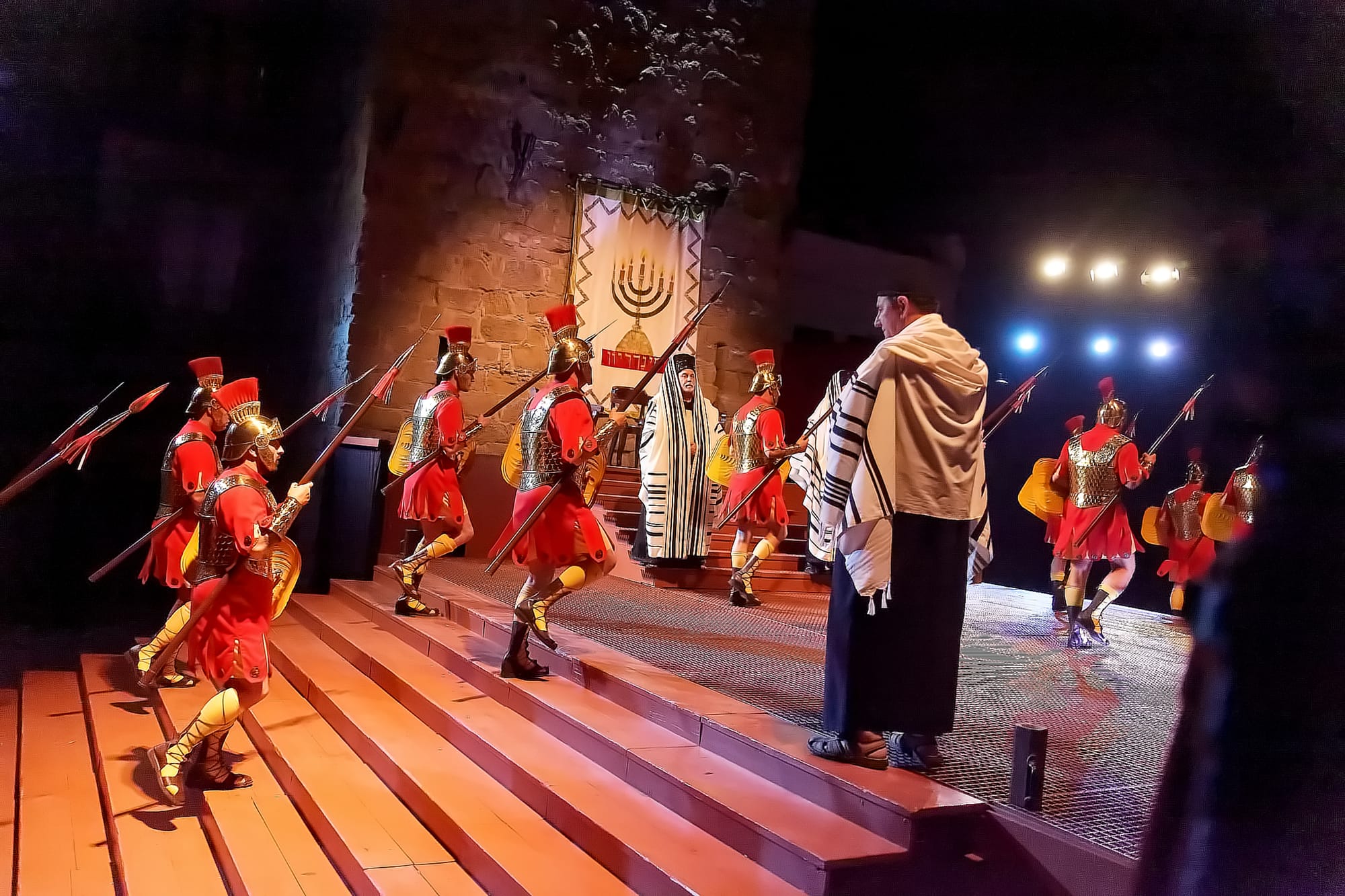
I was agog at the accuracy of the portrayal of the Sanhedrin, the Jewish legislative and judicial body at that time. The pillars behind them were inscribed with Hebrew lettering, which was carefully and correctly written. Their robes were accurately portrayed. “Wow, they really care about the depiction of the Jews,” I said aloud. The woman next to me proudly informed me that this play had been performed in Verges for 600 years and was one of the oldest performed versions of the story.
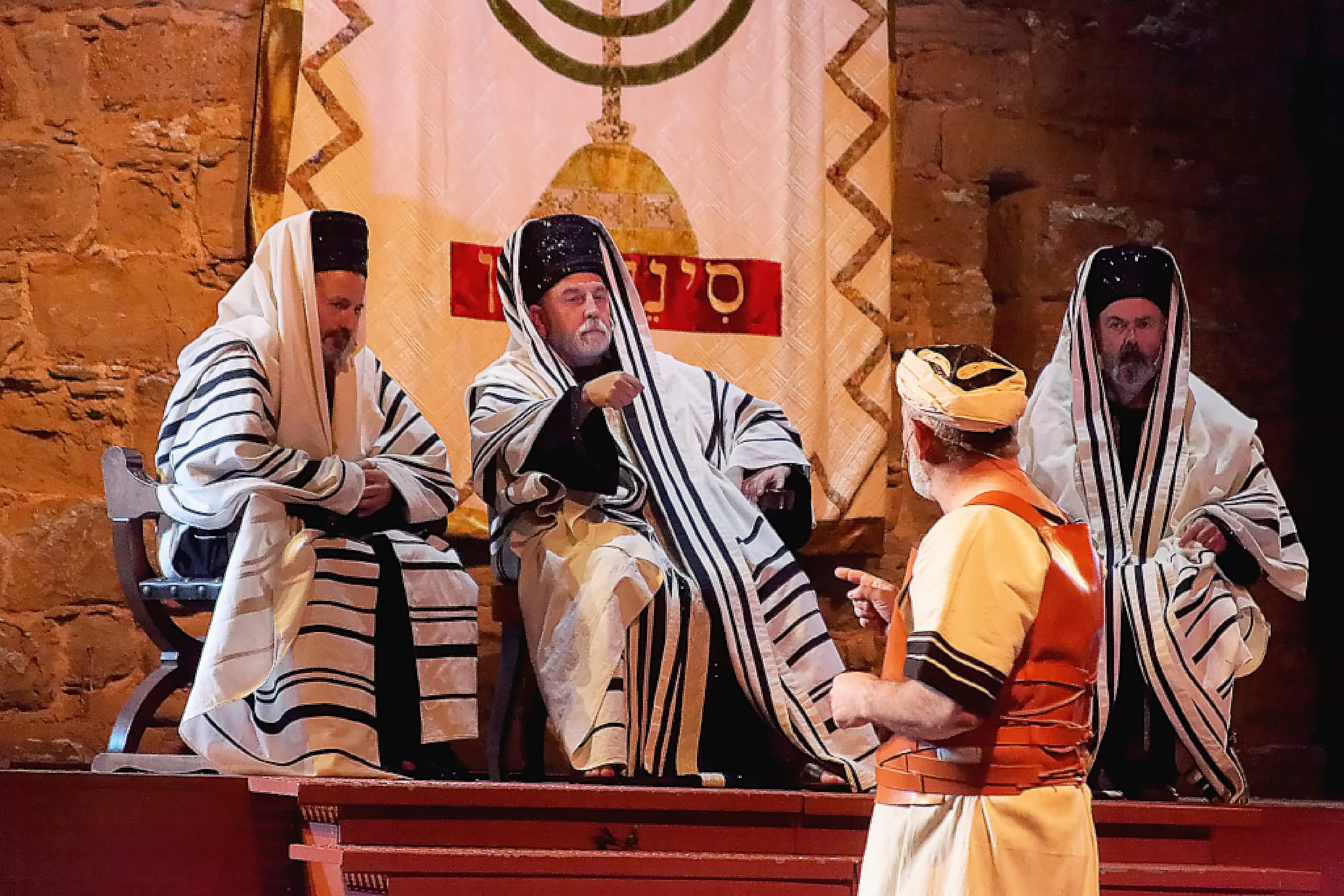
The longest scene of the play is when the Jewish Levitical priests from the ancient Temple urged Pontius Pilate to crucify Jesus, who was proclaiming himself king of the Jews. Oh no, I thought. I have read about how theatrical performances were used historically to turn Catholics against the Jews, but I had never seen it in person. And the scene where the Jewish judges were mocking Jesus as he was being hauled away to be crucified was so blatantly antisemitic in overtones that I was hoping I could escape before the end of the production when the lights went up. Pontius Pilate didn’t want to kill Jesus, and his wife didn’t either, but the Jews and the Jewish priests called for the crucifixion like enthusiastic cheerleaders at a crucifixion convention. I doubt that the actors thought about the antisemitism, but the medieval world and for centuries after that certainly thought about it and took it very, very seriously. Since the Jews were portrayed as having killed Christ, it was appropriate to create a Jewish killing field in Spain and beyond. And, of course Muslims and gypsies were also persecuted, but at least they weren’t blamed for the death of Jesus.
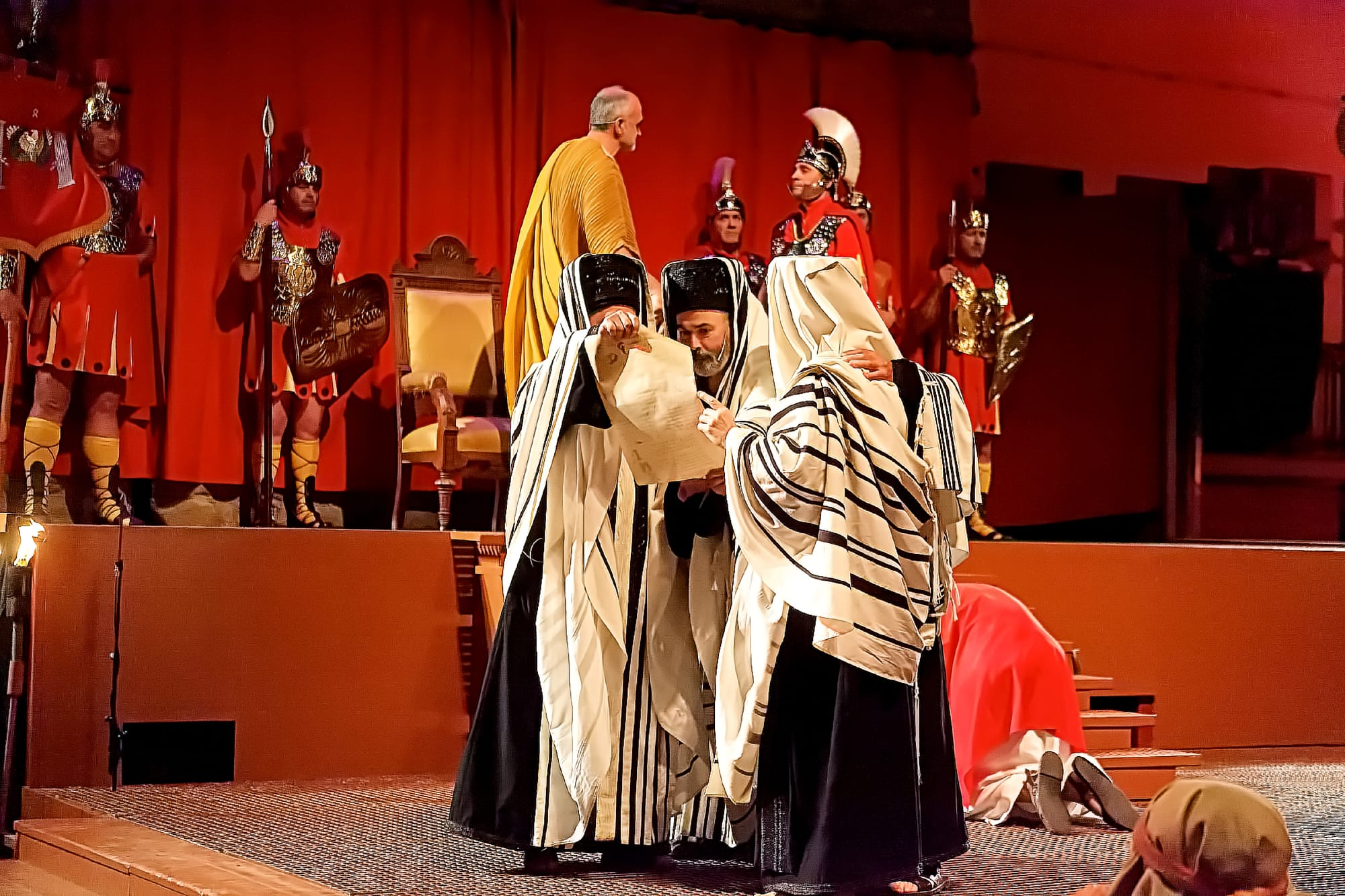
I actually asked the people sitting around me if they still blamed the Jews, but all I got in return were blank stares. In my mind, the audience had become a Nazi rally. But, in fact, the people I met were modern Catalonians, friendly and pleasant.
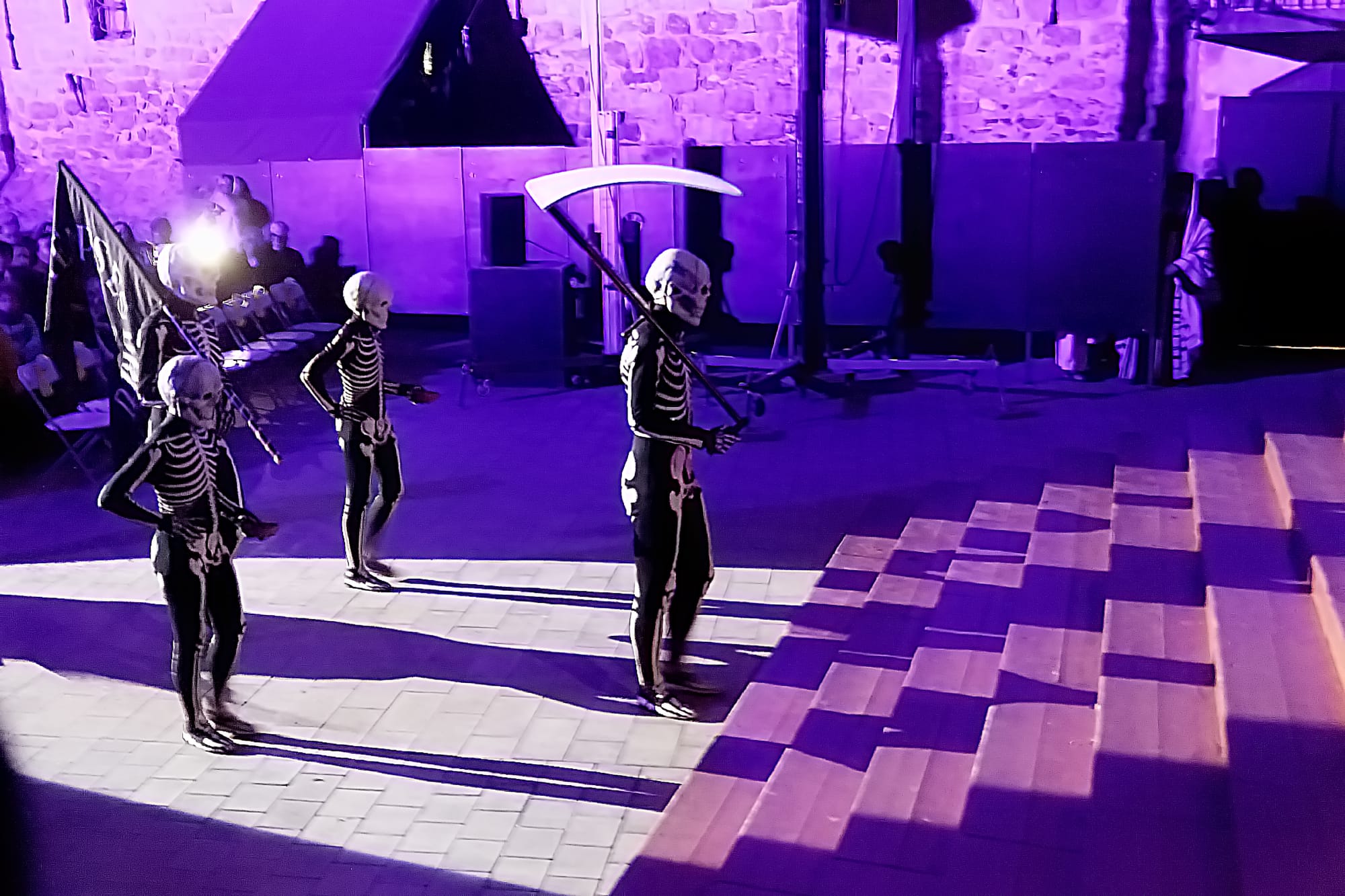
In spite of my horror, the story onstage was very moving, from beginning to end, and after the first half we saw the famous, ancient Dance of Death, which locals told me is only performed in Verges. Five figures appear, dressed in black clothes emblazoned with white skeletal bones and skull masks. They performed a very silent dance, lifting their legs and setting them down very precisely, in synchronized steps. The soundlessness made it even more eerie. Roman soldiers watched attentively from the ramparts. Images of death were projected on the stone walls. Behind the dancers were skeletal figures draped in black. Death comes to accompany Jesus through the humiliation, beating, and crucifixion that will follow. Death is his companion. He may be abandoned by humans, but he is not alone. And when he falls to his knees and sobs to God, it is wrenching. The audience watches, transfixed. It has to be one of the most emotional stories ever told. The audience knows what will happen, but they are gripped by the human drama onstage. And even though the play is performed in Catalonian verse, Paul and I could understand a lot of it.
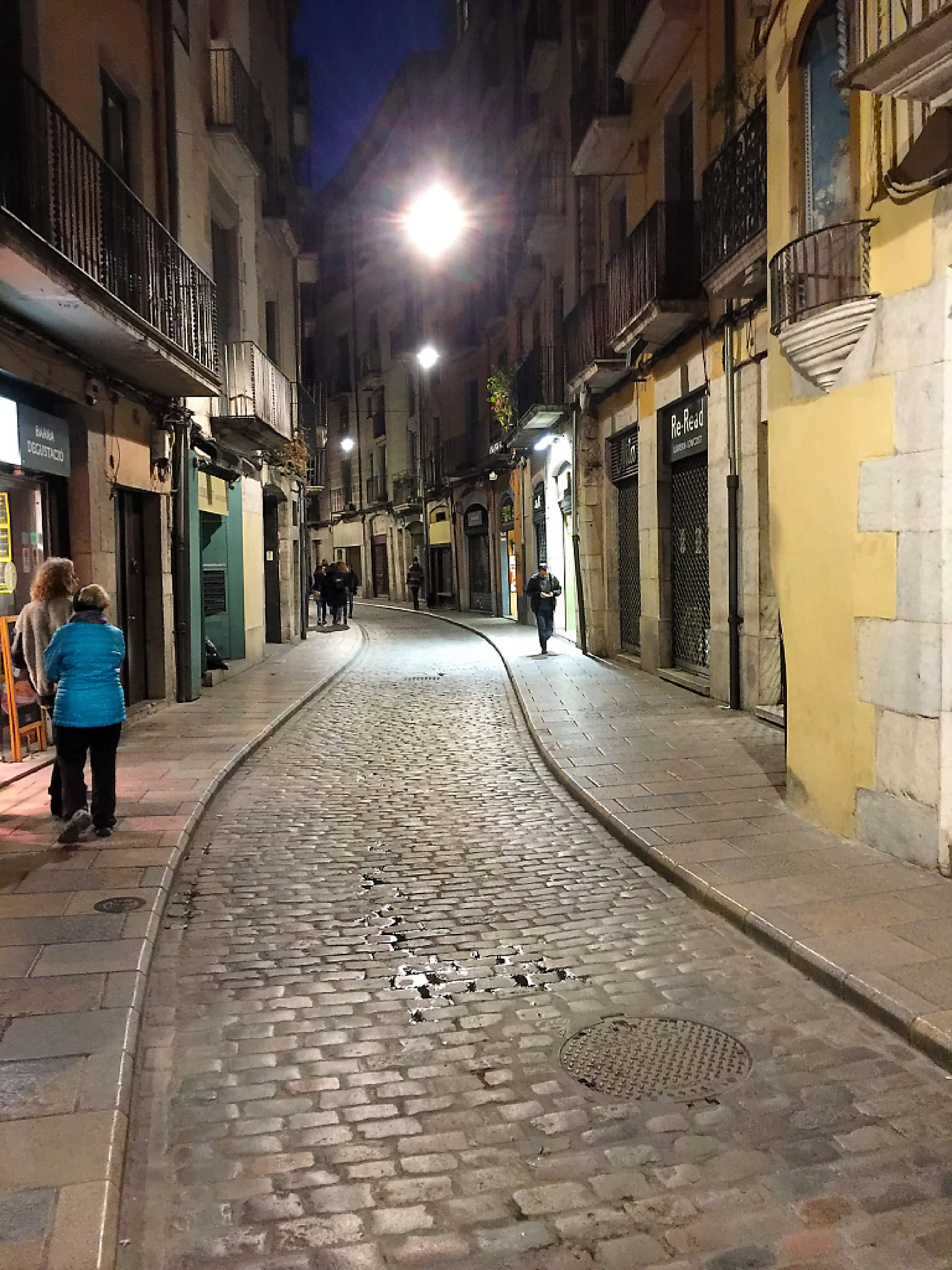
After the play, Tatiana wanted to leave, and I had to keep my promise to her, but first — of course you know this — I had to see the oily snails. Tatiana, unlike Paul and me, has a good sense of direction, and she wandered through the sinewy streets looking for clay and snails. I mumbled that we needed a map and a man appeared and asked us if we wanted a street map, as he had an extra copy.
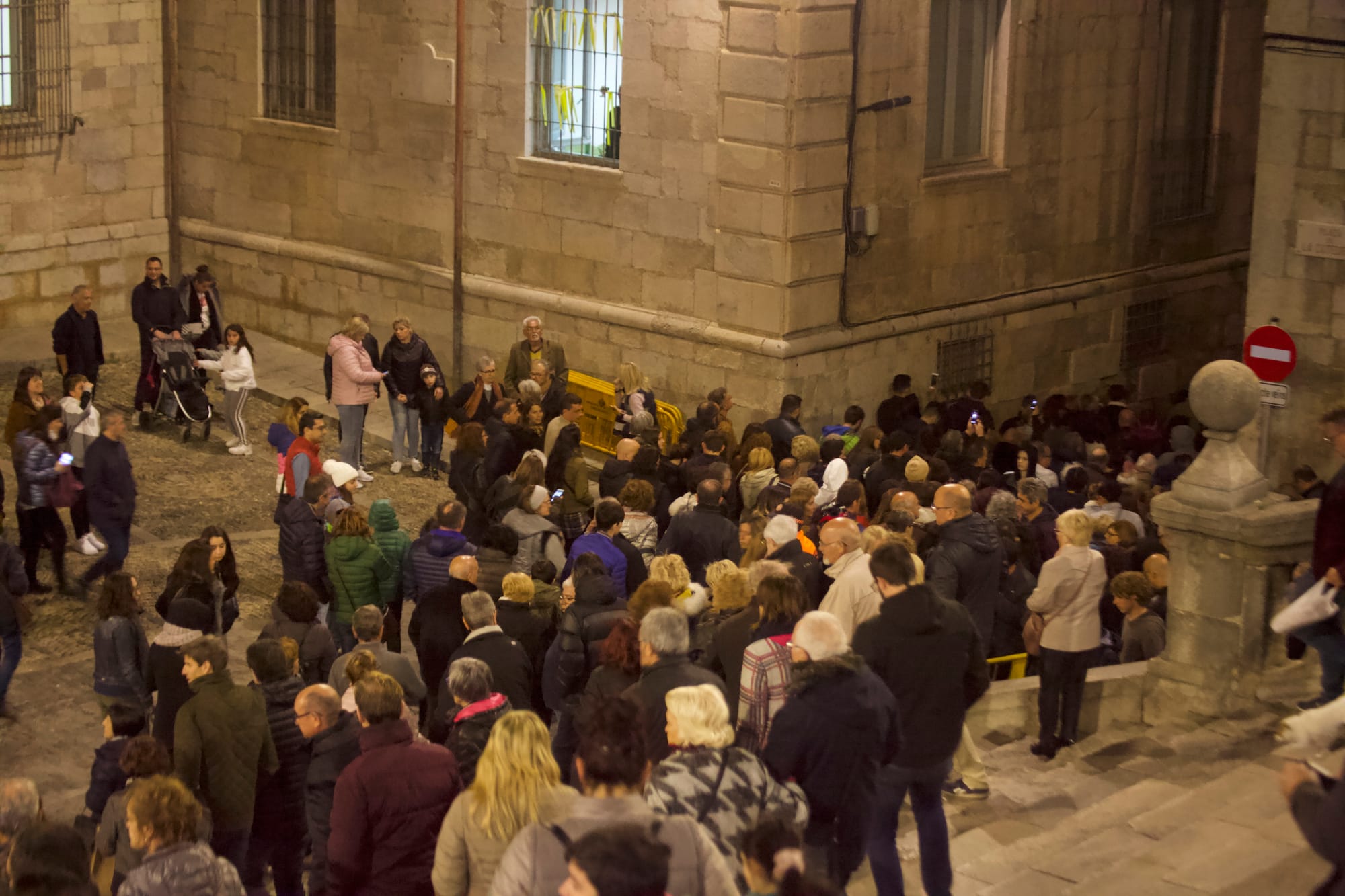
The street was lined with hordes of people who had been waiting for many hours; they stood or sat on cold stones. And above their heads, higher up on the stone walls, were the small snail shells, with wicks protruding, and each was pasted to the walls with a lump of mud or clay. We asked everyone how they would be lit. Did everyone have to bring their own match? We finally found out that the paraders — presumably the Roman soldiers — held out torches that would light the snails as they passed by, and the streets would be ablaze.
We were told that we might have to wait with the crowd for another hour or two until the parade and the Dance of Death passed by, and so we honored our promise to Tatiana and left. I turned around one last time to look at the wick-and-oil-filled snails, the dimly lit stone streets, the full moon above, the patience of the thousands of viewers, and then we were gone.
By then it was Good Friday, which was really a very bad Friday for Jesus the Jewish rebel. We are talking Calvary and being strung up like an Iberian ham by sadists who enjoyed punishing people by making their torment and death into a public spectacle.
It seemed appropriate for our Jewish friend Aysha, who lived in Girona, to take us through the old Jewish quarter, which had its own historical and Inquisitional horrors when the Jews had the choice to convert to Catholicism or leave the country in 1492. If they converted, they were hounded by the Inquisition thugs. Spies were always looking to see if they ate pork and weren’t enthusiastic about Christianity and bathed and cleaned their houses on Friday, before the Sabbath. If they “relapsed” and practiced Judaism in secret, or were even suspected of same, they could be arrested, killed, tortured and lose everything they had. If they left Spain, they had to leave behind their houses and businesses, selling them for next to nothing, and set off for a new life somewhere that allowed them to settle.
I thought about this as we climbed up a stone staircase and entered the magical world and palatial house of Aysha’s friend Blanca. Her tall, lank, red-haired son Pau, who was very quiet and sweet, led us through the house to the garden, which he said was based on the Tree of Life. But when asked questions about the connection to Kaballah, he shrugged and said vague things like “maybe” or “yes and no.” The abode is called “the house of 9 mezzuzahs” because out of l4 found in Girona, this house has nine. Several were embedded in a wall, which is dated l496, which was four years after the expulsion, so this house or series of houses put together certainly held secrets. If you do not know what a mezzuzah is, you may have seen them on the right door posts of Jewish houses. They contain small scrolls with sacred words from the Torah. Observant Jews kiss them when entering their houses. In Girona, the scrolls themselves are gone, but the holes cut into the stone doorposts to hold the mezzuzahs remain as a reminder that Spain, like Nazi Germany, tried to make its country judenfrei—free of Jews. Of course, this was problematic, because when Jews were driven from a place, the economy usually went into crisis and culture took a nose dive. And all of this was done in the name of Christianity, a religion based on a man who was an observant Semite.
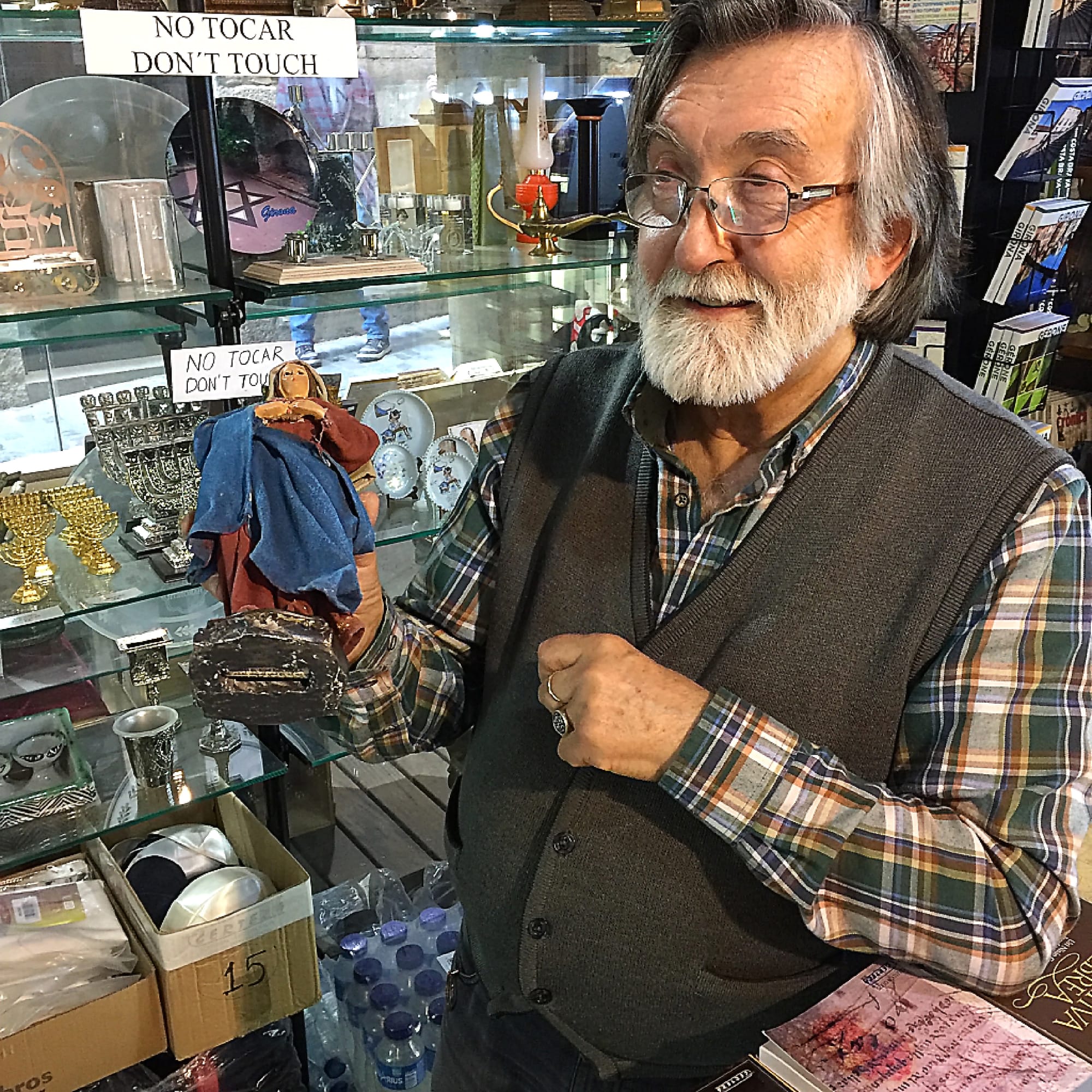
In Blanca’s house, with its sprawling warren of rooms and staircases and gothic windows, we saw a graceful sculpture of the letter “shin” in Hebrew and at least two menorahs. I mention this because during the two or three hours we were in the lady’s presence, she mentioned at least ten times that she is Christian, and she has no interest in the Jewish religion. Her home sits on top of an ancient mikvah (Jewish ritual bath), she comes from a village named the fountain of John the Baptist (which was a mikvah), but she is Christian, and has no interest in things Jewish. It is perhaps impolite to say it, but I think Blanca may be descended from converted Jews. Perhaps she did not know it, but I think this was the behavior of converted Jews after the expulsion of l492 and probably after the pogrom of l392. They insisted they were Christian, not Jewish, and not interested in anything Jewish. Their lives and their survival depended upon it.
When we met Blanca, she was in her mid 90’s and she sat in genteel grace on her sofa, surrounded by books. Aysha left, and the first thing Blanca said to us was that her life is about letters and numbers. “Gematria,” I commented– which is numerology that absorbed the famous Kabbalists who lived in the area around Blanca’s home. “I have no interest in anything of the Jewish religion,” she said. She explained that she was a lonely child who found solace in all her books. She handed me a drawing she had of a human outline, and all over the page she had written numerological equivalents of geometric shapes like rhomboid and spherical and I got the same glazed eyes I had when I was exposed to Kaballah gematria for the first time many years ago. I smiled and said she was a mystic, and she smiled back, and then we went into a deep tete-a-tete about walking a true path and how mystical the Hebrew alphabet is and what the Shechina means (the female aspect of God and light in the revealed, material world), and I found myself talking about Jethro, the Midianite magician who was Moses’s father-in-law and teacher in the esoteric arts, and I started writing some things for Blanca in Hebrew on a napkin. She looked at the paper, after she watched me write from right to left, and asked if she could keep it. I said I wrote Hebrew poorly, but she asked again if she could have the paper, “But I have no interest in Jewish religion. I am Christian,” she repeated.
Her voice crackled a bit, but her mind remained steadfast. She had found her way, through books, numbers and letters, and felt inner peace.
It was, by this time, a few hours before Passover. Aysha had decided to have a seder or Passover meal ritual and she asked me to lead it. But something was getting in my way. From the time I was a child, Passover was my least favorite holiday. I couldn’t stand seders, which were long and boring and meaningless to me. I didn’t like singing the songs. I kind of enjoyed asking the four questions in Yiddish, but I didn’t believe there was an exodus from Egypt with 600,000 men, plus women and children and slaves, and I found it ridiculous to dip my pinky in wine and daub it on a napkin as I recited each of the ten plagues. I wondered why God would want to kill Egyptian children, and didn’t believe that the Angel of Death knew which houses were Jewish and passed over them.
When I grew up and began to study, on my own, I led a bunch of alternative seders, like one from Miriam’s and another from the Egyptians’ point of view. But what I was facing in Girona was a woman Aysha had invited who was observant and liked the ritual just the way it was always done. I asked her if she would be offended if I went in another direction, and she said no but the truth is that she was quite offended. She sat to my right and shook her head in disagreement and kept her hands crossed over her chest the whole time and only participated in the most minimal way and I felt like someone had shoved matzo up my nose.
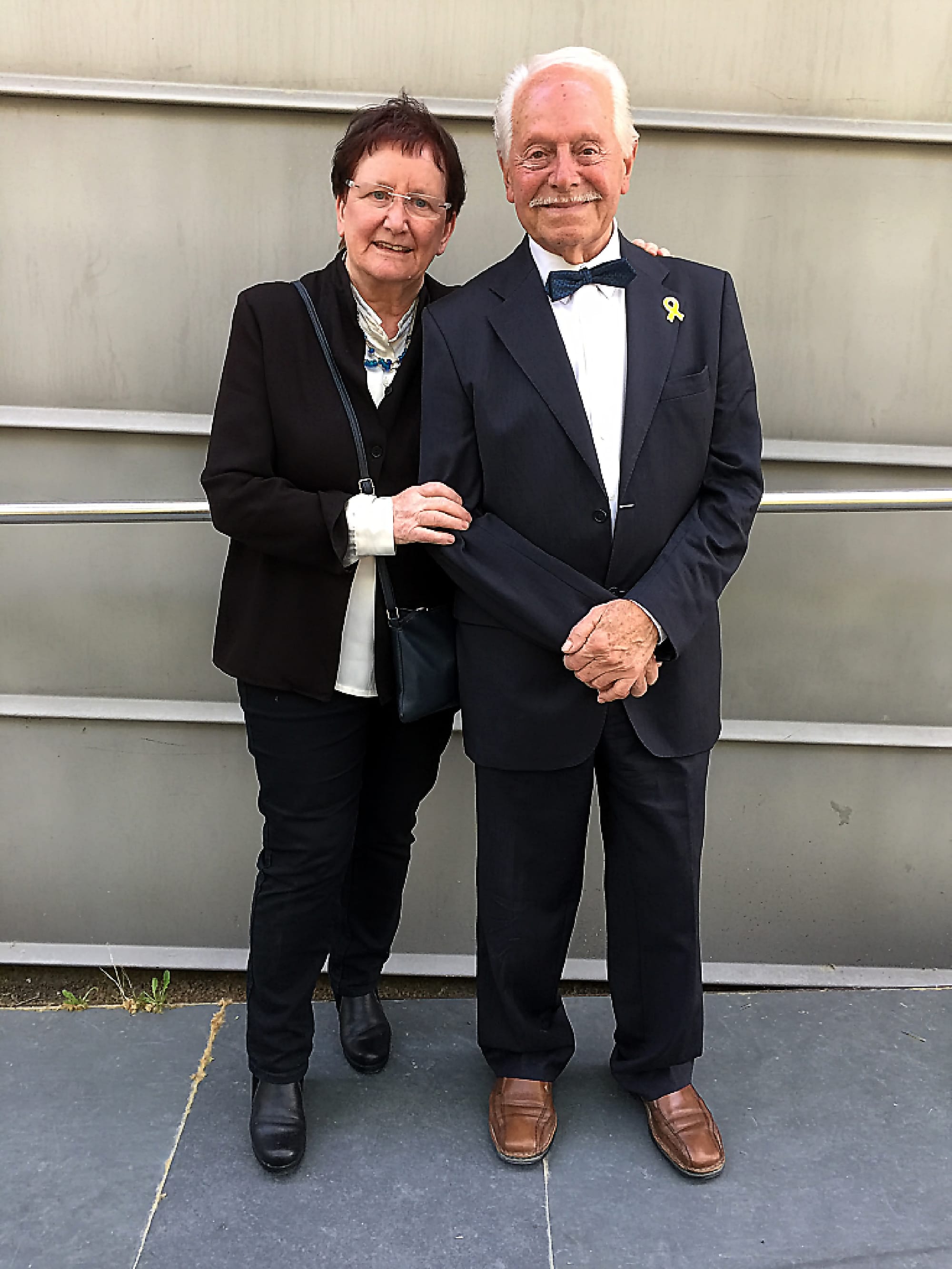
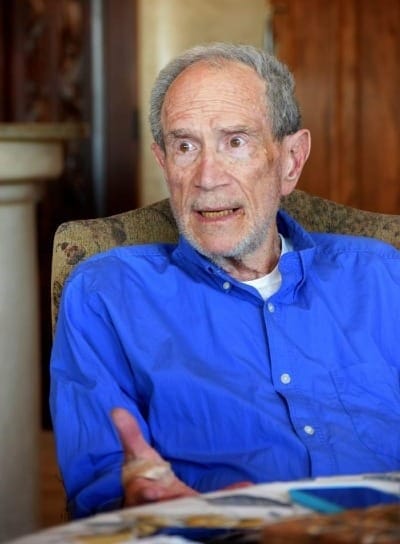
Two of the guests were people I had longed to meet. Josep Tarrés, who had just turned 90, was the man who single handedly discovered the hidden Jewish past of Girona. He used his own money, and was responsible for the restored buildings, the research, everything that tourists from around the world come to see today. But, Josep explained sadly, the government and certain Jewish people with money moved in, took it over from him, and made it all a tourist attraction for profit. They ignored him, didn’t even give him credit and his heart was broken. I had read a book about Josep. It was written by a woman who was madly in love with him, idolized him, and described him as being as evasive as Blanca’s son Pau. Apparently, Josep was involved in mysteries that could have come right out of the Da Vinci code. He was also a Catalonian independence supporter, and he ran afoul of Franco during that awful and oppressive regime, when Catalonians were banned from speaking their language, doing their dances, and preserving their culture.
His longtime wife, Pia Crozet, a famous sculptress from Brittany, assisted him every step of the way. She restored the Jewish section of Girona with Josep and she occasionally jumped in to add details to his story.
What I encountered at Aysha’s seder was the opposite of everything I expected. From the minute I met him, Josep was open, and extremely forthcoming. He said something that almost made me fall off my chair. “Most Catalonian people are from Jewish origins,” he said. He grew up in the Jewish section of Girona. He said that when the Romans first came more than 2,000 years ago, the main road was already in place because the Jews had been there before them. Throughout the course of the evening, he identified one thing after another as having a Jewish origin. He was raised Catholic, his cousin was the cathedral organist, but Josep was a man whose heart was in the large Jewish star he had constructed, the mezzuzahs and mikvahs and life of the Jews of Girona he discovered. He was also a famous poet, and everyone who met him a the seder thought he was brilliant, a natural organizer and totally charismatic. He created Garden of the Angel, a magnificent, Kabbalah-inspired garden in Girona. The design is based on the Tree of Life, or energy circles called sephirot.
Inspired by Josep’s presence, I went ahead with the seder I had planned. It involved chanting the word Pesach (Passover) like a mantra, and I asked Asyha’s visiting friend Roc to lead it. He was a smart, funny filmmaker who was making a documentary about Josep and Pia.
I asked Josep and Tatiana to go in the kitchen and do the washing of everyone’s hands. Each person went in, confided in the duo what they wanted to have washed away, and the duo washed their hands three times.
The observant woman had prepared a Passover plate and she made matzo ball soup. Aysha made crustless spinach quiche. Everyone drank wine.
At 9 p.m. sharp, Josep, Pia, Roc, Paul and I took off for the Good Friday event. Aysha had told them we wanted to experience it and they said they would get us the best place to watch it.
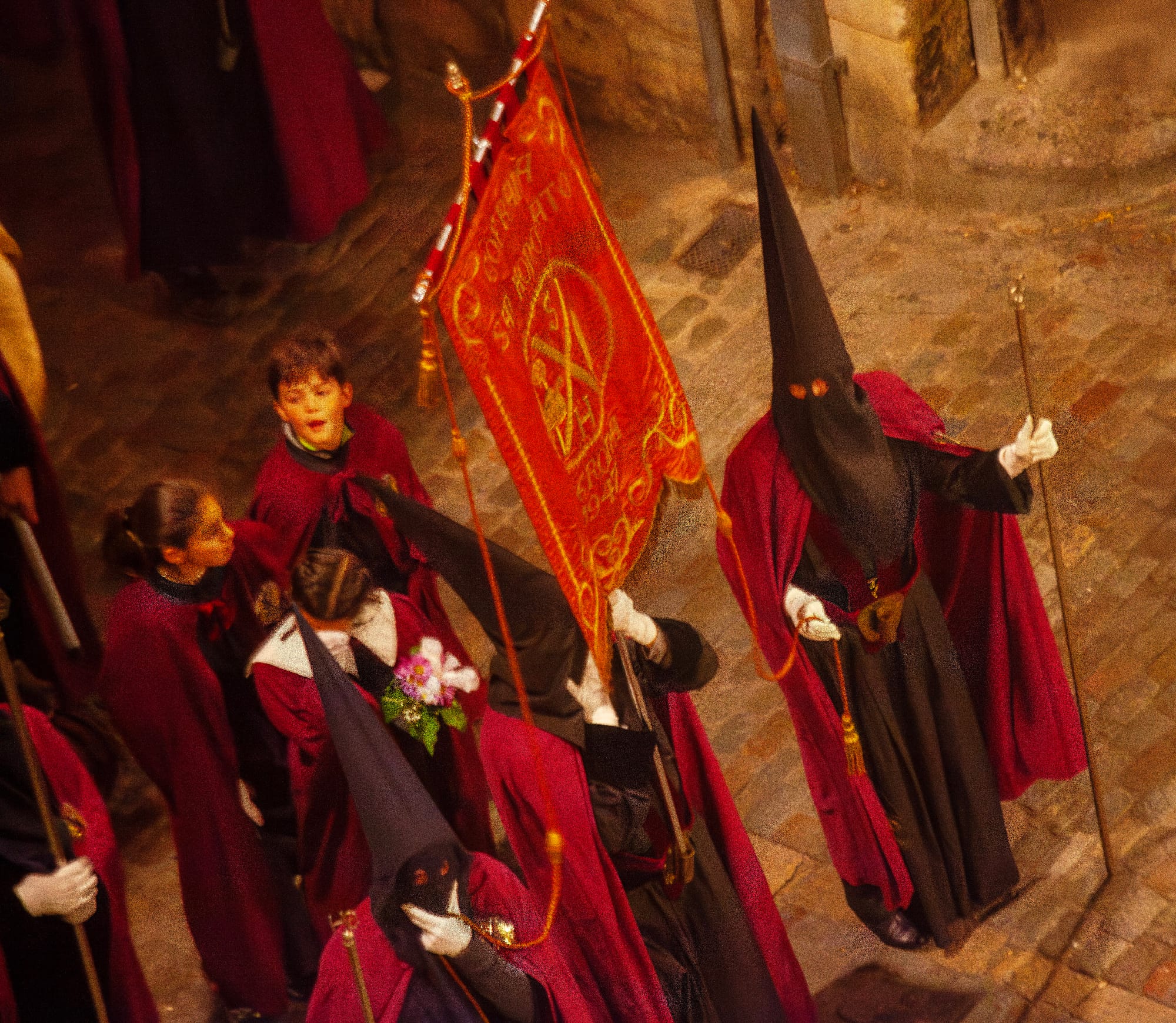
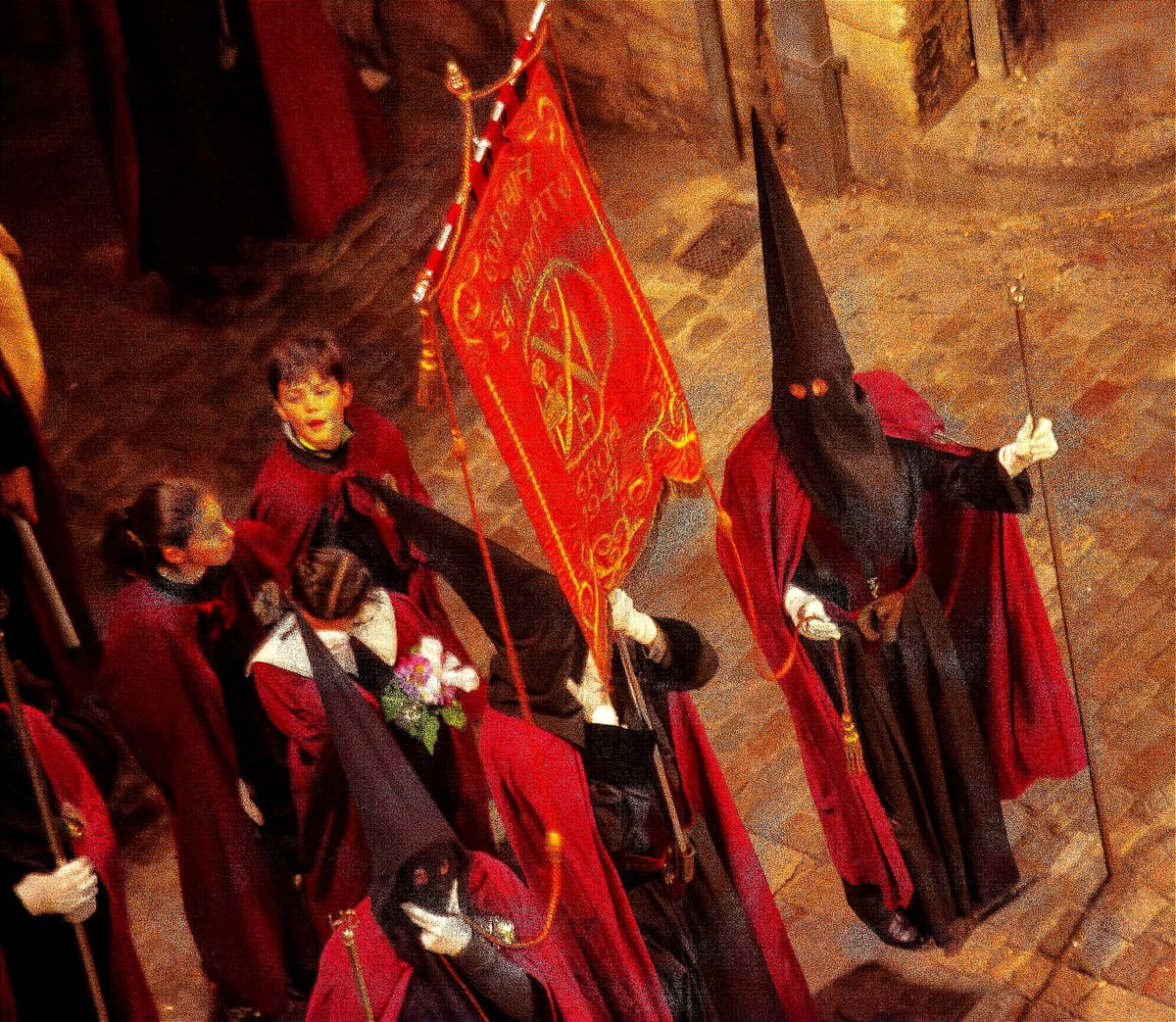
We walked with them thru the streets to the historic part of Girona and the cathedral. Suddenly we were backstage in the cathedral, where figures in pointed hoods in different colors with material masks and cowls that completely covered their faces, were preparing for the event. They looked exactly like a technicolor Ku Klux Klan. The bishop walked out in front of them, with his shepherd’s crook. But we couldn’t take our eyes off the masked and hooded penitents. They all exited the church and climbed down the 89 stone steps before disappearing.
Pia and Josep led us out of the cathedral. We walked along the back of the cathedral and Josep declared how beautiful the gothic windows and the magnificent Romanesque features were. A lifetime, almost a century in Girona, had not dulled his enthusiasm for its beauty.
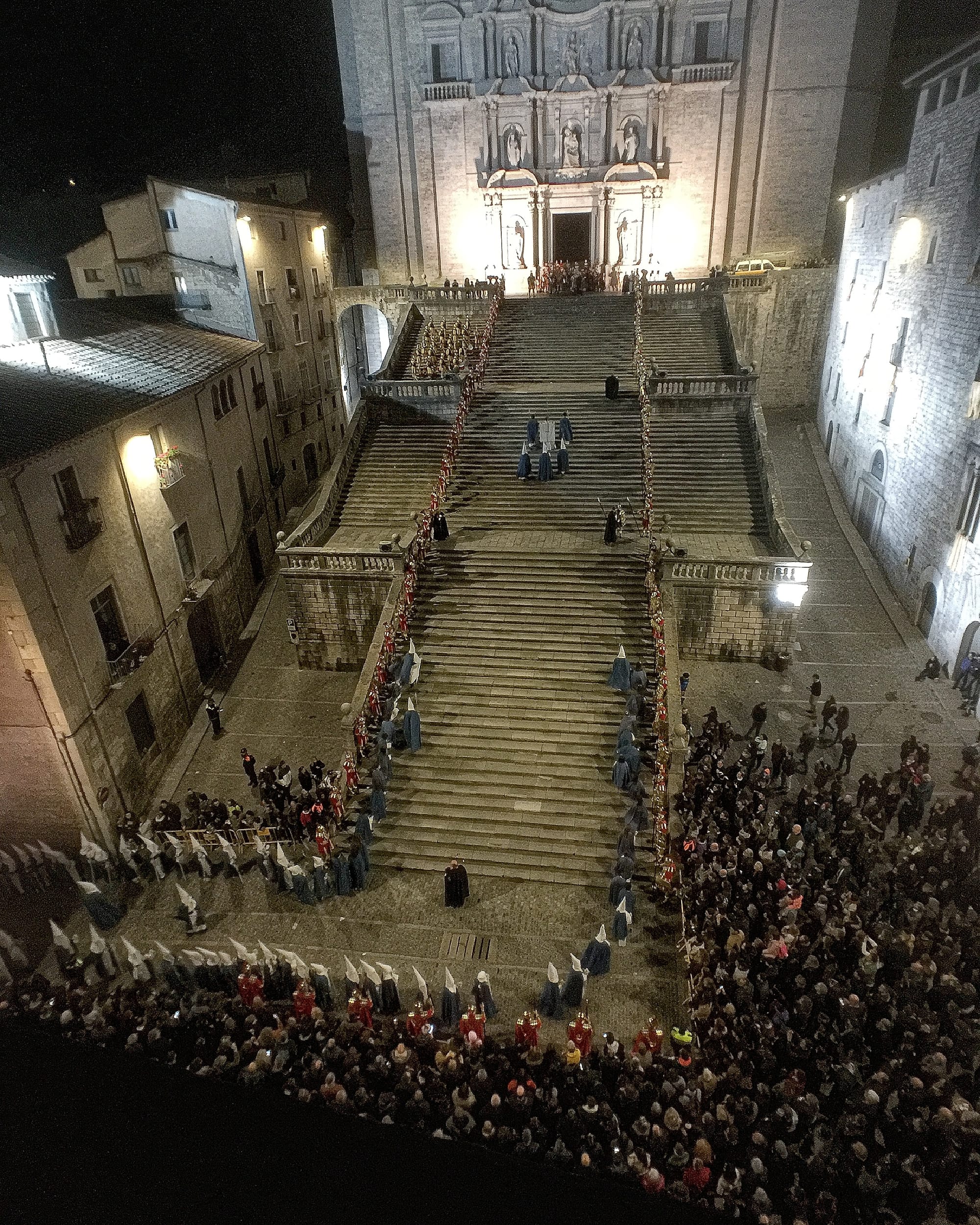
Then we entered a building directly across from the cathedral, and climbed up six flights. I was out of breath and Josep bounded along. When we got to the top, Roc whispered to me that we might be cold, and we headed out onto the roof. The entire Good Friday played out right below us. First there were Roman soldiers, with their cold, brutal, loud, pounding, synchronized marching gait and lances. They lined the flights of steps that led to the cathedral. Then there were group after group of cofradias (fraternal organizations) dressed in differently-colored pointed hoods and robes. When you didn’t think there could be any more groups, another ten or fifteen appeared. They all gathered on the long staircases of the cathedral. And everything took place directly below us. I was folded over the balcony like an inverted umbrella handle, watching, watching, wondering if there were any citizens left in Girona because it seemed like thousands were in the pageant.
At midnight, the star of the production appeared in a spotlight. Jesus, on a cross (both were made of wood), was carried up the steps. Roc whispered to me his disbelief in the whole Jesus story, and that Mary was not a virgin. He was funny and cynical and very entertaining. Beneath me was wooden Jesus on the cross, and behind me was Roc’s commentary.
After hours on the roof, I asked if I could use the restroom, and then we were in a medieval Buñuel film. A woman led me through room after room with mile-high armoires and nooks where a single bed was placed under a cross and a piano with two candles burning on top of it and marvels of art and architecture. And on one wall I saw a family tree that had so many branches it was dizzying. I asked who lived in the house and a man appeared who was the archivist of the city. He took us to places in the house that still had the Roman walls and gothic stones and Josep pointed up to a piece of stone and said, “Jewish. It’s Jewish. Because it has no human representation.” We went thru a room with hooks hanging from the ceiling, and I mentally tried to rule out torture or S+M sex practices and someone said it was for hanging world-renown Spanish hams. Whew. We were led into the man’s book-lined study and he showed us the view from his office window — the steps of the cathedral where the pageant had just taken place.
And then I was guided past a room filled with well-dressed people and candelabra and wine and dates and Paul and I left, speechless from all we had encountered during our two days of Holy Week just five years ago.
Happy Passover and Easter and whatever is in your heart this year.
Xxxxxx
Santa Fe residents Judith Fein and photographer Paul Ross are award-winning travel journalists who have contributed to 130 international publications. Judith blogs for Psychology Today about Transformative Travel and is the author of four acclaimed travel-related books. Some of the names in this story have been changed to protect peoples’ privacy. Visit https://www.GlobalAdventure.us
Judith Fein is the Senior Travel Writer and and Paul Ross is the Senior Travel Photographer of the New Mexico Jewish Journal.
Community Supporters of the NM Jewish Journal include:
Jewish Community Foundation of New Mexico
Congregation Albert
Jewish Community Center of Greater Albuquerque
The Institute for Tolerance Studies
Jewish Federation of El Paso and Las Cruces
Temple Beth Shalom
Congregation B'nai Israel
Shabbat with Friends: Recapturing Together the Joy of Shabbat
New Mexico Jewish Historical Society
Policy Statement Acceptance of advertisements does not constitute an endorsement of the advertisers’ products, services or opinions. Likewise, while an advertiser or community supporter's ad may indicate their support for the publication's mission, that does not constitute their endorsement of the publication's content.
Copyright © 2026-27 New Mexico Jewish Journal LLC. All rights reserved.