




Were Diego Rivera and Frida Kahlo Jewish? The Answer Is Complicated
By Judith Fein
Photos by Paul Ross
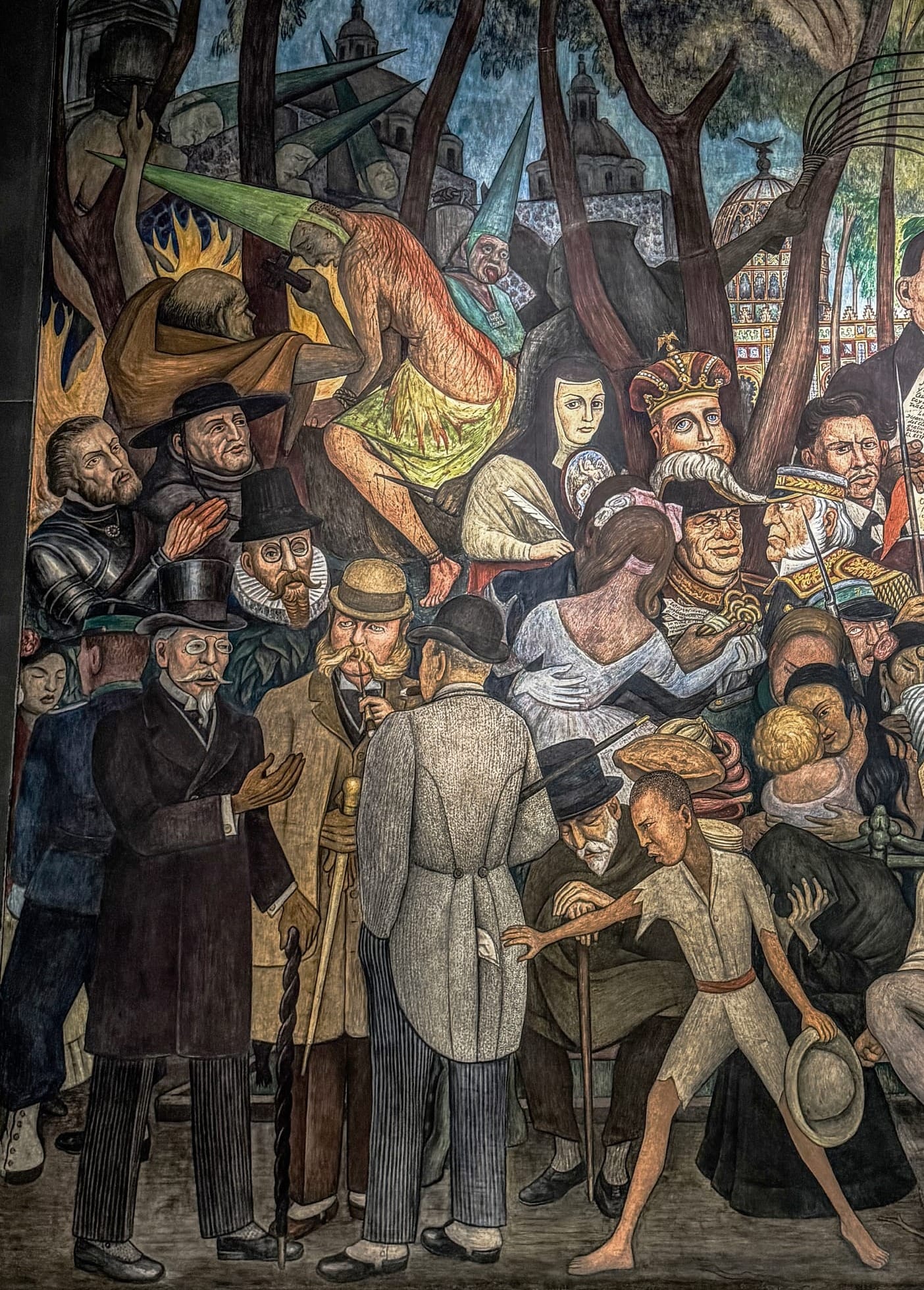
My husband Paul and I were dining in the Gastronomy Cooking School in Mexico City when I became captivated by a copy of a startling Diego Rivera mural that covered the entire back wall of the room. I could not take my eyes off a figure on the far left who wore a large conical hat. When the waitperson asked if I wanted anything else, I replied: “Yes. I would like to know where is the original of that mural?”
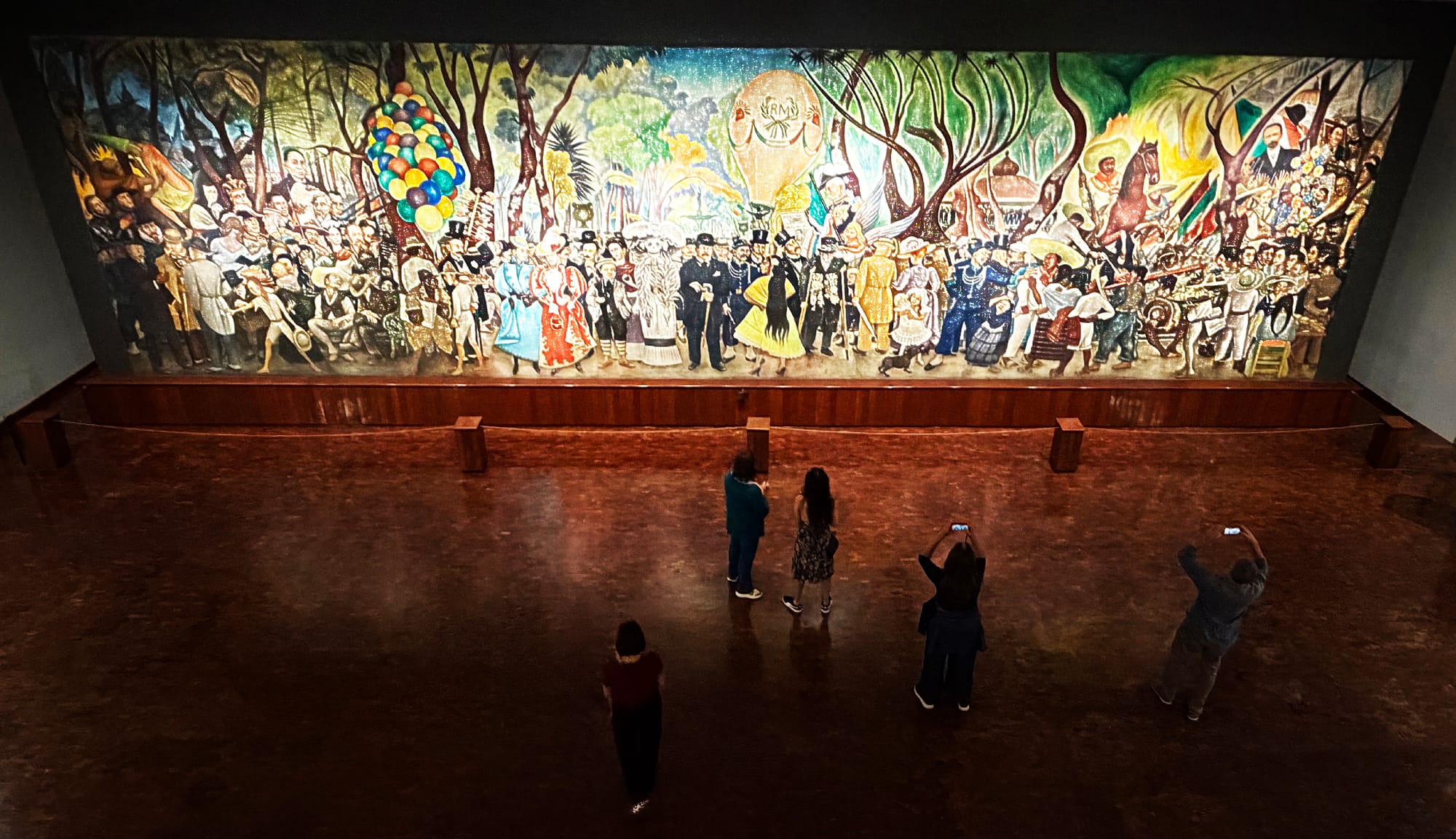
“The Diego Rivera Mural Museum,” she replied. By the time she had brought over the bill, an Uber was on its way to pick us up and deliver us to the painting.
The Uber driver was extraordinary: he drove back and forth, forth and back, but could not find the museum. As we drove around aimlessly for half an hour in Mexico’s infamous traffic, I thought it might calm down the driver to know that the museum contained the work of the man who helped pioneer public, political art with the Mexican and international mural movement. Famous political street artists today like Banksy were inspired by him. If the Uber driver had any hair on his head, he would have yanked it out. Finally, he just dropped us off at a busy street corner and said it was near there.
I asked vendors in the street and police officers. Nobody had ever heard of the museum. Finally, a fellow pedestrian named Monica said she had never been there but finally located it on google maps and wanted to come with us.
We entered the out-of-the-way Diego Rivera Mural Museum on the west side of Alameda Central Park, and a sign informed us that for one dollar a person we could have a private guide so Monica insisted on buying us tickets. Unfortunately, the guide spoke the fastest Spanish I have ever heard outside of Cuba. He said he was English speaking, but the only thing he ever said in English was “I don’t speak English.” Nonetheless, although my ears were exhausted, we spent hours in the museum, every minute of which I loved.
The 1947 mural is about 54 feet long and took Diego Rivera only two months to complete. What people don’t know is that “Sunday afternoon dreams in Alameda Park” depicts the dreams and nightmares of many of the characters in the mural. And the specific image on the far left that first caught my attention in the restaurant, was a beautiful woman wearing a coroza, or spherical pointed hat, used to humiliate heretics during the Inquisition.
I learned that the woman in the painting was Mariana de Carvajal, a prominent figure in Mexico City, who was accused of being a crypto Jew. She wore part of a sanbenito, or tunic used for victims burned at the stake. It had slipped below her waist. Her back was covered with lash marks from a whip, and the fire of the auto-da-fe where she was incinerated in 1601 burns behind her. One of the Spanish onlookers is the priest Fray Juan de Zumárraga, who helped to initiate the l6th century Inquisition in Mexico that targeted secret Jews and other “heretics.”
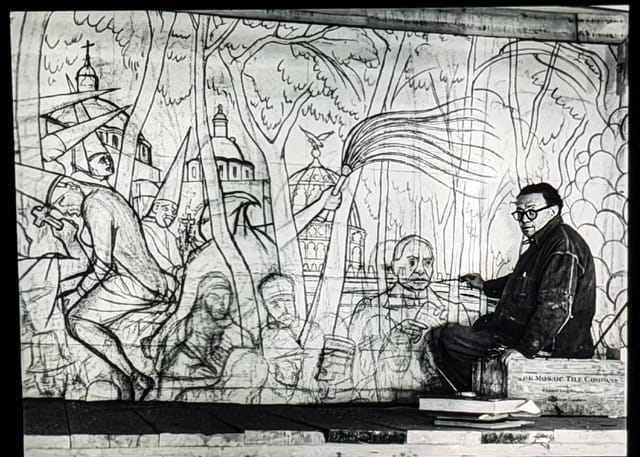
Monica whispered to me that Diego Rivera was Jewish, and so was his wife, the painter Frida Kahlo. The guide overheard and said it was true, but maybe it also wasn’t true.
I became obsessed. Both Rivera and Frida Kahlo claimed to be Jewish? How was it reflected in their art?
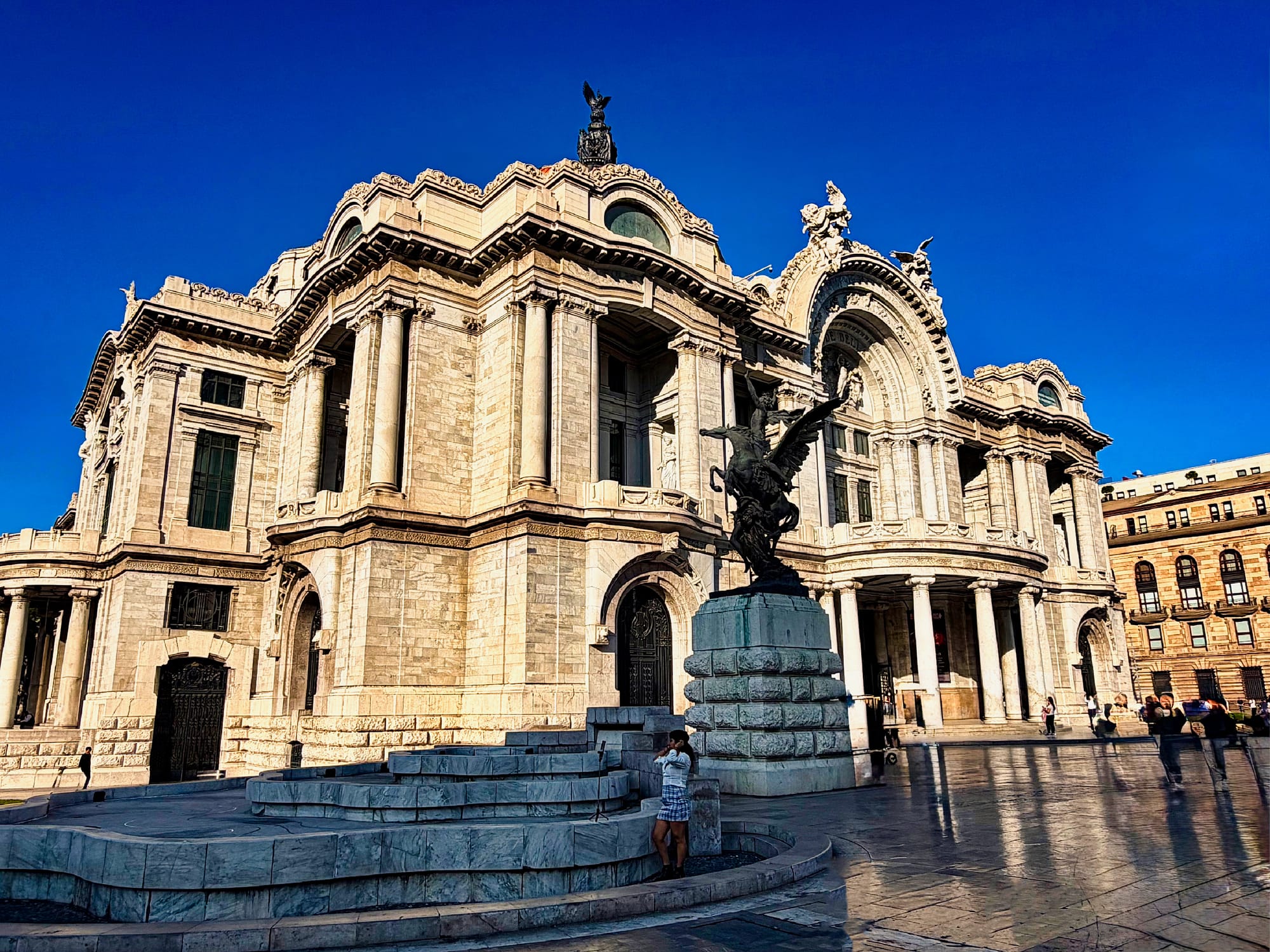
We went to the Palacio de Bellas Artes to see if there was Jewish imagery in other of Rivera’s brilliant and striking murals. In the painting “Man, Controller of the Universe,” his passionately socialist and revolutionary vision is linked to a few prominent Jewish figures: Karl Marx and Leon Trotsky. Marx founded communism and argued that the struggle between the owners and the workers is what drives history. Eventually capitalism would fail, and around the world, a proletarian revolt would lead to a classless society. And Trotsky applied Marxist theory as a leader of the 1917 revolution in Russia and a founder of the Red Army.
Rivera identified deeply with these ideas, and felt that the gulf in Mexico between the wealthy and the workers made it ripe for socialist ideals. His views were shared by many of his contemporary Mexican artists, thinkers, Leftists, progressives, Jews, and radicals who believed in an egalitarian society. I smiled at the thought that if he were alive today, he might actually be a supporter of democratic socialist Bernie Sanders, who is also Jewish.
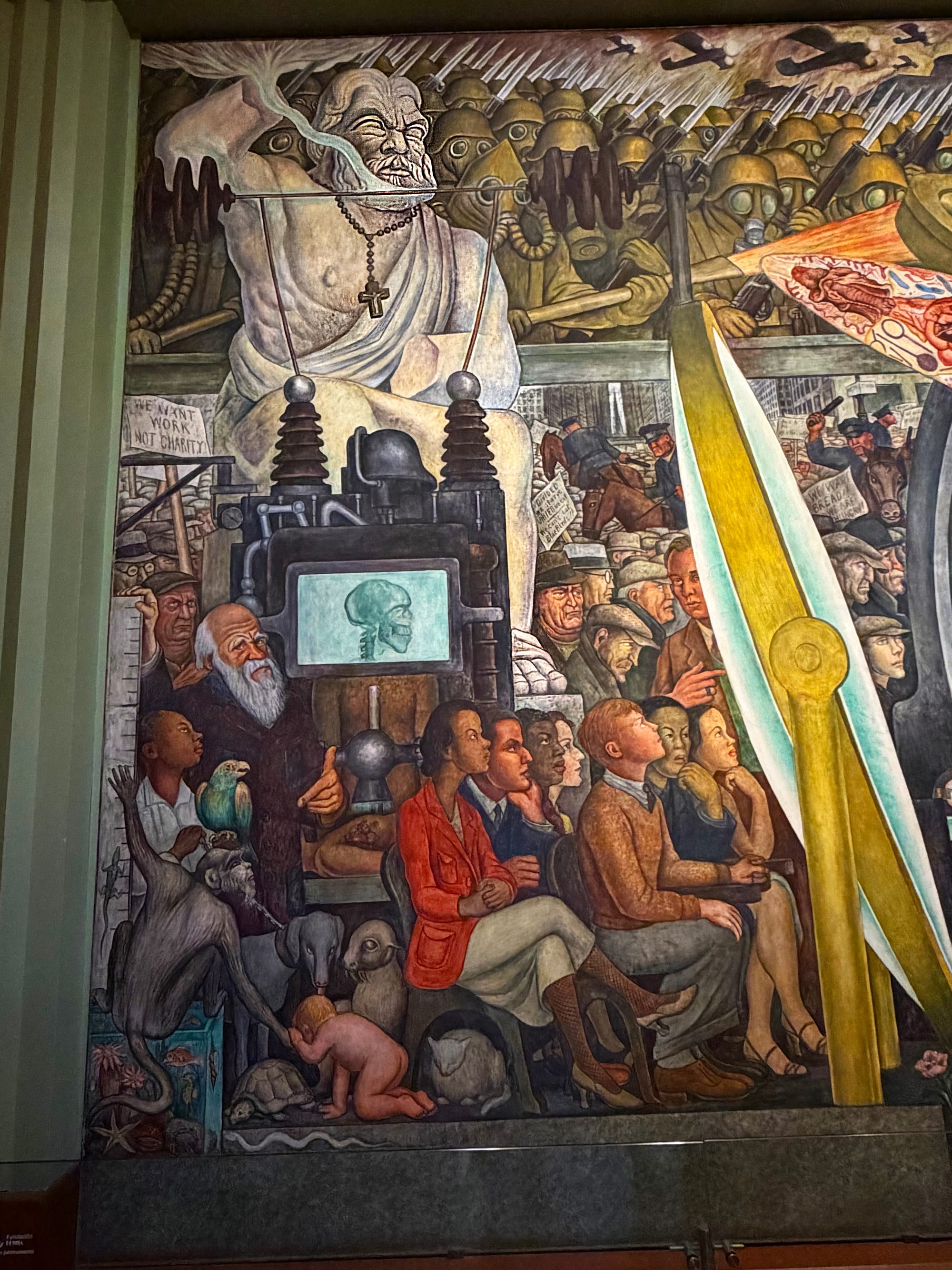
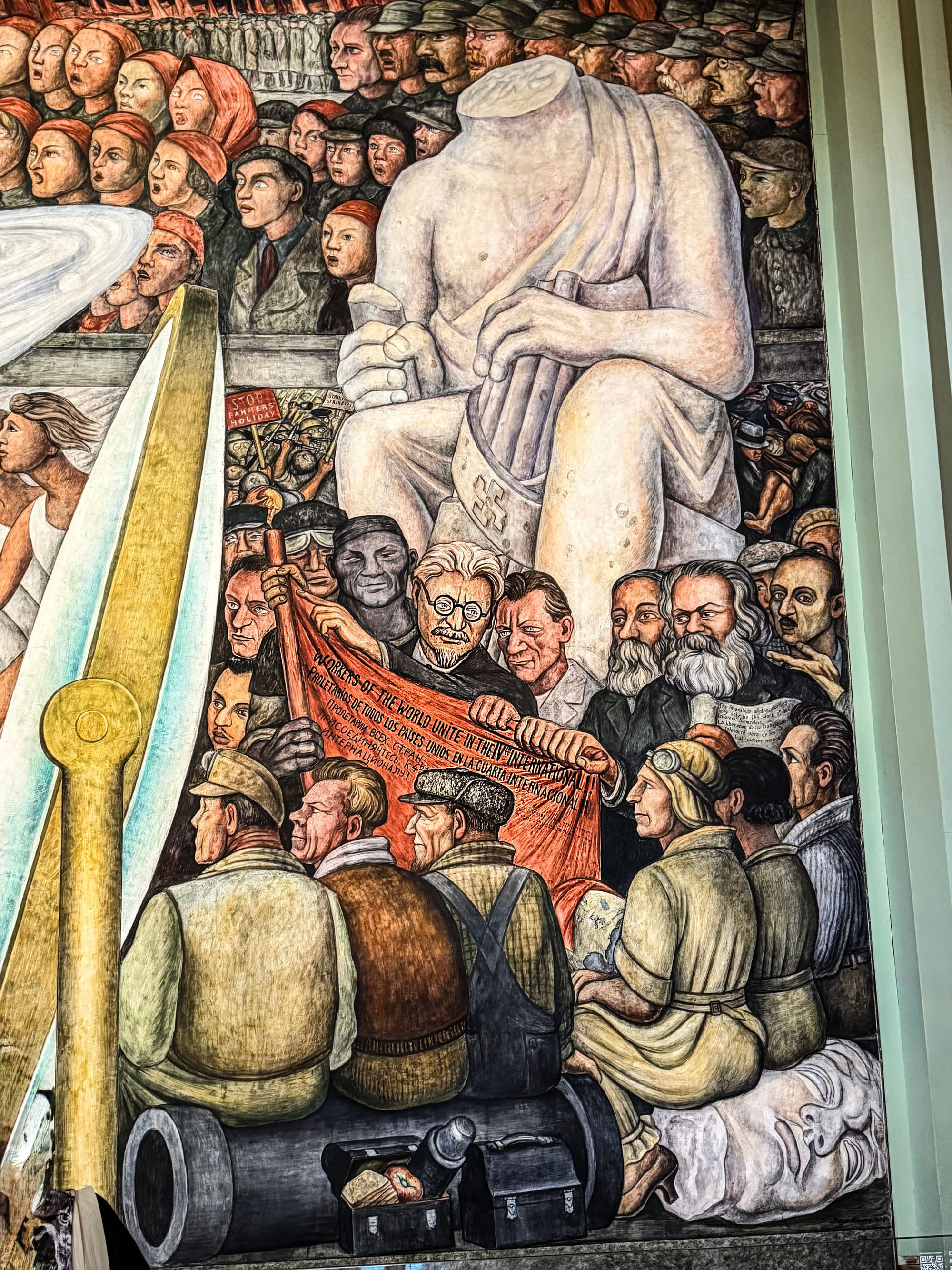
History and politics combine in this detail of a Rivera mural in which Karl Marx looms in godlike proportions. (Right) Beneath a beheaded ancient deity, Leon Trotsky brandishes a workers’ banner. Photos © Paul Ross / nmjewishjournal.com
When Stalin came to power in Russia, Rivera, like Leon Trotsky, vigorously opposed Stalin as an authoritarian anti-revolutionary. Rivera sided with Trotsky, and personally went to see Mexican president Lazaro Cardenas to ask for Trotsky to be granted asylum in Mexico because his life was threatened. The two men had a strong political bond, and Rivera identified with him as a Jew, but they had a lot of personal conflict. Rivera, like Trotsky, was a married womanizer and Trotsky had an affair with Rivera’s wife Frida Kahlo. Trotsky was considered the enemy of the Stalinist communist regime and brutally murdered.
At the Palacio Nacional, Rivera’s “History of Mexico” murals include the Inquisition that persecuted secret Jews who had been forced to convert to Catholicism. Once again, he featured the Portuguese Carvajal family, who were declared heretics as Crypto Jews, and burned at the stake in Mexico for their religious practices.
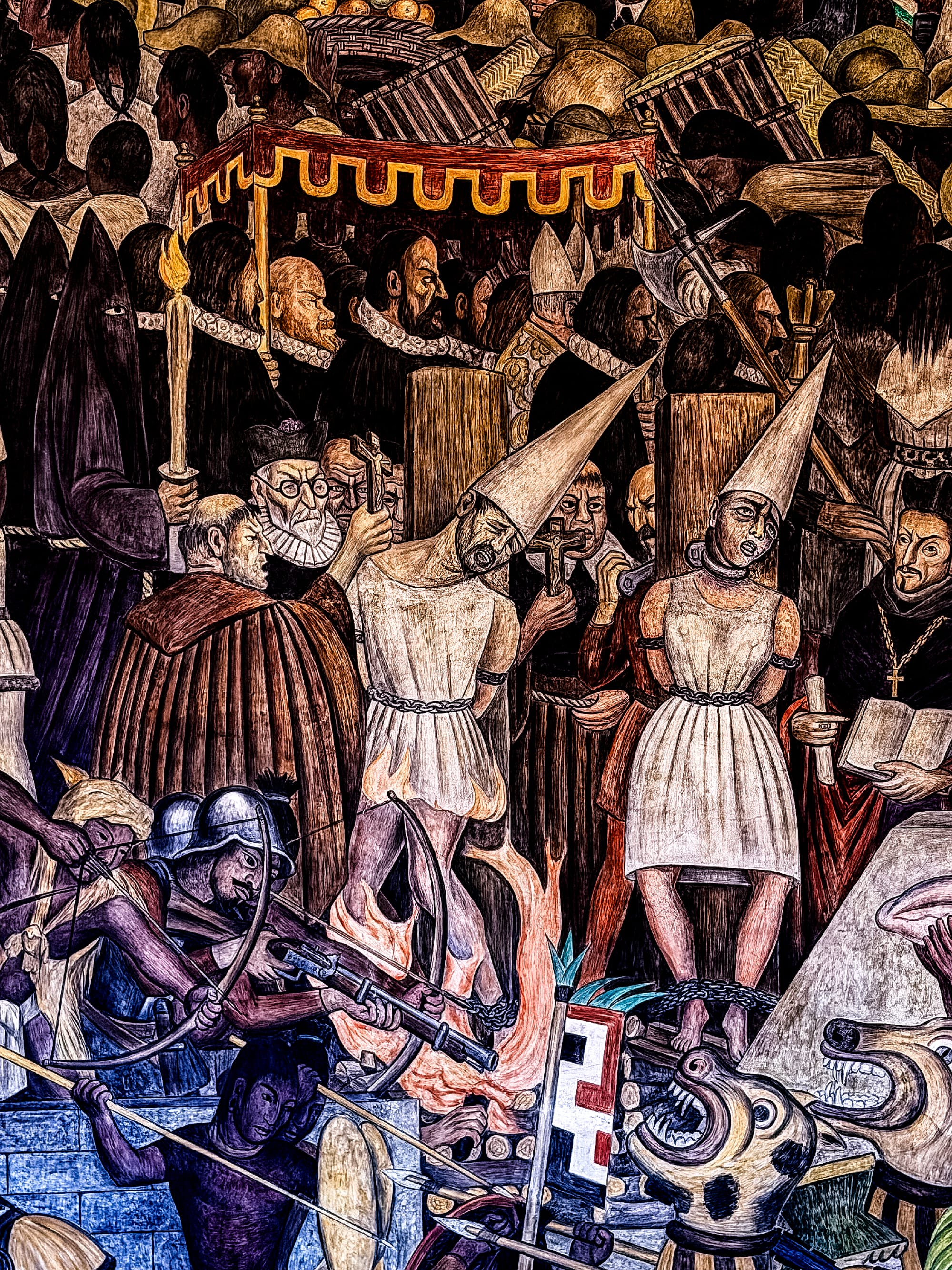
When the Nazis came to power in Europe, Rivera included strong anti-Nazi elements like swastika in his art. He declared that his grandmother, Inés Acosta, was descended from Portuguese Crypto Jews, and that Judaism was a dominant element in his life. He also said his wife Frida’s father was a German Jew. The couple was not religious or practicing, yet they had Jewish genetics, identified strongly with being Jewish and declared it was significant in their lives.
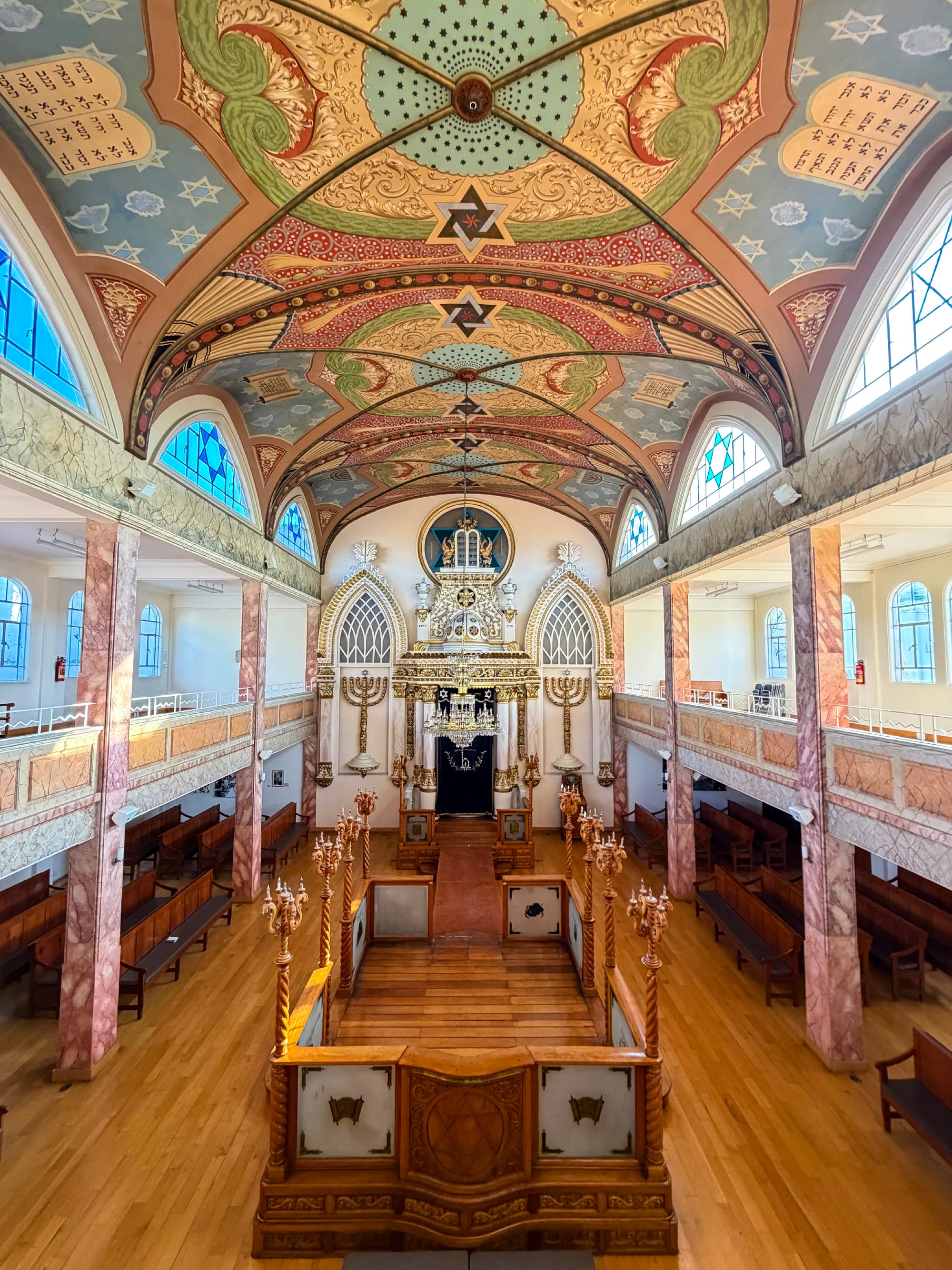
I asked every guide where I could find out more about their claims of Jewish ancesty, and one made the mistake of revealing to me the name of a book in Spanish, “Diego Rivera and the Inquisition,” published in 2008. It was an error because it sent me on a multi-day futile search for the book. I went online, to the publisher, to book sellers, to markets that sold books. No one had the book for sale. I found one copy at the first Ashkenazi synagogue in Mexico City, which is now a museum. It was built while Hitler was incinerating Jews in gas chambers. But somehow it flourished. It later fell into disuse when the first Ashkenazi Jews became more prosperous and moved to other neighborhoods. Apparently, Rivera had a connection with the synagogue and Jewish congregants. But when I said I was leaving for the U.S.A in two days, they said that alas, the book was not available for loan.
When I got home, my librarian friend located the book on interlibrary loan. I never studied Spanish and only speak it in the present tense, but I was determined to read the book of essays.
A piece by Alicia Gojman de Backal, a renowned Mexican expert on Judaism, focuses on the personal Jewish-related history of Rivera. In 1952, the muralist said his ancestors were “Spanish, Dutch, Portuguese, Italian, Russian and, I am proud to say — Jews.” He told a Jewish newspaper that his paternal grandfather was the son of a Jewish Italian in Petrograd, and his grandmother on his paternal side was Jewish. His grandfather was born in Spain, did business in Cuba, owned mines, and was a revolutionary in Guanajuato. At age 50 he married Inés Acosta, age 17, descended from Portuguese secret Jews.
In 1942, a letter from B’nai Brith in Mexico said Rivera considered it an honor to have Jewish blood in his veins. He spoke openly and publicly against antisemitism on several occasions. He had many Jewish friends, writers and artists, and he did illustrations for a book in Yiddish by USA poet Yuri Suhl. The last poem in the book was dedicated to Rivera.
The poet Isaac Berliner introduced him into Jewish circles, and Rivera illustrated his book about the dissipated rich in Mexico City while the poor suffered miserably from sickness, abandonment, and they were reduced to begging for bread. Rivera and Frida Kahlo were part of a circle of left-wing Jewish intellectuals.
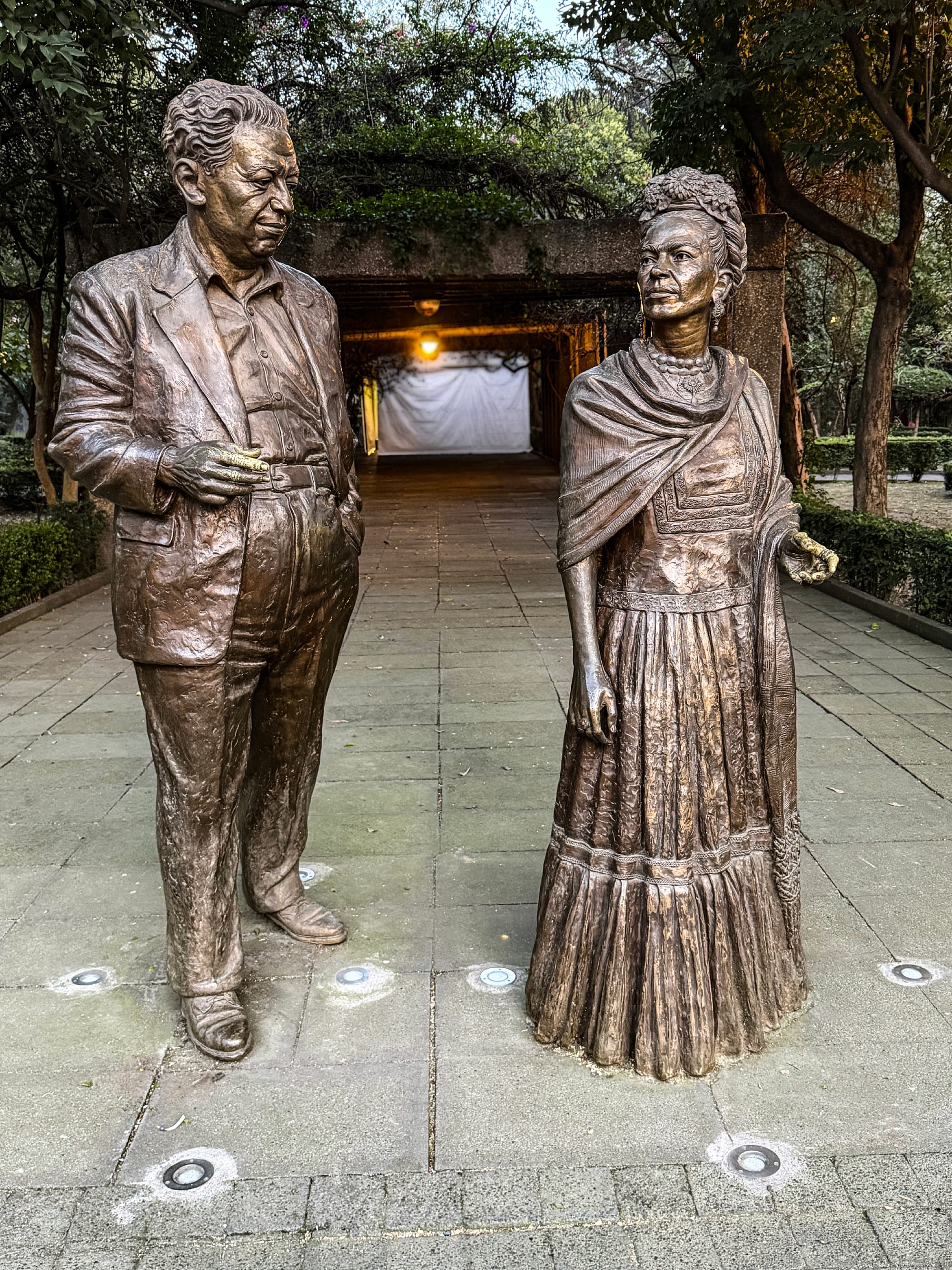
In one interview, Rivera said his young wife Frida (he was 47 and she was 24) was not a genuine Mexican—she was the daughter of a German Jew. That was what I learned about her, and most Jewish art lovers I know thought the same thing.
Kahlo proudly identified Guillermo Kahlo (born Carl Wilhelm Kahlo) as her German father. Sometimes she claimed that he was of Hungarian-Jewish descent. This was believed for a long time, until, about twenty years ago, several German genealogists and historians claimed that research indicated that he was a German Lutheran, from a long line of German Lutherans, and not Jewish. Her mother, Matilde Calderón, was of Spanish and indigenous Mexican descent.
I don't think it was definitively proven, one way or another, but before, during, and after World War II and Nazism Frida identified with Jews, hung with Jewish artists and activists, admired Jewish revolutionaries, had an affair with Trotsky, and certainly preferred to be identified as a Jew rather than a German, given all the anti-German sentiment at the time. She was definitely anti-fascist, anti-Nazi, and anti-antisemitism.
One of Kahlo's paintings has been interpreted by scholars as having Jewish content. "My Grandparents, My Parents, and I" was made the centerpiece of an entire exhibition on Kahlo's Jewish identity at the Jewish Museum in New York, curated by Israeli art historian Gannit Ankori of Hebrew University. The painting depicts her as a zygote, a fetus, and a naked little girl, connected to her father's German-Hungarian roots and her maternal and paternal grandparents by a loose red ribbon. The ribbon may symbolize an umbilical cord that connects her to her lineage and bloodline.
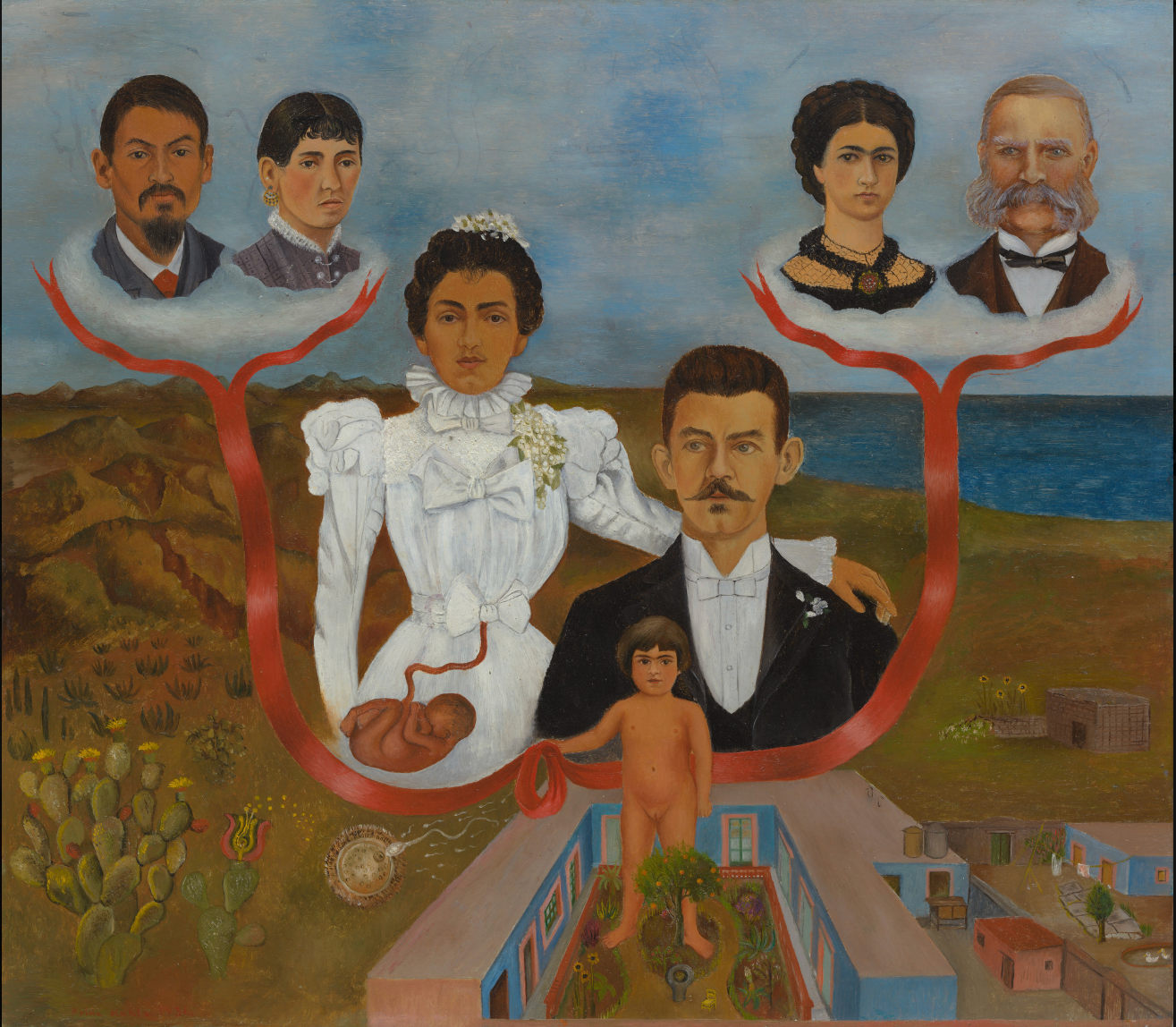
The painting itself contains no visual markers identifying her paternal grandparents as Jewish. The Jewish reading comes entirely from outside the painting, from Ankori's research into Kahlo's biography, letters, and library, and from the historical context: Ankori documented that 1936, the year the painting was made, and the year Kahlo began most frequently claiming her father's Jewish ancestry, was the same year the Nuremberg Laws were promulgated in Germany. Ankori argued that Kahlo deliberately used the format of the Nazi genealogical chart, employed at the time to establish racial purity, but inverted its purpose, proudly displaying her mixed heritage rather than erasing it. MoMA, which owns the painting, also connects it to the Nuremberg Laws context.
Another painting, "Moses," was commissioned by a patron who asked Kahlo to read Freud's Moses and Monotheism and paint her response to it. It is her personal artistic representation of that text, a dense, vibrant, highly symbolic work that is evocative but difficult to interpret or understand. It involves a fetus and an abandoned baby in a reed basket (Moses) with a third eye (wisdom or enlightenment) that may be Diego Rivera. Its main image is a life-generating sun that produces inspiring figures like Gandhi and evil ones like a young Hitler.
This brings us to the delicate and fascinating subject of what makes someone a Jew. For some, it is strictly about Halacha, or Jewish religious law. If you are born to a Jewish mother, or a woman who converted to Judaism, you are automatically Jewish even if you are an atheist or non-observant. For many Reform Jews, paternal Jewish lineage is accepted, especially if you are raised in a Jewish environment. But then there are people, many of whom I have personally met, who feel Jewish, identify with Jews and Jewish values, even follow Jewish practices and self-identify as Jews, but have no genetic connection. And many Kahlo admirers accept that this was the case with their beloved Frida.
With Diego, it's a different case. If he, indeed, came from a maternal line of Portuguese Crypto Jews, there would be no records to justify or negate his claims. Like the Carvajals in his work, who were burned at the stake, every precaution was taken to convert to Catholicism on the surface and hide one's true roots. But the more I learned about his long commitment to support Jews, socialize and work with Jews, talk about antisemitism, have connections with a synagogue, feature anti-Nazism and prominent Jewish thinkers and activists in his work, the more I believe he was Jewish through his maternal line. He did not claim that he was only Jewish, but, halachically speaking, I believe he identified his true Jewish roots.
Many people know about Kahlo's horrifying injuries and suffering, about Rivera's infidelity and the couple's marital discord, divorce, and remarriage, and Kahlo's affairs. But the subject of how they expressed Jewishness is, believe me, fascinating, deep, and intriguing.
Judith Fein and Paul Ross are award winning travel journalists who have contributed to 131 publications and published four books. Ross is also a photographer and cowboy poet. The duo is fascinated by places, people, and subjects that are little or lesser-known, and that reveal the many ways humans live, love, believe, eat, create, and communicate. They are the Senior Travel Editor and Senior Travel Photographer at the New Mexico Jewish Journal. Their website is: https://www.globaladventure.us
Read recent award-winners:
1st Place, Reviews, How attending a Wagner opera can be fun and not ponderous, NM Press Women, 2026
1st Place, Specialty Articles: Style, A Dazzling Fashion Show for the Most Famous Jewish Mother in the World, NM Press Women, 2026
2nd Place, Arts Reviews, I Have No Beef With the Manhattan Avenue Kosher Deli in Santa Fe, Society of Professional Journalists, 2026 (and most read of 2025)
2nd Place, Social Issues Latino Immigrants Today, Jewish Immigrants Back Then, NM Press Women, 2026
3rd Place, Arts Feature As Wagner's German opera house addresses his antisemitism, one of his most famous works is coming to the Santa Fe Opera this summer. NM Press Women, 2026
Community Supporters of the NM Jewish Journal include:
Jewish Community Foundation of New Mexico
Congregation Albert
Jewish Community Center of Greater Albuquerque
The Institute for Tolerance Studies
Jewish Federation of El Paso and Las Cruces
Temple Beth Shalom
Congregation B'nai Israel
Shabbat with Friends: Recapturing Together the Joy of Shabbat
New Mexico Jewish Historical Society
Policy Statement Acceptance of advertisements does not constitute an endorsement of the advertisers’ products, services or opinions. Likewise, while an advertiser or community supporter's ad may indicate their support for the publication's mission, that does not constitute their endorsement of the publication's content.
Copyright © 2026-27 New Mexico Jewish Journal LLC. All rights reserved.