




America 250: Faith, Freedom, and Mikveh Israel — The "Synagogue of the American Revolution"
As America marks its 250th anniversary, Philadelphia takes center stage as birthplace of the Republic. Lost in that celebration: the early Sephardic Jews who helped finance the Revolution, shape the Constitution, and lay the foundation for religious freedom.
By Carl Montoya
As America marks its 250th anniversary, Philadelphia rightly takes center stage as the birthplace of the Republic. Lost in that celebration is the story of the early Jews who were already there — mostly Sephardim (Jews of Spanish and Portuguese descent) — who helped finance the Revolution, shape the Constitution, and lay the legal foundation for religious freedom in the United States.
Most American Jews today have little connection to this history. They know Ellis Island. They know the Lower East Side. But the Jewish story in America begins much earlier, and a Sephardic Philadelphia congregation sits at the center of it.
The Synagogue of the American Revolution
Congregation Mikveh Israel was founded in Philadelphia in 1740 — 286 years ago this year. It brands itself appropriately as the "Synagogue of the American Revolution."
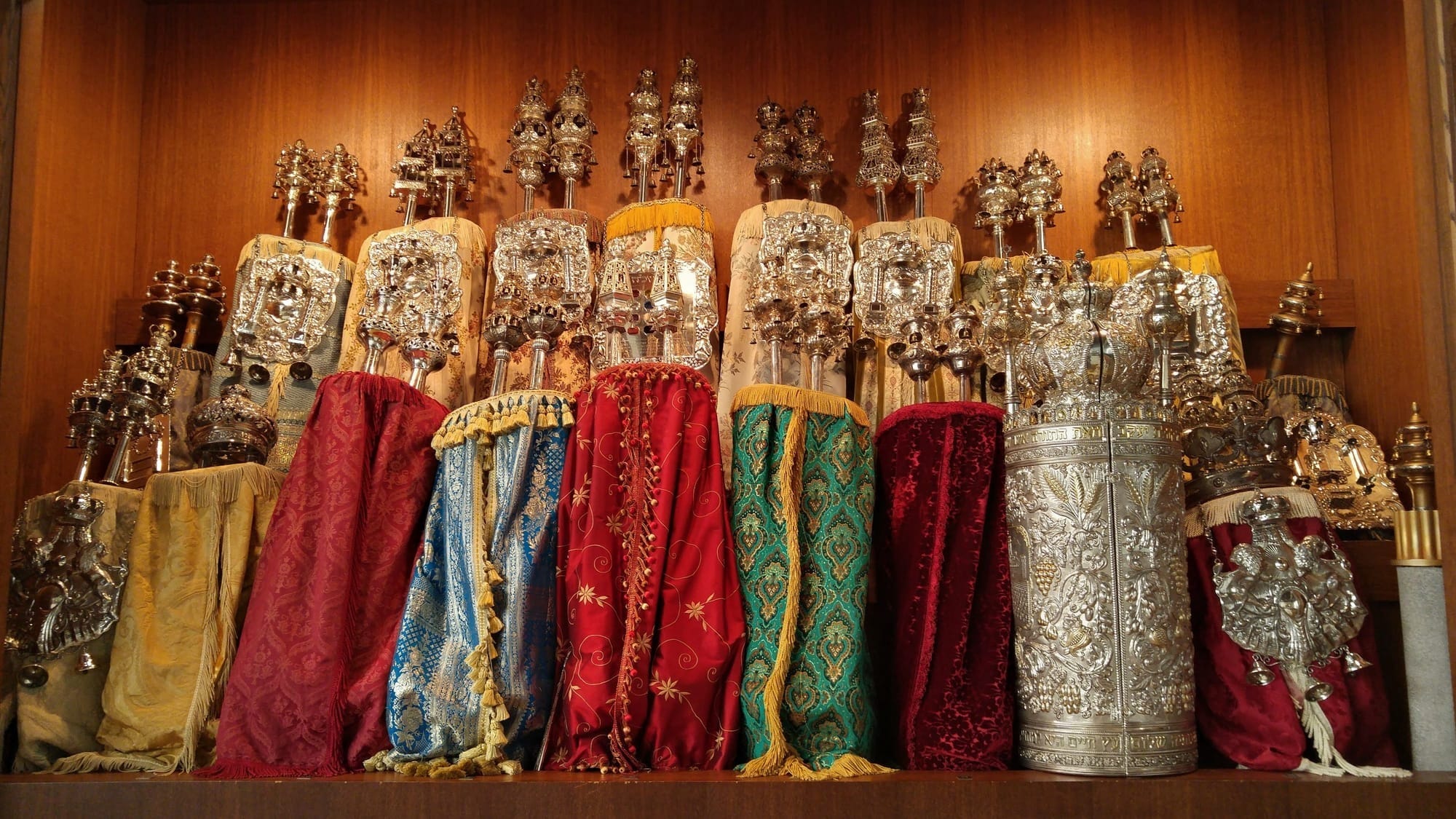
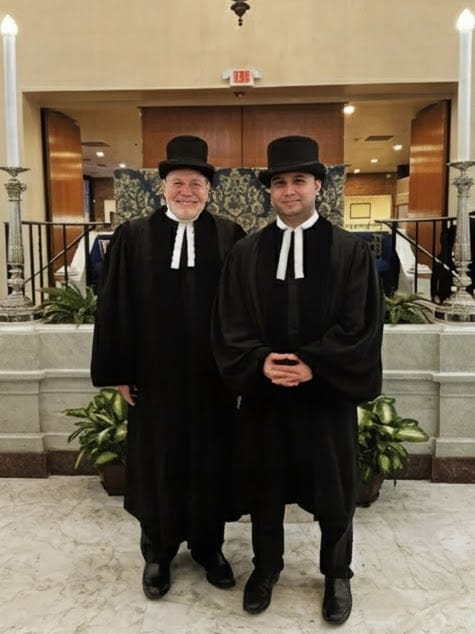
Mikveh Israel is Sephardic, one of only three synagogues in North America that still observes the Spanish/Portuguese minhag — the liturgical tradition dating to the expulsion of Jews from Spain in 1492 and from Portugal in 1497. The other two are Shearith Israel in New York City and Shearith Israel in Montreal. Before the Revolution, there were six synagogues in America, all Sephardic: New York (1654), Newport (1658), Savannah (1733), Philadelphia (1740), Charleston (1749), and Montreal (1760). Richmond was founded later in 1789 by Ashkenazim and adopted the Spanish/Portuguese minhag.
The first organized Ashkenazi congregation in America, Rodeph Shalom in Philadelphia, was founded in 1801 by Jews from Germany, Holland, and Poland who had been members of Mikveh Israel but wished to practice their own Ashkenazi liturgy and traditions. German Jewish immigration began in earnest around 1820, and Eastern European immigration followed in 1880. The Ashkenazim soon vastly outnumbered the Sephardim, and the early Sephardic founders were largely forgotten.
For readers unfamiliar with the Sephardic tradition: unlike Ashkenazi Judaism, which has Orthodox, Conservative, Reconstructionist, and Reform branches, Sephardic Judaism has no equivalent divisions — its congregations are rooted in Orthodox practice, though customs vary by region: Mizrahi, Persian, Egyptian, Syrian, and others. Ladino, the Judeo-Spanish language of the Sephardim, is still spoken by some, though the language is gradually fading. The Sephardim also use different terms for religious leaders of the congregation such as Reverend, Minister, Hazan, and Hakham, although Rabbi is commonly used today.
A World of Persecution and Exclusion
To understand what the early Jewish community accomplished, it helps to know what they left behind.
By the late 18th century, Jews across most of the world lived under severe legal restrictions, were persecuted, and were excluded from the societies around them. In Russia, they were confined to designated provinces. In Ukraine, pogroms targeted their communities and property. In Spain, Portugal, and their colonies, the Inquisition continued to persecute suspected crypto-Jews — those who practiced Judaism in secret. In Italy, Jews were confined to ghettos. In the German lands and Austria, they faced special taxes and strict limits on where they could live and work. In England, the mother country of the Colonies, Jews could not vote, hold public office, or attend major universities. In the Ottoman Empire and North Africa, they held protected but second-class status as dhimmis — a legally inferior standing under Islamic law.
What drew them to America was straightforward: the freedom to be Jewish — openly, legally, and without fear — and the promise of economic opportunity and a better life.
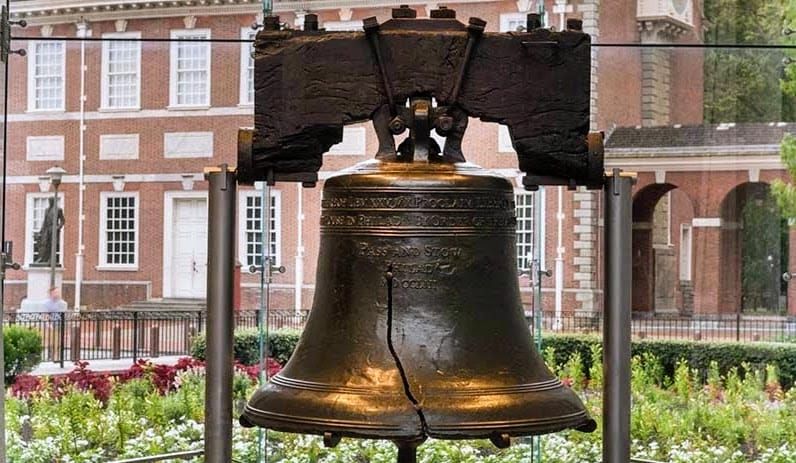
The Liberty Bell
Nathan Levy was an early founder of Mikveh Israel. In 1740, he petitioned Thomas Penn, the Proprietor of Pennsylvania, for a Jewish burial ground — helping to establish both the cemetery and the congregation that same year.
Levy and his business partner David Franks operated a merchant shipping company. In 1752, they were contracted to bring a bell from England to Philadelphia aboard their ship, the Myrtilla. The bell had been ordered by Isaac Norris, the Quaker Speaker of the Pennsylvania Assembly. Norris was proficient in Hebrew and owned a Hebrew Bible. He chose a verse from Leviticus 25:10 for the bell's crown that inspired him: "Proclaim Liberty throughout all the land unto all the inhabitants thereof."
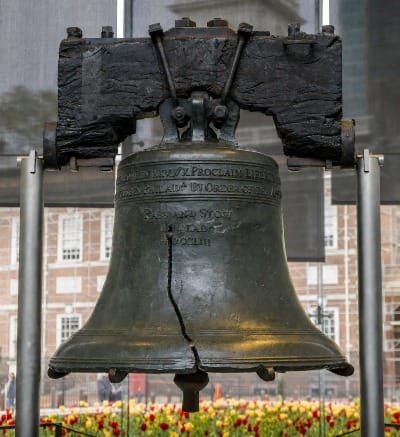
The bell became known as the “Liberty Bell” in 1835 when abolitionists adopted its inscription as a rallying cry and first coined the name. The name, however, did not come into widespread use until years later.
Financing the Revolution
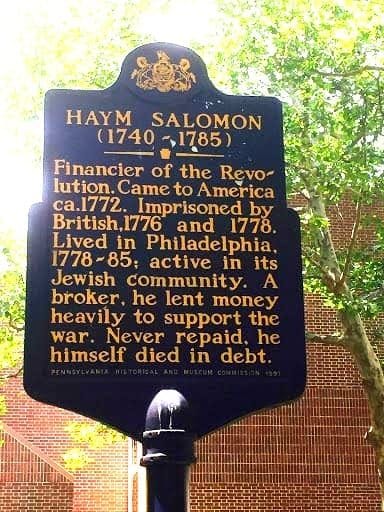
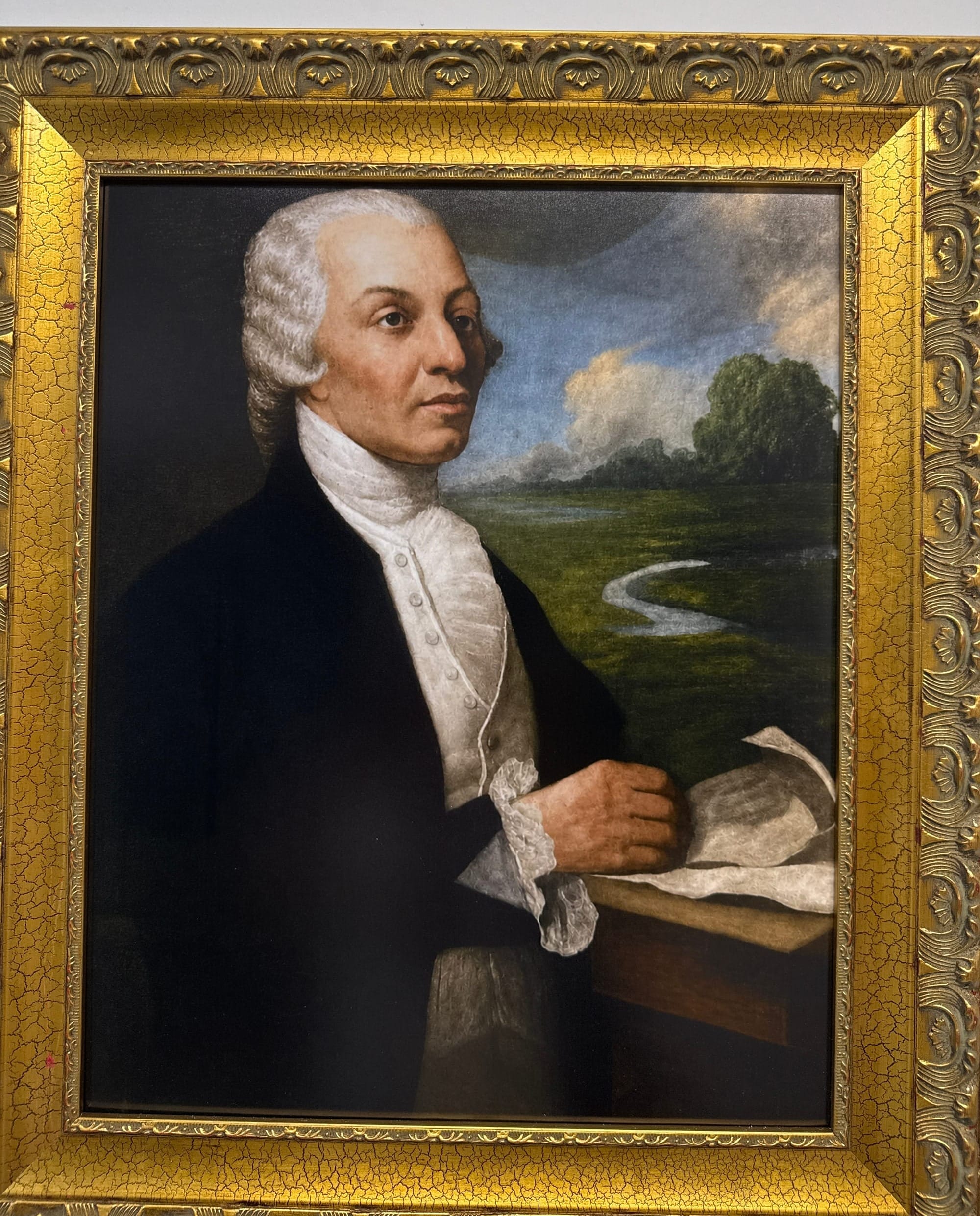
Haym Salomon, Financier of the American Revolution
Haym Salomon arrived in Philadelphia as a Polish émigré with Portuguese Jewish roots. He became a founder of Mikveh Israel and was one of its most illustrious congregants.
Salomon contributed approximately $650,000 of his own money to the American Revolution — roughly $15 million in today's dollars. He served as a key financial broker to Congress, to Robert Morris (Superintendent of Finance), and to the French and Spanish governments. He helped fund General Washington's decisive victory at Yorktown in 1781. He was never repaid. He died in debt, leaving his family destitute, and is buried in an unmarked grave in Mikveh Israel's cemetery.
In 1975, the U.S. Postal Service issued a commemorative stamp honoring him as a "Financial Hero of the American Revolution."
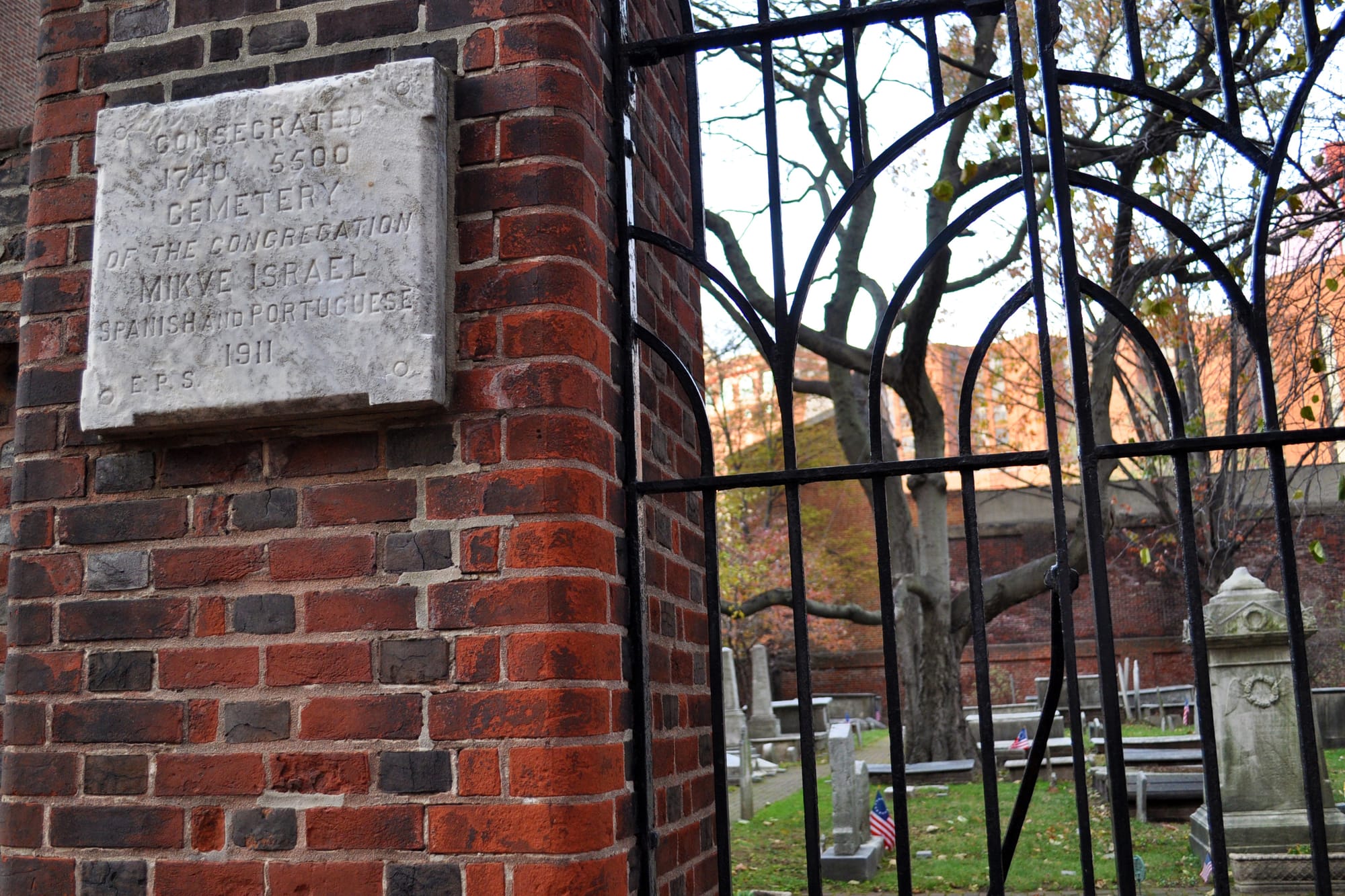
Mikveh Israel Cemetery Cemetery; Marker photo by By Nick-philly - Own work, CC BY-SA 4.0,
Building American Institutions
The contributions of Mikveh Israel's founders extended well beyond the Revolution itself.
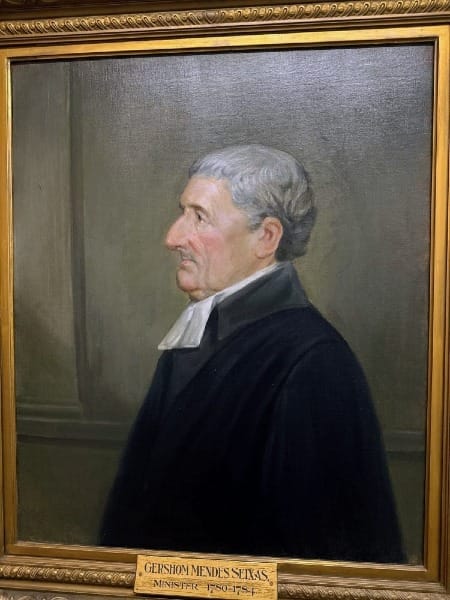
Reverend Gershom Mendes Seixas — the first American-born Jewish religious leader and “Patriot Rabbi of the Revolution” — led Shearith Israel in New York City before moving his congregation to Philadelphia in 1780 during the British occupation. He helped formally establish Mikveh Israel in 1782, assist in the construction of its first synagogue building, and reinforce its Spanish/Portuguese minhag. Seixas and his congregation returned to New York in 1784, but his ties to Mikveh Israel endured.
Isaac Moses in 1781 helped establish the Bank of North America, the first bank in the United States, and co-founded the Bank of New York alongside Alexander Hamilton.
Benjamin Seixas was one of five Jewish signatories, among 24 total, who executed the Buttonwood Agreement in 1792 — the founding document of the New York Stock Exchange.
In 1783, Gershom Seixas as minister, Simon Nathan as president, and Asher Myers, Barnard Gratz, and Haym Salomon as members of the board, "in behalf of themselves and their brethren Jews, residing in Pennsylvania” — protested the state's Religious Test Oath before the Pennsylvania Council of Censors, the body responsible for reviewing the state's constitutional compliance. The Oath required public officials to swear on a Christian Bible, which effectively barred Jews from public office.
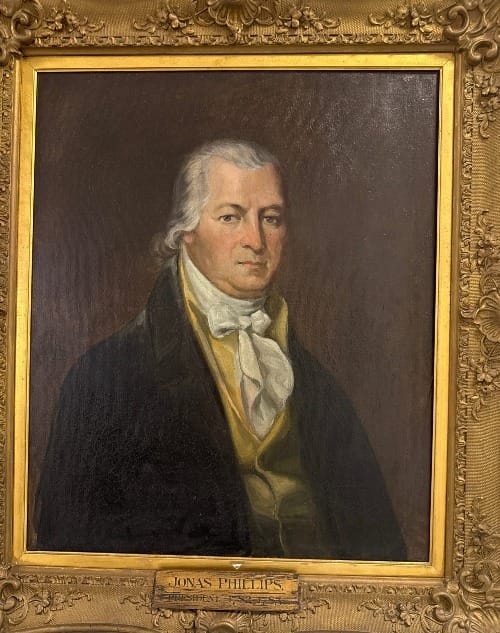
In 1787, Jonas Phillips, a Mikveh Israel founder, early President, and Revolutionary War veteran, sent a letter to the Constitutional Convention in Philadelphia urging the framers to guarantee religious liberty explicitly — an early act of Jewish civil rights advocacy in America.
Reverend Jacob Cohen walked in Philadelphia's Grand Federal Procession of July 4, 1788, celebrating the ratification of the Constitution alongside Christian clergy. Newspapers reported that "the clergy of different Christian denominations, with the Rabbi of the Jews, walked arm in arm" before 17,000 onlookers. For Jews who had known persecution and exclusion in other countries, it was a visible declaration that America was different. Among the clergy was Bishop White of Christ Church — the first Anglican church founded in Pennsylvania, in 1695 — where George Washington, Benjamin Franklin, and Betsy Ross attended services. Mikveh Israel and Christ Church have maintained their special relationship ever since, meeting annually for dinners at each other's place of worship.
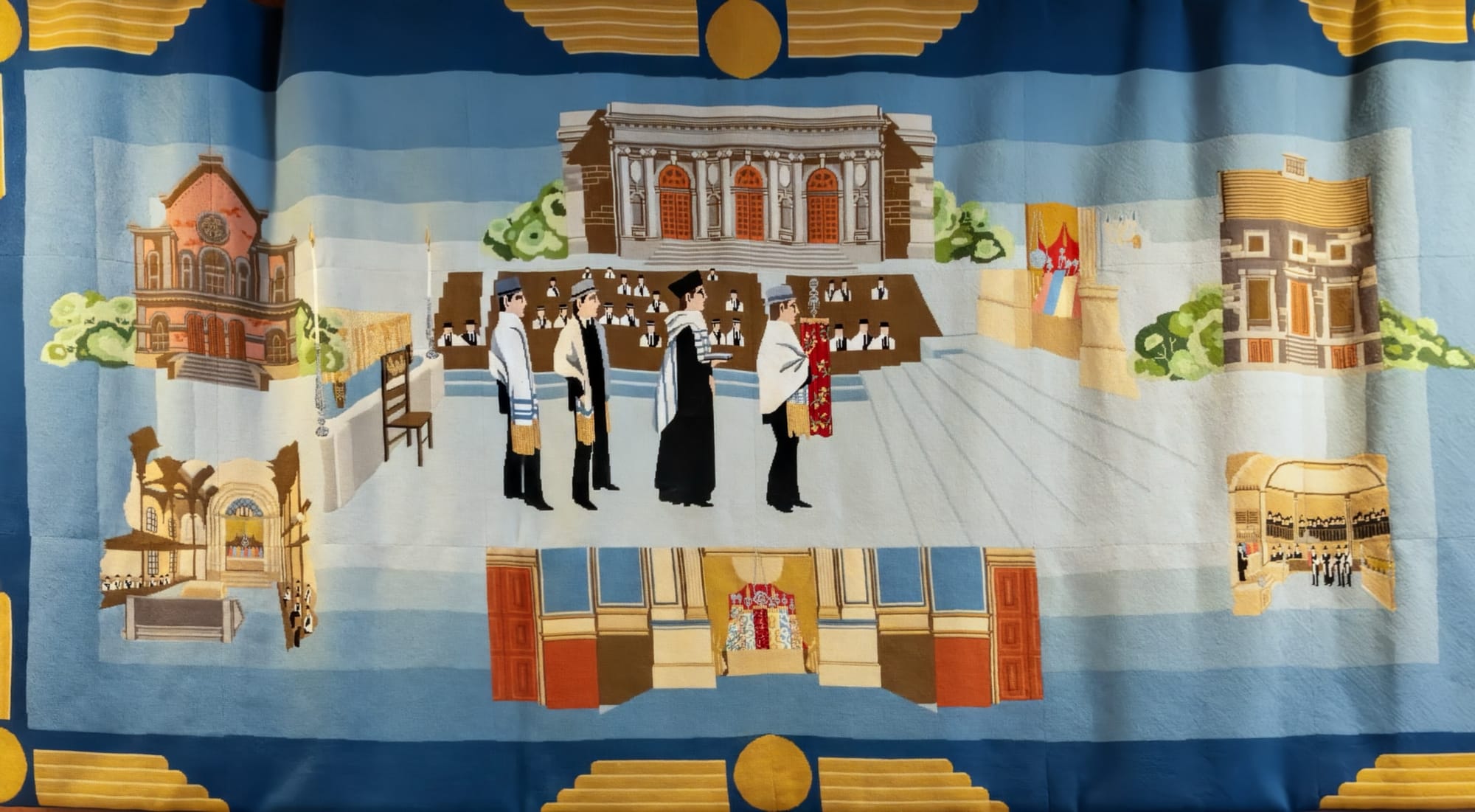
In April 1789, Reverend Seixas attended Washington's presidential inauguration in New York. He was the only Jewish clergyman among the 14 present, marching alongside Episcopal bishops and Presbyterian ministers in the official inaugural procession. In most of the world, such a scene would have been unthinkable.
The Washington Letters
When the Constitution was ratified in 1788, Article VI barred religious tests for federal office, but the document offered no protection for religious liberty itself.
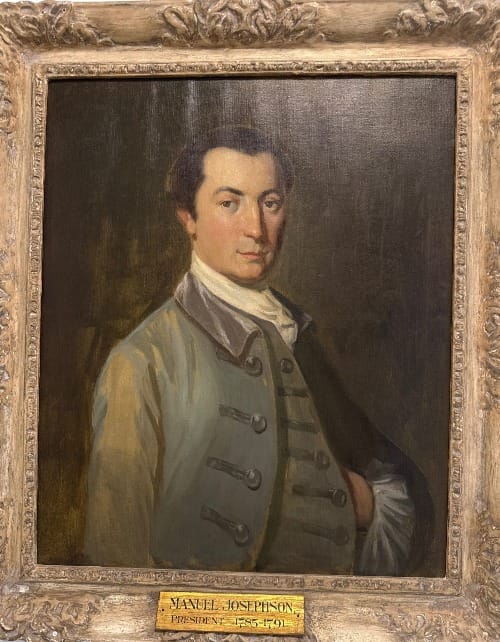
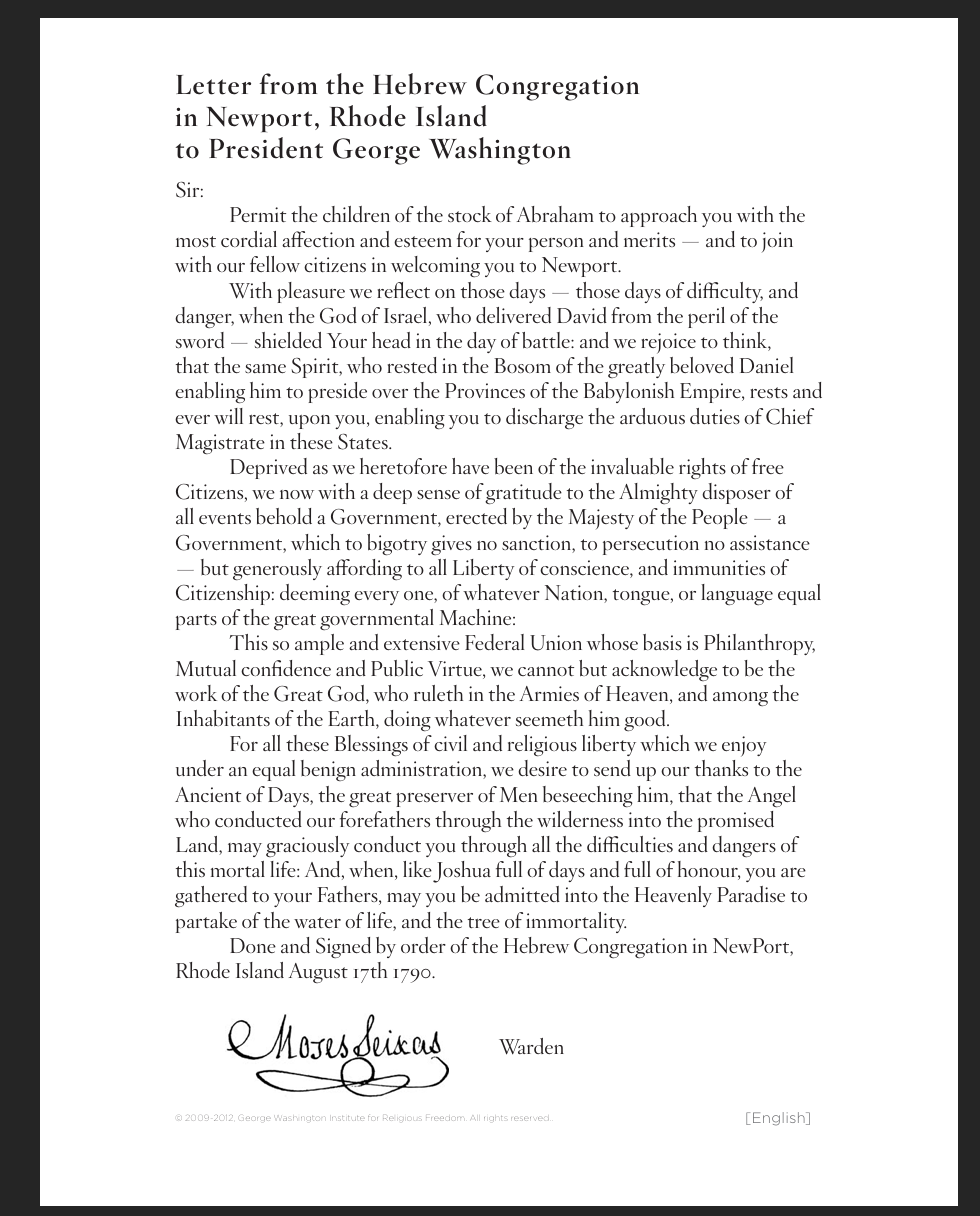
n 1790, Manuel Josephson, President of Congregation Mikveh Israel, initiated the idea for Hebrew congregations to send a joint congratulatory letter to Washington following his inauguration, expressing their hopes for religious freedom. Disagreements prevented a unified letter; instead, three separate letters were sent — one from Newport, one from Savannah, and a joint letter from Philadelphia, New York, Charleston, and Richmond. Moses Seixas, Warden of the Touro Synagogue in Newport and brother of Reverend Gershom Mendes Seixas, presented the Newport letter first, in August. In it, he described the new government as one "which to bigotry gives no sanction, to persecution no assistance."
Washington's reply adopted Seixas's exact wording and transformed it into a presidential declaration: that religious liberty was an inherent natural right, not a privilege granted by government. "It is now no more that toleration is spoken of," Washington wrote, "as if it was by the indulgence of one class of people that another enjoyed the exercise of their inherent natural rights." That a president would adopt a Jewish leader's own words as a statement of national principle was extraordinary.
The other letters, while significant, did not achieve this. Washington's replies to Savannah and to the four congregations reaffirmed support for religious freedom but in more general terms, falling short of Newport's explicit claim about natural rights.
The Newport letter preceded the First Amendment by more than a year. Whether it directly influenced ratification cannot be established, but it gave presidential voice — before it was law — to the principle that became the Amendment's foundation. Supreme Court justices have cited Washington's letters in religious liberty cases, and scholars rank them among the most significant documents in American Jewish history.
The original Washington letters have dispersed. The Weitzman National Museum of American Jewish History displays a facsimile of the Newport letter. Mikveh Israel preserves Washington's reply to the other congregations in a secure location, with a facsimile available to visitors. The Savannah original was lost.
The Washington Letters closed a founding chapter for Mikveh Israel. But the congregation's influence on American life continued. In the decades that followed, three of its prominent members left their own marks on American Jewish history and the nation itself.
Their stories are told in Part II.
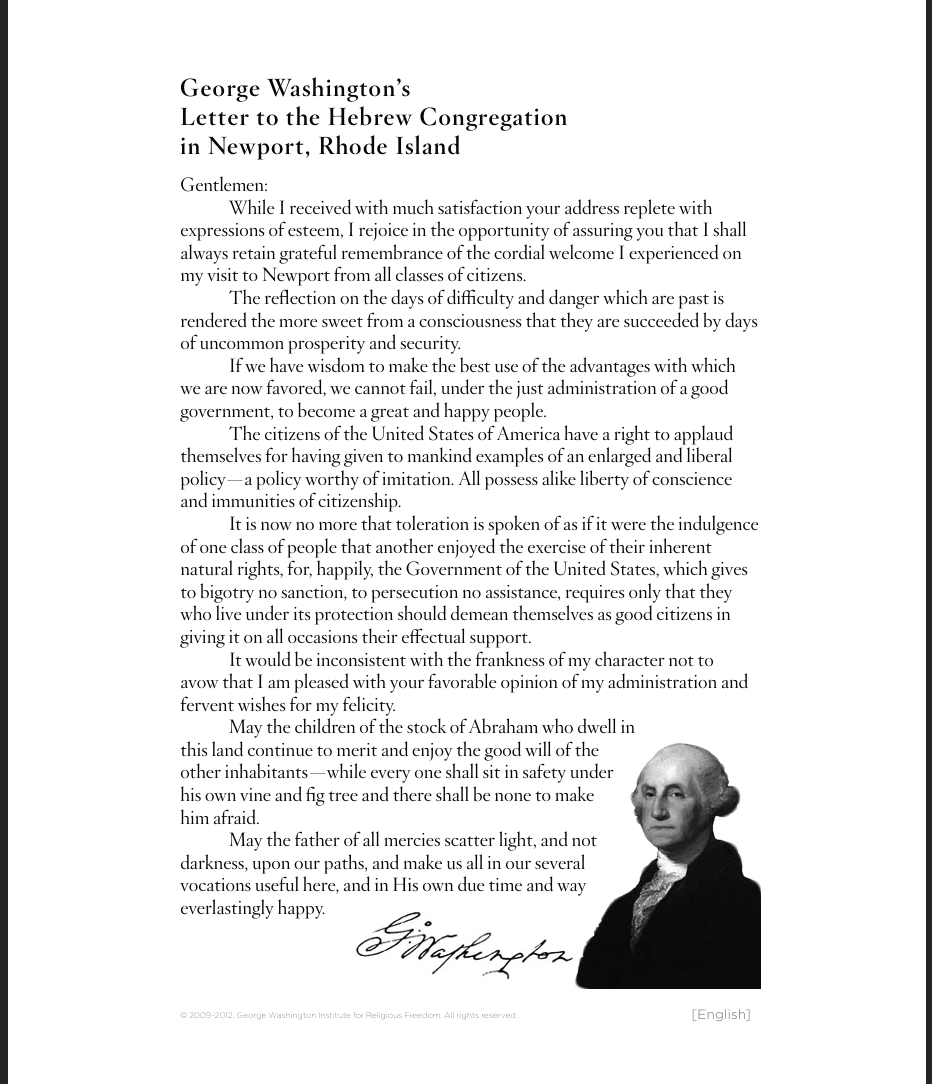
George Washington Institute for Religious Freedom and the Ambassador John L. Loeb, Jr. Visitors Center at Touro Synagogue, Newport, Rhode Island
Editor’s Note: In The New Yorker's June 15, 2026 issue, “Disorderly Duke: Was an English nobleman the hidden hand behind American Liberty” by Adam Gopnik about the intellectual foundations of the American Revolution ends with quoting the above letter from George Washington “to a Jewish congregation in Rhode Island“ but neglects to mention it was a reply to and its inspiration was in the letter he’d first received from Moses Seixas. This rather poignantly illustrates Montoya's opening point about the birth of our Republic, "Lost in that celebration is the story of the early Jews who were already there…" —DJS
Part II of II: Building a Community
In Part I, we explored how Congregation Mikveh Israel—Philadelphia's “Synagogue of the American Revolution”—helped finance the Revolution, shape the Constitution, and establish the legal foundation for religious freedom in the United States.
In Part II, we turn to three of its remarkable congregants, whose contributions in the decades that followed helped build the institutional, cultural, and civic foundations of American Jewish life.
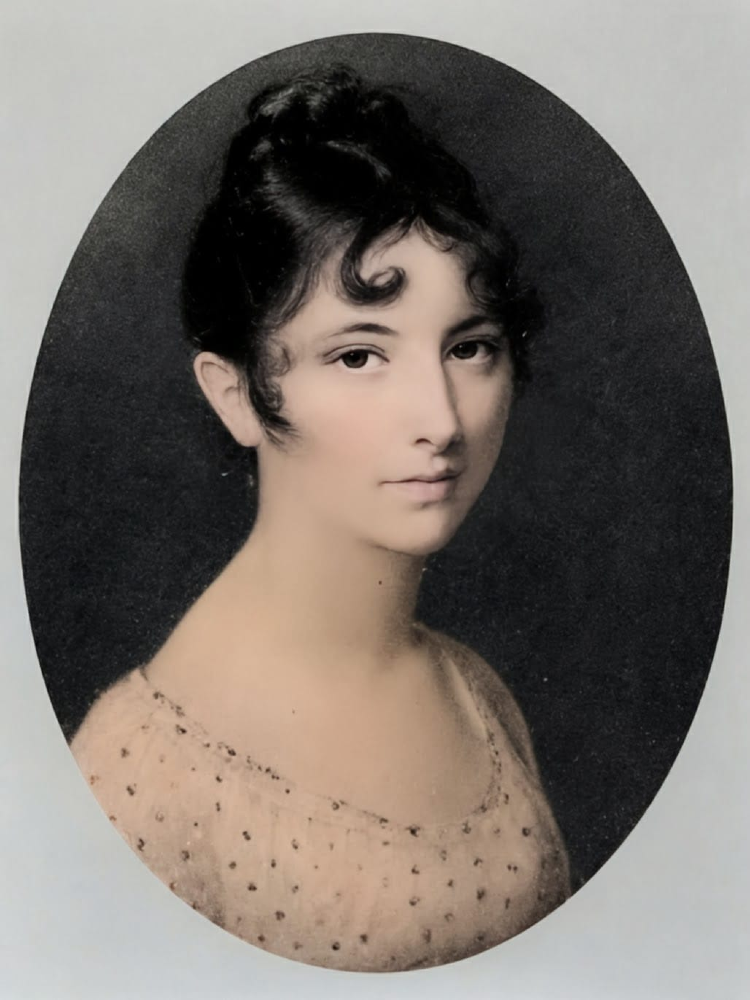
Rebecca Gratz (1781–1869)
Rebecca Gratz was the daughter of Michael Gratz, a Mikveh Israel founder who immigrated from Silesia in 1752. He built a successful international trading business and raised twelve children with his wife Miriam Simon, daughter of a prominent Lancaster, Pennsylvania merchant family. Of their children, all prominent in their own right, Rebecca proved the most accomplished. Rebecca's life spanned from the Revolutionary War to four years after the Civil War — 88 years during which she transformed Jewish and American charitable life.
At 20, she helped establish support services for women and children left destitute by the Revolution. She went on to found or co-found several institutions that shaped both Jewish and American civic life: the Female Hebrew Benevolent Society, which provided relief to indigent Jewish women and still exists today; the Philadelphia Orphan Asylum, which cared for children regardless of religious background; and the Jewish Foster Home, which ensured that Jewish orphans were raised within their faith. She also established the Hebrew Sunday School Society, the first Jewish coeducational Sunday school in America, and served as its superintendent and president for 26 years, personally overseeing the religious education of generations of Jewish children.
What set Gratz apart was not just that she founded these organizations, but that she led them. She served as secretary, superintendent, or president of each at a time when women in leadership roles were virtually unheard of. She worked across religious lines as well, integrating Jews into the broader charitable life of Philadelphia and demonstrating, practically, what Jewish civic participation could look like. Her work helped reduce prejudice and build goodwill between Jewish and non-Jewish communities.
She was also rumored to be Sir Walter Scott's inspiration for the character of Rebecca in Ivanhoe (1819) — a dignified, educated Jewish woman who refused to marry a knight because he was not Jewish.
Rabbi Isaac Leeser (1806–1868): Father of Institutional American Judaism
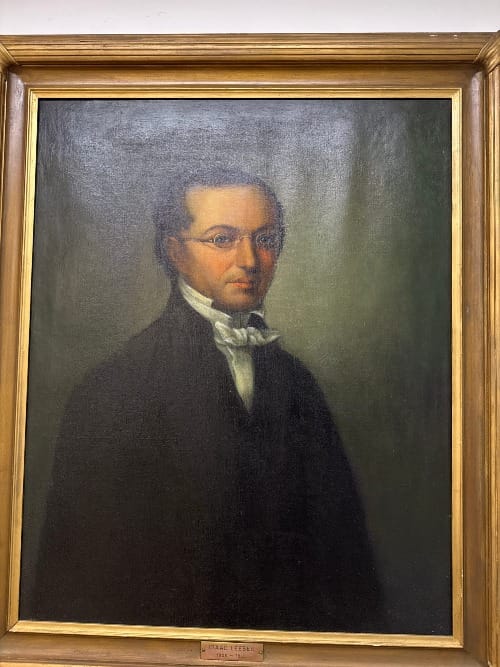
Isaac Leeser was born in Prussia, where he received his early religious training before emigrating to Richmond, Virginia, in 1824. He was taught the Sephardic minhag by Isaac Seixas, a relative of Reverend Gershom Mendes Seixas, which prepared him to fill Mikveh Israel’s vacant Hazan position in 1829.
Over the following decades, he built the institutional infrastructure of American Jewish life nearly single-handedly. He introduced regular English-language sermons at a time when American synagogues preached only on the High Holidays, a practice eventually adopted universally. He produced the first complete English translation of the Hebrew Bible by a Jewish scholar in America — completed in 1853 and known as "The Leeser Bible" — which became the standard English text in American synagogues throughout the 19th century.
In 1843, he founded The Occident and American Jewish Advocate, the first sustained Jewish periodical in the United States. In 1845, he founded the American Jewish Publication Society, the first press in the country devoted to Jewish texts and culture. Working closely with Rebecca Gratz, he contributed textbooks and guidance to the first Jewish Sunday school in America, founded by Gratz in 1838, and later founded the Hebrew Education Society of Philadelphia in 1848, and opened the first Jewish day school in Philadelphia in 1851. In 1867, he founded Maimonides College in Philadelphia, the first Jewish theological seminary in the United States. Although it closed following his death, new seminaries were established based on his model.
At the national level, Leeser was a founding vice president of the Board of Delegates of American Israelites in 1859, the first successful Jewish civil rights organization in the country. During the Civil War, he wrote to President Lincoln requesting the appointment of Jewish chaplains to serve wounded Jewish soldiers in military hospitals. Lincoln granted the request.
Leeser gave American Jews the religious texts, institutions, and intellectual tools needed to build a sustainable Jewish life in America. The vast Jewish cultural and communal world of present-day America rests, in no small part, on foundations he laid.
Commodore Uriah Phillips Levy (1792–1862)
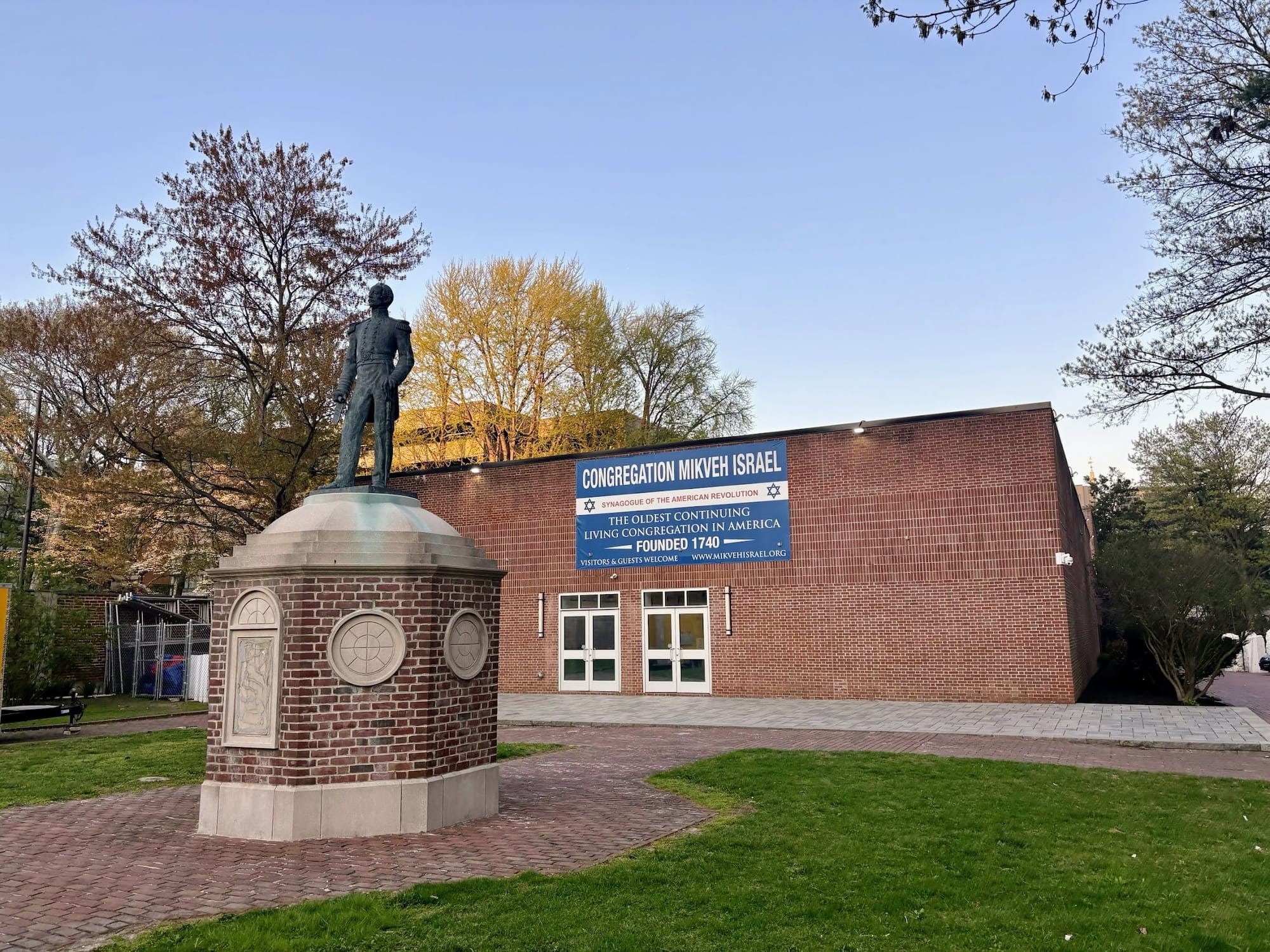
Uriah Phillips Levy was born in Philadelphia into a prominent Sephardic family. His maternal grandfather was Jonas Phillips, the Revolutionary War veteran and Mikveh Israel founder. Levy ran away to sea at ten to serve as a cabin boy, and returned home at thirteen for his bar mitzvah at Mikveh Israel. He embarked on a naval career spanning fifty years.
Those fifty years were marked by relentless antisemitism. Levy was court-martialed six times, dismissed from the Navy twice, and killed a man in a duel — all connected to antisemitism and his outspoken campaign against flogging or corporal punishment. He was reinstated each time by a sitting president — first by President James Monroe, then by President John Tyler. His campaign against corporal punishment succeeded: the Navy moved to abolish flogging in 1850.
Levy eventually rose to Commodore — then the highest position in the U.S. Navy, equivalent to Admiral today. The Naval Academy named a chapel after him. A World War II destroyer escort bore his name. A statue of him stands outside Mikveh Israel on Independence Mall.
Levy was also a devoted admirer of Thomas Jefferson, whom he credited with championing religious freedom. In 1832, Levy commissioned a bronze statue of Jefferson from the French sculptor Pierre-Jean David d'Angers and donated it to the U.S. government. It was placed in the Capitol Rotunda in 1834 and remains the only privately commissioned artwork in the Capitol.
In 1834, Levy purchased Monticello, Jefferson's estate, which had fallen into severe disrepair, as Jefferson had died and left his family deeply in debt and unable to maintain it. Levy restored it and bequeathed it to the nation upon his death in 1862. The timing was unfortunate, however, as the Civil War ensued and the house suffered damage. But his nephew, New York Congressman Jefferson Monroe Levy, restored it once again and donated it to the Monticello Foundation in 1923, where it remains open to visitors.
An Enduring Institutional Legacy
Beyond its individual members' contributions, Mikveh Israel's institutional legacy extended well into the 19th and 20th centuries. It founded or helped establish many institutions benefiting Jews in America: the Association for the Protection of Jewish Immigrants (1884), later absorbed into HIAS; the American Jewish Historical Society (1892); Gratz College (1895); the Young Men's Hebrew Association (1890s); the American Jewish Committee (1906); Dropsie College for Hebrew and Cognate Learning (1907); and the Weitzman National Museum of American Jewish History (1976), originally co-located with Mikveh Israel.
Mikveh Israel Today
The congregation's 1740 cemetery was designated a unit of Independence National Historical Park by Act of Congress in 1956, and listed on the National Register of Historic Places in 1971. It holds the graves of 19 patriot congregants, as verified by the Sons of the American Revolution, including Haym Salomon, as well as later prominent congregants such as Rebecca Gratz.
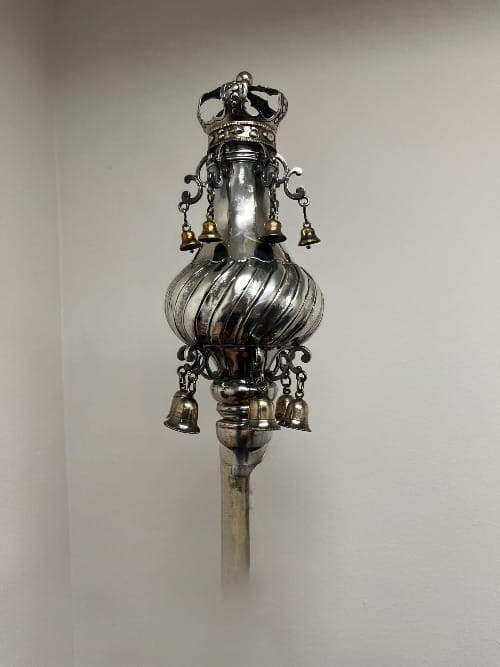
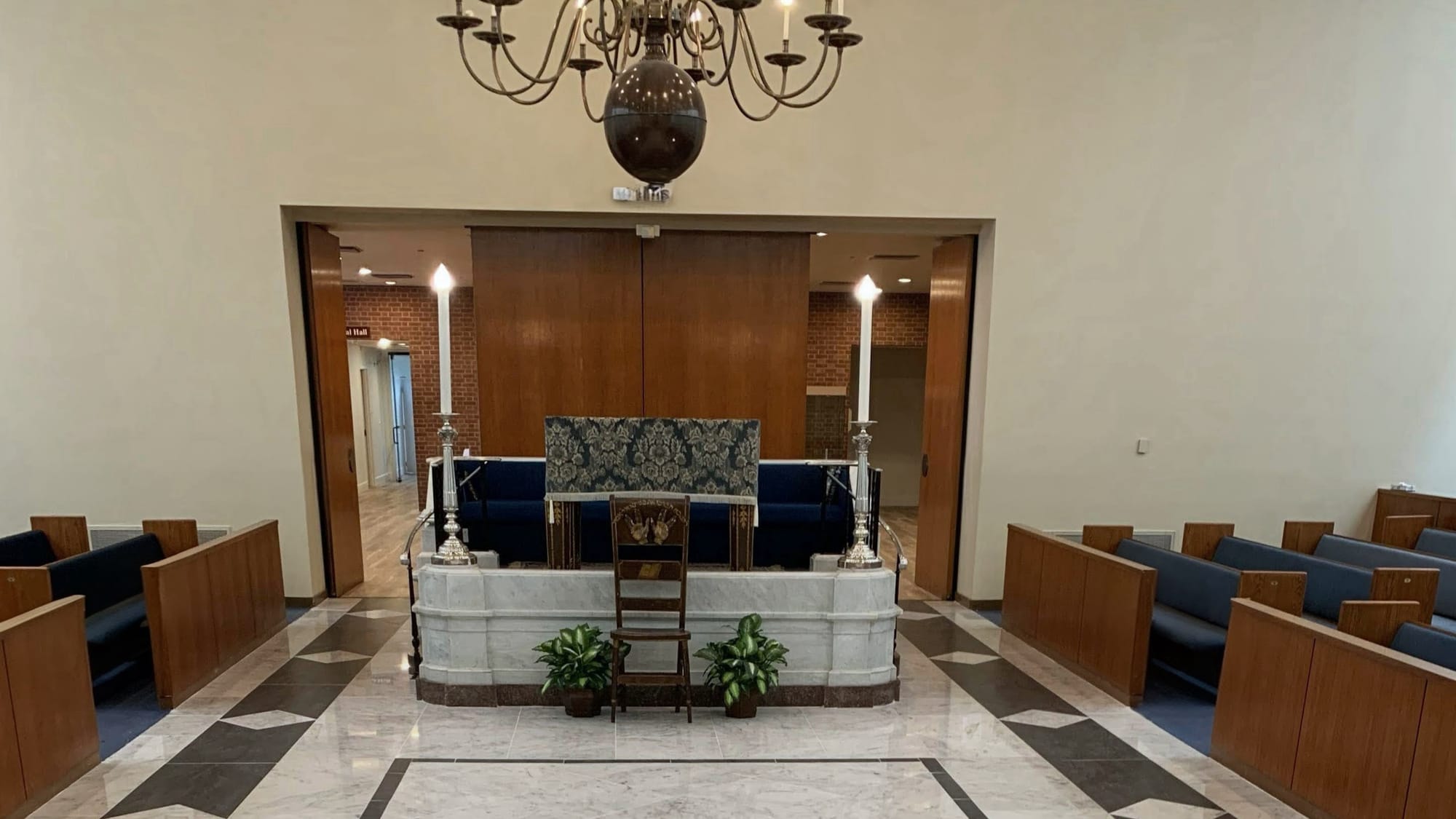
Among the synagogue's historic artifacts: a pair of sterling silver rimonim (Torah finials) crafted by Myer Myers, the foremost Jewish silversmith of the colonial period, estimated value of approximately $12 million; 20 Torah scrolls, the earliest dating to 1761 according to tradition; a reading table from the congregation's first synagogue building in 1782; and a Cohanim chair — a ceremonial chair used during the Priestly Blessing, in which Levites wash the hands of the Kohanim, the priestly descendants of Aaron, before they recite the blessing. It was donated in 1816 by Dr. Moses Lopez, a Converso (his ancestors were forcibly converted by the Spanish Inquisition) and returned Jew — someone who has reclaimed a Jewish identity after ancestors were forced to convert; and an impressive tebah (the Sephardic term for the raised platform from which the Torah is read and services are led, known as a bimah in Ashkenazi synagogues) — crafted from Italian marble in 1859 and assembled from 154 pieces.
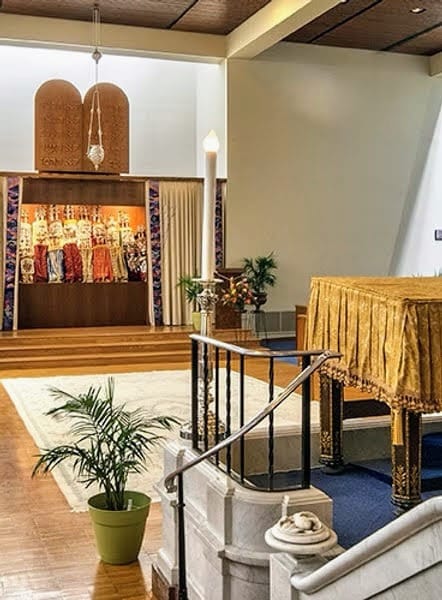
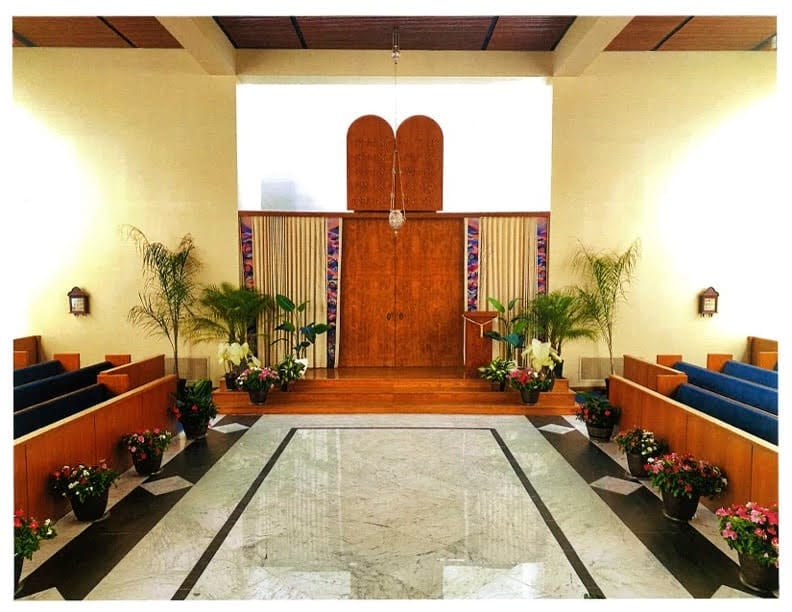
There are also the new Gratz and Museum rooms that recently opened to visitors. To learn more about Mikveh Israel's remarkable history, you are invited to visit Philadelphia and tour its sanctuary, exhibit rooms, and historic cemetery.
Mikveh Israel's story is not just about one congregation. It reflects how a small but determined group of Jews — Sephardic and Ashkenazi alike — helped shape a new nation grounded in religious freedom. Though the congregation drew members from both traditions, it was Sephardic practice and leadership that defined its character and rite. Together, their efforts ensured that Jews in America could remain Jews — openly and fully — while contributing to the broader society. The early founders didn't simply survive in a new country. They helped build it, and in doing so, created the conditions that made possible each wave of Jewish immigration that followed.
That legacy continues.
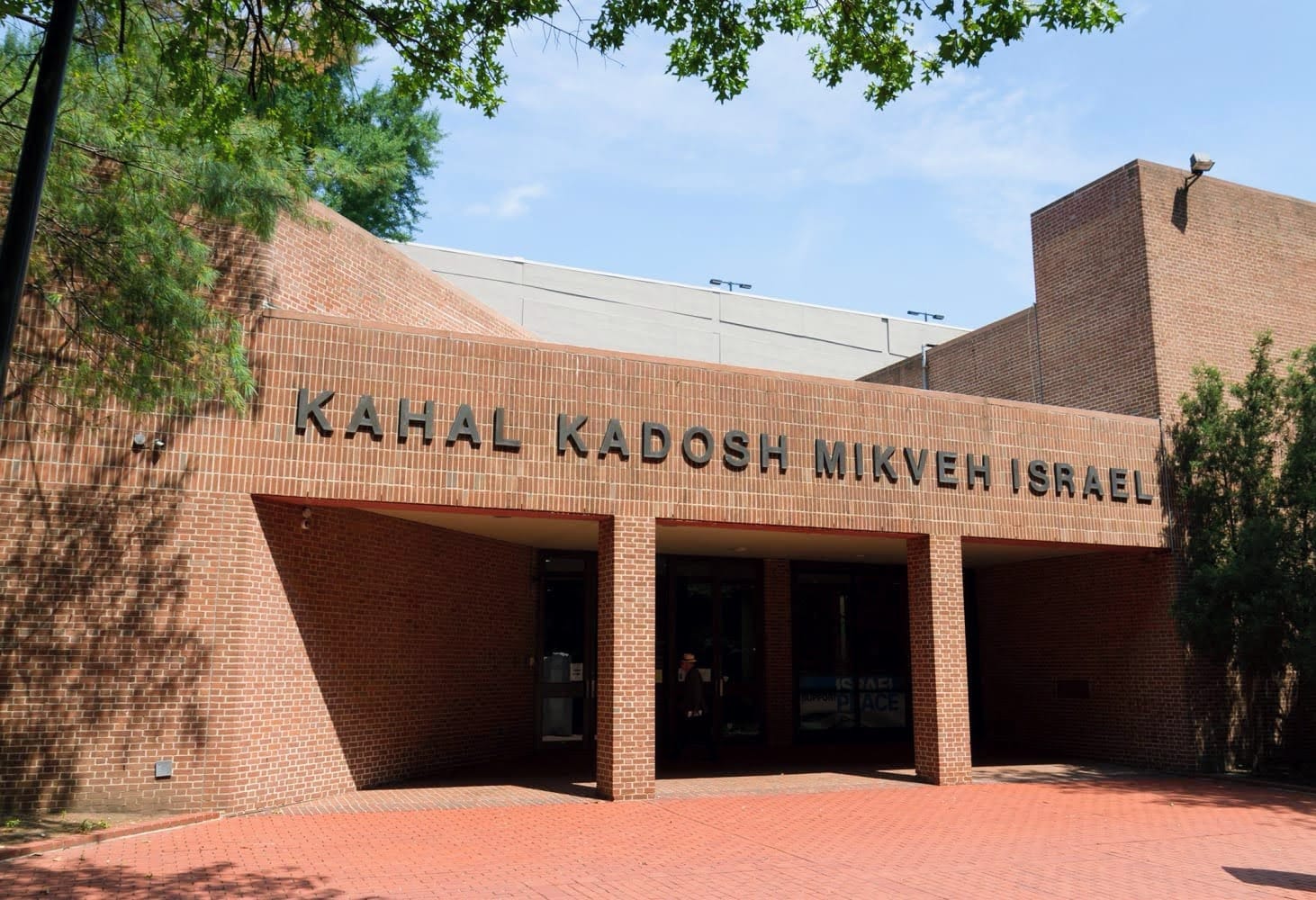
Congregation Mikveh Israel is located on Independence Mall in Philadelphia.
Carl Montoya, a native of Truth or Consequences, New Mexico, grew up in Scottsdale, Arizona. He retired from a federal career spanning several assignments, primarily in the Washington, D.C. area: the Office of the Commissioner of the Social Security Administration, Foreign Service Officer at Embassy London, the Office of the Secretary of Health and Human Services, and Director of the Office of Intergovernmental Affairs. He concluded his career as an Associate Regional Administrator in Philadelphia, where he now resides.
Carl is married to Donna Leibowitz and has four sons and four grandchildren. His interests include Judaism, genealogy, writing, and improving his Spanish fluency. He and Donna are enthusiastic travelers.
Carl serves on the Board of Adjuntos of Congregation Mikveh Israel — the "Synagogue of the American Revolution" — in Philadelphia, one of only three Spanish-Portuguese Sephardic congregations in North America. He also heads the Docent program, and the tours of the synagogue and cemetery. Carl gratefully acknowledges Rabbi Emeritus Albert Gabbai and Rabbi Yosef Zarnighian of Mikveh Israel for their time and effort to review the information covered in the article, particularly the Sephardic traditions and practices.
Community Supporters of the NM Jewish Journal include:
Jewish Community Foundation of New Mexico
Congregation Albert
Jewish Community Center of Greater Albuquerque
The Institute for Tolerance Studies
Jewish Federation of El Paso and Las Cruces
Temple Beth Shalom
Congregation B'nai Israel
Shabbat with Friends: Recapturing Together the Joy of Shabbat
New Mexico Jewish Historical Society
Policy Statement Acceptance of advertisements does not constitute an endorsement of the advertisers’ products, services or opinions. Likewise, while an advertiser or community supporter's ad may indicate their support for the publication's mission, that does not constitute their endorsement of the publication's content.
Copyright © 2026-27 New Mexico Jewish Journal LLC. All rights reserved.