







The ADL in New Mexico: Valued Locally, Debated Nationally

By Ellen Marks
Where do you turn for guidance after a young man attacks Congregation Albert and then, eight minutes later, the Jewish Community Center?
Or when a Jewish teacher is the target of antisemitism at a school in Santa Fe, or a known neo-Nazi shows up inside a University of New Mexico classroom?
In all cases, it’s been the Anti-Defamation League, an organization that is dedicated to educating, informing and fighting anti-Jewish discrimination. It has been doing so since 1913.
The ADL is perhaps best known for tracking antisemitism and other hate crimes, compiled through reporting of incidents, investigations and extensive research. It also provides educational programs and resources on antisemitism, anti-bias learning and the Holocaust.
The point of contact for New Mexico Jewish leaders is the ADL’s regional office in Denver, which this year is celebrating its 85th anniversary.
ADL Mountain States, which serves New Mexico, Colorado and Wyoming, was ADL’s first regional office outside of New York City and Chicago, says Jeremy Shaver, senior associate regional director.
Perhaps the New Mexican working most closely with the Denver office is Juan Dircie, director of the Jewish Community Relations Coalition of New Mexico.
Since becoming the coalition’s first director in March 2025, Dircie has turned to the ADL whenever antisemitism strikes close to home. This fall, the two are launching educational programs together.
“ADL is a great partner and phenomenal resource for the JCRC,” Dircie says.
Shaver says as soon as he heard about the dual attacks in Albuquerque on June 2, he responded by coordinating with Dircie, the FBI, local law enforcement and the Center on Extremism, the ADL’s own research and investigation arm.
“We are doing a lot of community response when incidents happen,” Shaver says. “We also are working really hard to disrupt this type of extremism before an incident happens.”
ADL wins praise, too, from Rabbi Neil Amswych of Temple Beth Shalom in Santa Fe. “For me, ADL serves as a safety net, particularly when it comes to addressing antisemitism in the public schools or in Santa Fe in general,” he says. “Knowing there are resources out there is enormously helpful.”
ADL continues to work at maintaining close ties to New Mexico, after it drew local criticism in 2017 for scrapping its Albuquerque-based office. Instead, New Mexico was folded into the Mountain States region.
Nationwide, ADL has come under fire from some American Jews during the past few years — caught in a broader struggle over defining when anti-Israel views bleed into antisemitism.
The numbers, and the 'great replacement' conspiracy theory
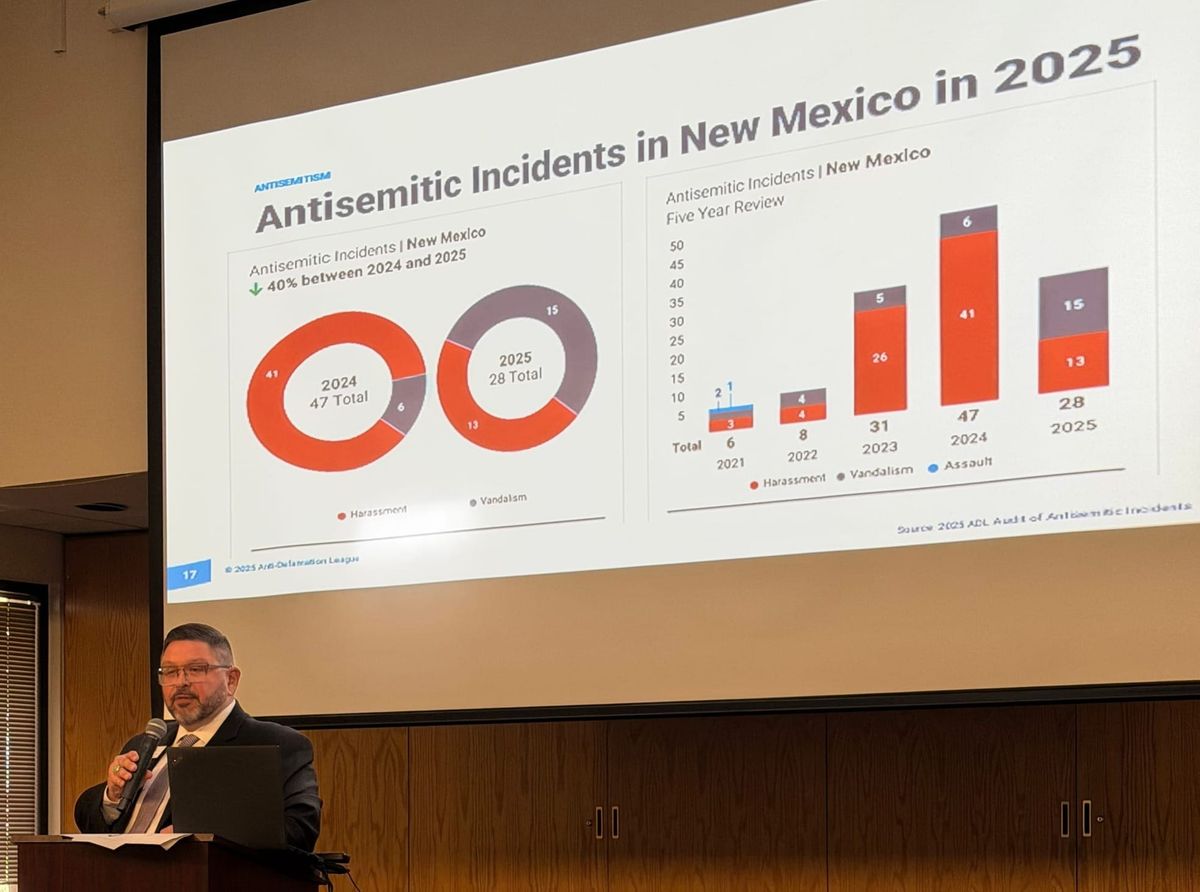
Shaver, at a recent presentation at Congregation Albert, shared both good news and bad when it comes to antisemitic incidents in New Mexico.
The state did see a sharp drop in 2025 —- 28 reported incidents compared to 47 the year before, Shaver said. However, that’s because 2024 was a high-water mark, with every state seeing “their highest record of reporting incidents.”
The information came from ADL’s annual Audit of Antisemitic Incidents, a compilation of assault, vandalism and harassment occurrences reported in the United States. (To report an incident to the ADL, go to www.adl.org/report-incident.)
The data showed that despite New Mexico’s decrease last year, incidents in the state climbed 367% over the five-year period starting in 2021.
Events reported in 2025 in New Mexico include:
– A patient at a Veterans Affairs facility who made antisemitic threats against a Jewish nurse, including “I’m going to kill that Jew.”
— A swastika that was painted on the apartment door of a Jewish person.
— Someone who posted a sign at a Jewish facility that read, “Get out of Gaza, Nazis.”
— An elementary school student who refused to sit at a table with a Jewish classmate, saying they did not want to “sit next to a Jew.”
Shaver added that while the nation has seen a decrease in white supremacist groups distributing propaganda, such groups have been more active in New Mexico, particularly the Patriot Front.
That group subscribes to the “great replacement” conspiracy theory, which holds that Jews are trying to replace the white population with nonwhite people, Shaver says.
Eleven of the incidents reported in New Mexico last year involved that theory, he adds.
ADL Education Programs Coming
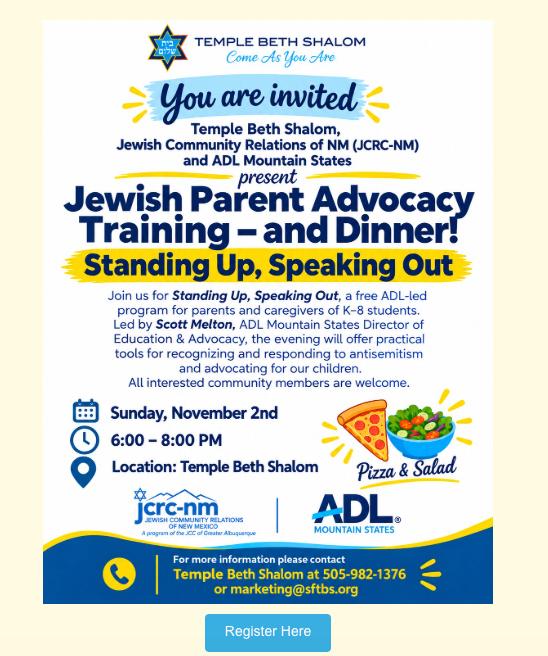
Dircie points with pride to coordination between his office and the ADL on the education front. He has been working with the ADL to bring its program “Words to Action” to New Mexico high school students in Albuquerque and Santa Fe in early November. ADL’s Denver office is providing Scott Melton, its director of education and advocacy, along with curriculum and materials showing how to recognize and deal with antisemitism. JCRC is providing logistical support and promoting the event.
In addition, the two organizations are hosting Jewish parent advocacy training in Albuquerque and Santa Fe on Nov. 1 and 2. Melton will teach parents how to spot and address antisemitism in elementary and middle schools.
Dircie also cited the incident involving the Santa Fe teacher, saying local Jews reached out to the ADL so the victim could access help through one of its national programs. That kind of coordination became even more important after ADL closed its New Mexico office in 2017.
New Mexico's ADL Directors
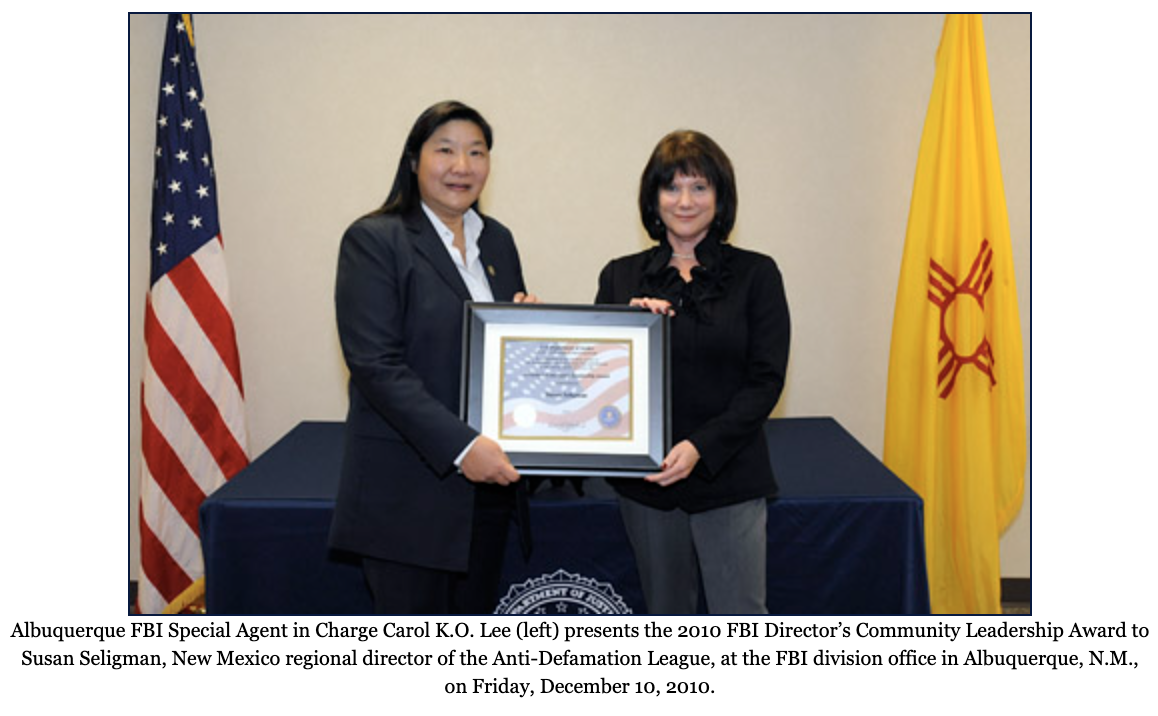
Susan Seligman held the New Mexico director position longest, from 1989 to 2014. She says the job was a passion for her. She is proud of celebrations she organized that focused on Jewish life in Spanish-speaking countries and drew representatives from the Mexican Consulate and the music and art worlds, as well as nationally known speakers. “The coalitions we put together were unheard of at that time,” she says.
She also kept a close watch, tracking hate groups and their activities in New Mexico, even though she was sometimes the target of death threats.
“I knew what was going on in this state,” she says.
Seligman says she arranged training sessions between law enforcement agencies and “national civil rights experts who specialized in hate groups and their symbols.” In 2010, she won a community leadership award from the FBI office in Albuquerque after she attended the FBI Citizens’ Academy and worked closely with the agency. The citation noted that she was instrumental in enacting anti-terrorist and hate crime bills in New Mexico.
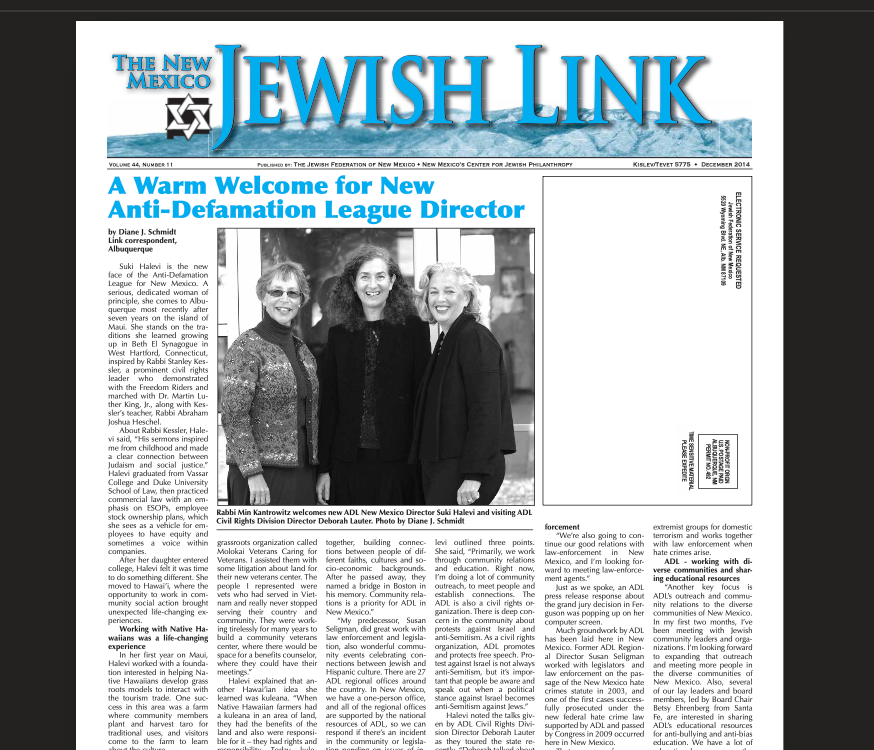
After Seligman retired, Suki Halevi led the New Mexico office from 2014 until it closed in 2017. A Duke-trained lawyer, she came to Albuquerque after seven years on Maui, where she worked with a foundation helping Native Hawaiians develop grassroots models for the tourism industry, and with Molokai Veterans Caring for Veterans.
Among critics of the closure was Sara Koplik, Hillel director at the University of New Mexico. “I was very annoyed when they left, because we had to re-create the work that they did in different ways in our community,” she says. “So that was, for me, extremely frustrating.”
Shaver says other areas also saw mergers, and ADL now has 25 regional offices and an office in Jerusalem. “Without having a staff member on the ground, we have to be creative about collaboration,” he says. “We are literally only a phone call or an email away and whenever we can be a support, we absolutely want to and will do our best.”
Old Alliances and New
ADL’s ties to the FBI frayed last year. After Charlie Kirk was assassinated in September 2025, conservative critics, among them billionaire Elon Musk, attacked the ADL for listing Turning Point USA, the group Kirk founded, in an online glossary of extremism. In response to the criticism, the ADL pulled the glossary from its website. Weeks later, FBI Director Kash Patel cut the bureau’s ties with the ADL, calling the group a political front and accusing it of spying on Americans. He offered no evidence for his claims.
Shaver says the ADL continues to share information with all levels of law enforcement despite the break.
“Whenever ADL identifies a potential threat in a local community, including any community in New Mexico, we continue to share information with law enforcement at every level, local, state and federal,” he says. “That has not changed, and ADL has continued to provide information to law enforcement, including the FBI, when we see any potential local threats.”
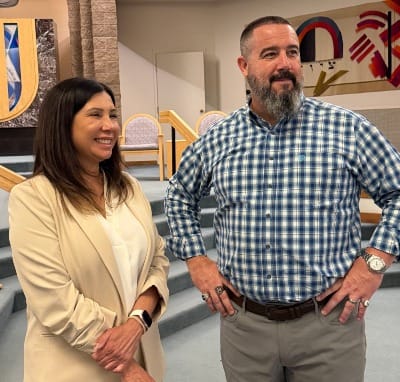
Also involved in safety issues is the Secure Community Network, a national nonprofit that advises Jewish institutions on security. This year, SCN added a regional presence with their office based at the Jewish Federation of El Paso and Las Cruces, covering Jewish institutions in New Mexico and West Texas.
SCN Regional Security Advisor Marissa Almeida, who served 28 years with the El Paso Police Department, most recently as a detective, began conducting security audits for Jewish organizations across the state. The day after the June 2 attacks, Almeida and Jason Dice, SCN’s Region VI director, led a safety training for the community at Congregation Albert.
The network describes itself as the safety and security organization for North American Jews. Koplik calls it a sort of “Jewish FBI.”
Taken together, SCN and the ADL are “very powerful” in protecting Jews during an “extraordinary, catastrophic rise of antisemitism around the world and right here,” she says. “We need these resources. We have literally created parallel law enforcement, parallel reporting, a parallel world to serve our tiny community because we haven’t been served by the larger institutions.”
Campus Convulsions: Protests, ADL's response, Criticisms
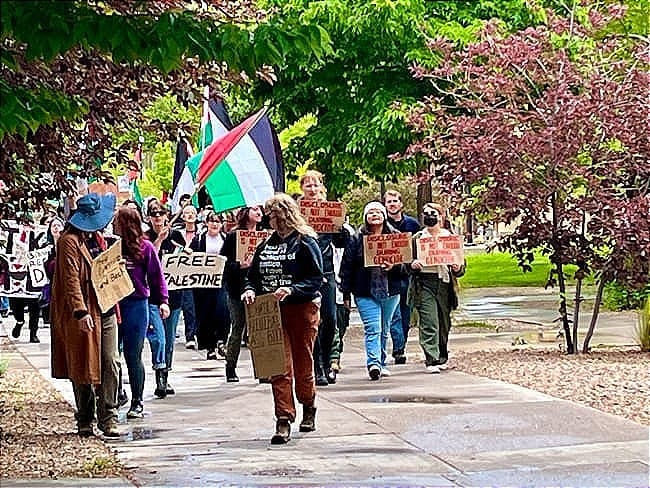
Campus protests raged across the country after the Oct. 7, 2023, Hamas-led attack on Israel and Israel’s subsequent military campaign in Gaza.
Pro-Palestinian banners and chants demanded that businesses and universities divest from Israel and end partnerships with Israeli institutions.
The explosive protests led to accusations of antisemitism against Jewish students, prompting debate over distinguishing between political speech criticizing Israeli government policies vs. words or actions that target all Jews in classic antisemitic ways.
In response, the ADL in 2024 began producing its annual Campus Antisemitism Report Card to evaluate “the climate of antisemitism on individual campuses.” The evaluations are based on progress on ADL-recommended actions to protect students, data on campus incidents and input from students and campus partners.
But the report card immediately drew fire from some Jewish groups, which said the evaluations lacked nuance and provided fuel for the Trump administration and right-wing leaders to cut university funding under the guise of campus antisemitism.
The student arm of J Street, a national Jewish organization, issued a statement saying many of its members “worry some harsh grades not only obscure laudable efforts to combat antisemitism, but will also scare off prospective students and make it harder to build Jewish communities on campus and address underlying issues.” J Street describes itself as a group that organizes pro-Israel, pro-peace Americans who want Israel to be secure, democratic and the national home of the Jewish people.
J Street spokesman Jordan Steinberg says the “ADL and other organizations in its orbit” have been too quick to label anti-Israel criticism as antisemitism for political purposes.
“You know, there are immense risks in conflating anti-Zionism with antisemitism,” Steinberg said in an interview. “What we don't approve of is the weaponization of charges of antisemitism to do things like the Trump administration has been doing, which is targeting higher education, targeting immigrants, targeting research funding. None of those things do anything to make American Jews safe.”
In response, Shaver points to “the normalization of antisemitism in so many spaces that we haven't seen in decades, and so it's critical to stay focused on antisemitism. And so, ADL has tried some new programs and some new initiatives, and we certainly have increased ADL's work on college campuses.”
He said the report card “opened some doors for conversations with university leaders” and prompted some schools “to actually reach out and say, ‘We want to be a good community, a good place of learning for all students, including Jewish students.’”
Both he and Koplik pointed to some changes at UNM after the ADL began its effort, including a task force on Jewish inclusion.
Nonetheless, UNM got a D in the most recent evaluation. Koplik says some of the categories were unfair — such as whether a school offers kosher food or Jewish fraternities and sororities — but that the report card did cause university leaders to “pay a lot more attention to what the ADL is saying about the experiences of your students on campus.”
She added that some of the criticism toward ADL is like that received by Hillel International. Both, she says, are painted “with the same brush,” and an attitude of, ‘Oh, you’re Zionist, therefore you’re bad.’”
“And for me, I reject that entirely,” Koplik says. “I think that's just antisemitic B.S.”
The ADL also has been accused of focusing more attention on Jewish hatred coming from the left, while failing to apply the same scrutiny to those on the right.
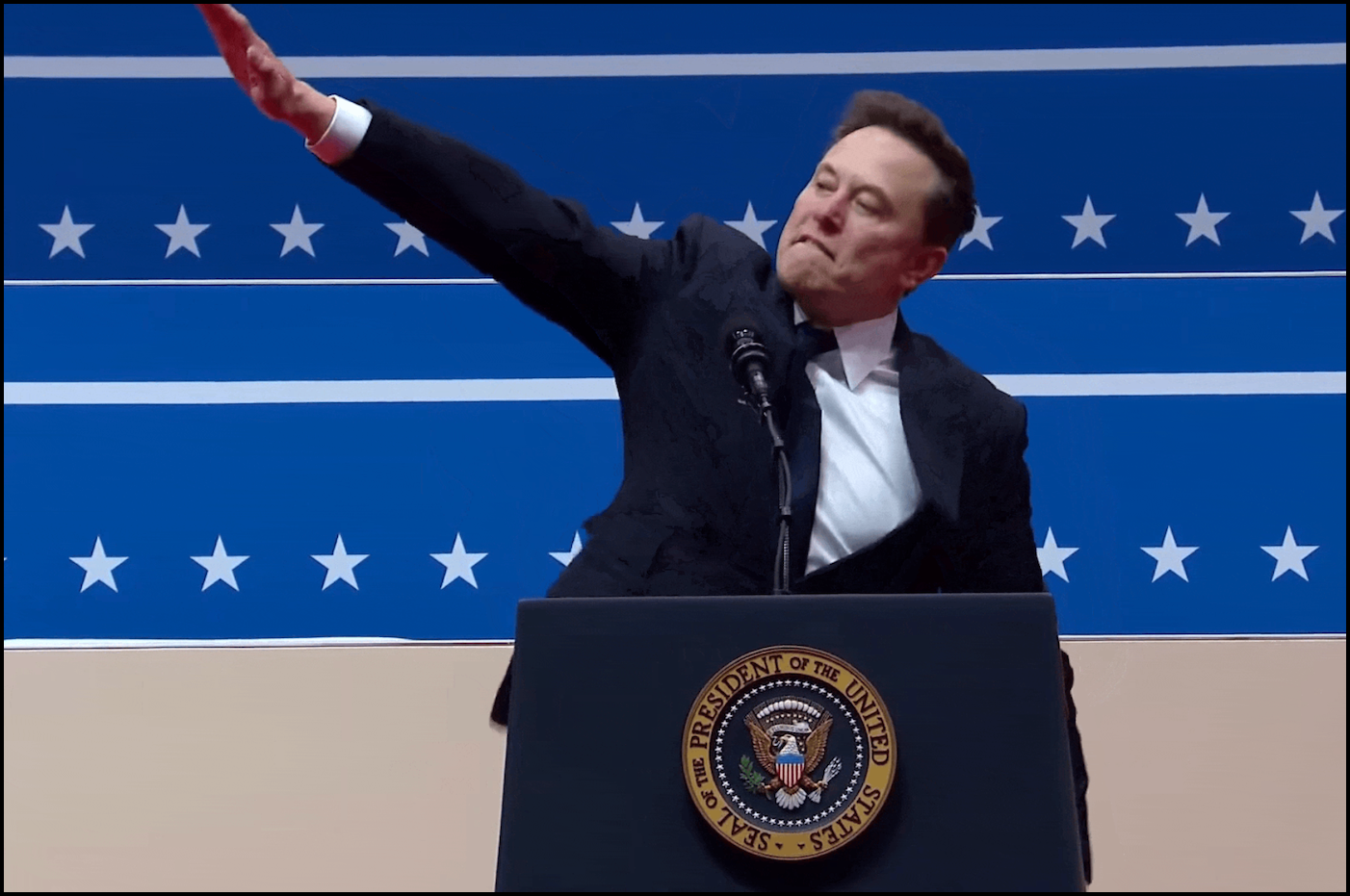
For example, the ADL drew harsh criticism in January 2025 when it described an arm gesture by Musk at a celebration of Trump’s inauguration, which many identified as a Nazi salute, as an “awkward gesture.” Days later, after Musk posted Nazi-themed puns on X, ADL CEO Jonathan Greenblatt rebuked him, writing, “The Holocaust is not a joke.” Greenblatt later said he regretted not framing the original statement differently.
The Moral Line
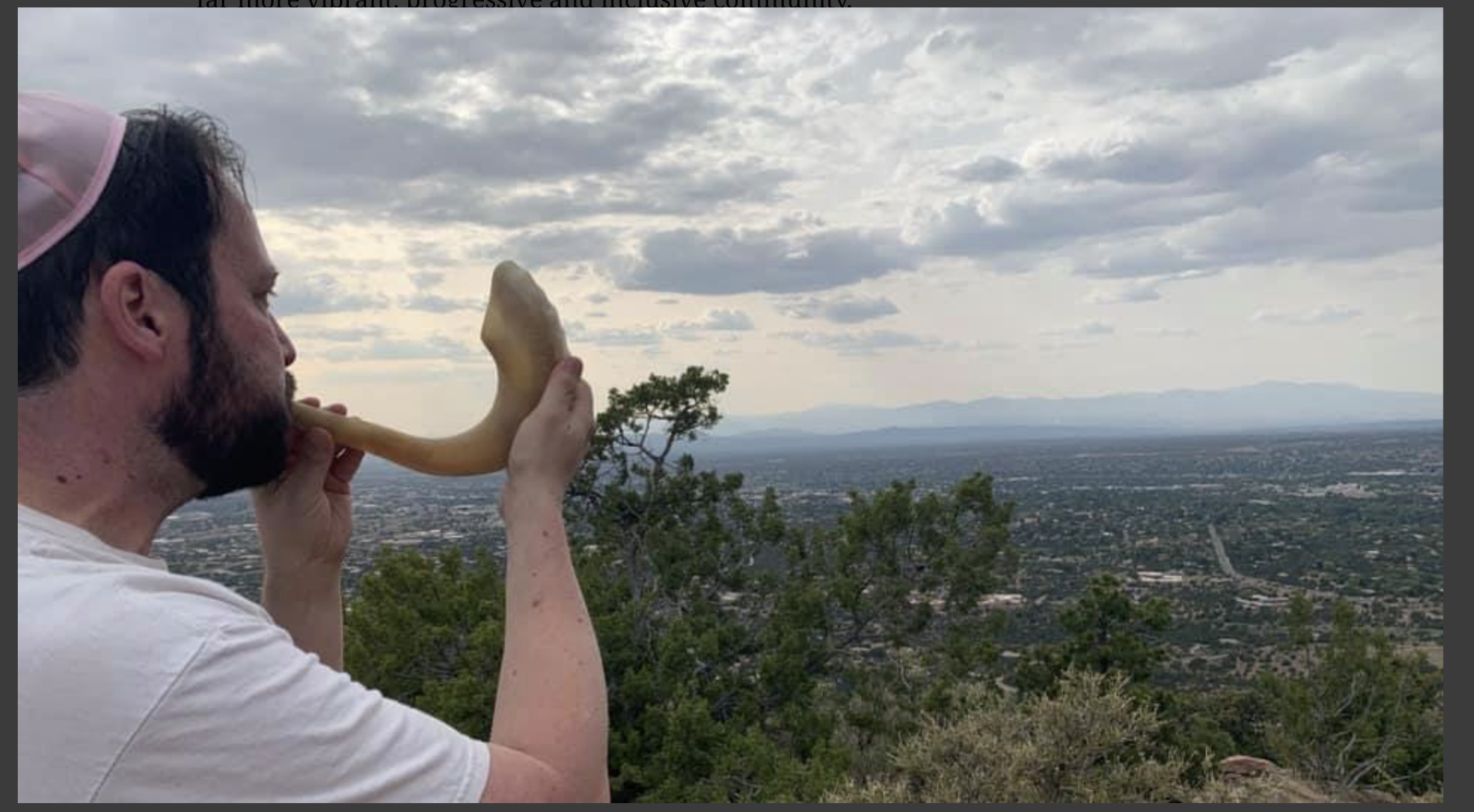
Rabbi Amswych of Santa Fe has a philosophical take on the role the ADL plays in a deeply divided America that has its chasms among Jews.
“I think the problem is that dialogue in our world, in our society now, is so lacking in nuance that we have to respond in sound bites,” he says. “The difficulty of that is that we can't put across nuanced positions, and I do think when it comes to antisemitism, there is definitely a need for nuance so that we can work with people to say what is and what isn't antisemitism.”
He said he was “really quite surprised” at ADL’s initial dismissal of Musk’s salute as an “awkward gesture.” It was, he said, “difficult for a huge number of Jews because one can be awkward without having to mimic very dangerous things in history.”
He pointed out that the ADL does not represent the entire Jewish community in all its complexity, and while it does have “very good resources,” people should be aware that “it’s not the only place that can define antisemitism or racism and so on.”
“I just think it’s very difficult for organizations to provide that balancing act between criticizing and trying to improve a country and working with people who are running the country," he says.
What it comes down to, Amswych says, is “where's the moral line? And the Jewish community is so divided on what that moral line is.
“So, I don't agree with everything that the ADL says publicly, but sometimes I do. And sometimes I don’t. I think that's part of a healthy dialogue in society about, well, what do we need?”
Community Supporters of the NM Jewish Journal include:
Jewish Community Foundation of New Mexico
Congregation Albert
Jewish Community Center of Greater Albuquerque
The Institute for Tolerance Studies
Jewish Federation of El Paso and Las Cruces
Temple Beth Shalom
Congregation B'nai Israel
Shabbat with Friends: Recapturing Together the Joy of Shabbat
New Mexico Jewish Historical Society
New Mexico Jewish Historical Society Hamakom Passionate Judaism in Santa Fe
Chavurat Hamidbar Fellowship of the Desert
Santa Fe Jewish Film Festival
Policy Statement Acceptance of advertisements does not constitute an endorsement of the advertisers’ products, services or opinions. Likewise, while an advertiser or community supporter's ad may indicate their support for the publication's mission, that does not constitute their endorsement of the publication's content.
Copyright © 2026-27 New Mexico Jewish Journal LLC. All rights reserved.