
















The Jewish Side of Flamenco and How to See It

Story & Photos by Paul Ross
In Mel Brooks’ remake of legendary director Ernst Lubitsch’s classic WWII dark comedy “To Be Or Not To Be,” a struggling Polish theatrical company learns that their Nazi occupier’s latest ban prohibits “Jews, Gypsies, and Homosexuals” from the theater. Upon hearing this, the would-be empresario (Brooks) cries, “Without Jews, Gypsies and Homosexuals there is no theater!”
Those invaders would hate what I love — La Emi’s latest production “Amor, Quejío, y Vuelo” (Love, Lament and Flight – the latter as in freedom). It stars the celebrated Emi Grimm (Jewish) in a thrilling evening of flamenco performance (Romani-influenced song and dance). The main elements comprising flamenco emerged from Jewish, Romani and Muslim cultures which, sharing a similar history of creative expression in defiance of oppression were united by being branded outcasts in the hierarchy of Castilian Spain.
Pain was expressed in the call to prayer of Islam, unfulfilled yearning in melancholic Hebrew melodies, and contumacy in the fiery intensity of Roma/Gitano dance. All three groups have never had it easy in their Mediterranean wanderings and, during the fascist reign of Francisco Franco, flamenco was simultaneously repressed AND promoted by the government as a source of Spanish identity.
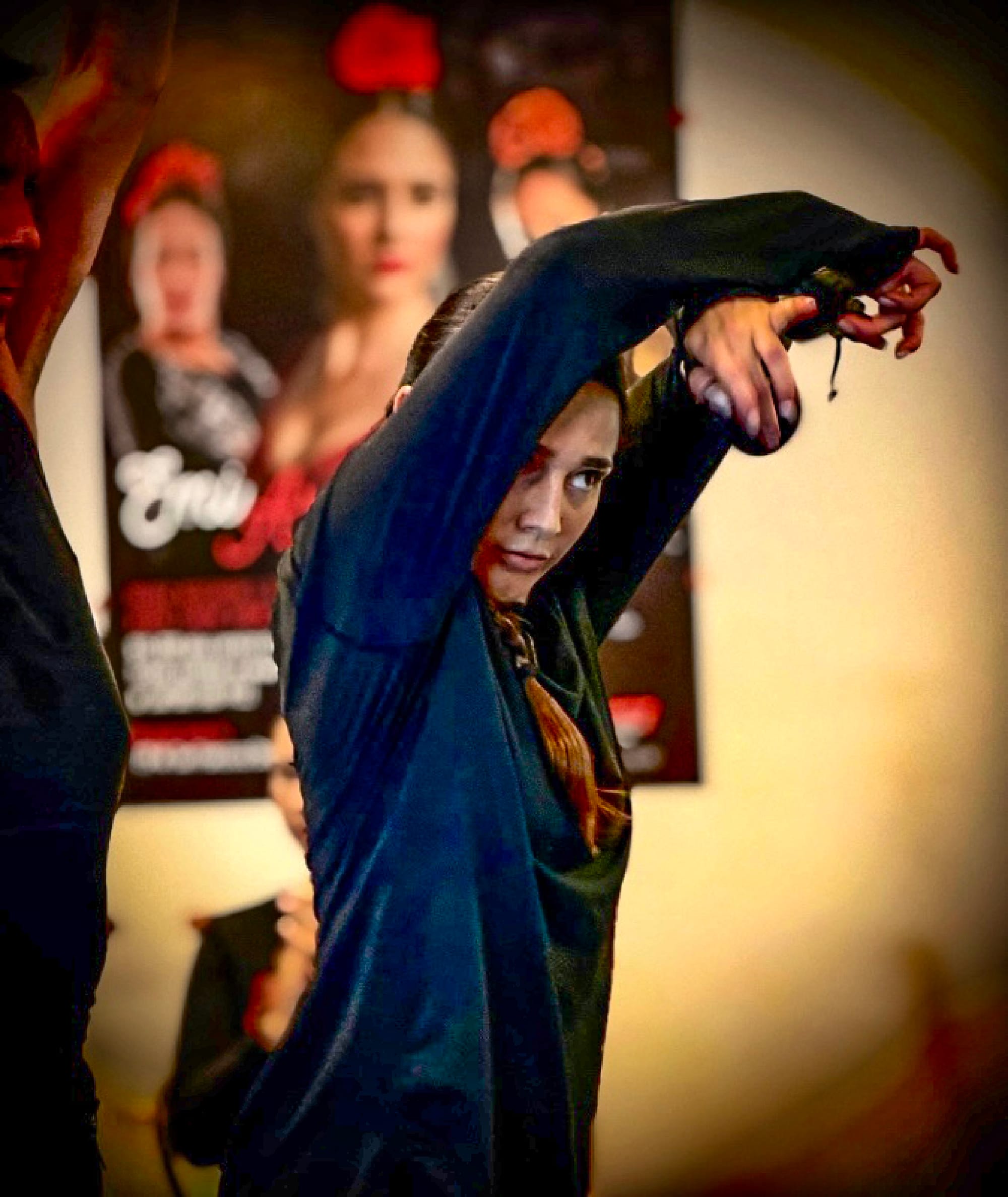
Beth Grimm (née Miller), Emi’s mother, is of Polish/Russian heritage and grew up in New York doing “Israeli dancing.” Emi’s exposure to flamenco came early …very early. Beth attended a New Mexico performance while pregnant, and synchronously infused the child with Jewish heritage and a love of the emotional art of Spanish dance.
“Are there historic cultural elements in your work?” I asked Emi.
“Yes,’ she replied, “they are an inherent part of me.”
Although she religiously identifies only as “spiritual,”she hastens to add that she is “culturally Jewish.”
Shortly after her prenatal acquaintance with flamenco, Emi wanted to be a part of the flamenco world but was told she had to wait until she was a little older. So, she began taking lessons at the age of four.
Because of New Mexico’s strong Spanish heritage, you might think that flamenco has been around forever but it arrived in our state in the 1940’s and grew rapidly as a vital element of a Latino culture revival to the point where New Mexico is now widely regarded as “the flamenco capital of the United States.” The famed Cansino family (whose dancing daughter transformed into Hollywood star Rita Hayworth) toured, taught and inspired the land of enchantment’s own legend Maria Benitez to perform and establish a school. That was just one of the academies where young Emi learned and “practiced, practiced, practiced. Flamenco is a lifestyle and I will always be a student.”
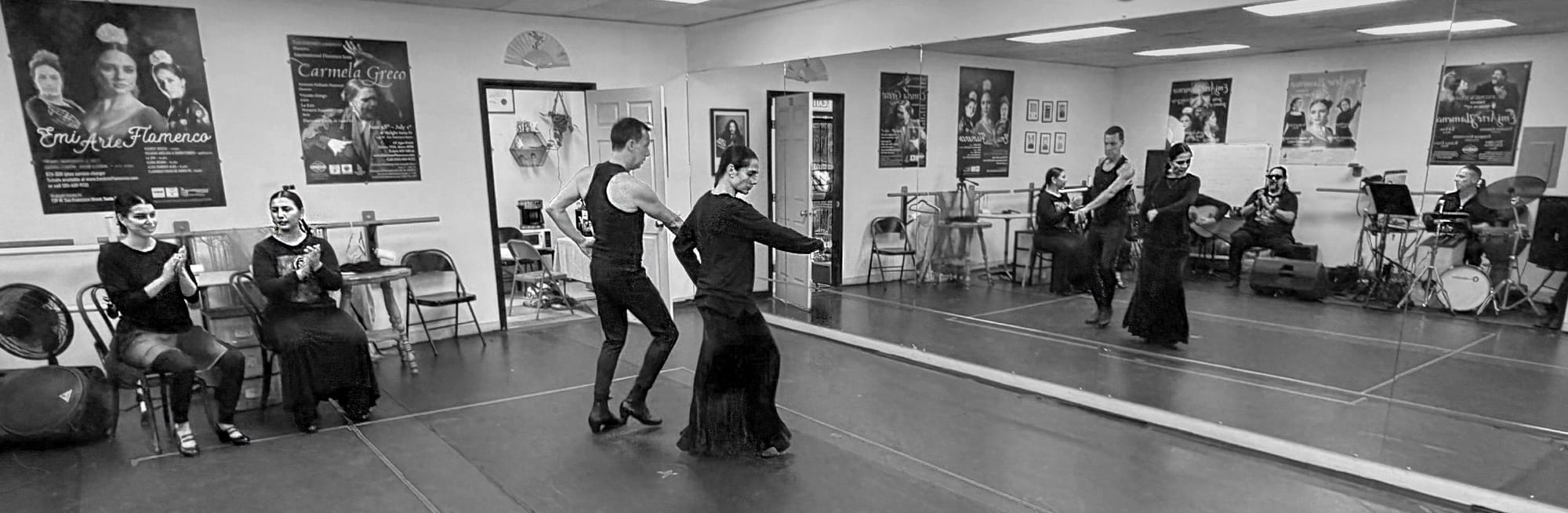
Emi’s current show blends flamenco puro (“pure,” traditional) and nuevo/fusion styles (various contemporary dance influences) with what she refers to as “raza” (literally “race” but, here, construed as the New Mexican equivalent of soul and spirit). The mix is intoxicating.
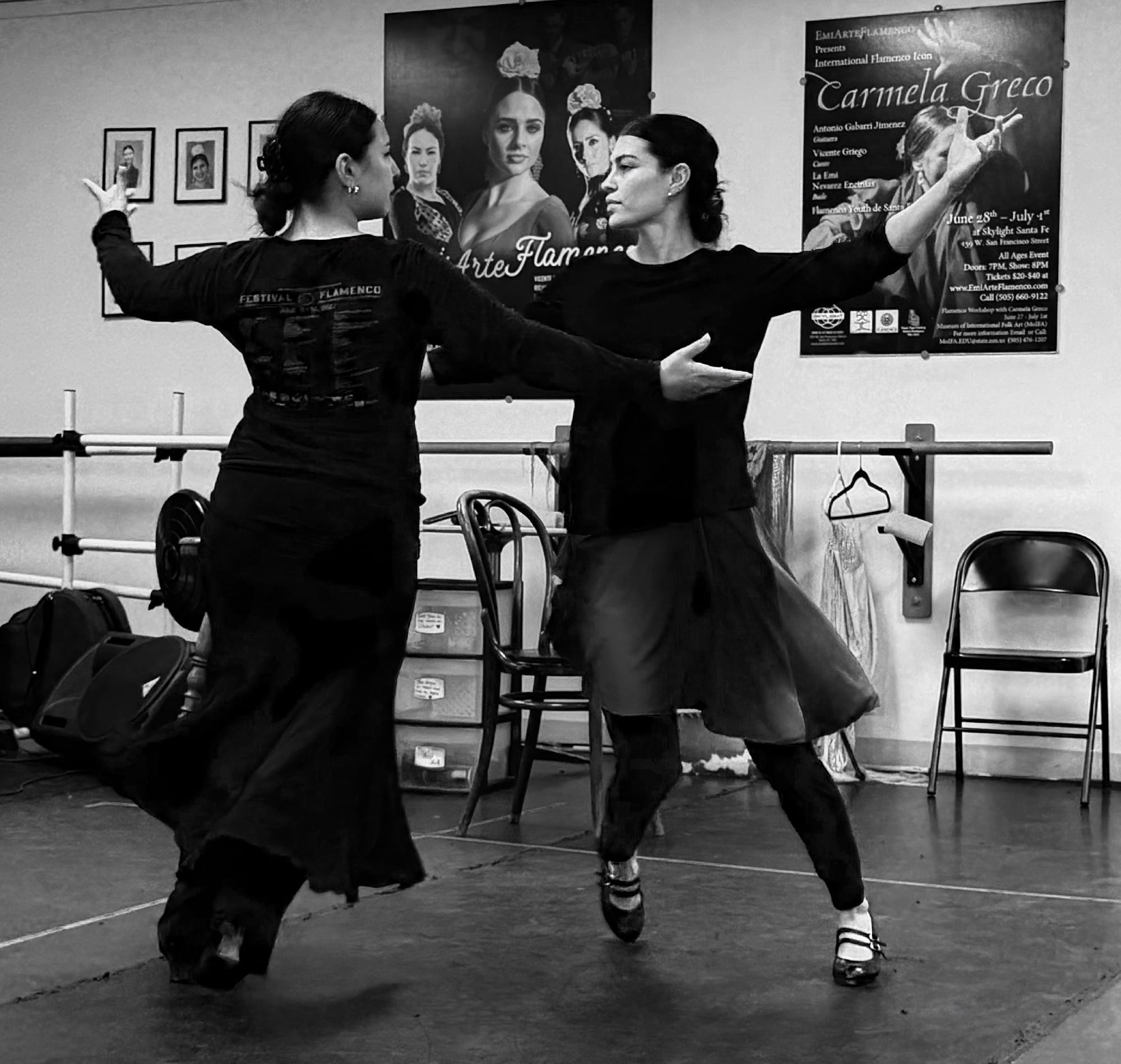
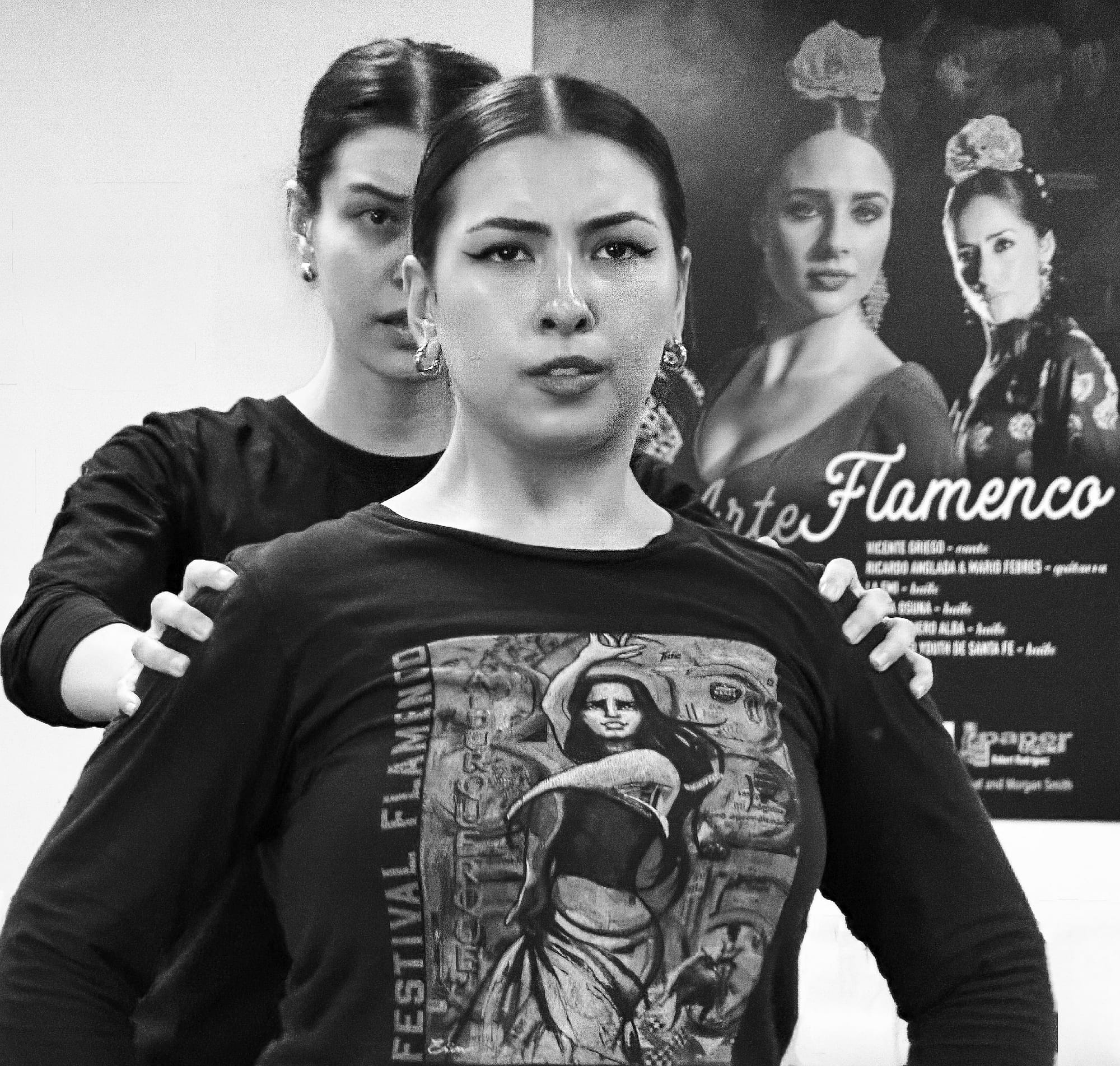
Dancers Aislin Robertson and Janira Cordova portray the alter egos of the star-crossed lovers photo © Paul Ross | nmjewishjournal.com
Unlike the conventional Spanish tablao freestyle performance approach in which a series of independent dances is interspersed with songs, Emi’s new show tells a single, sequential and theatrical tale of love, lust, loss, isolation and the redemption of self-discovery. It’s pretty much the story of the Jews, Roma, and Muslims who birthed flamenco in old Andalusia. Only, this time, it’s personal.
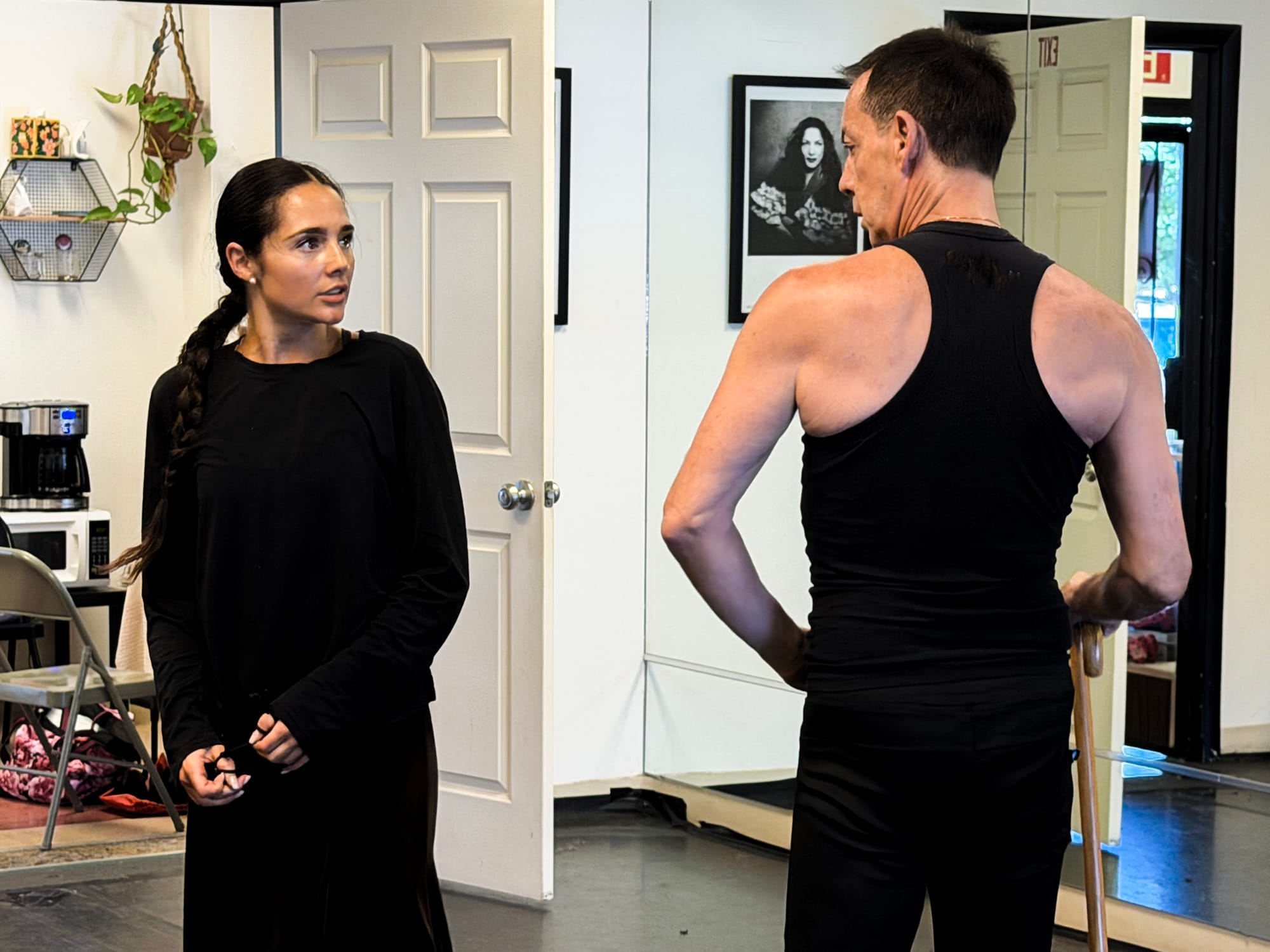
“Amor, Quejío y Vuelo” breaks new dramatic ground for La Emi. The stage is set with a draped round table and two chairs surrounded by candles. The two main characters are seated and, hovering just behind them, are dancer/actors embodying their alter egos. In moody mystery, the audience is drawn into a love relationship that begins in excitement, sex, and hope. Then comes a flurry of highs and lows, twists, turns, and confusion progress to resolution. It’s as unpredictable as life and as achingly familiar.
You will be thrilled, moved and, possibly, changed. Baby Emi was.
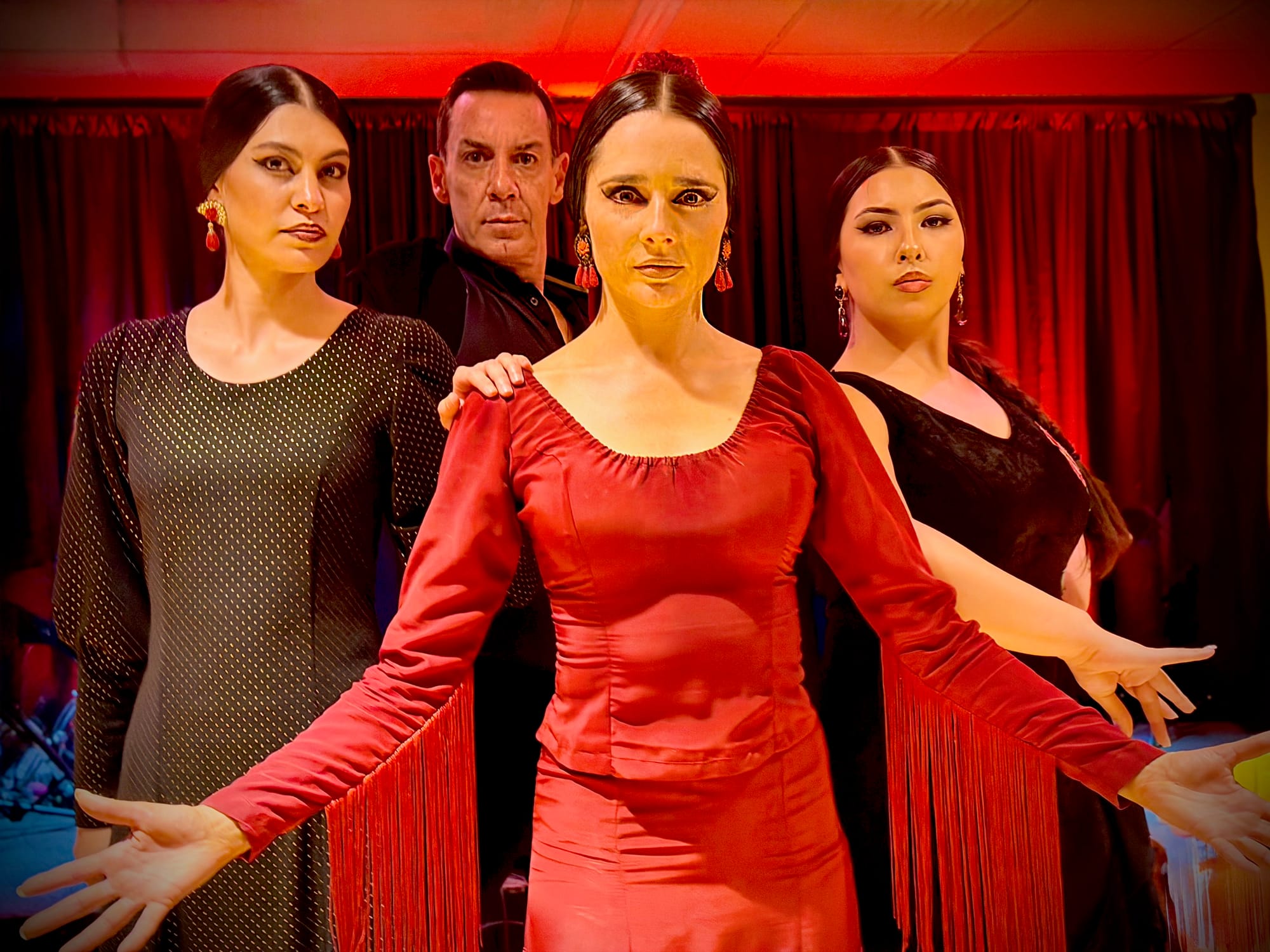
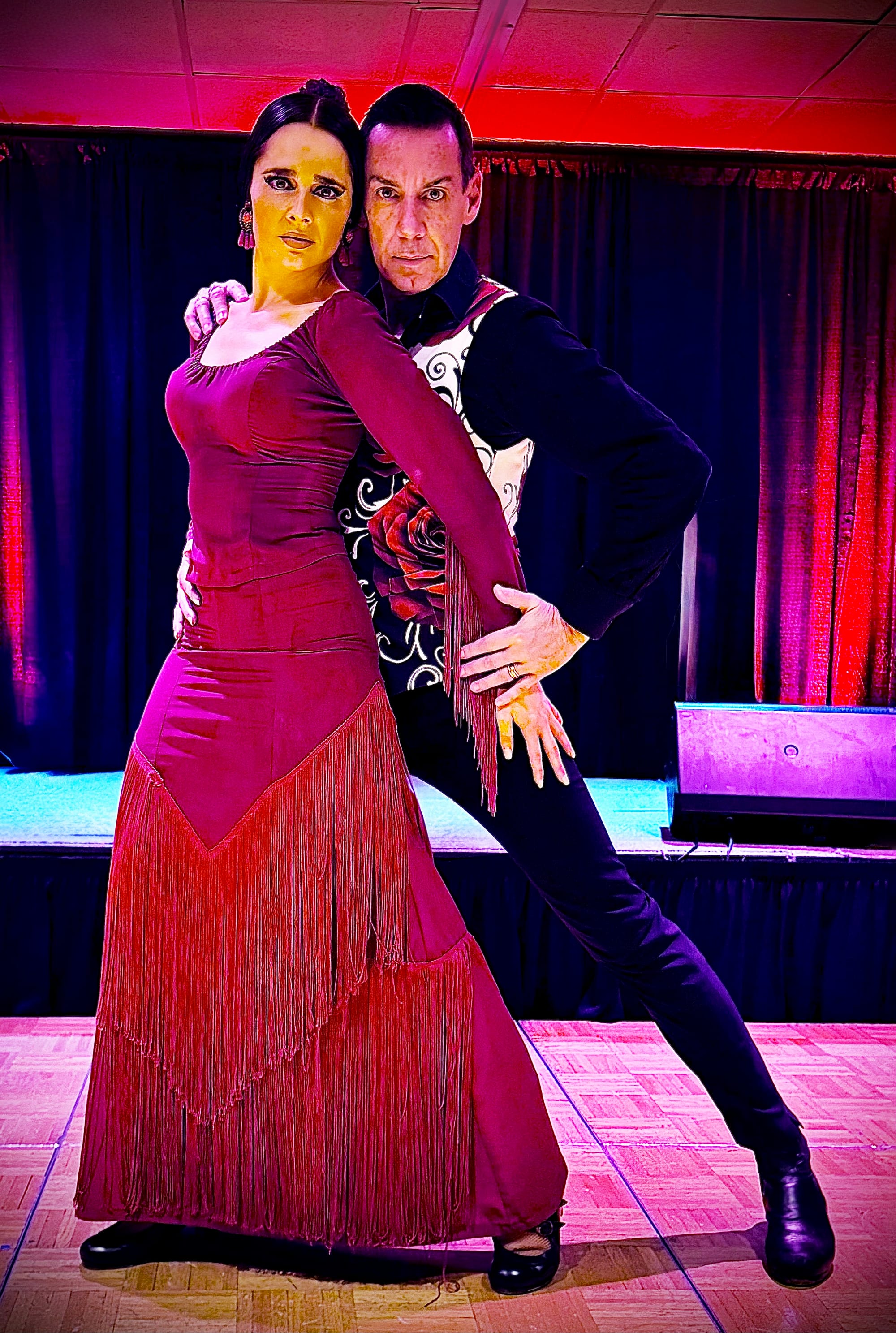
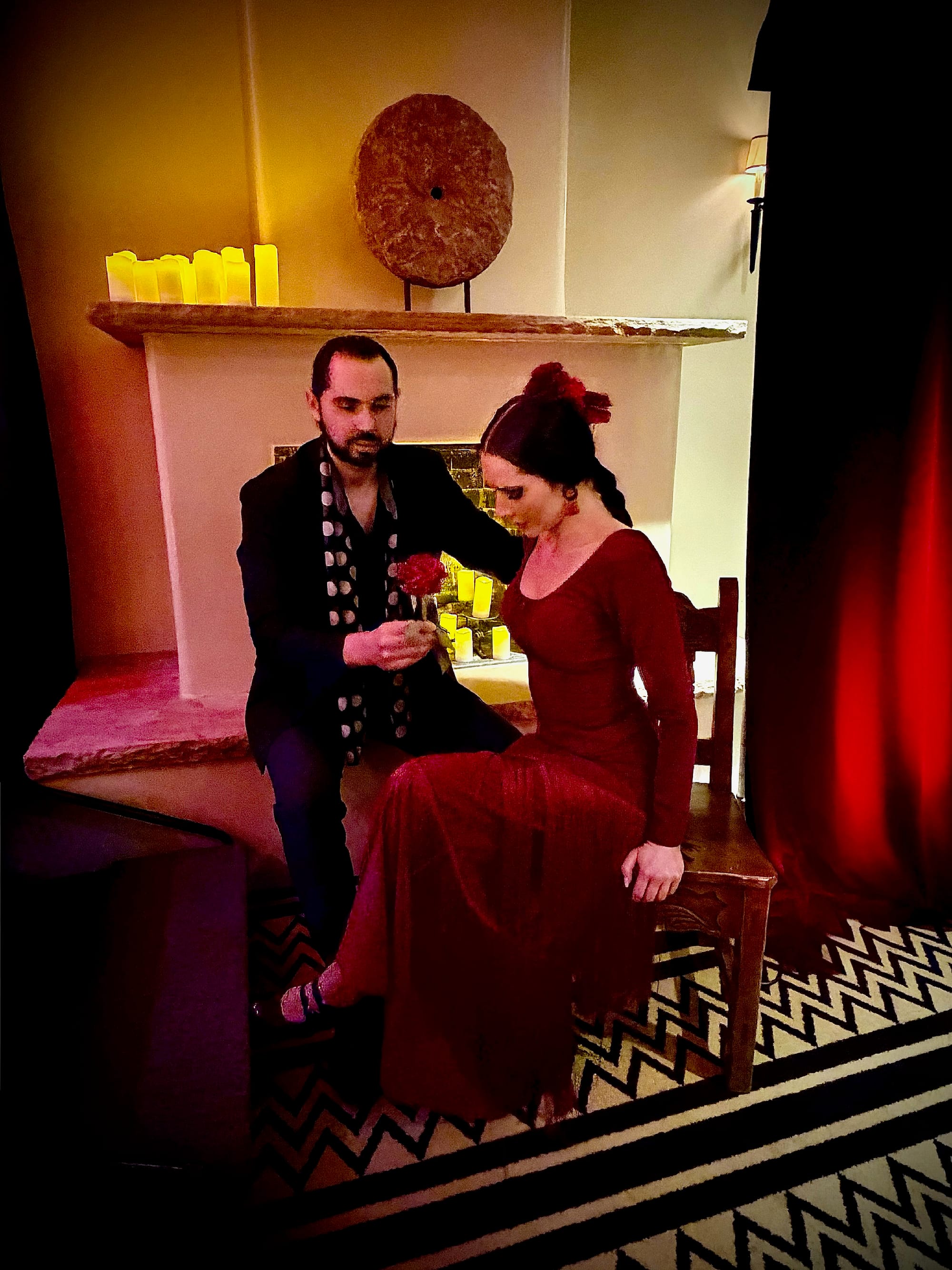
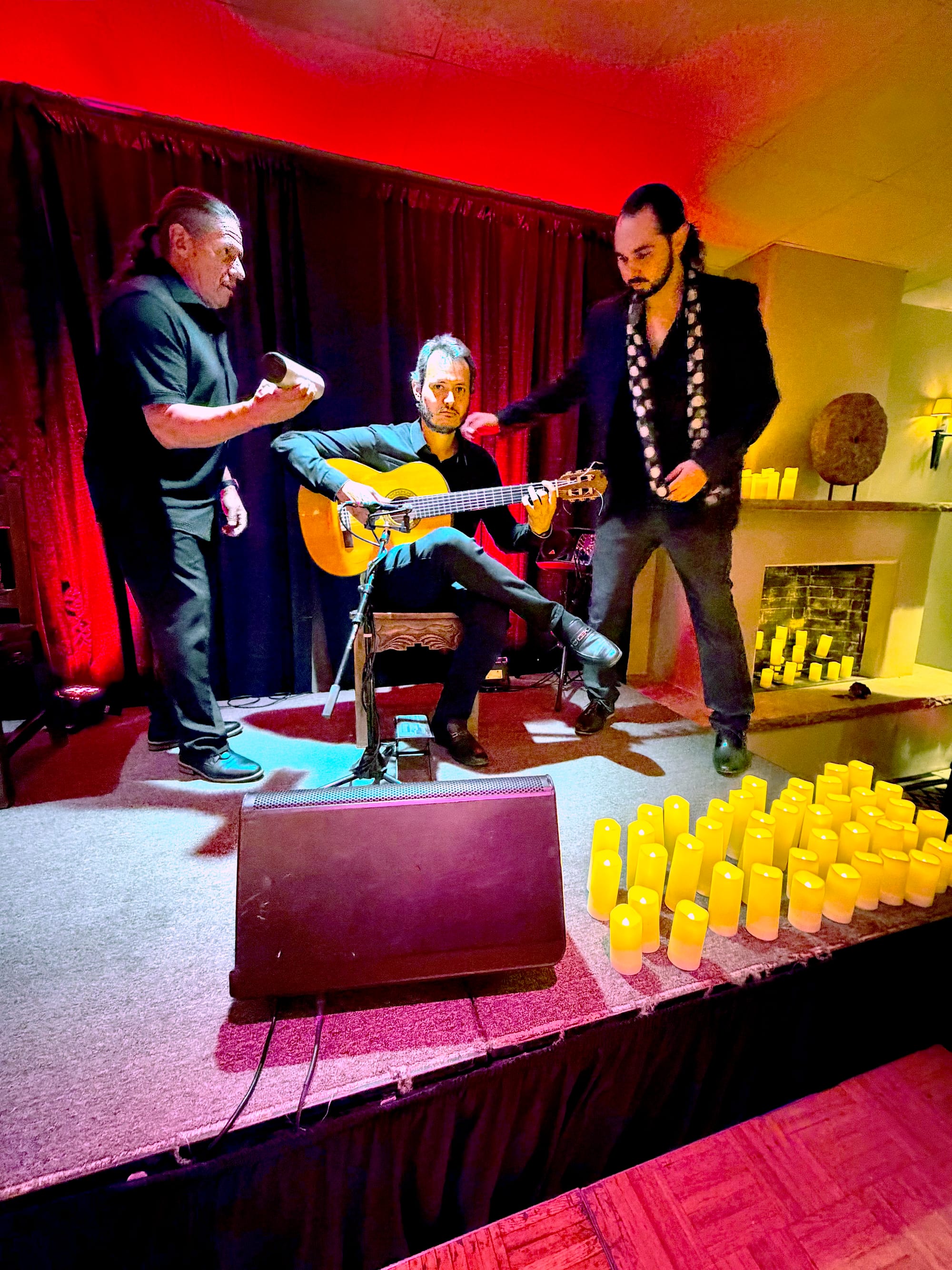
Emi y Junco; Cantaor Daniel Azcarate romantically consoles La Emi with a song; Percussionist Eddie Garcia, Guitarist Misael Barraza-Diaz and Singer Daniel Azcarate photo © Paul Ross | nmjewishjournal.com
You don’t have to know the following in order to be caught up in the magic of flamenco, BUT some knowledge about what you’re seeing and hearing can enhance the show. Here’s a cheat sheet primer:
Singing — As a key ingredient of the performance, songs are deep, soulful, and share a feeling between performer and audience. In fact, “la queja” is a traditional song style which translates as “the complaint.” And if a kvetch isn’t Jewish, what is?
note: Even if you are fluent in Spanish, you probably will not understand the words because many are in the Romani dialect of Caló.
Dancing — Celebrated cantaor (singer) and flamenco historian Vicente Griego, whom you may be fortunate enough to see and hear in the performance you attend, notes that “Everything from the hips up is heaven and, from the hips down, earth.”
What happens flashes past at a stunning pace so it’s a challenge, but look for the following.
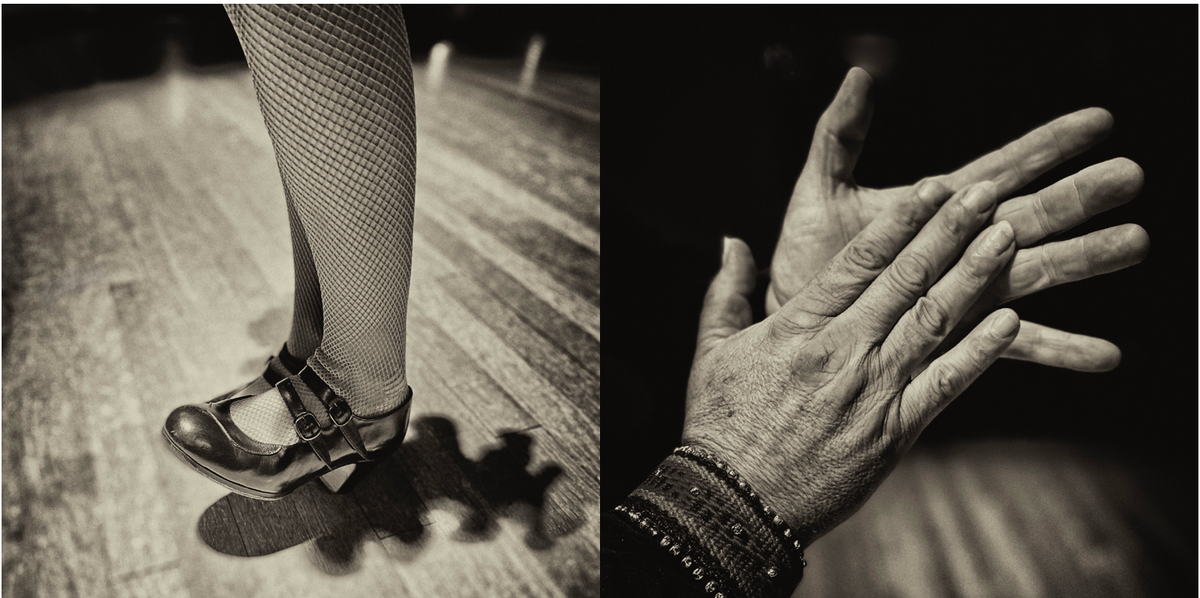
Golpe — a stomp with the entire foot
Planta — only the ball of the foot hits the floor
Punta — toe tap
Talón — heel strike
Vueltas are graceful turns (especially the acrobatic and sensual quebrada backbend) and include veronicas, which are the same moves as those of bullfighters with their capes.
Captivating hand movements are known as Floreos (flowers).
And you can —and will be moved to— join in with shouts such as “Olé,” “Amoya” (Go!), and “Eso es” (That’s it).
But my main tip is surrender to the experience and have fun!
705 S. Telshor Blvd., Las Cruces, NM
Mon-Sat 7:30 and Sun. Matinee 2 pm
2309 W. San Francisco St, Santa Fe, NM
note: special champagne toast for Thurs. Dec. 31st New Years Eve show 🥂
Paul Ross is half an award-winning travel journalist/ photographer and half PJ “the world’s most unusual cowboy poet.” He has written and photographed for over 100 publications, and performed funny, unexpected, highly entertaining poetry at rodeos, resorts, parties, meetings, cowboy poetry gatherings and western music conventions. His website, shared with his travel journalist wife Judith Fein, is https://www.GlobalAdventure.us.
Community Supporters of the NM Jewish Journal include:
Jewish Community Foundation of New Mexico
Congregation Albert
Jewish Community Center of Greater Albuquerque
The Institute for Tolerance Studies
Jewish Federation of El Paso and Las Cruces
Temple Beth Shalom
Congregation B'nai Israel
Shabbat with Friends: Recapturing Together the Joy of Shabbat
New Mexico Jewish Historical Society
HaMakom - Passionate Judaism in Santa Fe
Policy Statement Acceptance of advertisements does not constitute an endorsement of the advertisers’ products, services or opinions. Likewise, while an advertiser or community supporter's ad may indicate their support for the publication's mission, that does not constitute their endorsement of the publication's content.
Copyright © 2026-27 New Mexico Jewish Journal LLC. All rights reserved.