














I Want My Milky Way
By Jackie Wald
Mongolia. What does the name conjure up? Remote, desolate, exotic — perhaps even that delicious dish, Mongolian beef.
All are true. But Mongolia’s most striking feature is the Gobi Desert. Covering nearly a million and a half square kilometers, it is the world’s sixth-largest desert. Contrary to visions of scorching heat and endless arid plains, the Gobi is classified as a high-altitude cold winter desert, where temperatures range from -40°C in winter to +40°C in summer.
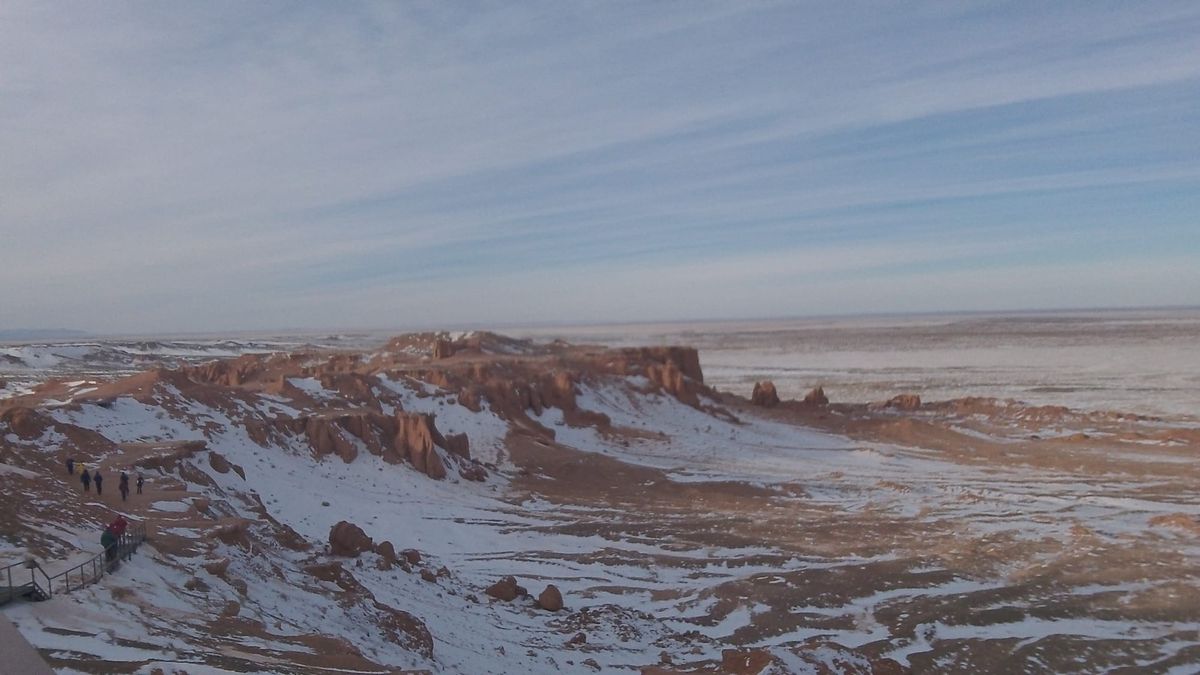
We visited in winter. Frost and snow clung to dunes, valleys, and rock formations.
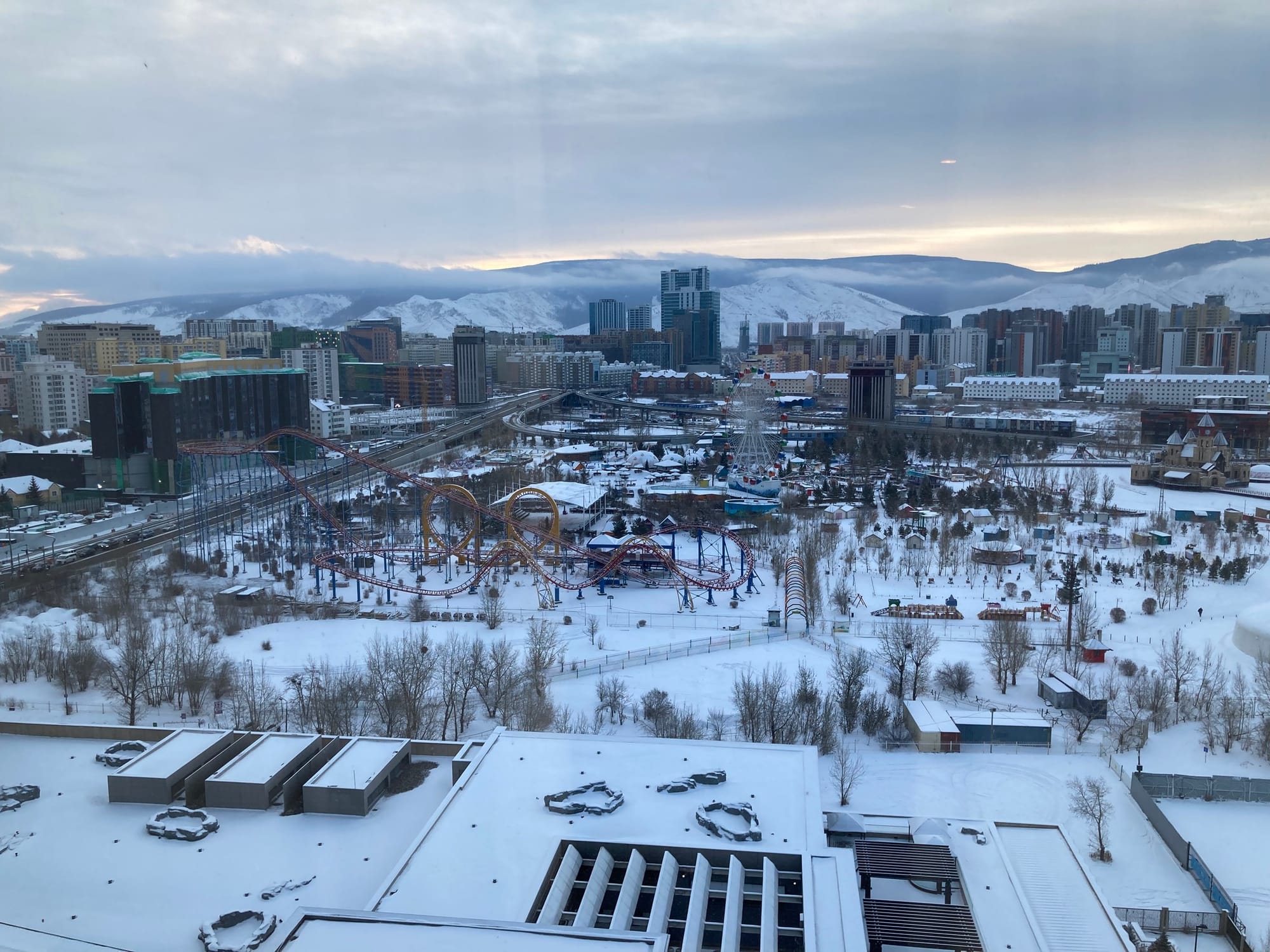
Getting to the Gobi was an expedition in itself. Our group took an hour-long bus ride from the airport to Ulaanbaatar, the capital. The next day we boarded two single-engine Cessnas bound for the South Gobi Province.
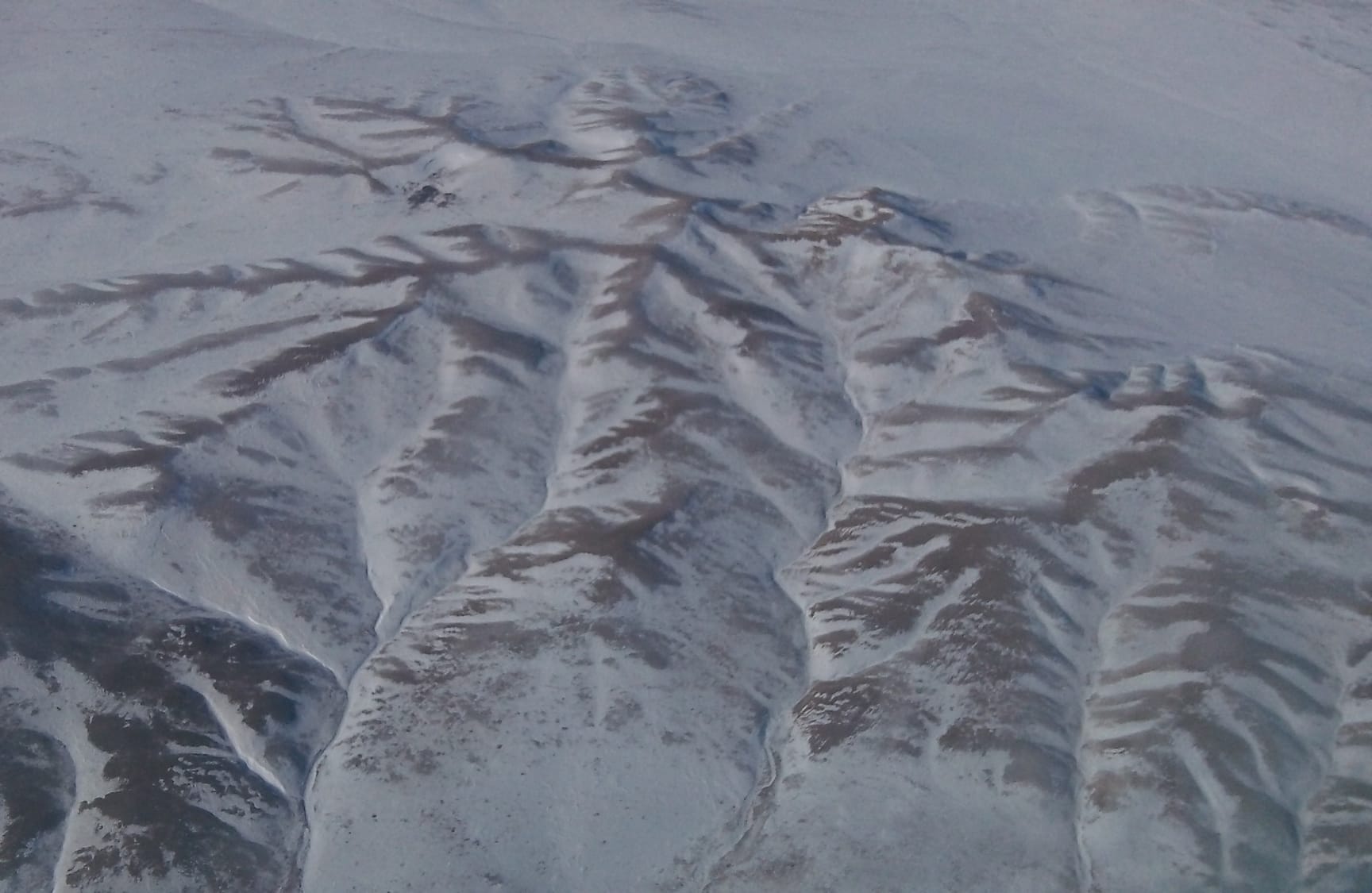
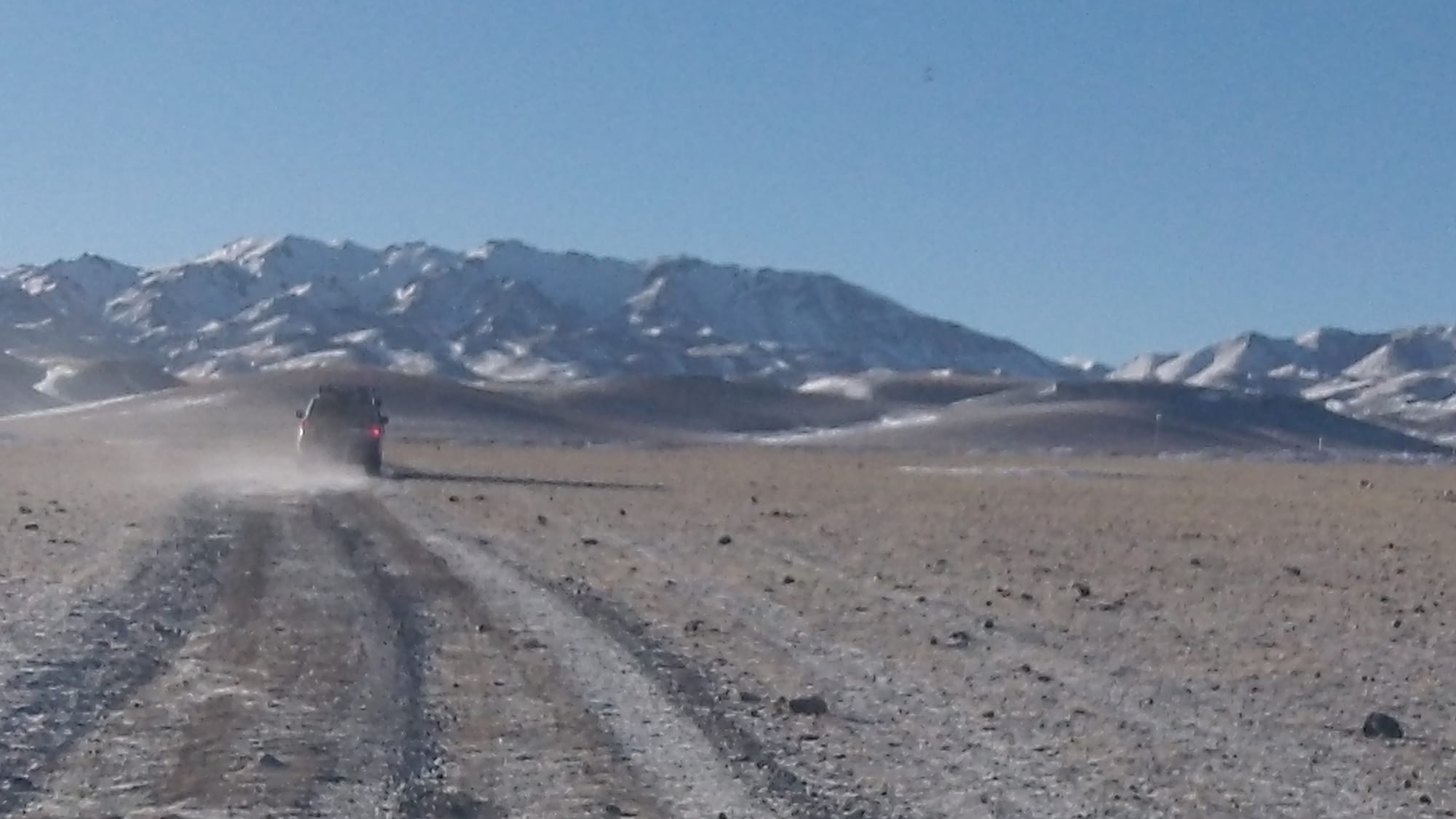
After a two-hour flight, we landed at Dalanzadgad, a nearly deserted airport. From there we traveled another hour across the open desert in a caravan of seven four-wheel-drive vehicles.
There were no roads.
Yet somehow the drivers navigated effortlessly without signs or markers.
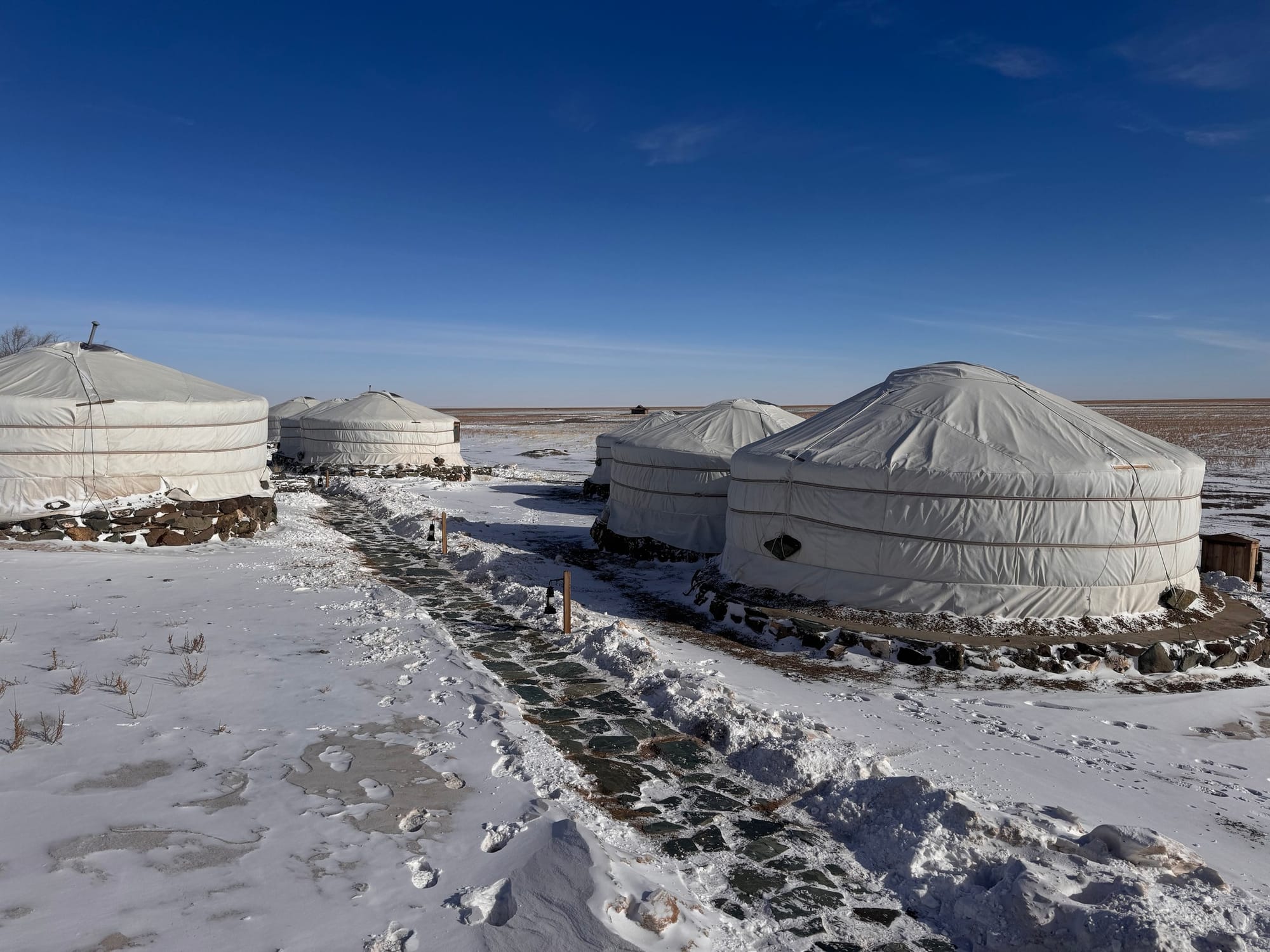
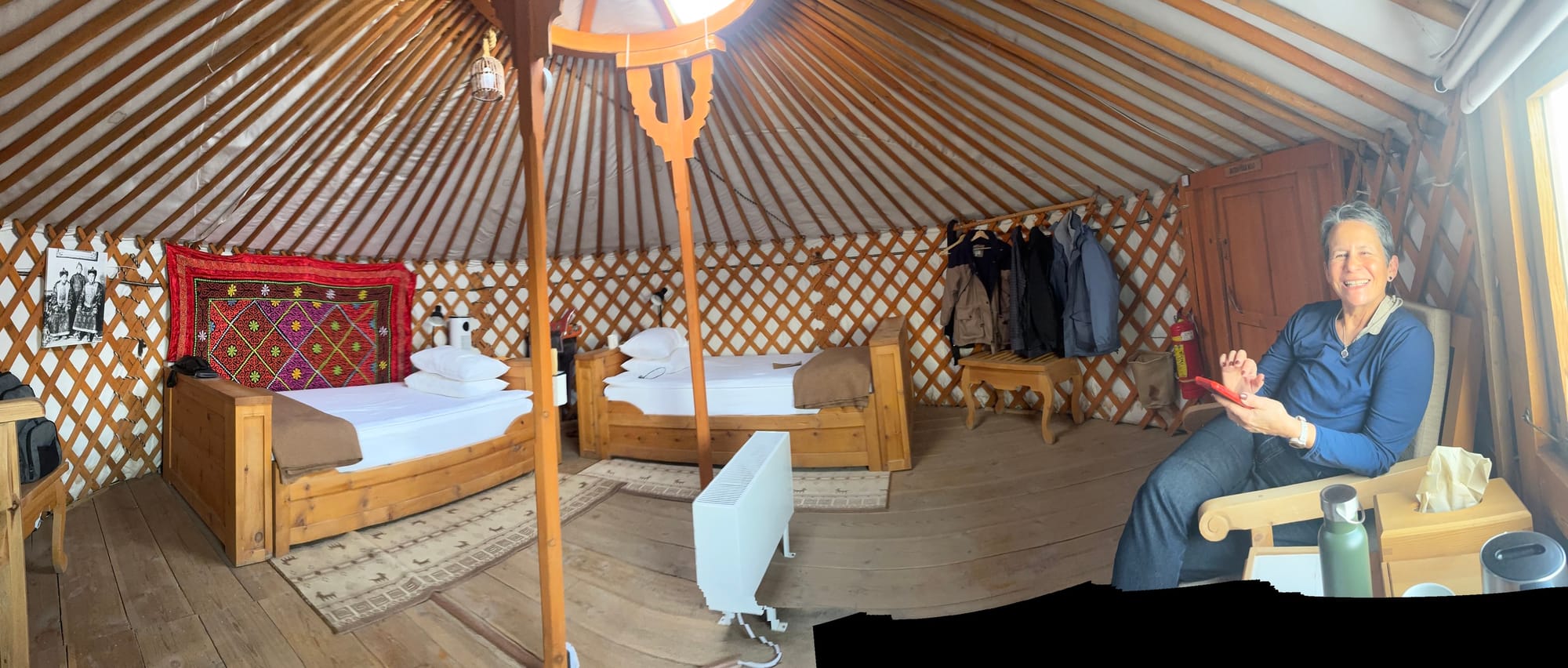
Our destination was a complex of yurts — called “gers” in Mongolia. We stayed in individual gers, while larger structures housed the dining hall, lounge, reception area, and gift shop. A yurt is a portable circular tent built from a lattice of wood or bamboo poles and insulated with animal skins or thick fabric. Archaeological evidence suggests these tent-like homes have been used for nearly 3,000 years.
Photos by Jackie Wald, Michael Wald
Ours, however, were surprisingly comfortable, complete with indoor plumbing, hot water, and electricity supplied by solar panels.
Our guides led hikes to remarkable sites throughout the desert. One destination was the Flaming Cliffs, towering formations of red sandstone famous for their abundance of dinosaur fossils.
Another hike proved far more demanding.
In subzero temperatures, we trekked through a gorge framed by snow-covered cliffs. Some members of the group never began the arduous climb, choosing instead to wait in the vehicles. I pressed on, trudging through snow that rose above my ankles with every step.
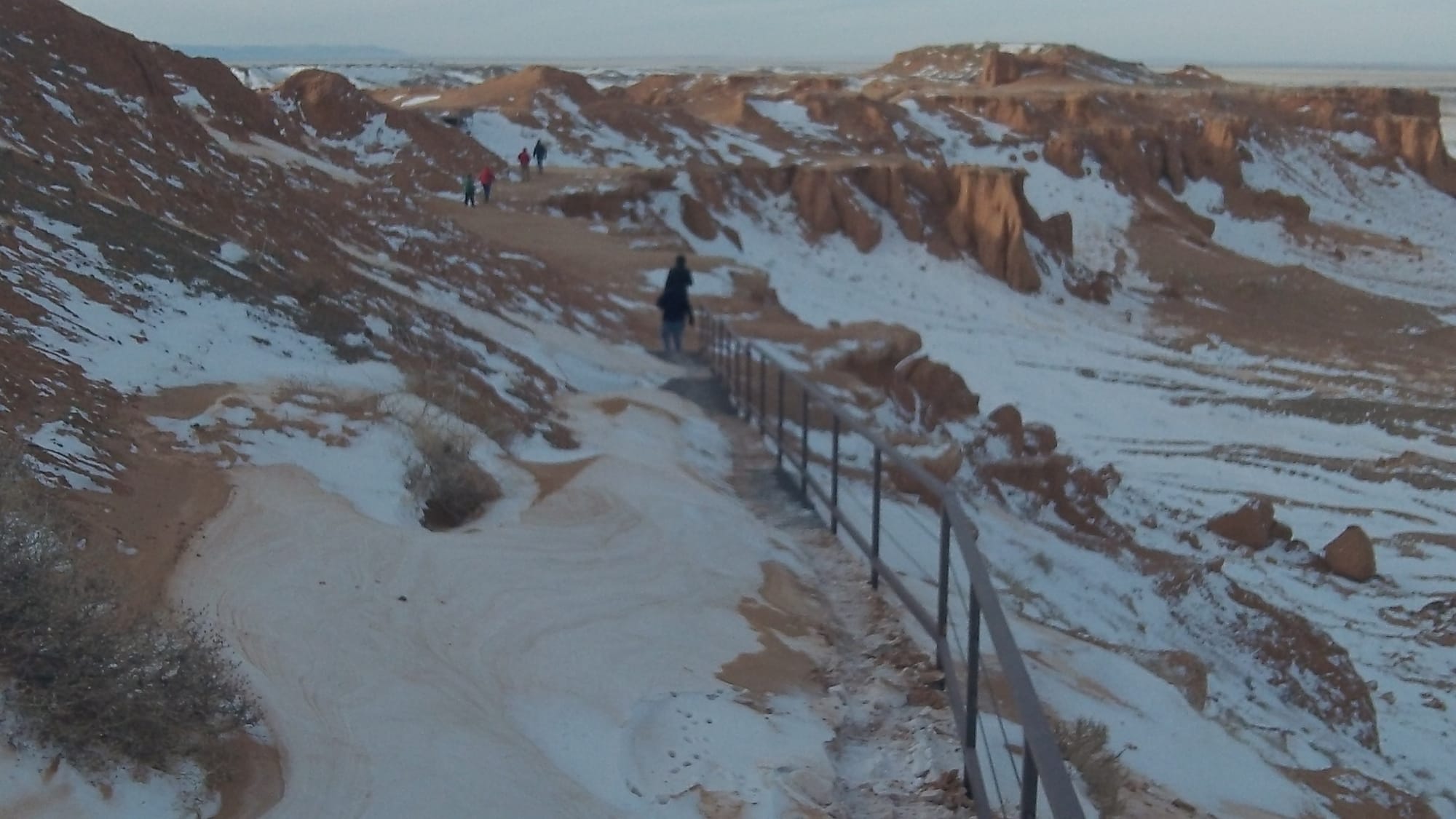
Everyone moved at a different pace. The guides, accustomed to the terrain, patrolled the line of hikers to make sure no one struggled alone.
And then, for perhaps twenty minutes, I saw no one at all.
No one ahead of me. No one behind me.
Sunlight glinted off the snow-covered cliffs. There were no birds, no movement, no sound of life anywhere around me. The silence was absolute.
I felt completely alone on the planet.
I had never experienced such a sensation before — just me and Creation.
Those of us who continued eventually reached the base of a mountain, where we were rewarded with the sight of a frozen waterfall. A massive sheet of ice clung to the rock face in rippling layers that created the illusion of movement. Because of the elevation and trapped cold air, it remains frozen year-round.
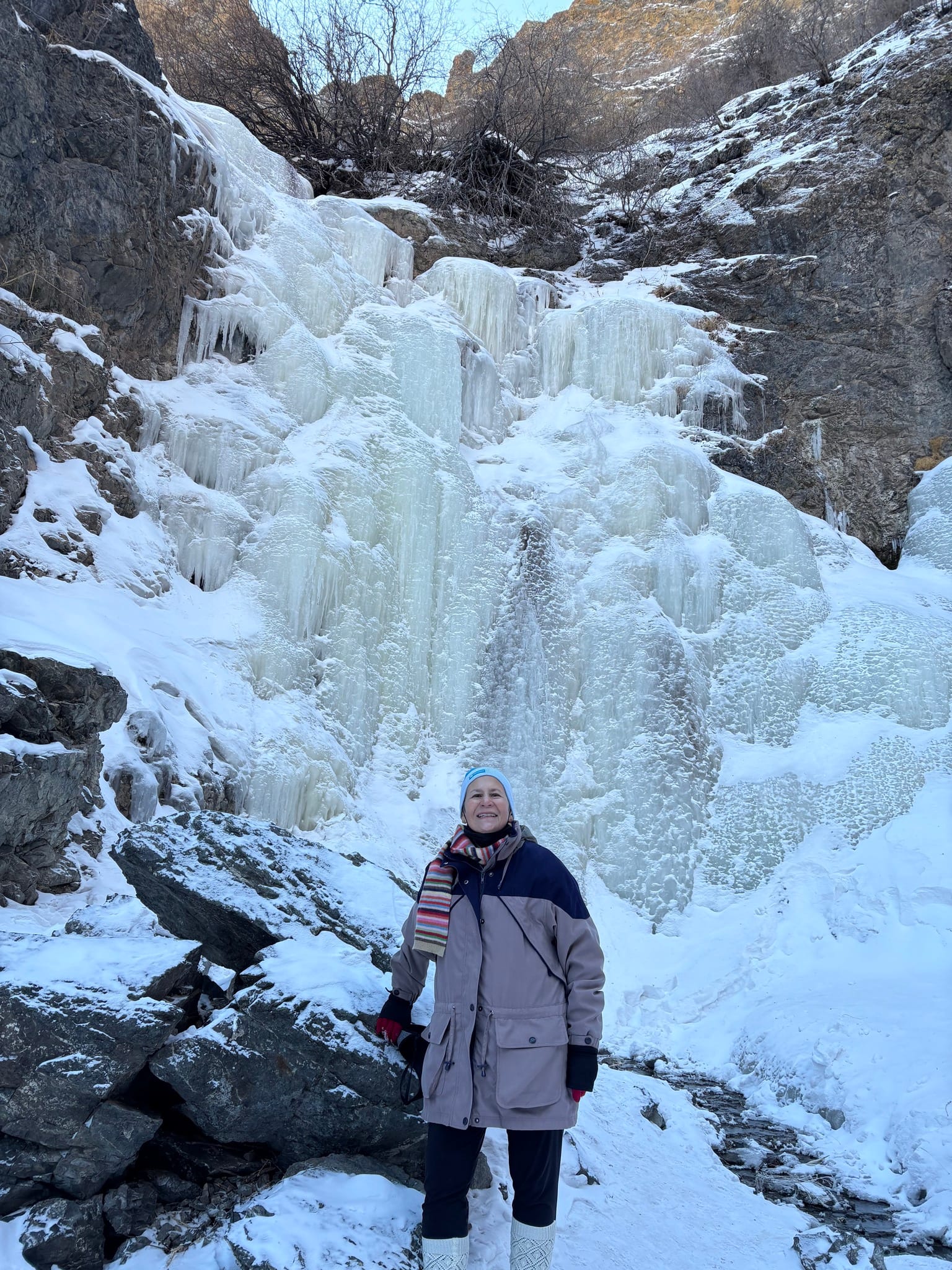
Our guides carefully timed the hike so the sun would be overhead before the gorge walls swallowed the light of this magnificent sight. Numb with cold, we eventually made our way back to the vehicles, where thermoses of hot chocolate and coffee, along with pastries, awaited us.
Among the many once-in-a-lifetime experiences — riding small Mongolian horses and two-humped camels among them — there was one disappointment.
There are few places left in the United States untouched by light pollution. In my urban neighborhood, only the Big Dipper and the brightest constellations remain visible. Decades ago, while camping in rural Iowa, I remember looking up at the Milky Way stretched across the sky in dazzling detail.
I had hoped the Gobi Desert would offer that view once again.
But snow clouds obscured the wide river of stars all three nights we were there.
I know there are places much closer than Mongolia where the spiral arms of our galaxy can still be seen in darkness untouched by artificial light. One day I will make the effort to go.
Still, I cannot help but feel disappointed that I missed my Milky Way in Mongolia.
Jackie Wald is a retired professor of Spanish who is delighted to have moved to Albuquerque 5 years ago. I Want My Milky Way is a companion piece to A Menorah in the Hallway, published in May, 2026.
Community Supporters of the NM Jewish Journal include:
Jewish Community Foundation of New Mexico
Congregation Albert
Jewish Community Center of Greater Albuquerque
The Institute for Tolerance Studies
Jewish Federation of El Paso and Las Cruces
Temple Beth Shalom
Congregation B'nai Israel
Shabbat with Friends: Recapturing Together the Joy of Shabbat
New Mexico Jewish Historical Society
Policy Statement Acceptance of advertisements does not constitute an endorsement of the advertisers’ products, services or opinions. Likewise, while an advertiser or community supporter's ad may indicate their support for the publication's mission, that does not constitute their endorsement of the publication's content.
Copyright © 2026-27 New Mexico Jewish Journal LLC. All rights reserved.