





The Jews of Old Santa Fe: New Mexico History Museum’s Jewish Roots Walking Tour

By Jennifer Levin
Some of the first Jews in what is now the United States called Santa Fe home. Crypto-Jews were a subset of Sephardic Conversos, forced to convert to Catholicism during the century preceding the Edict of Expulsion. The Spanish Inquisition, established in 1478, had already been persecuting Conversos for more than a decade. Jews soon scattered across Europe and into the New World. A few generations later, when the Inquisition came to Mexico, some Crypto-Jews moved north, into the Sangre de Cristo Mountains.
Ashkenazic merchants immigrated to New Mexico from Germany in the 19th century, in the aftermath of the Napoleonic Wars that stripped them of many rights. Between 1846 and 1860, Jewish families helped shape the modern commercial center of Santa Fe that we know today—but they mostly likely knew nothing of the Sephardim hidden in their midst.
As a local arts and culture writer, I’ve learned about Santa Fe’s Jewish history through a few books and occasional museum exhibitions. It’s hard to fathom why Jews aren’t mentioned as routinely as the Franciscans and the Pueblo tribes, but it’s a story that often feels kept under wraps. The Friends of History at the New Mexico History Museum recently created a new walking tour to show how these two Jewish diasporas helped build Santa Fe.
“This isn’t just a tour for Jews,” says Scott Nadler, the docent who developed the tour. “This information is crucial to the history of the Southwest.”
The Converso Problem
Nadler starts the tour on the downtown Plaza’s northwest corner with an overview of New Mexico’s major historic periods, beginning with the Native presence 23,000 years ago, which continues to the present day. Pueblo drummers and dancers perform near the Obelisk as he describes the Spanish Colonial Era (1598–1821), the Mexican Period (1821–1846), and the U.S. Territorial Era (1846–1912). He then narrates back to Spain and the mounting pressure against Jews.
“Sometimes life was okay. Other times, there were what we would now call pogroms. In the 1300s, the Catholics start cleansing the area of heretics, and you begin to get forced conversions,” says the Friends of History and Temple Beth Shalom board member. “By the mid-1400s, contemporary writing wasn’t about the ‘Jewish problem’ but about the ‘Converso problem.’ New Christians were the real threat, because they might secretly still be Jews.”
In Mexico, Conversos stayed in the community and became central to building the economy, which Nadler explains using a sociological theory called “the middleman minority.” But there was little commerce in early Santa Fe, and Crypto-Jews are believed to have quickly moved to mountain villages, where they intermarried with Spanish Catholics. When scholars began speculating about Crypto-Jews in the 1980s, cultural clues including Jewish symbolism on Catholic headstones was enough for some to claim that a secret yet obvious thread of Jewish culture must have survived the centuries.
However, Nadler sees these customs as inherited habits rather than hidden faith. “It mimes what came before. It doesn’t necessarily signify understanding or belief,” he says. A family that avoids pork, or a biscochito recipe made without lard, may point to Jewish ancestry even if no one remembers why.
Family stories are one thing, but irrefutable proof came with research into Inquisition archives and modern DNA testing, which confirmed what some onlookers had dismissed as wishful thinking. Today, many Santa Feans take pride in their distant Jewish heritage.
Crossing the Plaza, Nadler points out windows on the east end of the Palace of the Governors, where Doña Teresa de Aguilera y Roche was arrested in 1662 on charges of Judaizing, along with her husband, Governor Bernardo López de Mendizábal. Among the charges against Doña Teresa? Nadler says she was insufficiently reverent because she drank hot chocolate on Good Friday. The Pueblo drumming swells as he points out that when the Inquisition came to Santa Fe, accusations against Crypto-Jews were usually politically rather than religiously motivated.
But I can’t help noticing that “the Converso problem” isn’t much different from today’s moral litmus tests over Zionism, even if the stakes for Diaspora Jews aren’t as dire. As antisemitism yet again rises under the banner of politics, offering this tour feels not just important, but brave.
Jews at the Center of Society
Nadler doesn’t want to shock anyone, “but Spain wasn’t the only place that threw out the Jews,” he says. “France and England did it first.”
Jews in Europe became adaptable, forging ahead in whichever country needed their skills with money, because the Christian church banned its adherents from lending money, and, Nadler says, considered dealing with money and commerce beneath them. He explains that Eastern Europe and Germany were active centers of Ashkenazi Jewish life. “Poland invited Jews in. … But after 1815, after the Napoleonic wars, things changed.”
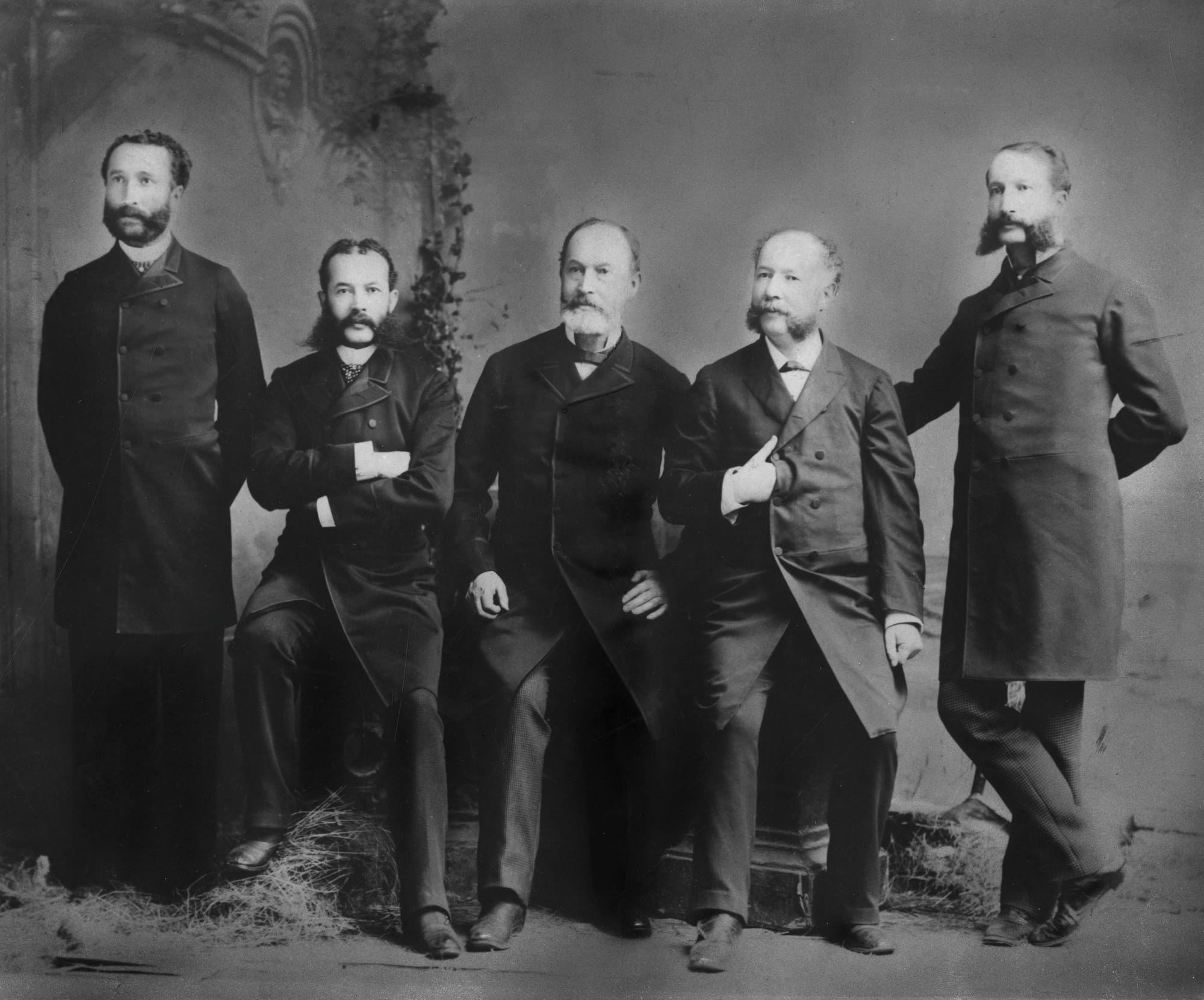
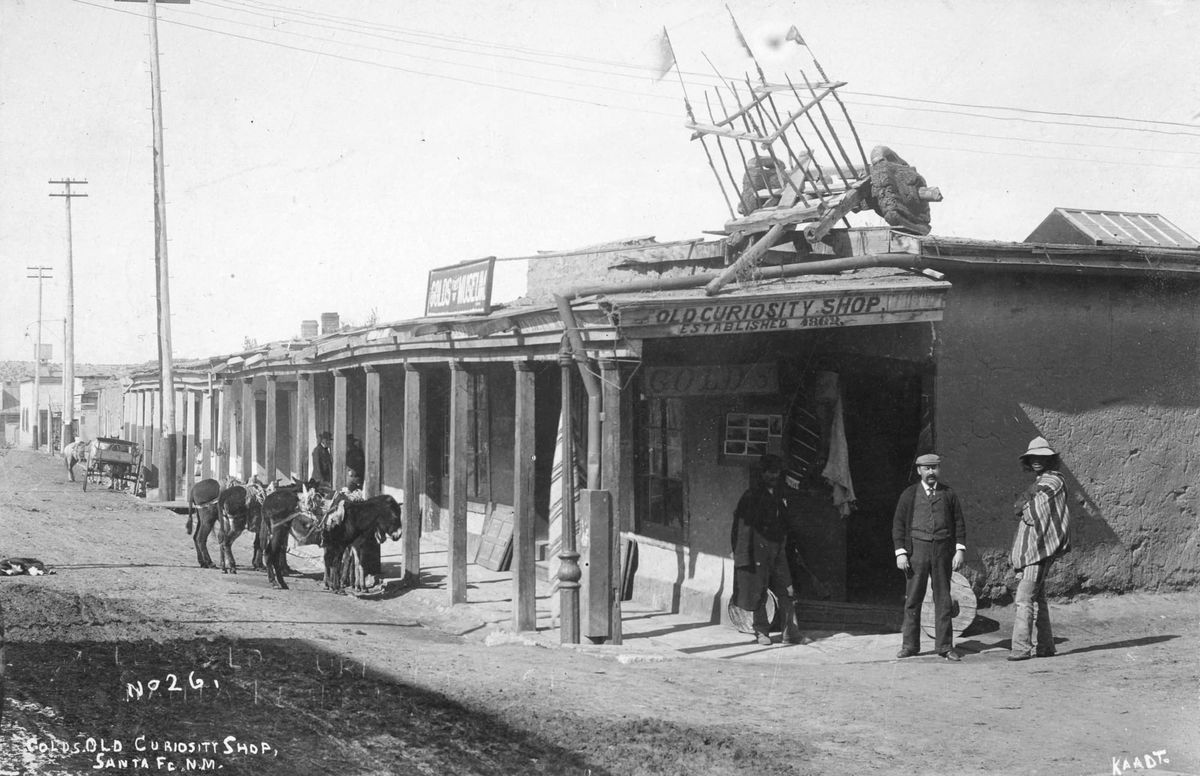
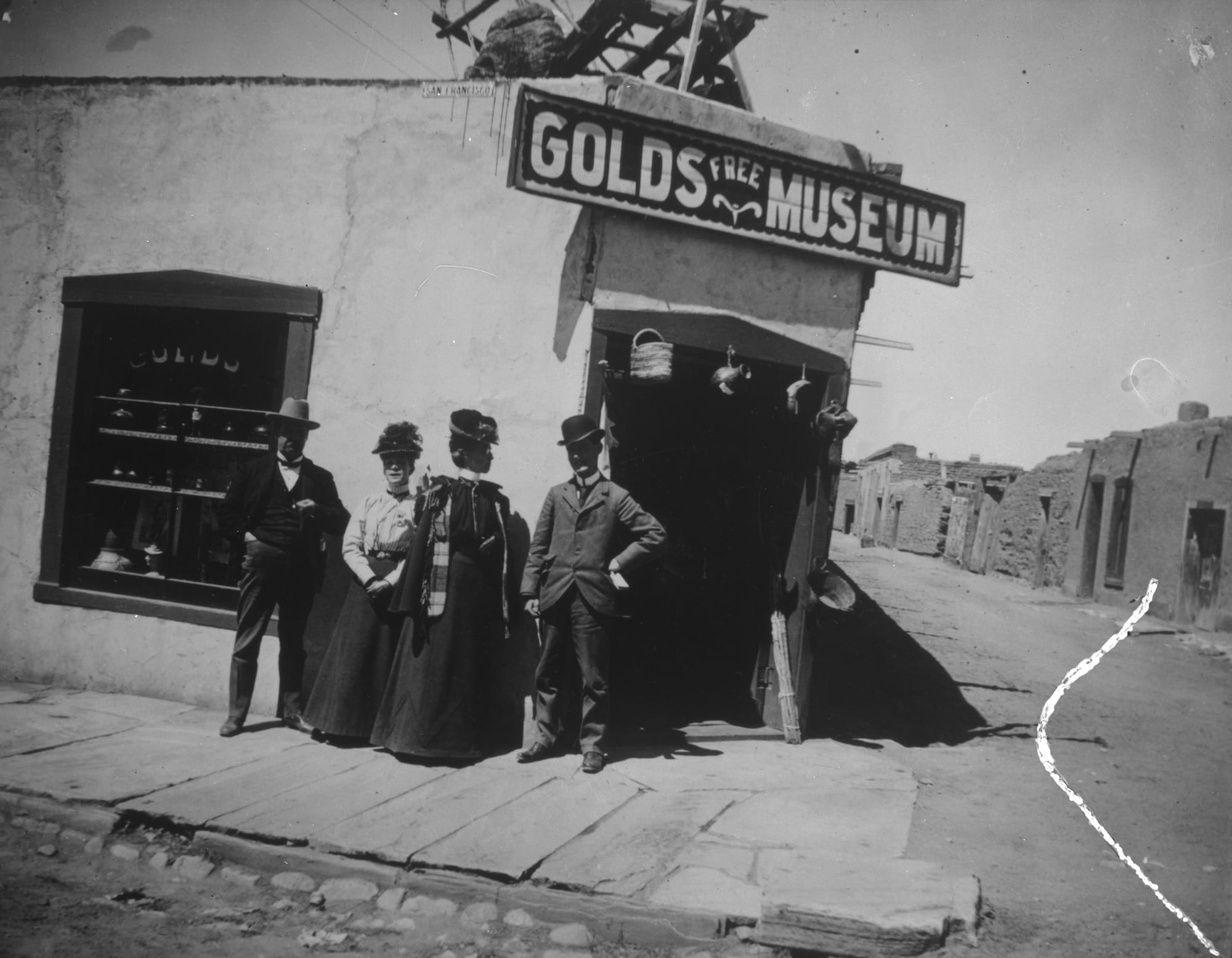
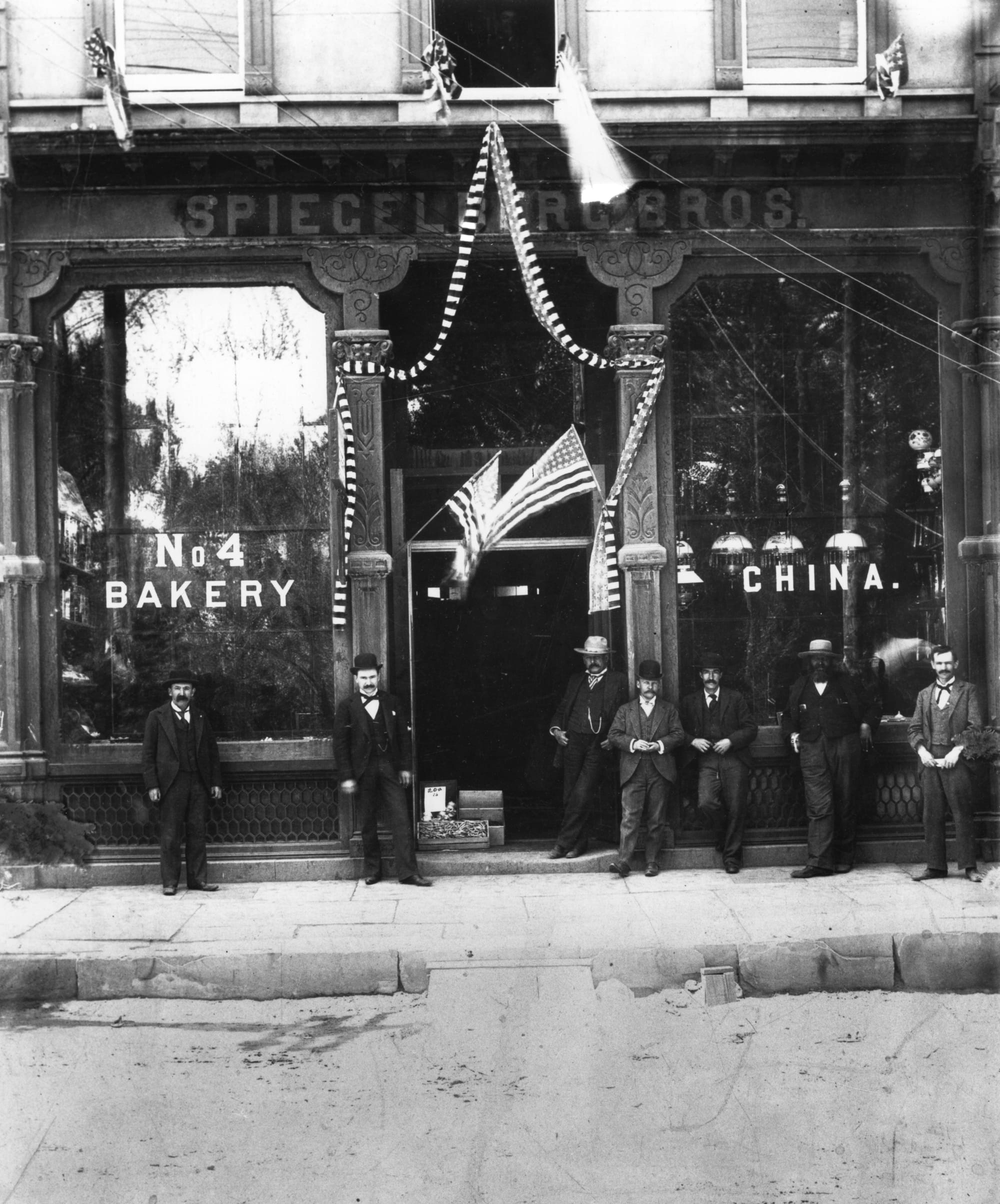
German Jewish merchant Solomon J. Spiegelberg arrived in Santa Fe in 1846 as a supplier with the U.S. Army. He quickly built an empire using $365 in seed money to buy his first store on the south side of the Plaza. He brought over his brothers, including the youngest, Willi, who learned Spanish and three Pueblo languages. The family opened retail businesses, created supply chains, and did business with everyone who wanted to do business with them. They were soon worth millions—and they were soon joined by other German Jewish merchant families.
Nadler leads the tour down Palace Avenue to the St. Francis Cathedral, where he talks about Bishop Jean Baptiste Lamy’s arrival in 1851 to shape the city’s Catholic community. Lamy was so enchanted by the Jewish businessmen’s educated wives, he planted fruit trees in their yards to demonstrate his friendship. Nadler loves talking about the wives, especially Flora Spiegelberg, whom he calls “a major figure” and whose home on East Palace Avenue was where the Peyton-Wright Gallery now stands.
One of the last stops is La Posada, a grand mansion on Palace Avenue built by a Spiegelberg cousin, Abraham Staab, for his wife, Julia, who according to local lore withdrew from society after the death of her youngest child. Their home is now part of a luxury hotel known for its historic bar and manicured grounds. A mezuzah still adorns the doorway to the original Staab house, which is rumored to be haunted by Julia’s ghost. Legend has it she was a consummate hostess. As a fact-based, no-nonsense historian, Nadler is skeptical, but I’ve always felt Julia’s presence. I think she’s waiting for her guests to arrive for Shabbat. It’s time to light the candles.
1 p.m. Wednesday, December 2
New Mexico History Museum Auditorium
Scott Nadler presents a lecture on Santa Fe’s Jewish history
Information and tickets at Friends of History New Mexico
Tour Details:
Friends of History Jewish Roots Walking Tour
Held the first day of each month, April through December
10:45 a.m.–12:45 p.m. (please arrive at 10:30 a.m.)
Meet at the entrance to the New Mexico History Museum, 113 Lincoln Avenue
Tickets: $40 adults; $20 ages 13–17; free for kids 12 and under
friendsofhistorynm.org or in the Spiegelberg Shop at the New Mexico History Museum
Private tours are available, subject to docent availability. Advance notice required. For more information email FoHTours@gmail.com
Note: The last monthly tour of the 2026 season is December 1
Jennifer Levin is a freelance arts and culture writer and communications professional in Santa Fe, New Mexico. She is writing a memoir about her family, Jewish identity, creativity, and chronic illness. View her memoir in progress at https://open.substack.com/pub/jenniferlevin505
Community Supporters of the NM Jewish Journal include:
Jewish Community Foundation of New Mexico
Congregation Albert
Jewish Community Center of Greater Albuquerque
The Institute for Tolerance Studies
Jewish Federation of El Paso and Las Cruces
Temple Beth Shalom
Congregation B'nai Israel
Shabbat with Friends: Recapturing Together the Joy of Shabbat
New Mexico Jewish Historical Society
HaMakom - Passionate Judaism in Santa Fe
Chavurat Hamidbar Fellowship of the Desert
Santa Fe Jewish Film Festival
Sisterhood - Congregation Albert
Policy Statement Acceptance of advertisements does not constitute an endorsement of the advertisers’ products, services or opinions. Likewise, while an advertiser or community supporter's ad may indicate their support for the publication's mission, that does not constitute their endorsement of the publication's content.
Copyright © 2026-27 New Mexico Jewish Journal LLC. All rights reserved.