










'We Should Worry': Church-State Separation and Texas's Ten Commandments Law Sparks Concern

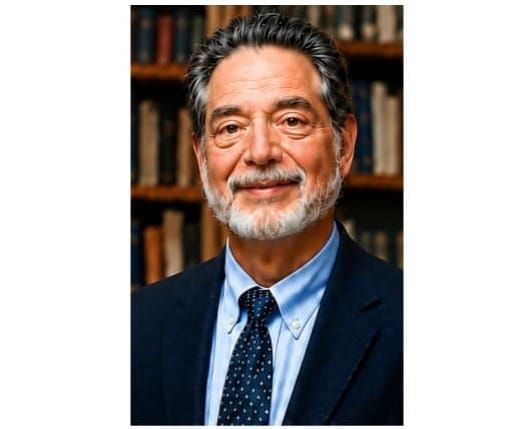
By Martin Finston
How do changing views on our Constitutional protections affect the separation between Church and State? And, should we, as a religious community, be concerned?
“We should worry,” was the message delivered at Congregation B’nai Israel’s July Shabbat Sparks event. Dr. Martin Finston, a local patent attorney and former president of the Congregation, spoke to an attentive audience for twenty minutes about “The Ten Commandments and the First Amendment.”
“The Ten Commandments” refers to Senate Bill 10, passed in Texas in 2025, calling for an abridged version of the Ten Commandments, taken from the King James Bible, to be posted on classroom walls in every public school in Texas. Opponents of the law have argued, in the legal action Nathan v. Alamo, that the law violates the Establishment Clause of the First Amendment: “Congress shall make no law respecting an establishment of religion...”
That argument went all the way up to the Fifth Circuit Court of Appeals, which hears appeals from Federal trial courts in Texas, Mississippi, and Louisiana. The Fifth Circuit was bitterly divided. But last April, citing recent Supreme Court precedent, the judges upheld the Texas law by the slimmest possible margin, with a vote of 9-8.
In his talk, Dr. Finston offered some historical background. The First Amendment was enacted in 1791, at a time when some states still had official churches. But that had ended by 1868, when ratification of the Fourteenth Amendment made the protections of the First Amendment incumbent on the individual states.
In 1971, when Earl Warren was still Chief Justice, the Supreme Court introduced a new test for adjudging whether a law or governmental action violates the Establishment Clause. The Lemon Test, which took its name from Lemon v. Kurtzman, the case where it first appeared, asks three questions: Does the law have a valid non-religious purpose? Is its primary effect neutral toward religion? Does it unduly entangle the government with religious matters? If the answers are “yes,” “yes,” and “no,” the Establishment Clause is satisfied.
The Lemon Test was still good law in 1980, when a Kentucky law very similar to Texas’s Senate Bill 10 was overruled by the Supreme Court on the ground that it had no valid non-religious purpose. However, the Supreme Court has shown a growing preference for a different sort of test — a historical approach asking, first, whether the law in question would have been regarded in the Founding Era as a “religious establishment’, and then asking whether the law is forcing religion on anyone. The Fifth Circuit cited the Supreme Court cases where this historical approach prevailed when it rendered its decision in Nathan v. Alamo.
Bringing his personal views into the talk, Dr. Finston argued that the Lemon Test has been a powerful safeguard against a very particular danger—the danger of laws creeping in, at any level of government, that were designed to promote someone’s personal religious preferences.
Will the Nathan v. Alamo case reach the Supreme Court? Many commentators consider it likely, but only time will tell. Dr. Finston said that, even though recent Supreme Court justices have repudiated the Lemon Test in their opinions, he is hopeful that it will still hold some weight, if and when Nathan v. Alamo comes before them.
Perhaps there is no real harm in posting biblical passages on classroom walls, Dr. Finston said. But what of the slippery slope that may place us on? In time, we may see religious passages officially posted in government buildings of all kinds. And when one religious faction or another sees that it has the government’s backing, we’ll have started down a road that can lead to widespread and entrenched intolerance.
There was lively discussion in the B’nai Israel social hall after the service and the talk had concluded. Several congregants shared their childhood memories of how it felt when prayers and religious events took place in their public schools, and shared their opinions about when and where a line should have been drawn. Dr. Finston says, “Several lawyers who’d heard the talk chided me that I’m too optimistic in thinking the Lemon Test may still have a future. I’m chagrined, but still hopeful.”
Since the date of Dr. Finston’s talk, three mothers of schoolchildren from the Houston area have sued in Texas state court to block Senate Bill 10, as reported by the New York Times on July 30. These plaintiffs cite the Texas Religious Freedom Restoration Act of 1999, which states, in part, that, subject to certain exceptions, “a government agency may not substantially burden a person’s free exercise of religion.” The mandated posting of the Ten Commandments, they say, does constitute such a burden. They also argue that the mandate violates the 2025 Parental Rights Amendment to the Texas constitution, affirming, among other things, parents’ fundamental right to make decisions concerning their children’s upbringing.
Dr. Finston ended his talk with a plea for us all, as private citizens, to uphold our highest patriotic values by practicing tolerance toward each other: “The next time you catch yourself reacting to a fellow human being as an ‘other’, try this: Reach out to him or her instead as a sister or a brother.”
Martin Finston was President of Congregation B'nai Israel, Albuquerque, from 2024 to 2026.
His arts review, "Susie Sandager, Author and Actress of Corrie Remembers" received a 2nd Place in Reviews in the NM Press Women Communications Contest, with an appreciative note from the judge that we need more heroes like her, adding “well written … and wonderful.” A meaningful and relevant Sparks piece he contributed is "Civic Engagement—Does it Matter? Watch 'Join or Die'".
Community Supporters of the NM Jewish Journal include:
Jewish Community Foundation of New Mexico
Congregation Albert
Jewish Community Center of Greater Albuquerque
The Institute for Tolerance Studies
Jewish Federation of El Paso and Las Cruces
Temple Beth Shalom
Congregation B'nai Israel
Shabbat with Friends: Recapturing Together the Joy of Shabbat
New Mexico Jewish Historical Society
HaMakom - Passionate Judaism in Santa Fe
Policy Statement Acceptance of advertisements does not constitute an endorsement of the advertisers’ products, services or opinions. Likewise, while an advertiser or community supporter's ad may indicate their support for the publication's mission, that does not constitute their endorsement of the publication's content.
Copyright © 2026-27 New Mexico Jewish Journal LLC. All rights reserved.