










Do You Want To Know Where You Really Come From?
By Judith Fein with Alex Denisenko
When I grew up, I was mesmerized by my “foreign” grandmother. She had gray hair, sometimes wore nylon stockings that she rolled up at the top, had an accent, read a newspaper in Yiddish, and, like many other immigrants, never wanted to talk about the life she left behind in “Russia.”
After many years of trying, I managed to extract six facts from her about her shtetl— her tiny village— of Minkowitz. One fact was that when she was 10, she dried tobacco leaves with the women. Another was that the floor of her house was made of “drek— animal excrement.
It took me decades to find out that Minkowitz was in what is now Ukraine, that the shtetl, even though it’s hardly a dot on the map, still exists, and that even though I am a travel journalist, I was afraid to go there. Afraid of what? What I would find… or what I wouldn’t find. It had mythopoetic status in my life, and maybe I didn’t want to see the real place.
Finally, after my husband and I were sent on assignment to Russia, he talked me into going to Minkowitz. I found a man I thought would be the perfect guide — Alex Denisenko. He was a genealogy scholar, he spoke Ukrainian, and he could take us to villages and towns in Ukraine, where most of the American Jews came from. Oh, and did I forget to mention that he would bring me to Minkowitz?
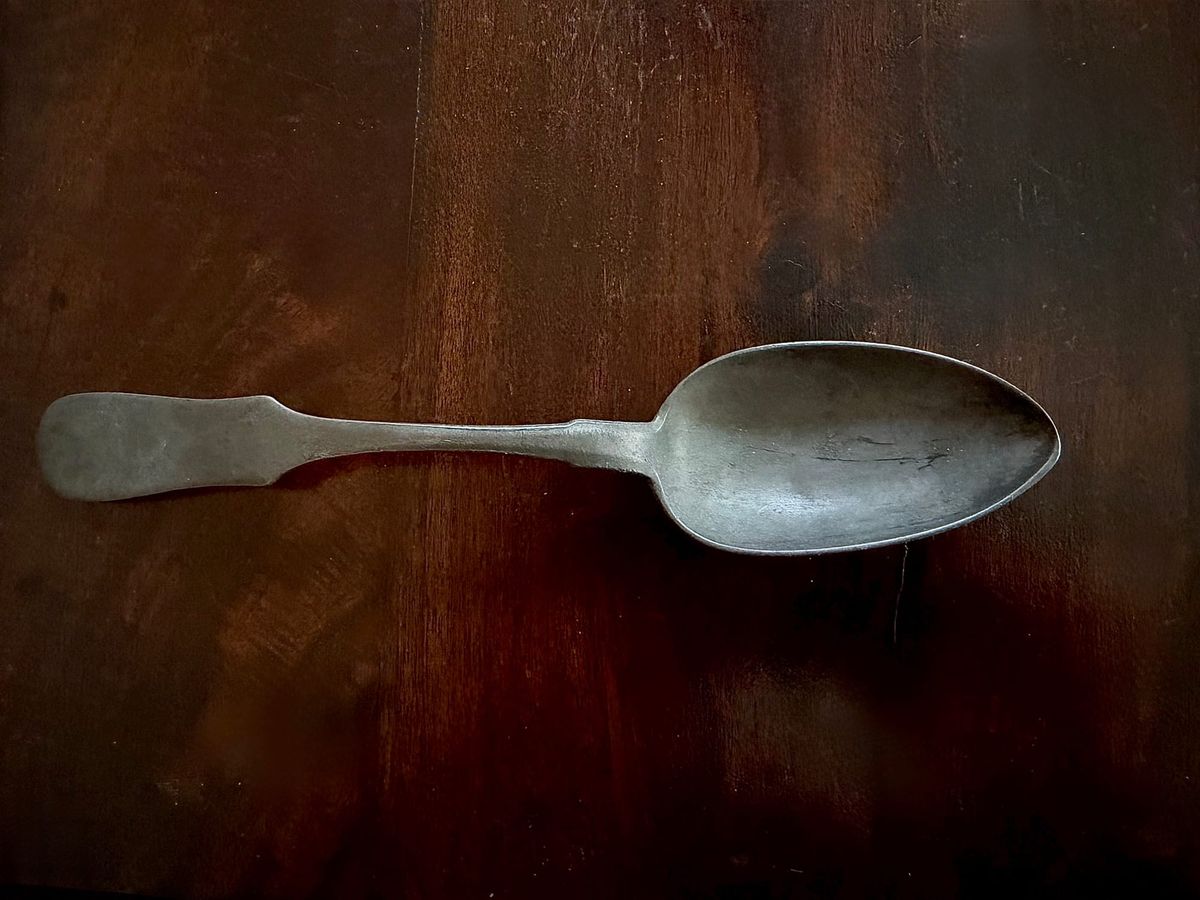
At first Alex seemed quite scholarly and serious, but we both opened up and I began to feel that Alex was like a trustworthy, smart, savvy cousin. Our trip was so powerful, personal, and deep that I wrote a book about it — The Spoon From Minkowitz. I wanted readers to know how an ancestral trip is like no other travel experience, and I wanted them to get to know all that’s left of the world their ancestors departed.
Now the invasion and war that Russia started have made travel to Ukraine untenable. Readers of my book still contact me to ask how they can learn more about the life of their eastern European ancestors, and they tell me how they long to go there as I did. Some of them wanted to know how they could work with Alex.
Recently, I contacted Alex and commiserated with him about the lack of visitors he could take to ancestral lands. I was agog at the detailed work he is doing with Jewish people to track down who and where they came from, and to furnish them with much more than just dates of birth, death, and when they came to the U.S.
Here, in his own words, is what Alex says he does to help Jews from eastern Europe glean important information about the people whose shoulders they stand on. He’s been doing it for thirty years, and he explained how he uses the archives to bring roots tours and family histories to life.
“Long before a family sets foot in the town their great-grandparents once called home, the real work of a heritage tour happens in dusty record halls, notary vaults, and microfilm readers scattered across Central and Eastern Europe. For genealogical researchers like myself who specialize in guiding families back to their ancestral towns, the difference between a meaningful “roots tour” and a sentimental drive-by is almost entirely a matter of paperwork — and knowing where to look for it.
There are two kinds of evidence.
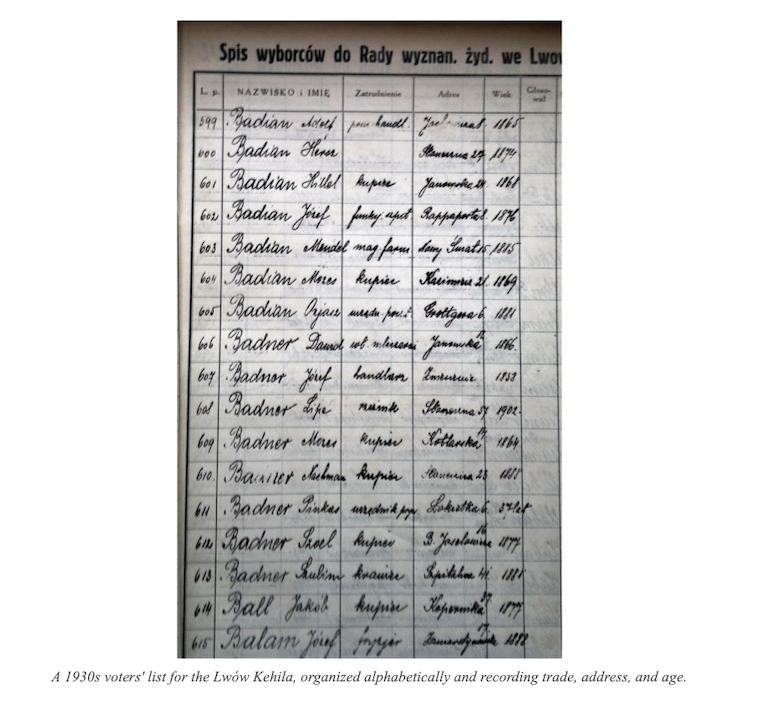
I prepare a family heritage itinerary that typically draws on two broad categories of sources. The first is archival: vital-statistics records spanning different countries and historical periods, census returns, property and notarial books, police and passport files, land-distribution documents, voting rolls from bodies as varied as the Austrian parliament, the Russian Duma, and local Jewish community councils (the kehila), and — for the darker chapters of the twentieth century — labor-service cards and records kept by Jewish councils under Nazi occupation.
The second category is non-archival: state civil registry offices, the recollections of elderly residents who still remember the old families, and local housing-administration bureaus that quietly hold onto property files long after the events they describe. Finding those “knowledgeable” old-timers, researchers note, is often as delicate an art as reading a hundred-year-old ledger.
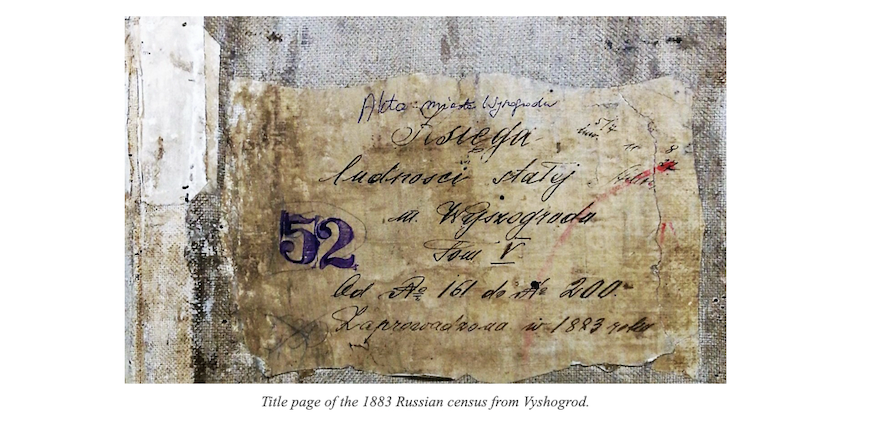
"Much of my research also takes place in the field. The research draws its authority not from theory but from case studies — real families traced street by street and document by document. Among them:
- The Frug and Warshawski families, whose paper trail stretches between the small town of Bobrovy Kut and imperial St. Petersburg.
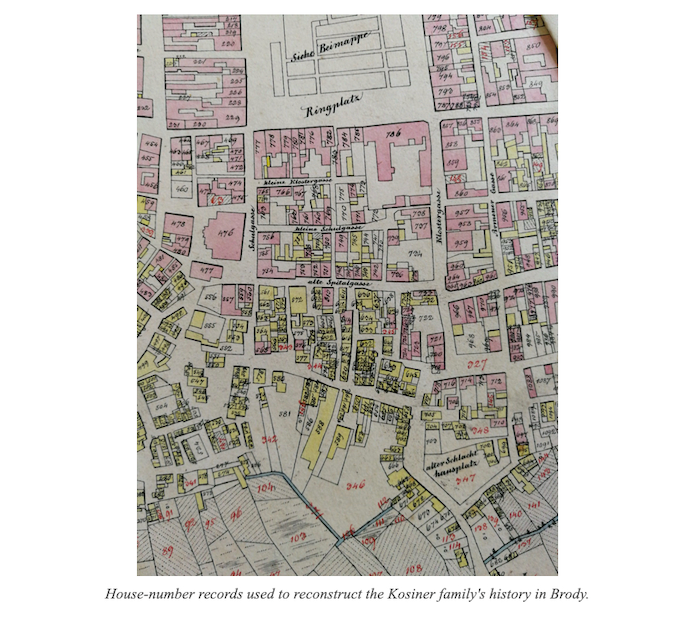
- The Kosiner family of Brody, reconstructed largely through house numbers — a reminder that in many Central European towns, addresses shifted over the decades and mapping them is its own investigative task.
- The Schrenzel family, documented through house books, police records, and an Austrian notarial act.
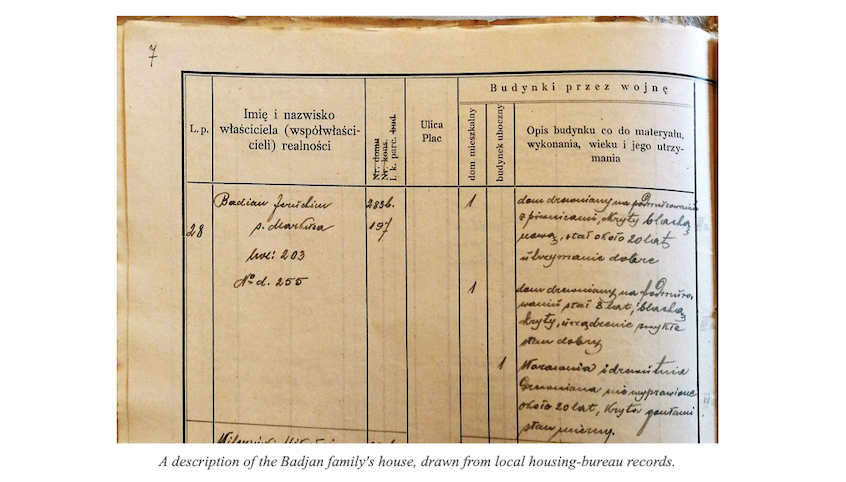
- The Badjan family of Lviv and Komarno, traced through housing bureau files, a 1940 Soviet insurance list organized street by street, and a family photograph taken on Cicha Street.
- The Eisenstein case, unraveled through Polish land-distribution (parcelacja) documents.
- The Kriegsfeld family's search for the shtetl of Minkovtsy, later recounted in Judith Fein's memoir The Spoon from Minkowitz.
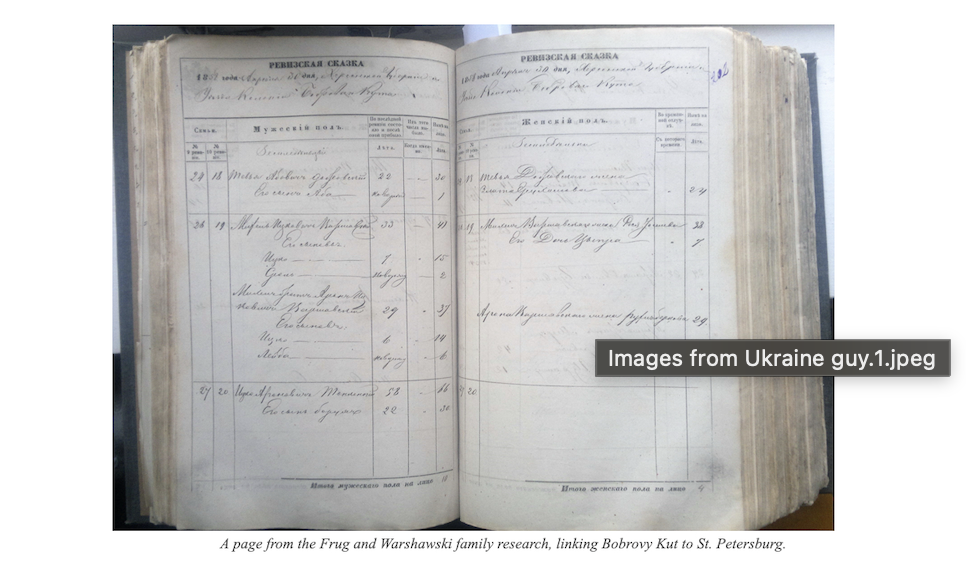
"I think this may be of special interest to you and your readers: I also create videos for those who cannot travel to their ancestral shtetl or home town. And I trace lost family members and recently found two of them.”
Before I asked Alex to tell me exactly what he was doing for people, I had no idea. When we were together, he made it all seem so easy. He knew exactly where to take us, he guided us to people he knew, and if he couldn’t answer any of our questions, he found a local who could.
Of course, I worry about Alex because he lives in L’viv, which Russia has been cruelly bombing. But I know that his work gives meaning to his life, and I hope it will bring meaning and knowledge about the lives of your ancestors to you, too.
And I am confiding in you that I think about this all the time whenever my mind wanders to eastern Europe or Alex: If Alex hadn’t taken us to my grandmother’s shtetl of Minkowitz, I would never have learned and confirmed that, astoundingly, from shtetl ledgers, my husband’s grandfather came from the same tiny town.
Zyva Simja - Living Family - משפחה חיה
https://www.livingfamily.net
Teams: alexalex9750
Landline: +380322611473
Mobile: +380506710725
Facebook: Alex Den
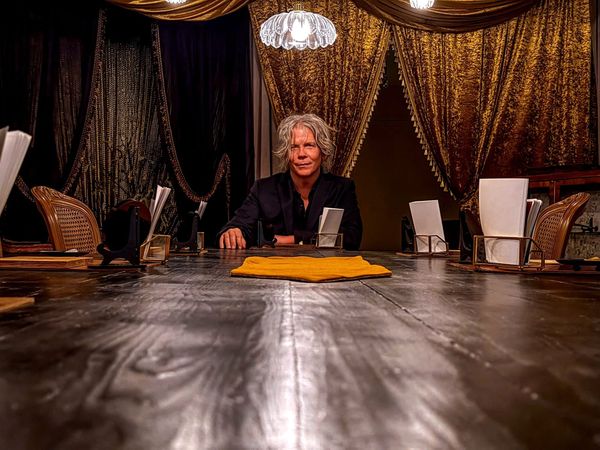
Judith Fein was born with a pen in her mouth, a computer in her hands, and curiosity in her brain. She is an award-winning travel journalist who, with her photojournalist husband Paul Ross, has contributed to 130 publications. She has written four books, done a TEDx talk on Deep Travel, and given many keynote talks. She recently finished the libretto for the opera Mariette in Ecstasy, and writes frequently about all forms of performance. She is the Senior Travel Editor of NMJJ.
Read also "Looking for your ancestors? Let Judith Fein Show You How To Get the Real Story" by Norma Libman, with more details about the book The Spoon from Minkowitz:
 New Mexico Jewish Journal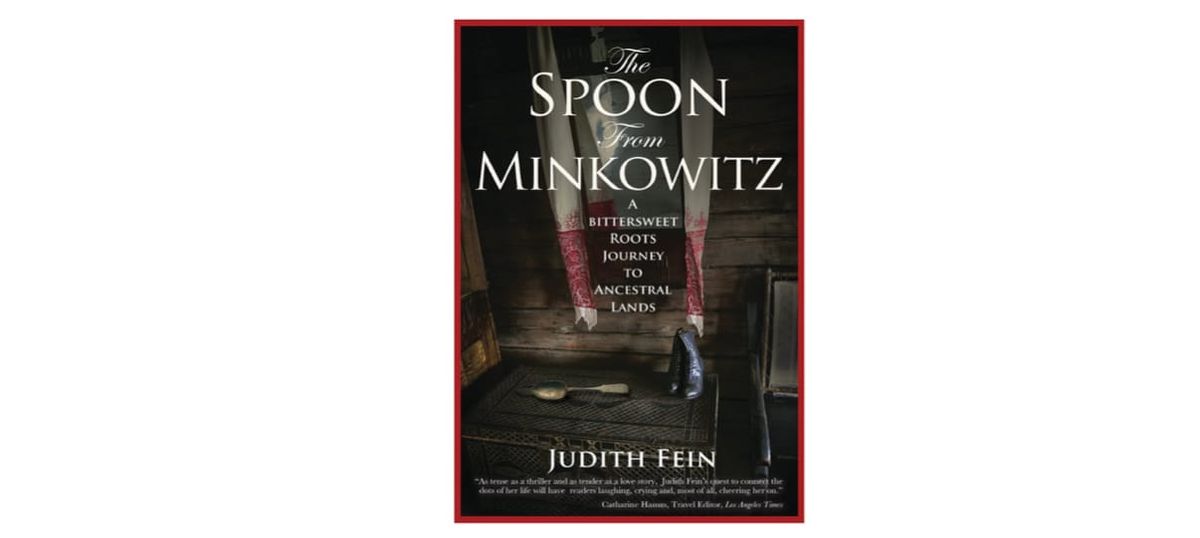
Community Supporters of the NM Jewish Journal include:
Jewish Community Foundation of New Mexico
Congregation Albert
Jewish Community Center of Greater Albuquerque
The Institute for Tolerance Studies
Jewish Federation of El Paso and Las Cruces
Temple Beth Shalom
Congregation B'nai Israel
Shabbat with Friends: Recapturing Together the Joy of Shabbat
New Mexico Jewish Historical Society
HaMakom - Passionate Judaism in Santa Fe
Policy Statement Acceptance of advertisements does not constitute an endorsement of the advertisers’ products, services or opinions. Likewise, while an advertiser or community supporter's ad may indicate their support for the publication's mission, that does not constitute their endorsement of the publication's content.
Copyright © 2026-27 New Mexico Jewish Journal LLC. All rights reserved.