
















Finding Your Inner West: An Urban Cowgirl Conversation with Corinne Joy Brown
Interview by Gloria Abella Ballen
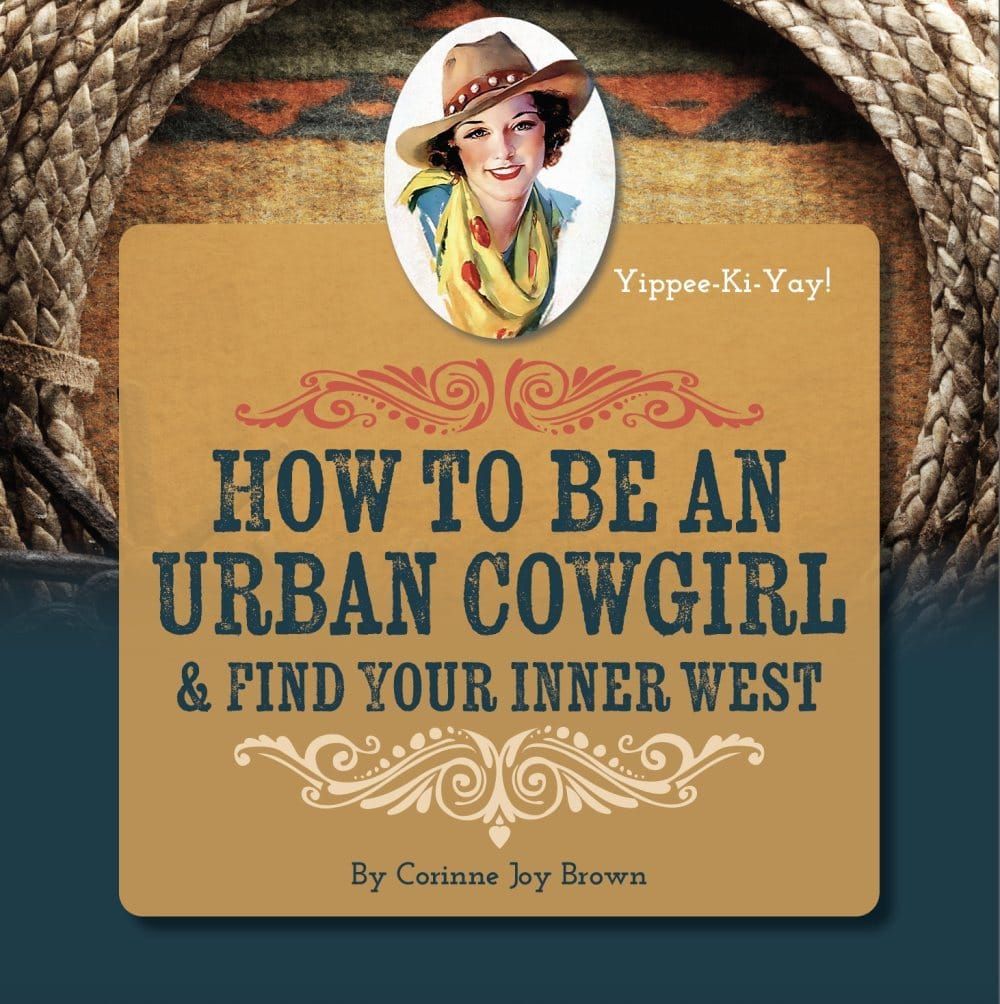
How To Be An Urban Cowgirl & Find Your Inner West by Corinne Joy Brown has just been published, and we are delighted to share this interview excerpt conducted by Gloria Abella Ballen.
Gloria Abella Ballen: Corinne, why were you interested in writing about urban women wanting to be cowgirls?
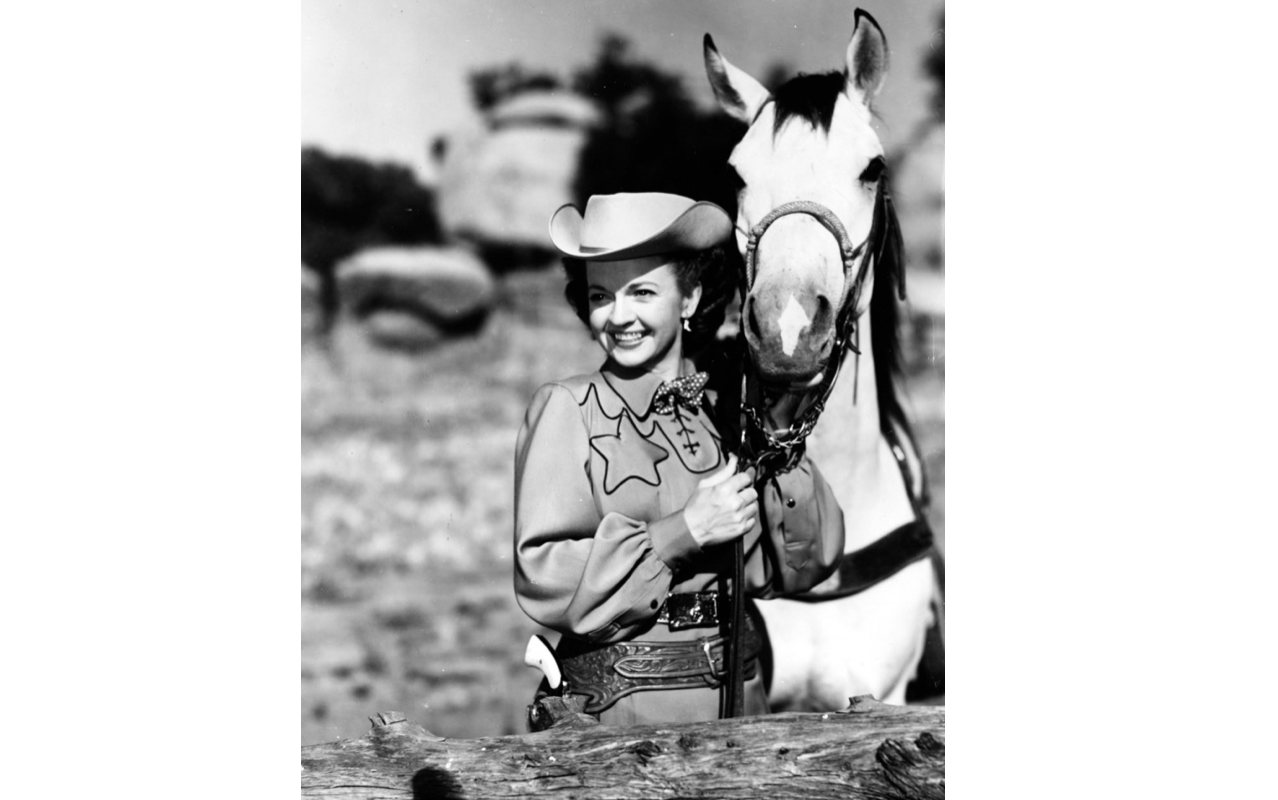
Corinne Joy Brown: I was raised in the 1950s on black and white television in America, and cowboy stories were always shown. Literally, it was the era of the silver screen and the Golden West, and my Saturday mornings were filled with serials, and my heroes were always cowboys, and in many cases, cowgirls, women like Dale Evans. They were endearing stories with great roles, and then Hollywood got ahold of the cowboy, starting as early as the 1930s and 40s, and by the time the 50s rolled around we had some of the most stellar movies, Wagon Train, Rio Grande, How the West Was Won.
And Hollywood needed to find a way to get away from the stereotypical roles of women, who were portrayed either as victims, like prostitutes, or what we called prairie flowers — homesteaders who had to keep the farm going, no matter what the weather, the dust bowl, the animals. They needed stronger roles for women.
What I find fantastic is that Hollywood was established by Jewish immigrants. There's a book about it, An Empire of Their Own: How the Jews Invented Hollywood, that explained how these creative talents, who came out of Berlin, and Warsaw, and Hungary, and Romania, and you name it – they were talented, skilled choreographers and writers and dancers and, they were the beginnings of Hollywood.
And this theme of the West, this open space where everything was possible, where man could face nature and animals and the challenges of life with the elements, and they fell in love with it. All of it. And they decided that the best way to have strong women was literally to create cowgirls. It began in the early 1950s with actresses like Doris Day and Betty Hutton in Calamity Jane and Paint Your Wagon and Annie Get Your Gun.
As I was growing up, I saw these musicals, Oklahoma… and I was mystified. I realized that women could ride horses, and women could carry a gun. Of course, in the beginning, all these women looked like Kewpie dolls. They looked like calendar pinups until things started to evolve. Barbara Stanwyck became the star of a 9-year serial called The Big Valley, as a ranch woman who could run a ranch and boss men around.
I got my first horse when I was 7 years old, but my parents had to sell him when I was a junior in high school. It was very sad. And then, after marriage for 20 years, on my 40th birthday, my husband bought me my next horse, Shamir, my Polish Arabian, and I had that horse for 24 years, I used to joke, longer than most of my friends stayed married.
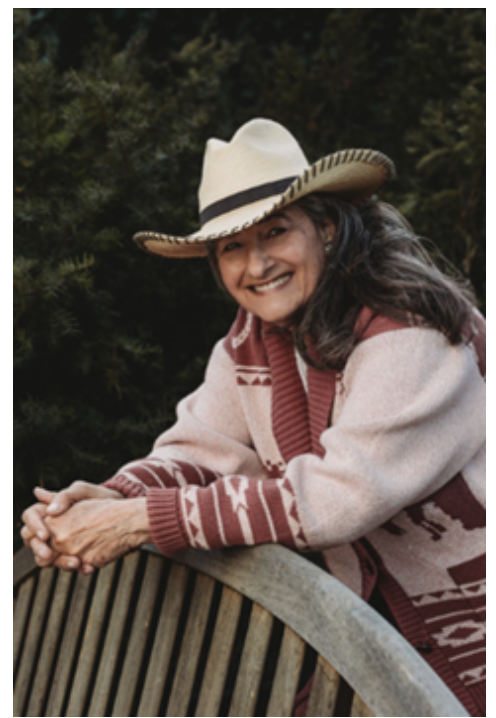
Gloria Abella Ballen: Why would a Jewish girl want to be a cowgirl?
Corinne Joy Brown: So, my parents were immigrants from Europe. My father was captured by Nazis in 1941 and escaped. He was a major medical officer in the French army. When my parents came to Denver, Colorado in 1942 they settled eventually in what was then the outskirts of town. In those days, Denver was called a cow town, and was home to the National Western Stock Show, which runs for three weeks every year in January, and where people bring livestock and compete. It’s the world of the rancher. Founded in 1906, it just celebrated its 120th anniversary. I was born in 1948 and by the mid-fifties I loved going every year
So, I grew up that way. We were five kids, and I was the one who wanted to be an Indian. You know, who loved horses, and I used to ride my horse bareback from the barn I boarded at to my parents' home, which is about a five-mile ride. I would tie him up in the backyard to have lunch and then ride him back.
Gloria Abella Ballen: Your life was a total assimilation to the West.
Corinne Joy Brown: Television… I wanted to be what I saw on TV. All these cowboys were polite, they were chivalrous, they were courageous, they were handsome. They were sweet. Several of them sang songs, like Roy Rogers and Gene Autry. They were the singing cowboys. This was something in my childish imagination that was like Camelot.
Gloria Abella Ballen: What made you decide to write this, which is like a guide for women?
Corinne Joy Brown: So, for 20 years, I was a staff writer on a retail wholesale trade magazine called Western and English Today. It came out monthly, and I covered manufacturers, designers, gear, you name it, from saddles to bits and spurs and boots, clothing, high fashion, couture. I wrote about all of it. And one day, my publisher and editor said to me, why don't you do a piece about what's in a cowgirl's purse? Just something fun and lighthearted.
I said, oh, I love it!
A regular person — in her purse, she's gonna have a little tube of hand cream. Okay, your cowgirl's gonna have a tube of bag balm, which is what you use to rub on the udder of a cow, you know, when they get cracked from the milking. It’s a wonderful, very emollient lotion that you can get at any ranch and feed store called Bag Balm, and it's really good for your hands. Next, you might have lipstick or perfume. Well, a cowgirl might have a can of mosquito spray or fly spray like Deet that you might need in a hurry. At any rate, I took it to the limit. They loved the article, and it stayed in the back of my mind forever. And then about ten years ago, I thought, Why don't I run with this?
Why don't I do something fun and lighthearted comparing the life of that rural ranch girl with the woman in town who goes to the rodeo, loves Western movies, loves country western music, loves cowboy boots, probably has two or three pairs, but has never gone to a ranch, has never ridden a horse. The West is a heritage, and we have all inherited it. It's a state of mind. It's that sense that the frontier never ends, that the West is full of possibility.
Gloria Abella Ballen: It's a myth!
Corinne Joy Brown: Yes, it's a myth, but it is also our greatest export, both the West and the cowboy have traveled to every corner of the earth — Japan, where they wear Western shirts, and Germany, where they do roundups and campouts, and they reenact Western shoot-'em-ups. You have no idea. This is a subculture.
Gloria Abella Ballen: Actually, for city girls the thing is the fashion of being a cowgirl. It's wearing the boots. It's more like a show.
Corinne Joy Brown: It is! It's like a masquerade. It's an escape into the West for a night. Nothing sexier... Dale Evans once said, "Cowgirl is an attitude, really. Pioneer spirit, a special American breed of courage." “Once a girl finds the right pair of boots, she can conquer the world.” Marilyn Monroe said that. “Don't be a lady, be a legend,” Dolly Parton. Dust is just cowgirl glitter. (Fallon Taylor) It's all in how you look at it. Here's another . "For one to fly, one need only to take the reins.” (Melissa James)
Being a horsewoman is an enormous sense of power. My message is about courage, reliability, being your best self, showing up, you know? And that's the cowgirl persona.
Gloria Abella Ballen: Corinne, this is fun. Good luck with your book.
Corinne Joy Brown is an award-winning author of historical fiction and non-fiction inspired by the American West with ten books in print, including her acclaimed novel Hidden Star about crypto-Jews. She also writes memoirs, plus freelances for a variety of print publications focused on design, architecture, fine art, and popular culture. Corinne writes middle-grade fiction as well, and has published a series of art books for young readers who love horses. A past-president of the Denver Woman’s Press Club, a founding member of Women Writing the West, and the editor/publisher of HaLapid, an academic journal serving the Society for Crypto-Judaic Studies, she is a Fellow of the University of Colorado History Department at CU/Colorado Springs. She and her husband live in Colorado and enjoy their German Shepherd, Ziggy. Stav Appel has inspired her next novel. Visit her at https://corinnejoybrown.com/
Read also by Corinne Joy Brown:
No One Came to Taos to be Jewish or the book you weren’t looking for but are glad you found
New Mexico By Proxy or How my soul came to belong to New Mexico
The Torah in the Tarot by Stav Appel, Coming from Ayin Press FIRST PLACE, Religion Feature, Society Professional Journalist Top of the Rockies 2026.
From Mabel Dodge Luhan to Rosh HaShanah, An Unexpected Connection
Community Supporters of the NM Jewish Journal include:
Jewish Community Foundation of New Mexico
Congregation Albert
Jewish Community Center of Greater Albuquerque
The Institute for Tolerance Studies
Jewish Federation of El Paso and Las Cruces
Temple Beth Shalom
Congregation B'nai Israel
Shabbat with Friends: Recapturing Together the Joy of Shabbat
New Mexico Jewish Historical Society
Policy Statement Acceptance of advertisements does not constitute an endorsement of the advertisers’ products, services or opinions. Likewise, while an advertiser or community supporter's ad may indicate their support for the publication's mission, that does not constitute their endorsement of the publication's content.
Copyright © 2026-27 New Mexico Jewish Journal LLC. All rights reserved.