

















Three Jews + An Opera About A Trans Woman

By Judith Fein
Photos by Paul Ross
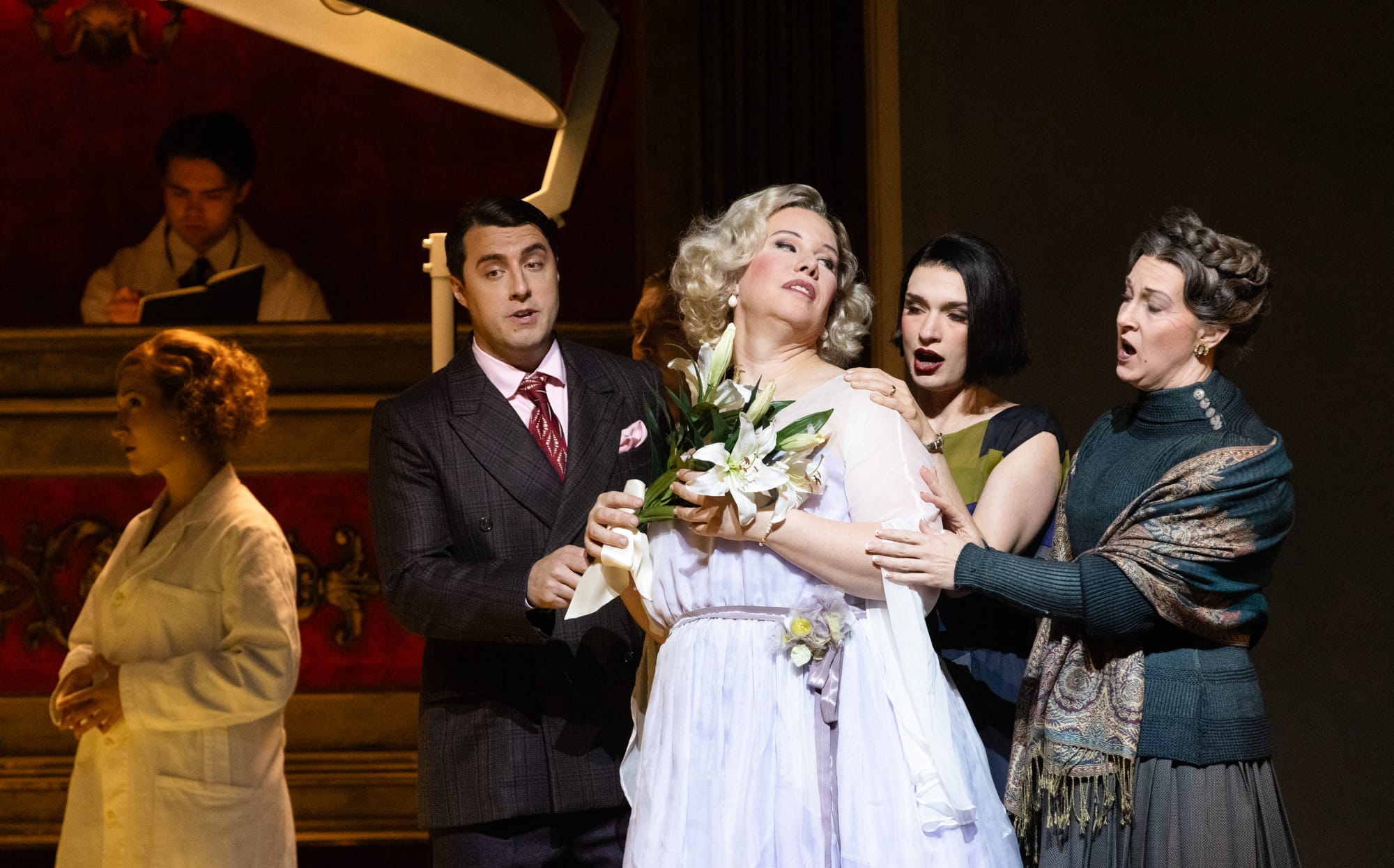
I was sitting at a recent event sponsored by the Wagner Society of Santa Fe. It was about the Santa Fe Opera’s American premiere of Lili Elbe, the true story of one of the first trans women ever to undergo gender-affirming surgery one hundred years ago. If you saw the movie The Danish Girl, starring Eddie Redmayne, you have already experienced a different fictionalized version of Lili Elbe’s remarkable and moving story.
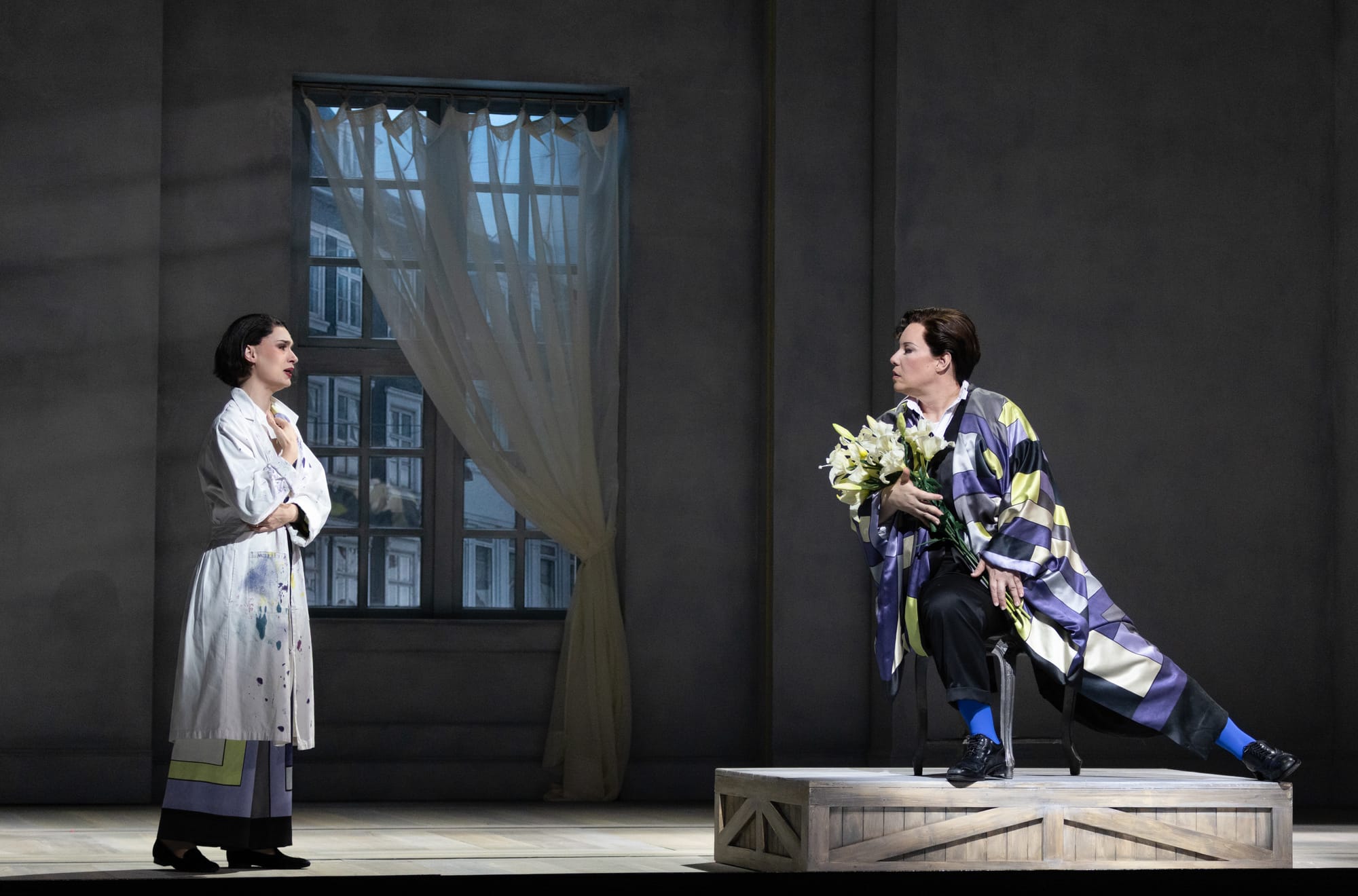
Known formerly as a successful male painter named Einar Wegener, who was happily married to another successful and talented artist named Gerda Wegener, was asked by the latter to please fill in for a female model who hadn’t shown up for a sitting. Einar obliged by donning the model’s elegant cloak, assumed and held the model’s graceful, feminine pose, and could no longer play the role of a man. Einar realized her true self and she adopted the name Lili.
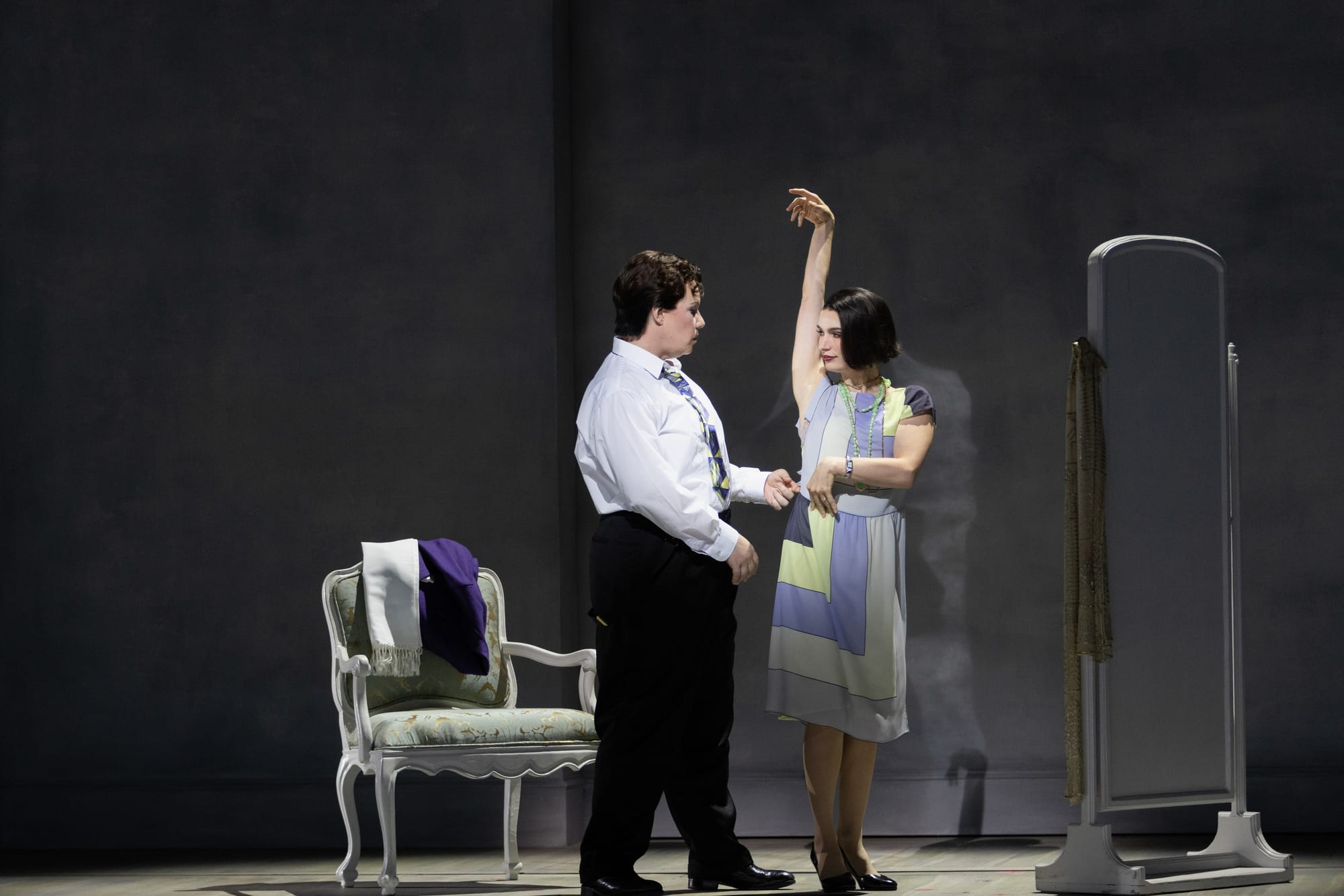
Gerda went along with Lili appearing a bit in public, and passing for Einar’s sister. But soon Lili was no longer interested in pretending to be anyone else. She was Lili Elbe, proud, beautiful, emotionally resilient and she openly faced family, friends, and the public as she experienced her total transformation into who she always was. She and Gerda went through the difficulty, drama, challenges, and surgeries, and their powerful love always kept them connected, right until the end. Ultimately, it is a story about enduring, transcendent love.
I thought I would be writing a review and analysis of the upcoming opera, but something happened at the Wagner Society event that made me change direction. The Lili Elbe composer and conductor were the speakers, and when they introduced themselves, they each led with the statement — perhaps because the brilliant composer Richard Wagner was such an antisemite—that they were Jewish. And I learned that the librettist was also Jewish. At that moment, I became obsessed with wanting to find out how three nice Jewish boys became three kindly, accomplished, successful Jewish men and why they were drawn to this groundbreaking opera about Lili Elbe. I also wanted to know if being Jewish influenced their lives and their work as creators bringing operas to the public.
The premiere of Lili Elbe was a few nights ago, and the audience gave a standing ovation that probably could have lasted all night. The audience understood the importance and timeliness of the story being told. They raved about Lucia Lucas, the trans woman opera star portraying Lili, and Sylvia D’Eramo’s embodiment of Lili’s wife Gerda. They honored the singers, the masters of production, and each of the three men I will introduce to you before you go to see the opera.
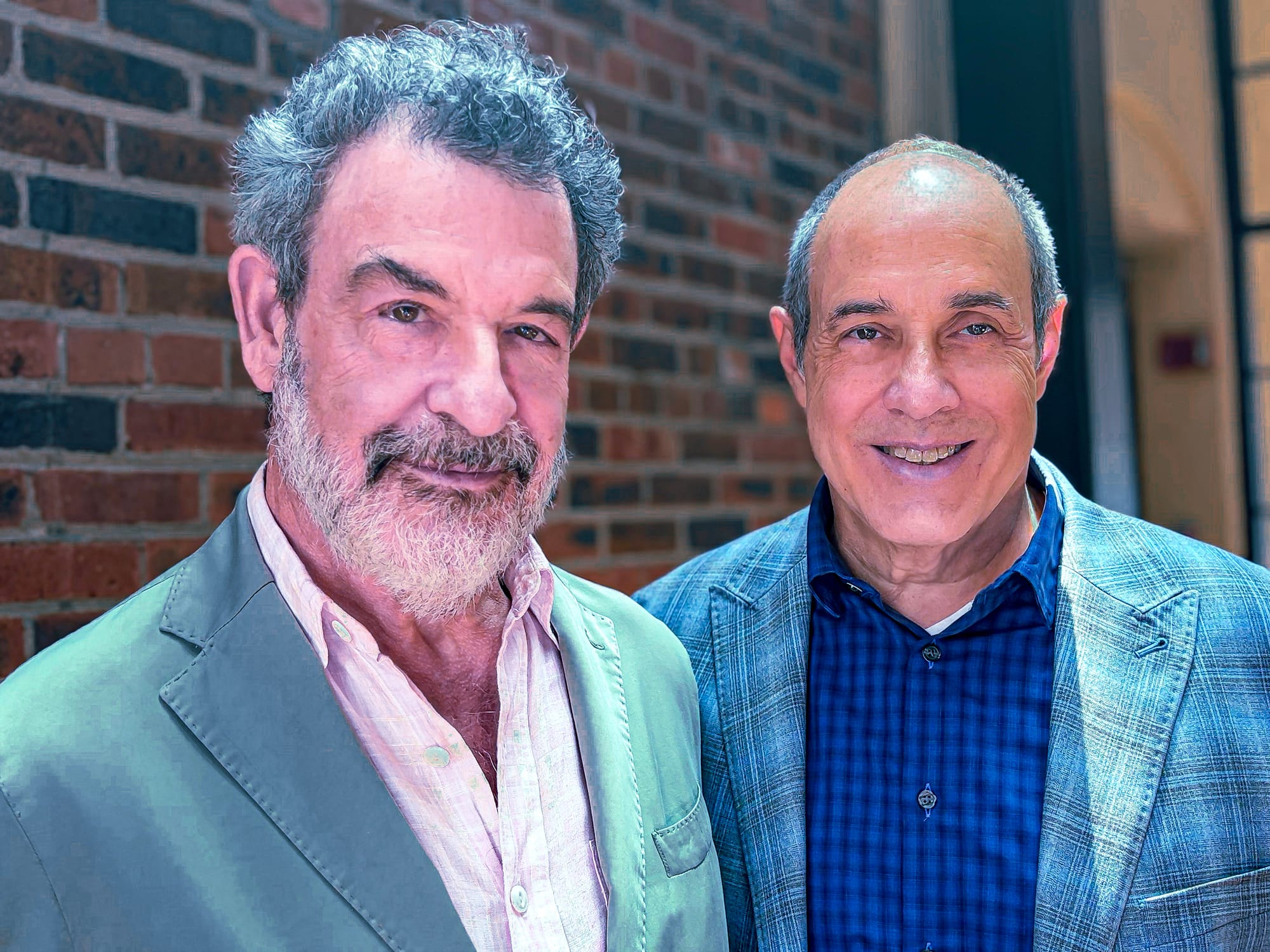
TOBIAS PICKER, the composer
Tobias Picker is unique among famous opera composers— first, because he is living; second because when he was Artistic Director of Tulsa Opera, he was the first to cast a trans performer (Lucia Lucas) in a lead role (she was a magnificent Don Giovanni); and third because he composed an opera (Lili Elbe) specifically for that trans performer who also served as dramaturg (and reviewed this article as a trans advocate).
Like other luminary composers in the past, Picker’s operas have been performed around the world and his friends and admirers include many famous people. But he was not always a member of the “in” group. While still of single digit age, he developed Tourette Syndrome, and some of the kids at school in Pound Ridge, New York, mocked and imitated him and his tics. He was also the recipient of antisemitic epithets hurled at him by other children, and his brave response came from his upbringing. Although literature, art, and music were his Jewish parents’ religion, he was taught that Jews were “the chosen people,” and his father instilled in him the pride of being a Jew, and taught him that if anyone picked on him for his religion, he could retaliate by telling them that Jesus Christ was a Jew.
He is also gay and by 18 he was living a gay life in New York City, although he never formally came out with his family or discussed it with his father. But when he was 26, and he came home with his lover Aryeh Lev Stollman (the librettist of Lili Elbe), his father was accepting of Stollman and treated him like a son. According to Picker, “My mother said, ‘Is this my fault? Do I have to feel guilty?’ and I said no. ‘Good,’ she replied, ‘then I don’t have to feel guilty.’”
Now 72, when Picker reflects back on his youth he says, “I always felt like an outsider, and I still do and always will. Those patterns started at an early age and don’t change. I would say that all my operas have a character who is struggling with being an outsider. It’s a common human condition.”
Some of Picker’s early challenges led to very positive later outcomes. Oliver Sacks, the celebrated neurologist and author, wanted to meet Picker because he had Tourette’s, and Picker wanted to meet Sacks for the same reason. They became good friends for over 20 years, and Picker’s opera Awakenings (with libretto by Stollman) was based on Sack’s 1973 deeply moving memoir about treating long institutionalized patients who could barely move or speak with L-DOPA. Picker says that Sacks “helped me by accepting me and being interested in me. He considered Tourette’s part of who I am, and I came to understand that and it led to a much stronger acceptance of it.”
Picker acknowledges that there are Tourettic elements in his music. “Unexpected changes and the use of structural contrast might stem from that,” he says.
Another beloved Jewish person also entered into his life. Picker says that Jews have an affinity with each other, and they were part of his friendships with notables like Sacks, and Justice Ruth Bader Ginsburg. He met RBG in Santa Fe over 20 years ago. (His opera Emmeline was first performed at the Santa Fe Opera in 1996.) The judge attended several of his operas including An American Tragedy at the Metropolitan Opera. She married him to Aryeh Lev Stollman at the Supreme Court. “She also met my mother who did a painting of her for her 80th birthday,” the composer says.
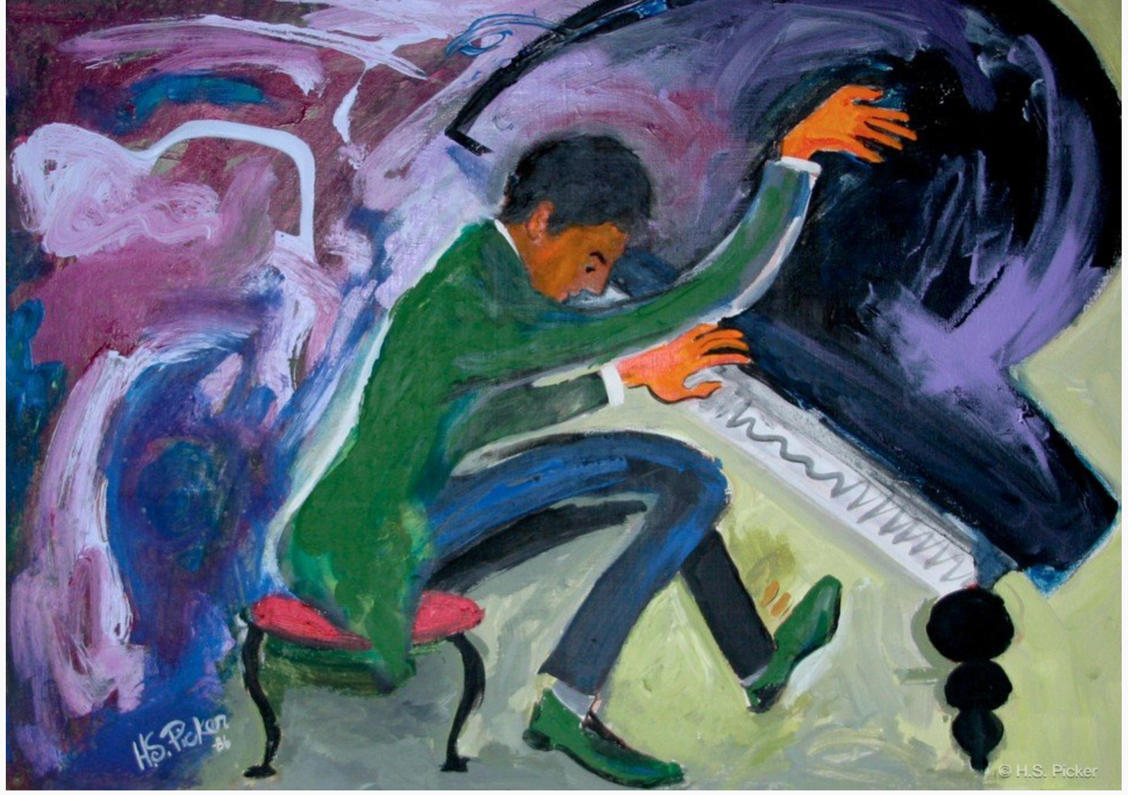
Picker had a very unusual Jewish mother. She was a highly successful designer of high-end women’s shoes. She was also a painter, and he acquired an understanding of artists at an early age when he watched her paint. “She did my portrait several times, and I knew what it was like to pose for an artist. She didn’t tell me to put on a robe [like Gerda asked Einar in the opera] but she did pick out my clothes for the sittings. I loved sitting for her. She only painted on the weekends— she was designing shoes during the week, and also traveled to Paris and Milan for the annual shoe show. I only got to be alone with her when she wasn’t working, and it was rare. She wasn’t waiting for me with milk and cookies and PBJ sandwiches like my friends’ mothers.” She was a force of nature and had her first solo exhibit at the age of 95. “She told me to wear my gloves in the winter and other Jewish mother things. She could be forgiven for being overbearing because she was a real artist.”
Picker was also highly influenced by such diverse Jewish composers as Arnold Schoenberg, Gustave Mahler, Kurt Weill, George Gershwin, and Erich Wolfgang Korngold. And, of course he was influenced by Leonard Bernstein. In 1963 he attended his first live music performance, and it was one of Bernstein’s Young People’s Concerts. “Jewish music was handed down to me in my DNA,” Picker said.
Jewish DNA also played another role in Picker’s life. His maternal grandmother was born in Auschwitz in 1892. Her family, including his mother but also aunts and uncles, came to the USA. “But I also have many relatives who didn’t leave and perished in the Holocaust.”
The composer was deeply impacted by the Ken Burns documentary “The US and the Holocaust.” His next opera, which premieres next year in St. Louis, is about Eleanor Roosevelt and an opera singer who she was instrumental in saving. The extraordinary First Lady also persuaded FDR to start the War Refugee Board, which rescued and provided relief to Jews and other victims of the Nazis.
Picker is committed to telling stories about important women and he describes his music as “melodic, emotional, passionate, architecturally sound, and deeply human.” One of his heroines is Lucia Lucas, the trans star of Lili Elbe. He composed the opera for her. “Lucia is a great artist,” he says. “She’s been who she is since she was born. She just had to transition to make it real to the world and herself. Lili has always been Lili. And Lucia has always been Lucia.”
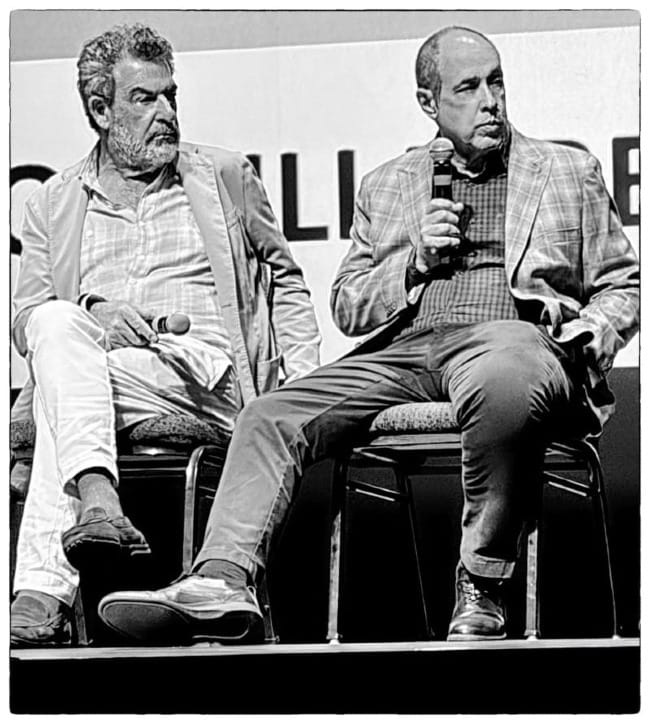
Aryeh Lev Stollman, the librettist
Aryeh Lev Stollman was what was known in my family as a yeshiva bochur— a male student who studied the Talmud and Jewish law in an Orthodox school called a yeshiva. It called up an image of a serious, scholarly boy who was more comfortable with religious books and acquiring knowledge than with the indulgences of the secular world.
Stollman’s father was an Orthodox rabbi and also an English professor who specialized in the works of British poet John Milton and Milton’s interpretation of the Hebrew Bible. In Milton’s most famous work, Paradise Lost, the poet sought to explore theology and “justify the ways of God to men.”
Stollman was deeply impacted by his own 20 years of Talmud study and the religious environment in which he grew up. In addition to mastering Hebrew, he also learned Aramaic, the lingua franca in which the Babylonian Talmud was written. And, like his father, he also excelled in the secular world. He is currently a neuroradiologist at Mt. Sinai Hospital in New York City, and he was drawn to literary endeavors— in his case, by writing award-winning and highly acclaimed novels and short stories and becoming poetic himself as an opera librettist for Tobias Picker, his partner of 46 years. “I would say that my libretto for Lili Elbe is lyrical,” he says. “The words are sung three to four times slower than how we speak, and can be set to music. The libretto is written first, but Tobias and I work together as collaborators. He sets it to music and that influences my words.”
Stollman credits his Jewish studies with making him a better story teller. Aggadah, the narrative parts of Hebrew literature, uses stories and parables to explain complex ideas and teaches values, morals, and ways to behave as a fully realized being. “Lili is a love story about being ‘other’ and trying to be part of society and feeling good in yourself. I have always been fascinated by identity, and how one feels about who one is. About finding yourself and becoming who you are,” he says. And the ways the opera characters behave towards each other are the ways we, too, should and should not behave towards others in our lives.
The librettist feels that his background has given him the ability to think in multiple ways and directions — which includes using Greek mythology, and specifically the Orpheus myth as an anchor in the Lili Elbe story. Orpheus descends into the Underworld to save his beloved wife Eurydice from death and lead her back to life, but he is not allowed to look back; when he does, he loses her. Lot’s wife, though not in the opera, also looks back and is turned into a pillar of salt. In Lili Elbe, Lili does not look back at her past life. She looks towards the future, and how she can become more of the whole woman she wants to be.
“The Talmud taught me how to think, and it has made me a better doctor and a better writer,” Stollman reflects. “I’m grateful that I have a multicultural background rooted in the Hebrew Bible, Talmud, Midrash, Aggadah, but also western literature, Greek mythology, and that gives me a rich background from which to be creative. The more varied one’s background is, the more creative one can be. As a Jew, being ‘other,’ makes me empathic to different kinds of otherness. And in terms of Lili’s real life, she mixed with Jewish society. Two of the characters in the opera — Hélène and Eric Allatini, were Jewish friends of Lili and Gerda who came to see them in Paris. Both of them were killed at Auschwitz.”
I asked Stollman if he had any other experience that he wanted readers to know about. “Yes. I touched the Rebbe.” Before the Rebbe died, Stollman was the doctor who helped transfer him from a stretcher to the x-ray machine. When people speak of “the Rebbe,” today, they are usually referring to Rabbi Menachem Mendel Schneerson, who died in 1994. He was the last leader of the Chabad-Lubavitch movement, and one of the most important Jewish figures of the 20th century.
The Lili Elbe librettist is indebted to his background, but he reaches out to people of all backgrounds as a doctor and a writer. He agrees with me when I say that he is “ecumenical.” It comes from a Greek word that means he reaches out to “the whole inhabited world.”
Roberto Kalb, conductor
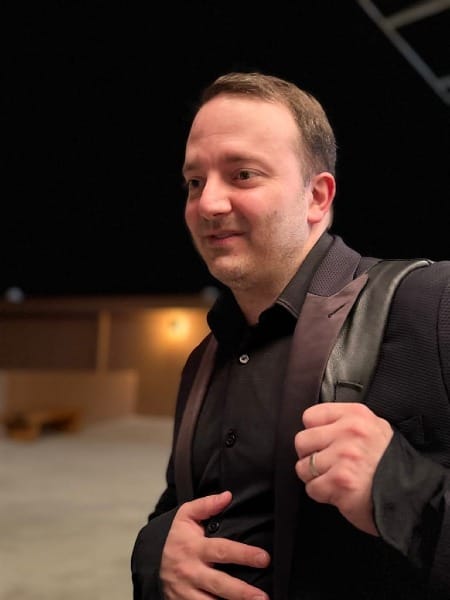
Roberto Kalb hails from Mexico City. His family was not very religious, but he fondly recalls his bar mitzvah where he sang his selected torah portion on March 30, 2000 in front of 200 friends and family. Like all bar and bat mitzvah kids, he got many gifts that included a bunch of video games. But now, when he thinks back, his favorite gift was a family heirloom— a keychain with a miniature Torah on it.
The most important things in his life have always been family and music, and there is much magic in his story. As a kid, he used to sing along with The Three Tenors — Luciano Pavarotti, José Carreras and Plácido Domingo— until his voice changed. As an adult, he got to assist Domingo several times, in Los Angeles, Moscow, and London, for Operalia, the most important opera singing competition in the world. He sat together with Domingo to watch a performance of La Bohème at the Royal Opera House in London, and the superstar told him many stories of his performances of Rodolfo, one of opera’s most famous and beloved characters.
As a seven-year-old, for Mexican Independence Day, he wore a full mariachi suit and danced with all his classmates. He bought his first baton when he was 13, so that he could conduct his middle school band. Now he is in such demand, that he has already planned every day of where he will be and what he will be doing for the next two and a half years.
The other part of that schedule is where and what his wife Mane Galoyan, an acclaimed Armenian soprano who he calls his soulmate, will be doing so they plan when they have family time together. Their relationship seems to come out of a romantic novel or opera. They met through music. He was conducting Rigoletto at Kentucky Opera in 2019. She played Gilda, Rigoletto’s daughter, and they were in complete synch artistically. I joked with him that it was love at first aria. A year later, they had a covid marriage with only 10 guests, and then a Zoom wedding for 200, where they did their first dance to a Nat King Cole recording of the emotional, lyrical “L-O-V-E.”
They have a one-year-old daughter named Eliana, which means “gift from God,” in Hebrew. Thanks to her parents, the baby is already involved in the musical realm. As Kalb describes it: “She listens to everything. She loves music. The first things she heard (and loved) were Mozart piano sonatas, but we play all kinds of music for her.”
But there are sad parts of Kalb’s story too. On his father’s side, the family came from Lemberg, which today is L’viv in Ukraine. They moved to Vienna and then to Mexico, but some went back to Vienna and Kalb lost many relatives on both sides during the Holocaust. His mother was born in Cairo, which she left at age five in 1956 during the Suez Crisis, when there was an attack against Egypt by Israeli, British, and French troops. It triggered mass arrests, confiscation of property, and official expulsion orders. His mother went to Paris, New York, and then to Mexico City to visit her aunt. There she met Kalb’s father. They were married within a year, like Kalb and his wife.
His ancestry includes one cautionary tale too. In 1927, his paternal grandfather wanted to be a conductor, but his mom was so devastated at the idea of him leaving for Vienna, that he stayed and became a banker.
“It’s important to know who you come from and what they went through and how you ended up being you,” Kalb reflects. “It gives me a clear sense of identity. I have done exhaustive family research and would like to go to L’viv, but obviously not right now.” The much-admired conductor follows Jewish holidays, makes a Passover seder, and fasts on Yom Kippur. His Armenian wife Galoyan considers herself agnostic. I mentioned to Kalb that many Jewish populations have strong genetic ties to Armenians, Kurds and Turks. Does DNA influence who we fall in love with and marry? Could he and Galoyan be linked farther back than this lifetime? Kalb responded that the idea was intriguing.
Kalb says that the philosophy of Judaism emphasizes the family unit and the teaching of the Torah, which he wants to pass on to his daughter — be kind, charitable, put family and community above all else. “Wherever I am, and with whatever group, I support them and try to make everything better.” His eldest brother married a reformed Muslim woman. They raised their children with Judaism, but they were free to choose their religion and now they have chosen the Jewish faith. “It’s nice to surround kids with a religious background, but then they can choose.”
As a successful conductor who has worked in some of the top opera venues in America, including the Metropolitan Opera, he remarks that his directing at the San Francisco Opera was very special to him. “That’s where I saw my first opera — Fidelio by Beethoven. I fell in love instantly. I was 18. As soon as I heard the first duet in Act I, I understood what opera was. I had a standing room ticket in the back of the theatre. I wanted to learn more. I went to the San Francisco Conservatory of Music. I studied composition and played piano. I was writing an opera when I stopped composing because I became too busy conducting. But I will get back to it at some point,” he says.
When asked about his success, Kalb says he tries to conduct the music, and to be as selfless as possible. The gestures are all specifically for music making, and not to look good. When he first meets the orchestra, it’s the same way he connects to any large group— as fellow humans and collaborators and with much respect. Then, he confides, they respect you back.
“I’m spiritually agnostic,” he adds. “I am a spiritual person. We are all connected in ways we can’t explain. Something connects all of us, especially with music. Science can’t explain it.”
I asked Kalb questions about his conducting of certain Lili Elbe scenes — for example, when Lili tells her mother that she is no longer her son, but now her daughter. Onstage, the mother’s rejection was painful and significant, but played in a low-key way. The music soaring from the orchestra, however, was highly dramatic, forceful, propulsive, muscular. Why this dichotomy?
“A compositional tool is that one can exemplify characters’ inner struggles. Onstage it was not so physically active, but the music expresses how the characters feel. Her mother was shocked by Lili. So, it’s very dramatic, intense music.”
Did he adjust any of the tempi during rehearsals? “Yes, a few. I added a ritardando before Doctor Warnekros is introduced to Lili, to add a beat before new information is delivered [he can perform the surgery that will make Lili capable of having a child]. We did a lot like this to tailor the drama while rehearsing with Jim [James Robinson, the director] and Tobias during rehearsals with just singers and piano. It was to adjust what wasn’t working perfectly.”
The end of the opera is very subtle when Lili and Gerda express their love for each other, and then the brave Lili dies. Roberto talks about the ending musically. “It ends on a major chord— harmonically, pretty conclusively. It ends with an echo of two trumpets playing a third [which creates harmony]. It’s a soft ending. The opera fades away. I executed it how Tobias wrote it.”
That pretty much describes how my interviews with Kalb went: harmonically, gently, and, for each topic, pretty conclusively.
Judith Fein has written four acclaimed and award-winning books, contributed to 130 publications with her photojournalist husband Paul Ross, directed and wrote plays for a theatre troupe in Europe for 9 years, directed a Gilbert & Sullivan comic opera in San Diego, writes blogs for Psychology Today about transformative travel, and gave a TEDx talk about Deep Travel. She wrote her first libretto for composer Henry Mollicone’s opera Hotel Eden, which got much critical acclaim, and has just completed her second opera libretto.
DATES AND TICKETS
LILI ELBE, SANTA FE OPERA
FRIDAY AUGUST 14, 8 PM
TUESDAY, AUGUST 18, 8 PM
THURSDAY, AUGUST 27, 8 PM
Read the New Mexico Jewish Journal on our website, and
sign up for our free newsletter here, delivered to your inbox about twice a month.
Community Supporters of the NM Jewish Journal include:
Jewish Community Foundation of New Mexico
Congregation Albert
Jewish Community Center of Greater Albuquerque
The Institute for Tolerance Studies
Jewish Federation of El Paso and Las Cruces
Temple Beth Shalom
Congregation B'nai Israel
Shabbat with Friends: Recapturing Together the Joy of Shabbat
New Mexico Jewish Historical Society
HaMakom - Passionate Judaism in Santa Fe
Policy Statement Acceptance of advertisements does not constitute an endorsement of the advertisers’ products, services or opinions. Likewise, while an advertiser or community supporter's ad may indicate their support for the publication's mission, that does not constitute their endorsement of the publication's content.
Copyright © 2026-27 New Mexico Jewish Journal LLC. All rights reserved.