



“To Be a Jew Is a Verb”: A Las Cruces Family’s Century of Showing Up

By the New Mexico Jewish Journal
Debra Wechter Friedman grew up watching her parents build a synagogue from scratch in southern New Mexico. Now she’s asking what the next generation of Jewish giving looks like in a state that rarely makes the philanthropic map.
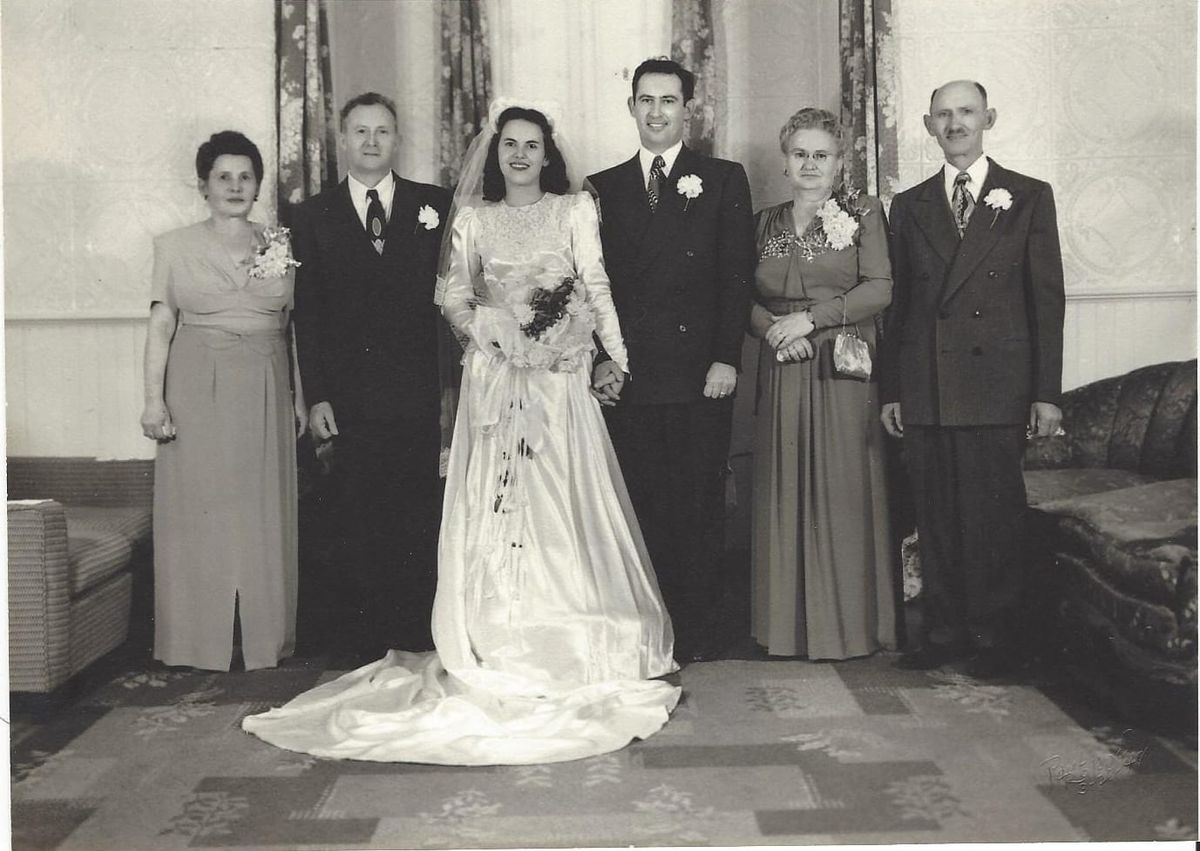
Debra Wechter Friedman remembers exactly why her parents ended up in Las Cruces. Her father, Mark, had been offered part ownership in a small shop on Main Street called the Music Box. Her mother, Rose, was eighteen years old.
“So that’s why they moved to Las Cruces,” Debra says, with a laugh she seems to have been carrying for decades. “The Music Box. There they are — both raised Orthodox and kosher — and the closest kosher butcher is El Paso.”
What Mark and Rose Wechter found in 1950s Las Cruces was a scattered but tenacious Jewish community — entrepreneurs, educators, a handful of families determined to build something permanent in the high desert. There was no temple yet. The community gathered in borrowed rooms: a corner of the public library when a sympathetic Jewish mayor arranged it, a space next door to the Music Box on Main Street.
From those ad hoc beginnings, Temple Beth El of Las Cruces was born. Mark Wechter, deeply educated in his Jewish heritage, served for years as the congregation’s lay rabbi and lay cantor — unpaid, uncredentialed by any seminary, simply the person who knew the most and was willing to lead. Rose Wechter helped establish the Sunday school and, with Mark, led the fundraising drive to build the congregation’s first permanent home. When Rose passed, her fellow sisterhood members and congregants named the social hall after her. Not through a major gift. Just because they loved her.
“My grandparents and parents were constant givers,” Debra says. “Not only Jewishly, but within the whole community. That’s where I learned it. I can’t imagine not being involved.”
Roots in the Old World, Planted in the Southwest
Debra’s grandparents came from Ukraine and Moldova, part of the early twentieth-century immigration wave that remade American Jewish life. Both sets of grandparents came through Ellis Island, then traveled by train to meet their family sponsors — one set in El Paso, the other in Galveston. Her parents met in El Paso — Rose was seventeen, Mark just back from military service, working as a record salesman. They married on her eighteenth birthday.
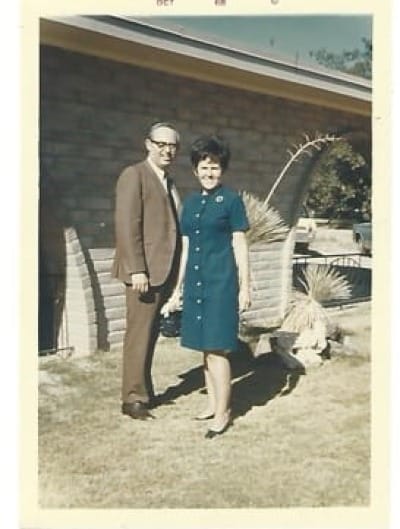
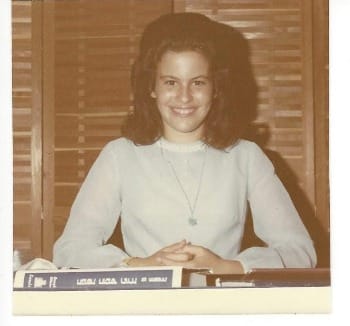
It’s a story repeated across the Southwest in the mid-twentieth century — Jewish families planting themselves in unlikely places, far from the dense urban communities of the East Coast, finding or creating community where it didn’t yet exist. The Music Box lives on today as White’s Music Box. Temple Beth El is still there too.
“You Have to Be Doing”
Debra lives in Albuquerque now and, by her own account, gives constantly — to animal welfare organizations, environmental causes, immigrant services, and Jewish institutions. For years she has volunteered weekly with Albuquerque Reads, a literacy program run through the Chamber of Commerce and APS. She sits on boards she believes in, including the New Mexico Jewish Historical Society.
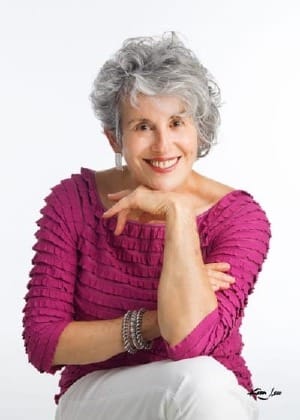
Ask her to explain the impulse and she reaches straight for text. “To be a Jew is a verb,” she says, quoting a rabbi she holds close. “You can’t just be thinking about doing something, you have to be doing. You can’t just have love in your heart. You have to be proactive. You have to reach out.” She invokes Hillel: “Who are we if we’re only living for ourselves?”
There’s also something she describes, with characteristic directness, as “totally selfish” about giving. “The way that God made us is that when we give, something in our brain just goes off and it makes you feel so good. We’re wired for it.”
After October 7th: Visibility as an Act
Debra recently opened a donor-advised fund through the Jewish Community Foundation of New Mexico, a vehicle that lets her consolidate her annual giving and direct grants to specific organizations throughout the year. Practical considerations mattered: simplified record-keeping, strong financial returns on invested funds. But what actually pushed her to formalize the commitment was October 7th.
“Since October 7th, and the extreme rise of antisemitism, I realize how important it is for us not to be invisible,” she says. “It behooves us to be a really strong, cohesive community. I want Jewish in my life. I want to do Jewish. I want to support Jewish. I want to be more fully Jewish.”
For Debra, that urgency has a geographic dimension specific to New Mexico. “There’s a voice in this little desert town,” she says. “Jews are here. We are here.” It’s a declaration that sounds almost defiant — the granddaughter of Ukrainian and Moldovan immigrants, insisting on presence in a place her grandparents could not have imagined.
Her fund’s name — the Make a Difference Fund — is blunt in the way her family apparently has always been. Mark Wechter didn’t wait for a rabbi to appear in Las Cruces. Rose Wechter didn’t wait for someone else to start a Sunday school. Their daughter, it seems, is still following their example.
Sarah Winger is the Executive Director of the Jewish Community Foundation of New Mexico. The JCFNM manages donor-advised funds and other philanthropic vehicles for New Mexico Jewish donors.
Editor's note: Source material for this article was submitted by Sarah Winger, Executive Director of the Jewish Community Foundation of New Mexico. It was rewritten for publication by Claude (an AI assistant by Anthropic), with factual corrections provided by the subject.
Community Supporters of the NM Jewish Journal include:
Jewish Community Foundation of New Mexico
Congregation Albert
Jewish Community Center of Greater Albuquerque
The Institute for Tolerance Studies
Jewish Federation of El Paso and Las Cruces
Temple Beth Shalom
Congregation B'nai Israel
Shabbat with Friends: Recapturing Together the Joy of Shabbat
New Mexico Jewish Historical Society
Policy Statement Acceptance of advertisements does not constitute an endorsement of the advertisers’ products, services or opinions. Likewise, while an advertiser or community supporter's ad may indicate their support for the publication's mission, that does not constitute their endorsement of the publication's content.
Use of Artificial Intelligence: The New Mexico Jewish Journal may occasionally use AI tools to assist in drafting, editing, or rewriting content. When AI has played a substantial role in producing a piece, it will be disclosed in an editor's note accompanying that article.
Copyright © 2026-27 New Mexico Jewish Journal LLC. All rights reserved.