







Grave Visits, Stones, and Stories: Ways to Honor Our Loved Ones This High Holy Day Season
By Rabbi Deborah J. Brin
Many of us visit the graves of family members, friends or teachers during the High Holy Day season. We do this to remember and honor those who came before us, to contemplate our own mortality and prepare for the season of change and t’shuvah/repentance. It is customary to go to the cemetery before Rosh Hashanah, this year September 11th as well as during the days between Rosh Hashanah and Yom Kippur September 20th.
When we arrive at the grave site, we usually place a stone on the marker to say ‘you have not been forgotten’. We think about the person, what we learned from them and how they impacted our lives. Some people will simply sit quietly, meditate or talk out loud to their loved one, pouring out their hearts. If we go with other family members or friends, we might tell each other stories. When we do share about who they were, especially with members of the younger generation who may not have known them, we keep their memories and their legacies alive.
Visiting the grave of a loved one need not be gloomy or sad. Sholom Aleichem, (pen name of Solomon Rabinowitz, 1859 – 1916), wrote an ethical will and in it he said, “At my grave . . . my remaining son and sons-in-law, if they are so inclined, should say kaddish for me. And if they do not wish to do this, or if it is against their religious convictions, they may fulfill their obligation to me by assembling together with my daughters and grandchildren and good friends to . . . select one of my stories, one of the really merry ones, and read it aloud in whatever language they understand best, and let my name rather be remembered by them with laughter than not at all.” (p.151 Ethical Wills A Modern Jewish Treasury edited by Jack Riemer and Nathaniel Stampfer).
What happens if like so many of us here in New Mexico, we are geographically separated from where our loved ones are buried? To my knowledge, there isn’t a traditional answer to this question. Here are a few ideas to consider:
- There could be a special place in our house, a basket, bowl or potted plant, where we put stones when we want to visit our beloveds who are buried too far away.
- We could sit quietly and look at photos, reread letters or other writings from our family member, friend or teacher.
- We could sit still and think about them and make journal entries or write them a letter.
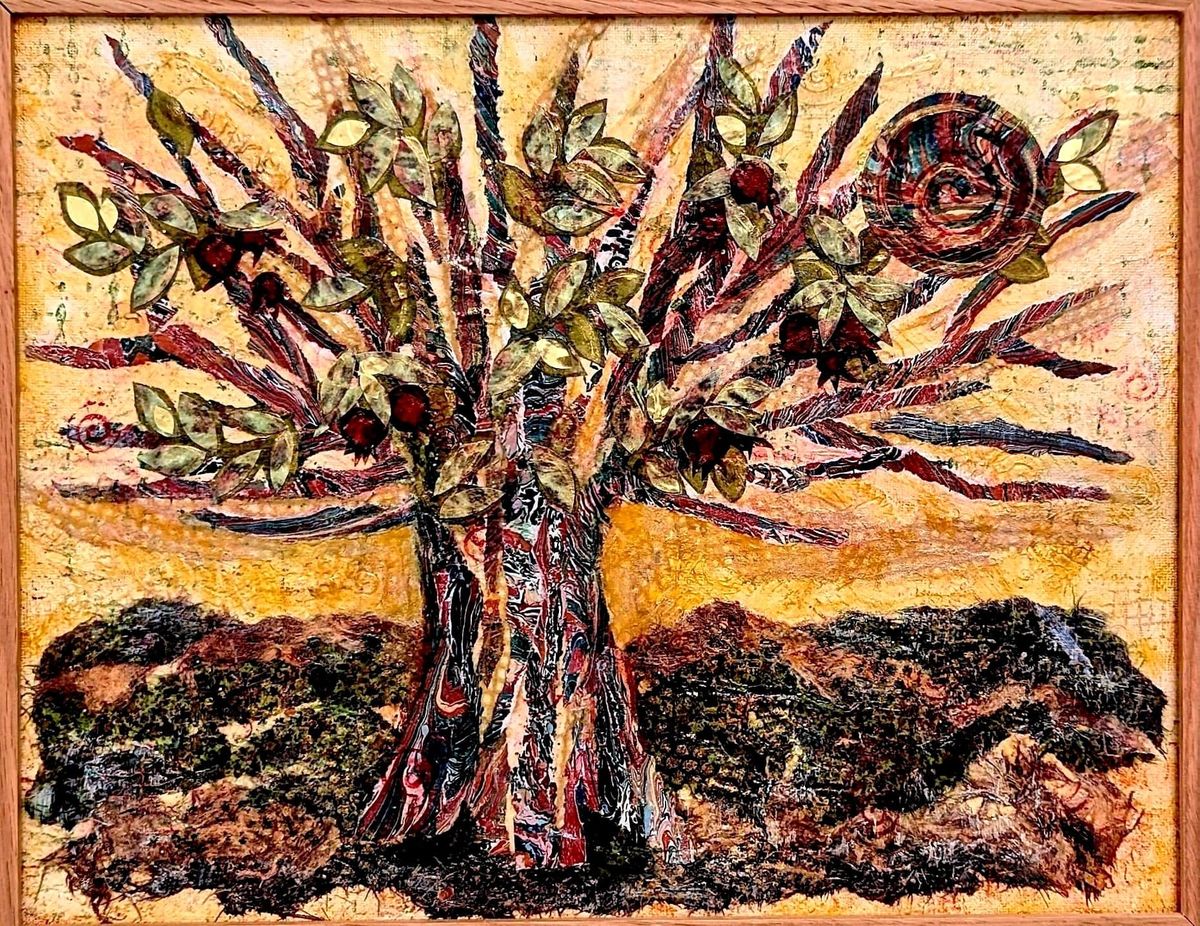
- We could plant a tree in memory of a loved one. Years ago, the son of a congregant died and due to suspicious circumstances around his death, the release of the body for burial was delayed. Even though she couldn’t do a funeral, she wanted to do something. We planted a tree and made a ceremony. She always had a place in her own yard where she could visit with him even if it wasn’t his grave.
- We could go to a nearby cemetery where there are members of our community that are buried. We can walk around and see the names of those we knew and remember them. Seeing their graves helps us to face our own mortality. In keeping with the season, knowing how short life is, it could help us to become introspective about our own lives.
Whether your loved ones are buried nearby or far away, may you remember them this holiday season, tell stories about them, be inspired by them and allow the knowledge of your own mortality to spur you on to be a mensch and to engage fully in your life.
Shanah tovah um’tukah - - may it be a good and sweet New Year.
Rabbi Deborah Brin served as Rabbi of Nahalat Shalom in Albuquerque from 2006-2016 and is now Rabbi Emerita of the congregation. She has been a geriatric, hospice, and college chaplain and is known for her teaching and pastoral counseling skills. Brin, one of the first 100 female rabbis to be ordained, also is founder of the Rabbinic and Cantorial Association of Albuquerque.
Related:
 New Mexico Jewish Journal
Meredith Gould, Ph.D. Mixed Media Artist & Writer
Meredith Gould Arts (Website) My Jewish Life and Other People's Religions: The Catholic Years (Swan Song Books)
Community Supporters of the NM Jewish Journal include:
Jewish Community Foundation of New Mexico
Congregation Albert
Jewish Community Center of Greater Albuquerque
The Institute for Tolerance Studies
Jewish Federation of El Paso and Las Cruces
Temple Beth Shalom
Congregation B'nai Israel
Shabbat with Friends: Recapturing Together the Joy of Shabbat
New Mexico Jewish Historical Society
HaMakom - Passionate Judaism in Santa Fe
Policy Statement Acceptance of advertisements does not constitute an endorsement of the advertisers’ products, services or opinions. Likewise, while an advertiser or community supporter's ad may indicate their support for the publication's mission, that does not constitute their endorsement of the publication's content.
Copyright © 2026-27 New Mexico Jewish Journal LLC. All rights reserved.